
In collaboration with Convergence, VOICE OF ASIA is proud to present timeless articles from the archives, reproduced digitally for your reading pleasure. Originally published in Convergence Volume 21 in 2013, we present this story on Indian fashion, and the sheer breadth of culture as told through cloth.
Indian culture is one of the most diverse in the world. As a subcontinent, the vast country is home to thousands of different traditions, each one vivid, rich and full of intricate detail and history. This intermingling of cultures is manifested in a visual amalgam of colour in the form of traditional attire. Convergence takes an excursion into this part of Indian culture, as the country – and the world – prepares to celebrate Deepavali, the Festival of Lights, a celebration when everyone dons their best traditional Indian wear.
Because of its diversity, India does not have one single national Dress. Each region has its own dominant style, depending on the culture that has influenced it. Wherever the dress comes from, however, it always steals the spotlight at gatherings, with its beautiful embellishments and embroidery, and rich, striking colours. Made with material from georgette to chiffon and velvet, Indian dresses are an appealing choice for women attending events, especially because of their versatility. They capture the essence of women, no matter what age or body type, and their sequins, ornamentation and design highlight the beauty and grace of the wearer.
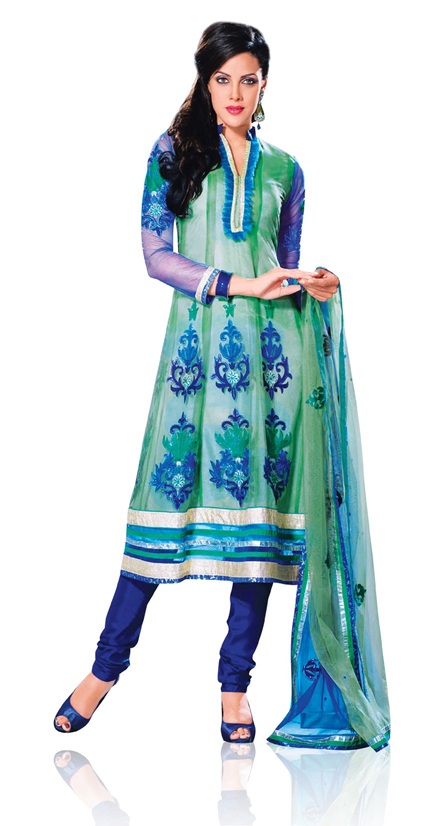
Salwar Kameez – Traditional Beauty
The centuries-old salwar kameez consists of loose pajama-style trousers tapered at the ankles, a long shirt or tunic adorned with embroidery and lace, and the dupatta – a long scarf that may be worn as a shawl or a veil, hung around the arms, or draped over one shoulder. The salwar kameez was brought to India by the Punjabis, an Indo-Aryan ethnic group of South Asia. at the time, it was more a functional garment than a fashionable one, with its primary purpose to provide protection from the scorching heat of the region. Later, under the rule of the Islamic Mughal Empire, the salwar kameez changed from a functional garment to a luxurious one, as women added embellishments, used silk and crepe as fabric, and wore bolder colours. It is popular for its comfort and practicality, and with its ageless appeal, has stood the test of time and evolved into a garment with style sought the world over.
Lehenga Choli – A Majestic Ensemble
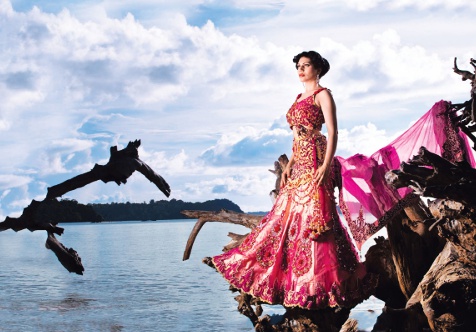
The lehenga choli came to Western India by way of the royal courts of the Mughal Empire. The choli is a blouse that is sometimes midriff-baring, cut to fit to the body, and sometimes with a low neck and short sleeves, although there are various other styles which cover the midriff and arms. It is worn with the lehenga, a full-flared, ankle-length skirt. The outfit is completed with a majestic dupatta, just as one would with the salwar kameez. What is most distinctive about the lehenga outfit is how the long, full skirt swishes and flares around the wearer.
The lehenga has undergone very few alterations throughout the years. Contemporary designers still resort to the much-loved Mughal era patterns and designs of the lehenga, retaining the spirit of the old Empire’s lifestyle. craftsmen use silk and brocade to create these masterpiece ensembles, just as they used to do during the Mughal era, but they have also started using chiffon. With its flamboyant feel and mix-and-match look, this vibrant attire is a favourite choice for such auspicious occasions as Deepavali. Royal family members favoured elaborate brocades on the lehenga, with gold and silver embroidery and detailing with mirrors and precious stones.
Saree – Exotic Elegance
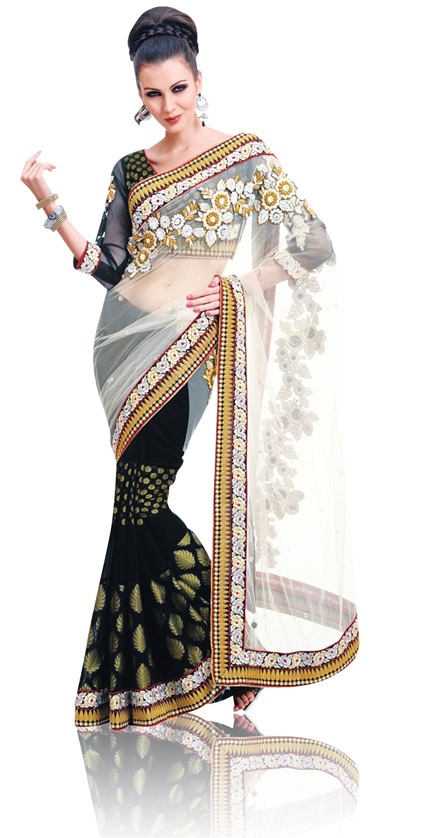
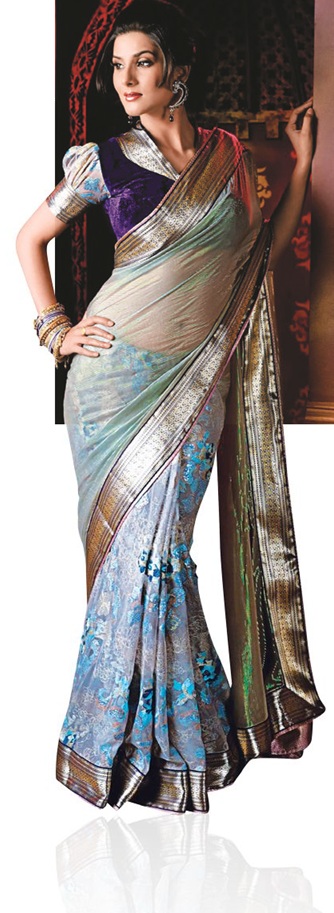
Withstanding over 5,000 years, the saree is the oldest – and most popular – of Indian costumes, as women not only in India but also Pakistan, Bangladesh, Sri Lanka, Nepal, and across the Indian diaspora all wear the saree in their own style to reflect their traditions. This sensual attire, consisting mainly of a six-to-nine-yard piece of unstitched cloth, highlights the feminine form and accentuates the hips as it drapes down the full length of the body.

Available in a plethora of fibres, designs and colours, the saree is usually worn with a fitted blouse covering the upper part of the body, and underneath it is a slim petticoat into which the pleats of the saree are tucked to hold it in place. It is, to this day, one of the most alluring feminine garments, not only in India, but the world over. The saree‘s popularity through the ages may be attributed to its simplicity, comfort, and versatility. It is instant fashion, created by the wearer as there is an art to draping the saree that is an expression of the creativity of whoever is wearing it.
Wrapped in Luxury
The most expensive saree ever made features reproductions of 11 paintings instead of a traditional fabric pattern. 10 of the paintings are small images on the borders of the saree, with the 11th and most prominent of them being a replication of the oil-on-canvas “Galaxy of Musicians”, that features Indian women in various region-specific styles of saree, playing different musical instruments.
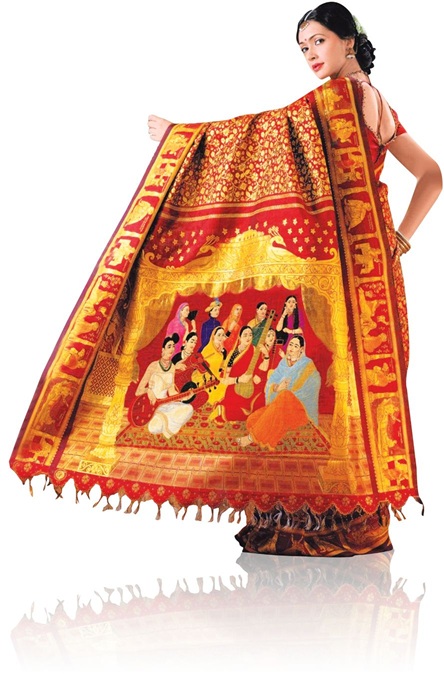
The paintings are creations of celebrated 19th-century Indian artist Raja Ravi Varma, who is recognised for fusing Indian traditions with European art techniques in his depiction of scenes from the great Hindu epics of Mahabharata and Ramayana.
This saree is fit for a queen – created and designed by Chennai Silks, a textile house in Tamil Nadu. It is made of woven silk, weighs almost 18 pounds, and is studded with 12 precious stones including diamond, ruby, emerald, yellow sapphire, topaz and pearl, and is detailed in gold. It took over 30 handloom weavers and about one year to make.
While it was created to be an entry for the Guinness Book of World Records, it may also be worn, but perhaps only with permission from the wealthy and anonymous businessman – who may or may not be Kuwaiti – who bought it in 2008 for the price of US$100,000.
From Bollywood to Hollywood
The saree has now become a fixture on red carpets, representing class, style and beauty, thanks to bollywood glamourising the traditional Indian costume. Not to be left behind, Hollywood has recently tapped into that pool of ethnic creativity, as A-listers and celebrities seek fashion designers to drape them in lovely sarees, or saree-inspired dresses.
For this reason, many fashion designers have bridged Western and Asian style by fusing modern with traditional. This has allowed the uninitiated to experience the captivating style of traditional Indian garments without having to struggle too much with the technicalities of wearing them, as it certainly takes skill to comfortably – and effectively! – wear, pleat and drape a nine-yard-long saree.
The ‘Concept Saree’ is easy to wear for those who have never worn a saree before. The pleats are pre-stitched and already in place, with just one wrap around, and one end ready to drape over the shoulder.
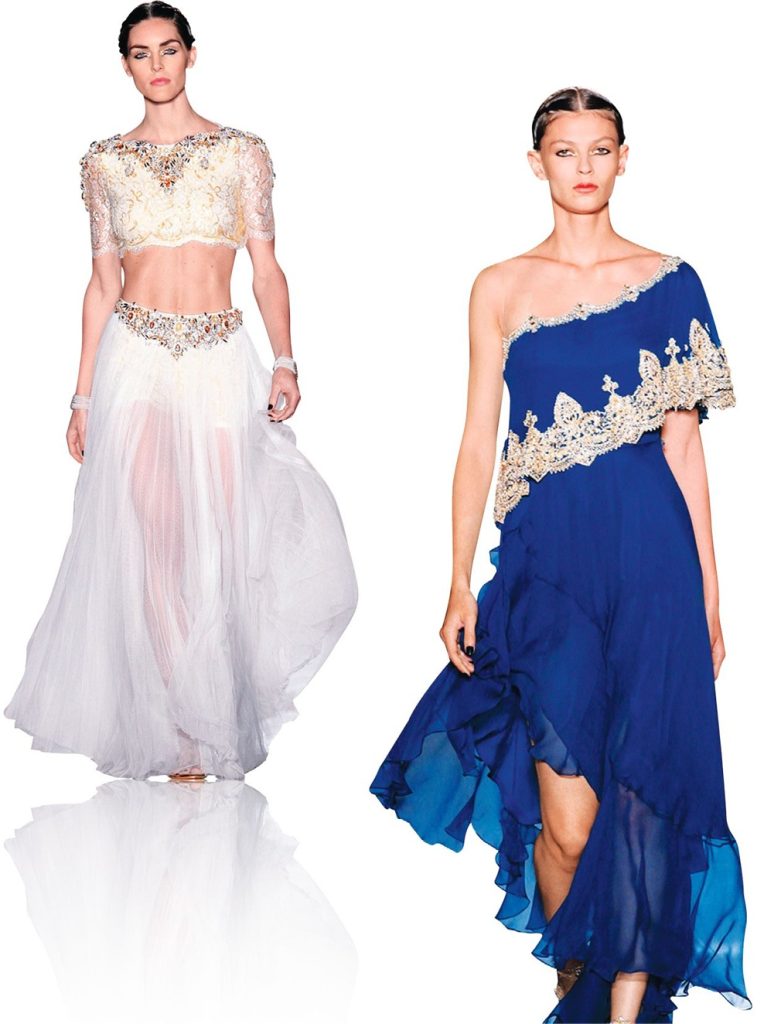
Aside from the Concept Saree, many designers have also created saree– and lehenga-inspired dresses, a favourite among celebrities in the West. New York-based designer Naeem Khan was behind Annette Bening’s Oscar Awards gown, and Madonna wore an outfit by Indian designer duo Falguni & Shane to her birthday bash. There is also Manish Malhotra, whose work so captivated Michael Jackson that he was asked to design the late superstar’s outfit for his visit to India, and also to design outfits for his children.
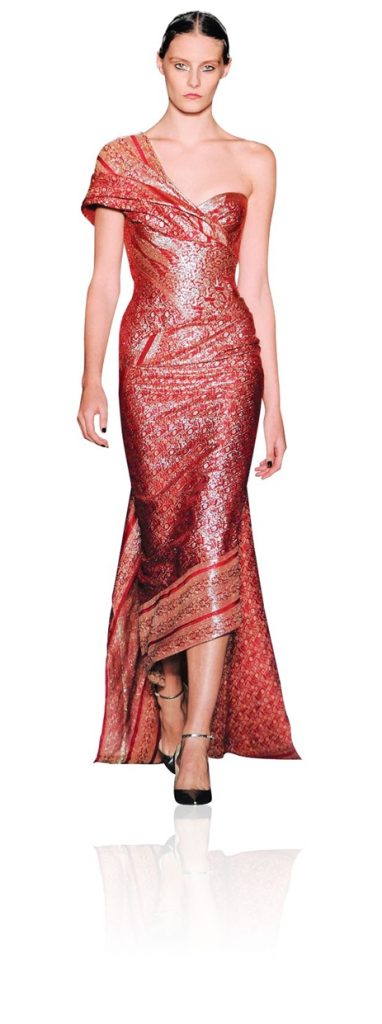
Indian style has undeniably brought some freshness to the fashion industry in the West, as big houses have also tried their hands at the saree. As far back as the 1950s, the Italian Valentino was ahead of the curve when he designed a saree dress for Jacqueline Kennedy. With its recent popularity, Jean Paul Gaultier launched their saree dress in 2008, and Hermès showcased a saree line in 2011.
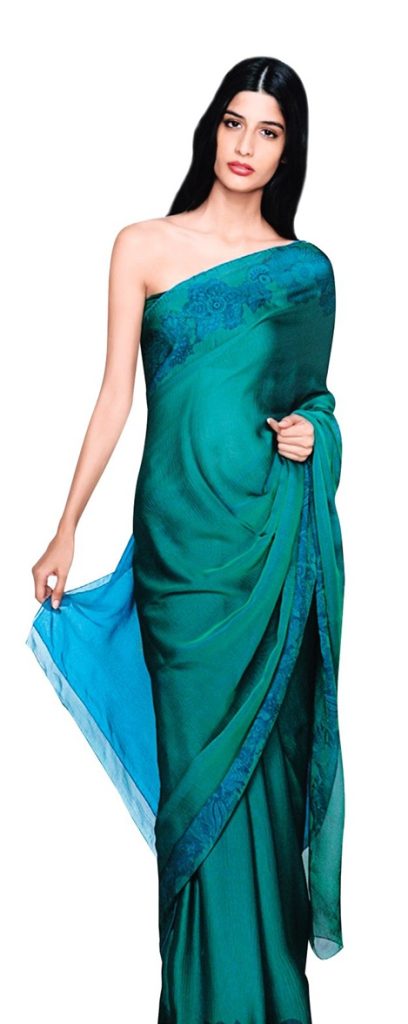
India is known for its mix of old and new traditions, and its many customs and cultures. Indian wear is just as varied – with a multitude of fabrics, designs, styles and accessories to choose from. Ironically, it is this diversity that makes it so unique. Indian and Indian-inspired attire complements women of all ages and backgrounds, flattering the silhouette and adding a touch of sensuality to their demeanour. It is designed to be versatile – both functional and dressy so that it may be worn to suit any occasion, at any time of day.
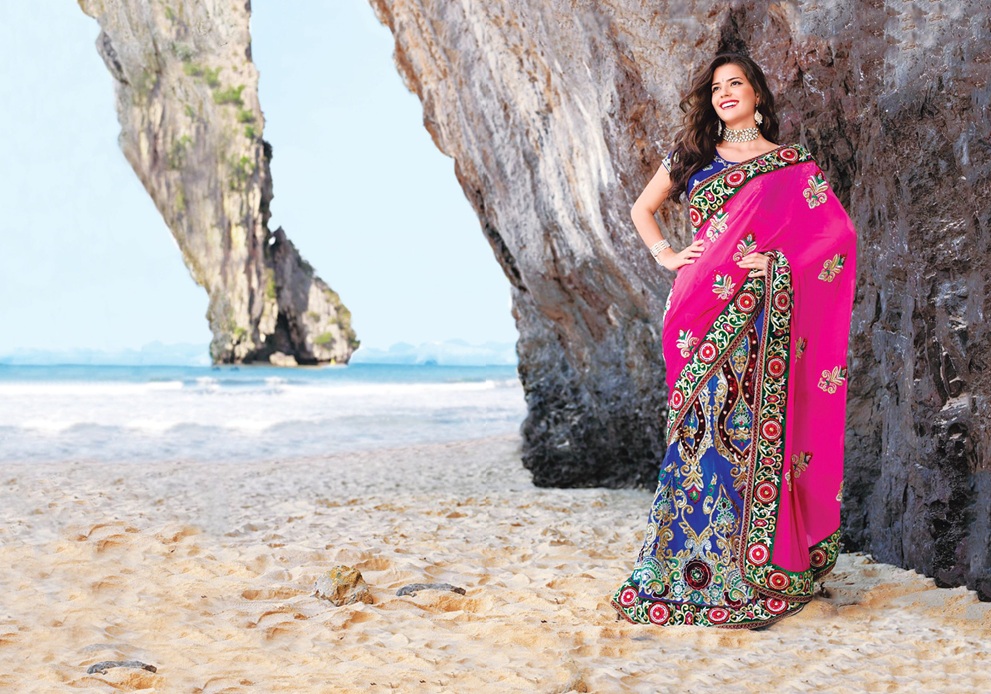
You too can experience the enchanting allure of Indian wear. Take a trip to Jalan Masjid India in Kuala Lumpur, or to the Klang city centre (32km to the west of Kuala Lumpur; 6km east of Port Klang) and you will be spoilt for choice by the dizzying array of sarees, lehenga cholis, and salwar kameezes. You will also find a multitude of ethnic costume jewellery and accessories that complement your Indian fashion wear, such as gemstone-studded sandals and handbags, multi-coloured bhindis and bangles, and yes, even complementing Indian wear for the gentlemen. Happy Deepavali, dear readers, and we hope, after reading this article, you will spend it in utmost style, à la Indian.