


In collaboration with PASSIONS, VOICE OF ASIA is proud to present timeless articles from the archives, reproduced digitally for your reading pleasure. Originally published in PASSIONS Volume 57 in 2013, we present this story on Pelé, sharing his story of origin from humble beginnings to legendary footballer.
From the streets of São Paulo to becoming one of the most iconic stars in sporting history, Brazilian football star Edson Arantes do Nascimento (Pelé) recalls his rise to fame and gives his thoughts on the upcoming World Cup. From a National exclusive interview with the man, PASSIONS has the score.
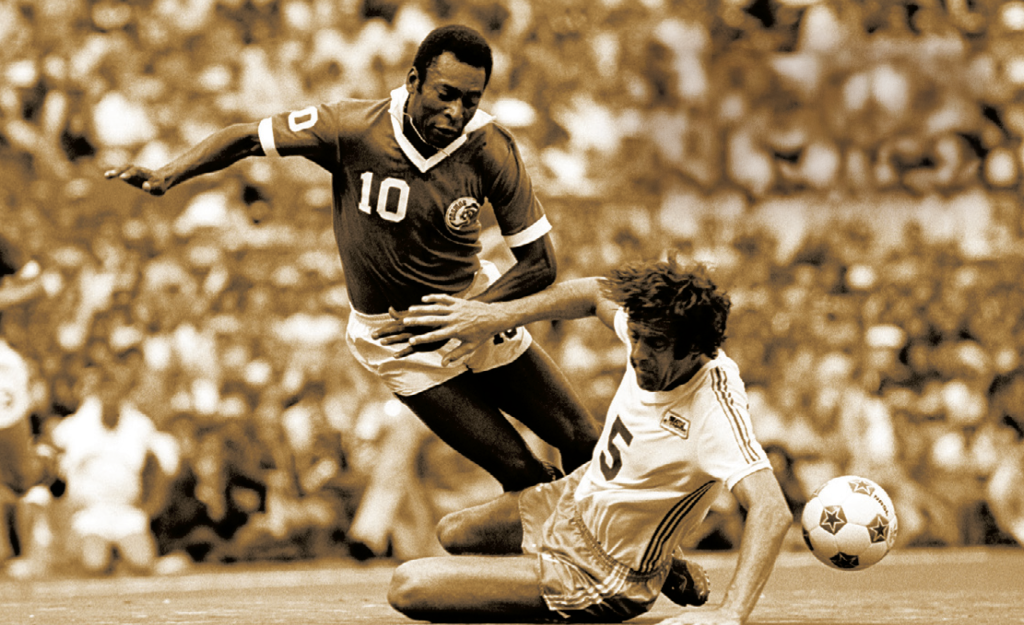
“I want to score! I always want to score.“
Pelé’s father gave him the name Edson, after the American inventor, Thomas Edison. Later, when the family moved to Bauru in São Paulo State, where his father played football, there was a goalkeeper called Bile, and people started to call the young Edson by this name. It sounded like Pelé, which was what everyone soon began calling him. At first he didn’t, but Pelé came to love the name, because of what it meant around the world.
“I can’t remember how old I was exactly when I saw my first game. But because my father played for Bauru I used to get tickets from when I was very young, so I never had to pay to go to a football match.
When I came back from the 1958 World Cup, my friends said I had to be an example for the youngsters now that I was a champion of the world. So I went to do my national service when I turned 18 in October that year. It was fantastic. I learnt how to cook, how to respect people, to wash things, to dress, to iron, everything. It was a very good education. But the most important thing it taught me was discipline and that helped me in football, no doubt.”
Q: How big an influence was your father?
“My father had a big influence on me. He was a professional footballer and played for the local team, Bauru Athletic. I always said, ‘One day, I’m gonna be like my father’ – that’s what I had in my mind from a young age. I have one big memory, and that’s the World Cup in 1950. Everybody was saying ‘Brazil will be champions’ but it was a disaster. Uruguay won in front of 200,000 people at the Maracana.
I was nine years old and I said to my father, ‘I am going to win a World Cup for you. Eight years later, I was in Sweden and I won the World Cup. For him.
My father was a good soccer player. As a striker, he scored a lot of goals with his head. He always advised me to work on things. When I was young, I started dribbling with the ball, and I started to tease the youngest who played with me, because I had more skills. Then my father said to me: ‘It is not good for you to tease the young boys. You play football because it’s a gift from God. Now, if you respect people, if you are well prepared, if you are training – how to kick with your left foot, how to head – then you are gonna be a great player, then nobody’s gonna stop you.
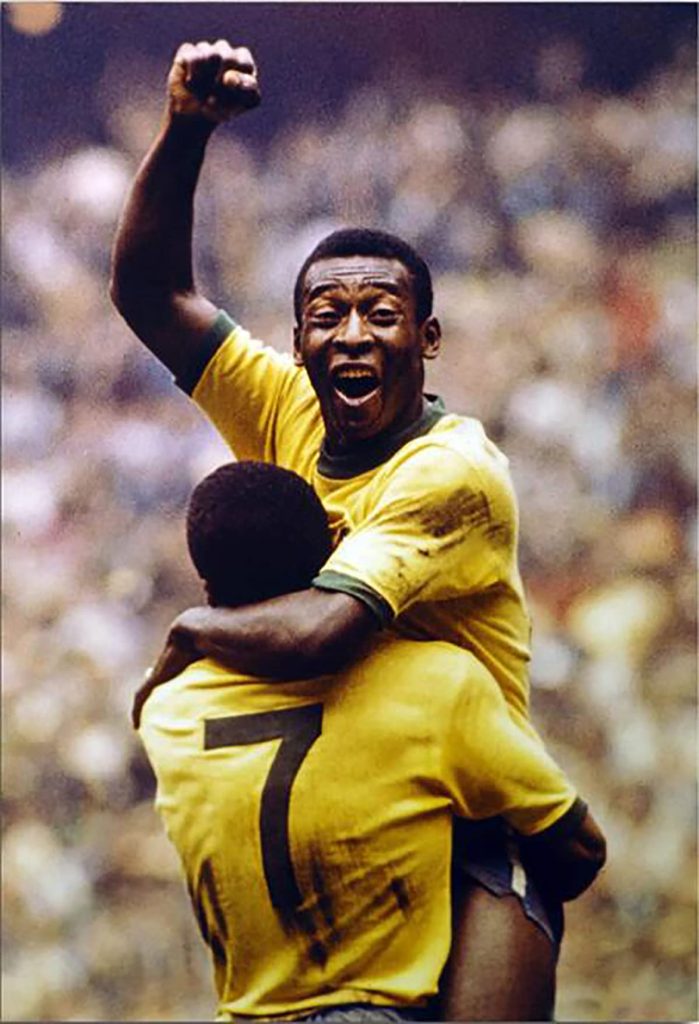
That is the reason I used to train more after the team training. Instead of going to the beach or to the movies, I was there to kick the ball, to control, to jump, and this was the most important thing in my whole life – always I was better prepared than anybody else. I scored more than 100 headed goals in my career. In the World Cup in Mexico in 1970, my goal in the final was a header. I used to train, heading the ball with my eyes open.”
Q: How did you develop your football skills?
“When I first started to play, we couldn’t afford a proper ball, so we used to make balls with socks, and stuff the socks with newspaper. And my mother got so mad because I used her socks. We also used to play with a coconut. We didn’t kick it, just a lot of dribbling. The first leather ball was from my father’s team Bauru. My father used to get their old balls for me, but the condition wasn’t very good.
When I started playing, the players had more ball control and more skill than now because in the street you play against four, five, 10 other players without much space, so you learn to make quicker decisions. A lot of great players came from Bauru because of this. It is different there today. There is asphalt on the streets, the kids go to the gym, go to indoor soccer.
When I got to 12, 13 or 14, Waldemar de Brito, a friend of my father, got me a trial at Santos and in the first week they said, ‘OK, we’re going to sign you.’ That’s when I started to realise that I must be quite good, because Santos was a good team.”
Q: Tell us about your career with Santos.
“I joined Santos in 1956 when it was starting to grow. The club used to give an opportunity to youngsters. That was how I started to play in the first team very early. I had other invitations to go to Rio de Janeiro and São Paulo to try and be a professional with the big clubs there, but Santos was a young team and all of a sudden there were a lot of us and everything started to come together
When I was in Santos for some months, we played against Corinthians, in the second division from a town called Santandre. I played after half-time and scored my first goal. I will never forget it; it was one of the most important moments in my career.
At the beginning of my career, I played as a reserve goalkeeper, both for the Brazil national team and for Santos, because you could not replace the goalkeeper if he had a red card or an injury. Instead, you had to choose one outfield player who could also play in goal.
My first game in the national team was at 16. I played against Argentina in 1957 [aged 16 years and nine months] and I scored in a 2-1 loss [becoming the youngest player to score in international football]. It was very difficult to go out and walk around like before. I was 17 years old and had played in the national team at the World Cup. People went crazy.
Now, they are more used to seeing youngsters because of television. They score one goal and all over the world everybody sees it and knows this player. Every place I went, people said, ‘How could this young boy play for Brazil?’ Today, youngsters have more opportunity, but they also have more support.”
Q: How was your experience in your first World Cup?
“Even though I was only 17 years old, I remember the 1958 World Cup in Sweden very well. It was the first time I’d travelled outside Brazil. Although I scored three goals in the semi-final and two in the final, one of the most important games in my career was the quarter-final against Wales. It was a very tough game, because if Brazil didn’t win we would go home. There was terrible pressure in that game.
But I scored, we won the game 1-0, we went to the final, and, we won. The final was important, but this game made it possible.
In the next World Cup in 1962, I made the first goal and scored the second in the first game against Mexico, which Brazil won, but I was injured in the second game against Czechoslovakia and missed the rest of the tournament.”
Q: Were you ever tempted to leave Santos?
“At that time, very few players went to play abroad. Then, we were like a family; the same players together, same team, three, four, five years. Why would you want to change for a little more money? After ’68, I had offers to go to Europe, to Mexico… but I said: ‘No, I’m with Santos, I don’t want to change.
I’d have to say the injury against Portugal at the 1966 World Cup in England was my worst moment in football. I was injured in the first game, missed the second game, and came back for the final group game but I wasn’t fit and we lost 3-1. At the time, I thought I’d stop playing for Brazil. If ’66 had been my last World Cup, I would have said goodbye to Brazil as a losing player. But I continued to play with Santos.”
Then in 1969, I was in good shape and I played in all the qualification games before the tournament. “[Pelé scored six goals in six games.]”
Q: How different was the 1970 World Cup for you?
“While I had more experience, it was tougher for me than in 1958 because the responsibility was on my shoulders. In my first World Cup, I was young, I wanted to be there, but I didn’t have to be the responsible player. But in 1970, I had to be the experienced player, the game rested on my shoulders.
1970 was when I played my best for Brazil. In the first World Cup I was very good, but I didn’t play every game. In Mexico, I played every game at a high level. And no doubt, this World Cup was one of the best if you think about the quality of the teams.
The thing is, nobody expected us to win. Because in Brazil, when it comes to the World Cup, everybody is always very demanding. For the newspapers, we could not play together, and this was the best Brazil team of all time. In Brazil, they always complain about something.
Good players mean it’s easier to play together, but most important, we were a good ‘team’ and Zagallo was a good coach. Fortunately it turned out that ’70 was the best World Cup and then I retired at my best.”
Q: Why did you choose to go to America?
“Even when I retired from Santos in 1974, I had proposals to go to Inter Milan, to Real Madrid, to Juventus. I could have gone to play in South Africa or somewhere else in South America but I always said no. I only moved to play with New York Cosmos to promote soccer, because our particular type of ‘football’ wasn’t popular in the United States. In the United States it was a different life, I had more opportunity to push more people to the game.”
Today, soccer in the United States is very well known, the national team do very well, the ladies are always among the best in the world and they have more children playing soccer between the ages of eight and 18 than any other country in the world.”
Q: How difficult was it to change the American mind-set about football?
“The first season was a little complicated for me, really tough. When I arrived there, we played on a small field – half grass, half not grass, because it was used for baseball. When the first game was on television, they had to paint the bare patches green. I got paint on my boots and I thought I had a fungus until they told me it was paint. We lost a lot of games in the first season. We changed some things, signed some big names – Beckenbauer, Neeskens, Chinaglia and others – and moved to Giants Stadium, where we got 45,000-50,000 crowds minimum, sometimes 70,000.
When we started to play and win at Cosmos, we had a really big bunch of names in the crowd – movie stars, sports stars, pop stars, politicians, artists – Robert Redford, Muhammed Ali, Mick Jagger, OJ Simpson, Andy Warhol, Elton John, and Henry Kissinger too – every game there was somebody there. Even before Cosmos, I met John F Kennedy, who was a fantastic person, and later I spent some time with Nelson Mandela, the Pope, the Queen. Even she knew who I was. That’s the great thing about sports, particularly football – it brings people together
I knew ’77 would be my last season, and I said to God, ‘I’m gonna do my best, I’m gonna prepare well, but I need help to retire a champion.’ And God gave it to me.”
Q: Are there any players who stand out in your mind?
“I had a lot of opportunity later on to see some great players, but my hero before I became professional was Waldemar de Brito, who was responsible for taking me to Santos for a trial when I was 16. He was an excellent player, who played in Argentina and for Brazil, the national team. Then there was Zizinho, who played for the national team, a very skilful player who played in the 1950 World Cup final. And, of course, my father.
I’ve played with and against so many excellent players in my career it’s hard to choose favourites. Some of the best didn’t get to play in the World Cup – George Best, Di Stefano, for example, who was an excellent player. Among those who did, Cruyff, Puskas, Zico, and Bobby Charlton. There have been a lot.
Neymar is my favourite player at the moment, but Messi has been playing at a top level for longer. He and Ronaldo. It is easy for players to do well for a couple of years – to play well for 10 years? That is what makes a true great.
There were many defenders who gave me a tough game. I always had the best defender marking me – like Bobby Moore and Franz Beckenbauer. They were very difficult to play against, but the Italian, Giovanni Trapattoni was the most difficult. I only played against him for one half, but he was the best marker I ever played against.”
Q: What are your thoughts on teams in the 2014 World Cup?
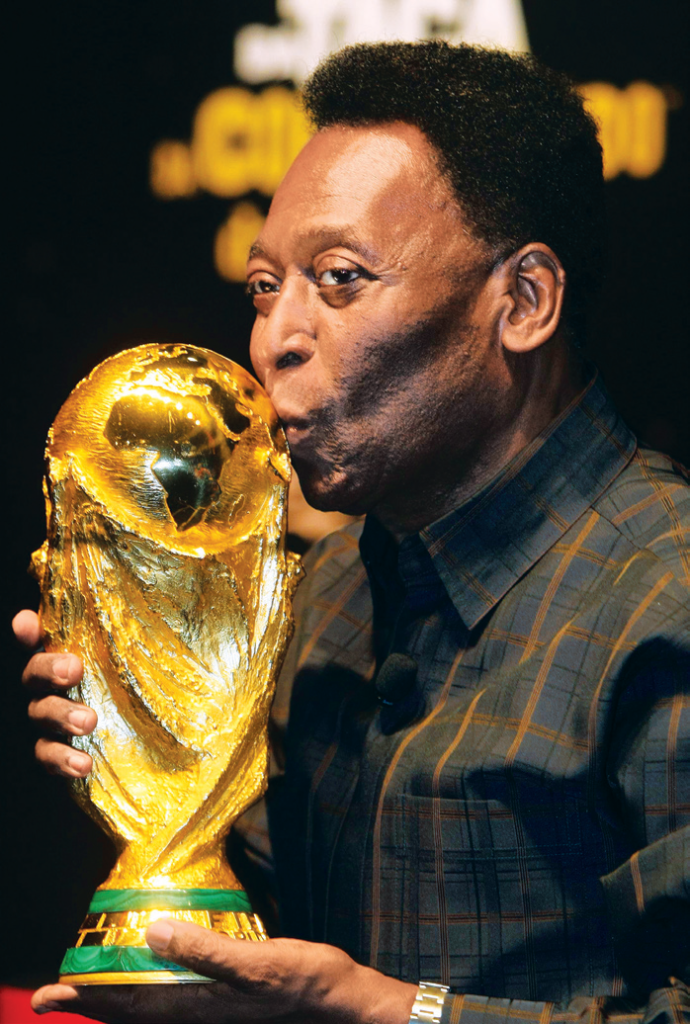
“Group D [Uruguay, Costa Rica, England and Italy] is a very tough group with three very good teams. I would like to see Uruguay get through as I would like to get revenge on them [for 1950]. Italy will always be dangerous, and England are long overdue a good tournament – maybe this is the one where all those talented players will perform to their potential? If they get out of the group they have a chance.
I think for any good team the first challenge is to get to the quarter-finals. Once you’re there, anything can happen, but when you look at Brazil and Germany and Spain, you have to consider that these are the teams which are best placed to win. For England, the quarter-finals would be good. They need to get back the big tournament mentality. I think they are going into tournaments scared. You look at Spain, they go into tournaments expecting to win.
It is no coincidence to see teams going through phases of not being able to cope with tournaments – France and Spain have both been very good and very bad in the past 20 years. It’s not just about the players – it’s about the mentality. When you’re winning, you believe you can win the game after that, and the game after that. When you’re losing, it’s sometimes difficult to see where your next victory will come from.”
Q: How do you think Brazil will fare? Will they be knocked out?
“It’s okay if they do. I would be happy to see any team win if they play the game the right way and it is a good final. But I would prefer it if Argentina did not win! That would be the worst nightmare of every Brazilian! You can never tell because football is a game and it is unpredictable but I think Brazil can win. I have no doubt that Brazil has the best players and hopefully the coach Luiz Felipe Scolari can make a winning team again, as he did in 2002. Home advantage will certainly count for something. The crowd support will make it harder for the other teams. Many people view the World Cup as in some way linked to Brazil, so to be welcoming it to South America is really very special. I’m not sure when the next time will be that we get to host something of this magnitude in terms of a football event. As a country, we feel very lucky at the moment.”
Q: Do you feel football has changed over the years?
“On the pitch in 20 years, it will be the same as when I played, there is not much difference. I could play today and be the same as I was – it might be even easier. The referee protects the ability of forwards now – we never got that – so on the pitch it is the same. I think it is off the pitch that the game has changed and will continue to change. Players earn so much money now that you worry if they are still in touch with what it means for the normal football fan to watch football. In many cases, the players do realise – but I fear in some, they are too detached now. There is also the technology argument. I want the game to remain as it is.”
Q: What was your best moment in football?
“God gave me three. I always wanted to say goodbye as a champion and in that way, I have luck. When I came back in 1970, I knew it would be my last World Cup. With Santos it was the same. In my last year, ’74, Santos won and I was the top scorer in the league. Then, I was in New York for three years and I knew ’77 would be my last season. So I said: ‘Oh God, I cannot leave here without being a champion, we must win this tournament!’ These were the best moments.”
“I do not think regrets in football or in life are a good thing to have. I am very proud and extremely grateful for the career I had, and that is probably enough.“

