In collaboration with PASSIONS, VOICE OF ASIA is proud to present timeless articles from the archives, reproduced digitally for your reading pleasure. Originally published in PASSIONS Volume 53 in 2013, we present this story on The World of Mozart, we present this story on the World of Mozart, and how the musical genius’ influence shaped the culture of his hometown of Salzburg.
People enjoy Baroque architecture for its use of motion and exaggeration to tell a story of drama, grandeur and tension, and classical music for its incorporation of literature into music form – writing the ‘score’, which is essentially the story of the song, and then writing the system with which all the musical instruments work in complex coordination. A great way to enjoy both classical styles of art is to visit the charming Austrian town of Salzburg, the birthplace of Mozart.
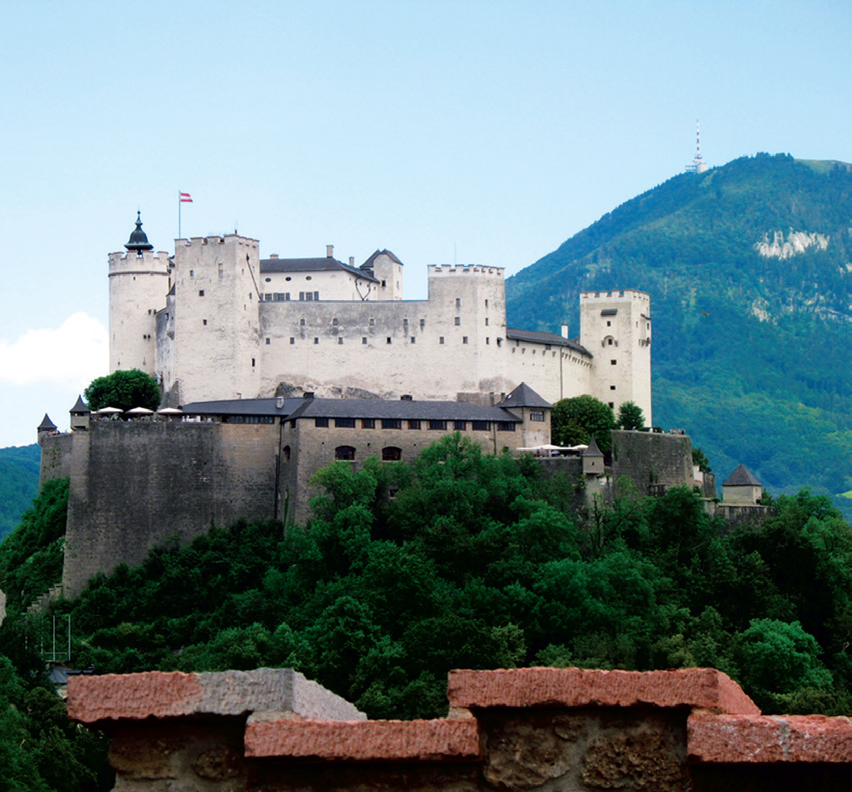
Salzburg, which means ‘Salt Castle,’ got its name from the salt-carrying barges on the Salzach River that were subjected to a toll during the 8th century. When you visit the city, you are greeted at once by its old-world charm and its attractive Alpine scenery. It is one of the best-preserved cities on the list of UNESCO World Heritage Sites, and is well-known for its Italianate baroque architecture. Walking through the city is like experiencing history; the Salzburg Cathedral in Altstadt, or ‘Old Town’ is one of three arches that make up the popular square with St. Peter’s Abbey and Salzburg Residenz. Restoration work is visible around these buildings as artisans try to rebuild the parts that are affected by history and time. The fortress halls, the chapel, the staterooms of the 17th century palace of archbishops, the festival complex, and the art galleries with the work of 20th century artists like Kokoschka, Kubin and Schiele are all open to the public.
The Prodigious Son
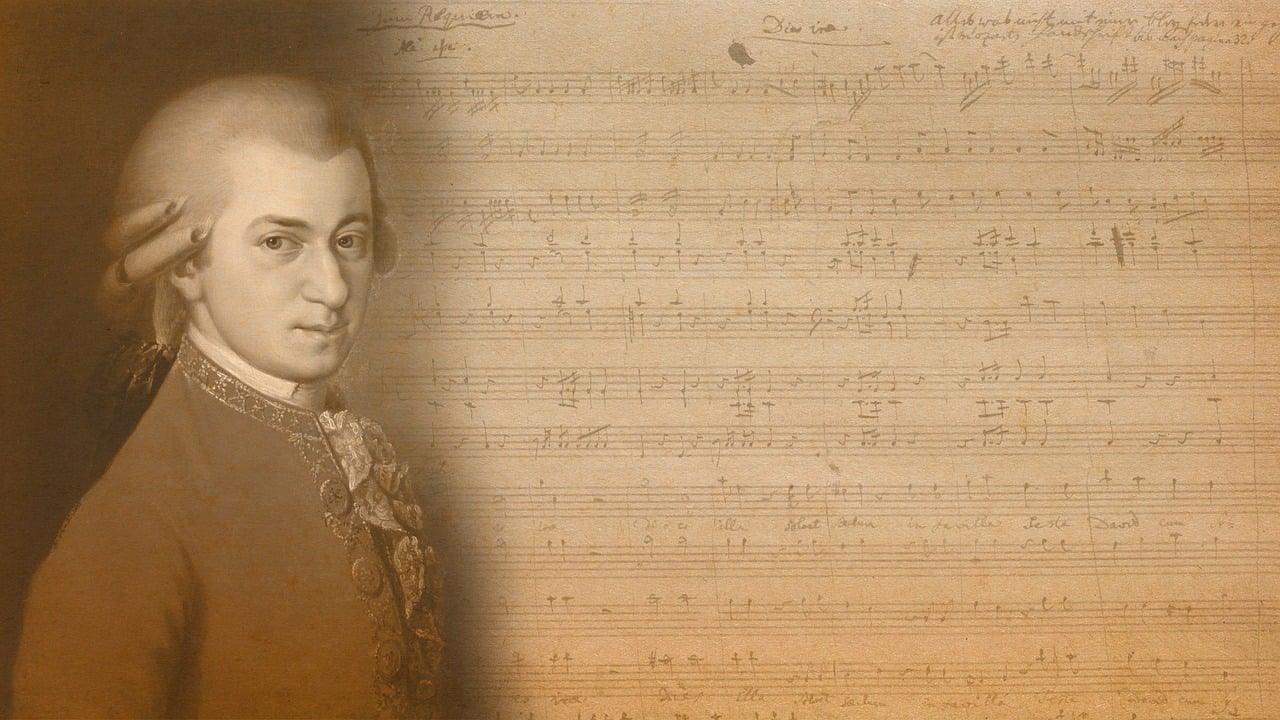
The charming town is best known for being the birthplace of Wolfgang Amadeus Mozart, one of the most talented musical composers of all time. When he was born, Salzburg’s political leadership was concentrated on the wealthy residents of the city, who would also commission the arts, music and entertainment. Music at the time was transitioning from the Renaissance to more complex compositions, and Mozart’s father Leopold was a composer, violinist, and concert master. It was in this inspiring musical environment that Mozart was raised.
He first exhibited signs of musical genius when, at only 3 years old, he showed an understanding of chords, tonality, and tempo. Mozart and his sister were trained early on by their father, and the siblings continued to play music and travel to places like Paris, London and Zurich to perform under his supervision.
Mozart began on the violin, composing 5 concertos before turning to the piano. At the age of 21, he composed the Piano Concerto Number 9 in E Flat Major and eventually became absorbed by Baroque-style compositions under the influence of such greats as Johannes Sebastian Bach and George Frederic Handel. Fans of Mozart have described his music as subtle in its complexity while exuding simplicity and purity. He produced compelling melodies, and maximised the very precise system of classical music staff notation to employ sound-layering, and evoke joy and melancholy. He also excelled in every classical sub-genre he composed in – concerto, sonata, symphony, and opera.
The Sound of Music
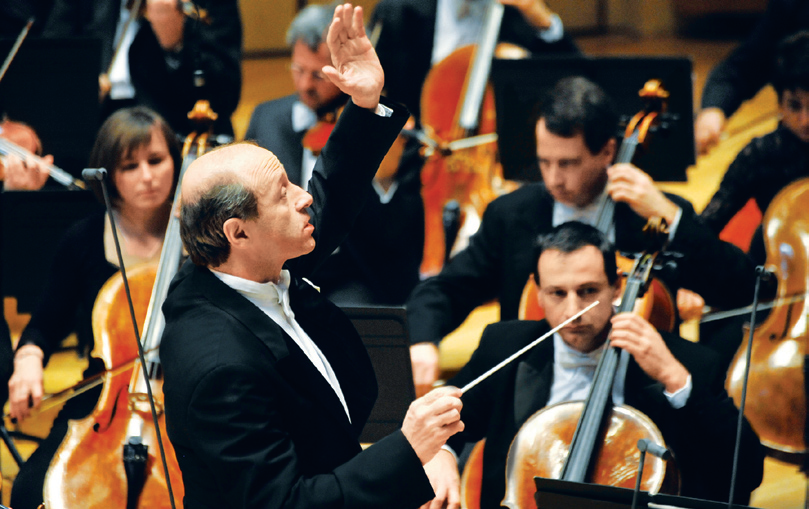
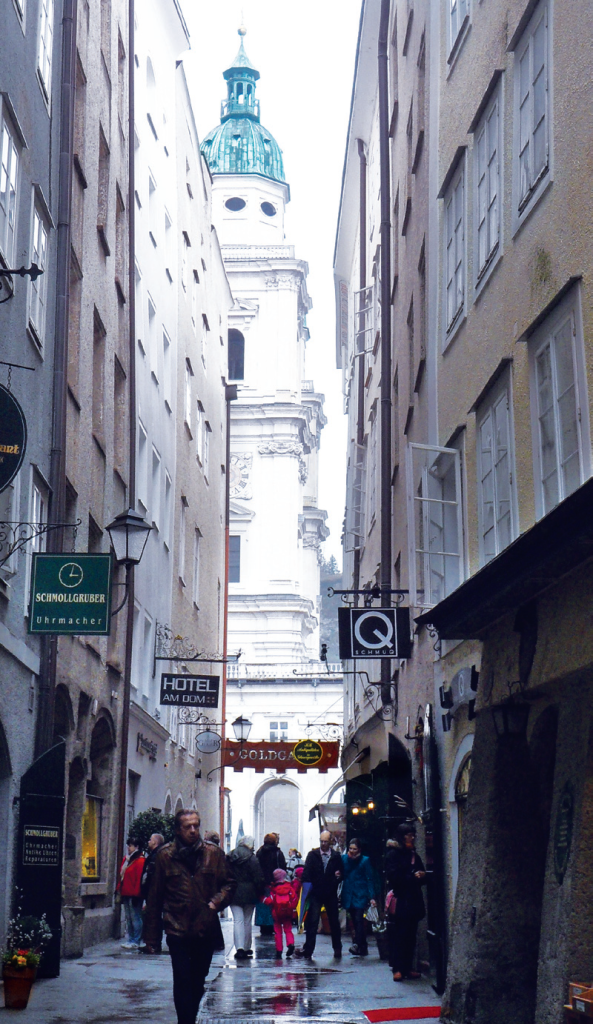
Salzburg continues to pay tribute to Mozart. One of the oldest and busiest streets in the city is the Getreidegasse Street, where Mozart was born and where he lived until the age of 17. The Mozartkugel, or Mozart ball, is a pistachio marzipan chocolate produced by Salzburg confectioner Paul Furst who named it after the composer. The confectionery still produces the Mozartkugel by hand using the original recipe. In the summer, the Salzburg Festspiele runs from July until September, a music festival that includes performances of Mozart’s work. And most of all, Salzburg still holds tribute concerts in the city, with events like The Mozart Week every January where the music reprises Mozart’s most famous compositions and piano sonatas.
Musical lovers will enjoy visiting the film settings of The Sound of Music which was shot in Salzburg. The picturesque hills and mountains, the gardens of Schloss Mirabell, and the district of Aigen where the Von Trapp family home is located, are all featured in the multiple-award winning film.
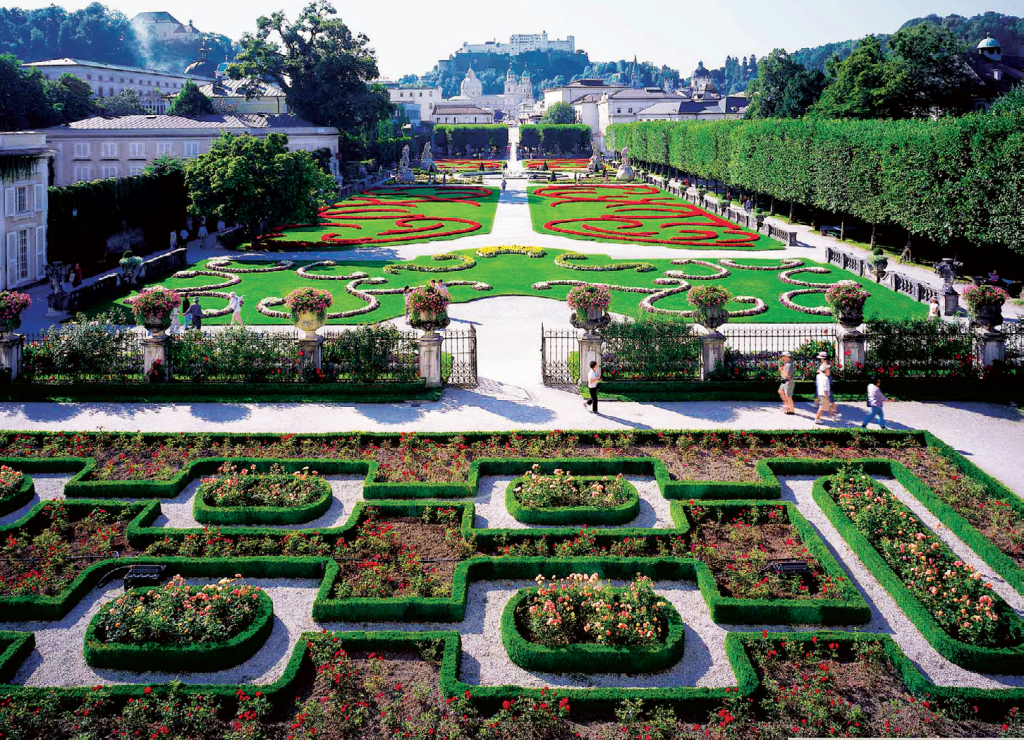
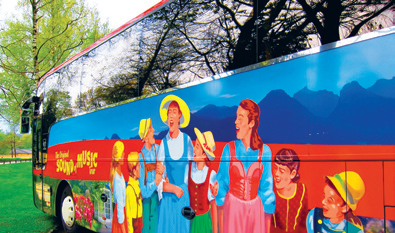
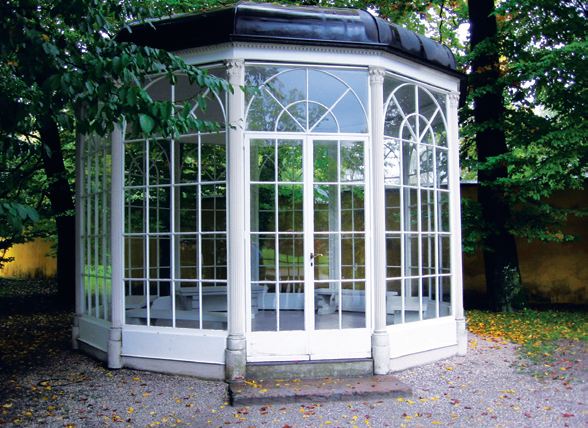
Mozart’s musical compositions echo Salzburg’s architecture in its boldness and complexity, and together, both the city and the musician have become synonymous with each other, defining and retaining the qualities that make them a favourite for enthusiasts of European architecture, pure classical music, and old world charm.
MOZART THE MASTERPIECES
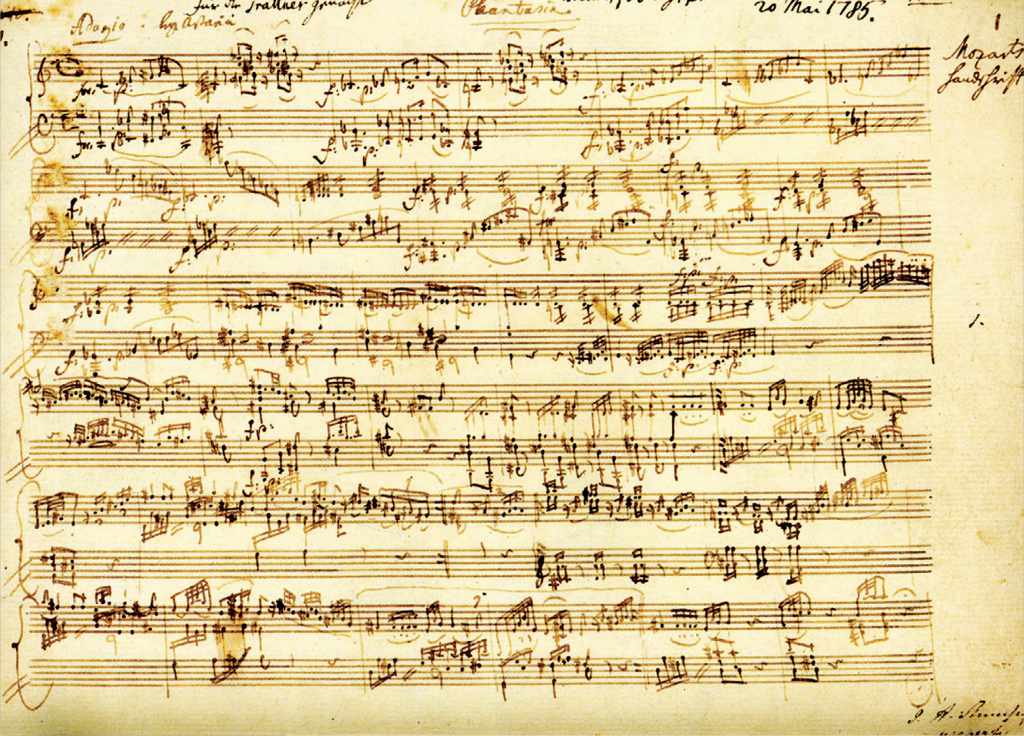
Mozart was a true performer. His passion is evident in the complexity of his compositions, the volume and range of his work, and the way he layers sounds and musical instruments to elicit specific emotions. Here is a sample of some of his most famous pieces in the different styles and genres he mastered.
1. Clarinet Concerto in A
The only concerto he wrote for the clarinet is also the most famous of his concertos for its striking and mature sounds. An instrumental, it was written for clarinettist Anton Stadler in the fast-slow-fast form of three movements: allegro, adagio, rondo: allegro. It was also one of his final compositions before he died.
2. Piano Sonata No. 11
This three-movement sonata consists of a theme with six variations (andante grazioso), a minuet and trio (menuetto), and an allegretto called Alla Turca, also known as the “Turkish Rondo”. At the time, Turkish Janissary bands were popular, and their music influenced some of Mozart’s compositions. This piano sonata is one of his best-known piano pieces.
3. Symphony No. 41
The last symphony that Mozart composed was also the longest. Sir George Grove, the first director of the Royal College of Music, wrote that it was the greatest orchestral work in the world. The symphony’s four movements are arranged in the traditional Classical form, and incorporate flutes, oboes, bassoons, horns in C, trumpets in C, timpani in C and G, and strings.
4. Don Giovanni
Arguably Mozart’s most popular opera, Don Giovanni has a score with the usual strings, timpani, double woodwinds, horns, trumpets, and trombones, but also requires occasional, specific musical effects such as 3 onstage ensembles for the ballroom dance scene, and the mandolin for the second act. It is one of his most extravagant compositions, and contains elements of comedy, melodrama, and the supernatural.