

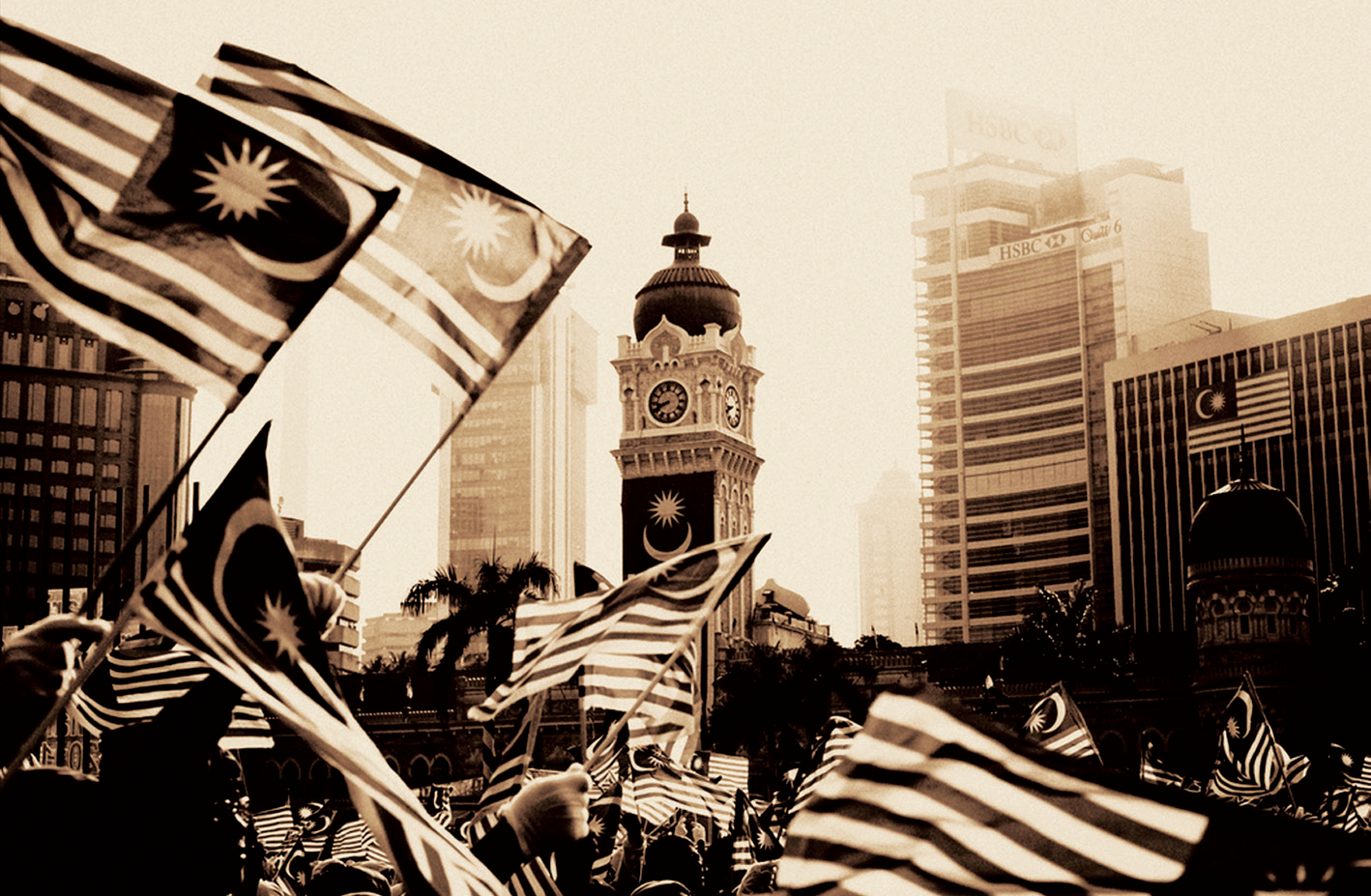
In collaboration with PASSIONS, VOICE OF ASIA is proud to present timeless articles from the archives, reproduced digitally for your reading pleasure. Originally published in PASSIONS Volume 52 in 2014, we present this story on Malaysia, and the rich history we have, to learn from the past to build a greater tomorrow.
For many, Malaysia is a multi-ethnic, multi-cultural nation, and that is very true. What is not as well-known though is that Malaysia’s cultural history is far richer, far more unified than popularly thought. far from being a land where different cultures seem to exist in their own little spheres, there is a Malaysian culture that is an amalgamation of three major civilisations – China, India and Arabic.
In the world today, where the first two nations have emerged as economic superpowers, Malaysia could have leveraged on this shared heritage, allied herself to them, and capitalised on this rich, shared history.
Little is mentioned of this in our history text books, and for many young Malaysians, the story of our homeland only starts at the 15th century. But it goes far, far beyond that, and the greatest shame is that when we forget our past, our real past, we weaken the foundations on which we can build the future.
There is more to Malaysia than what we superficially see, there is so much more to be proud of and there are so many roads to walk down together. Understanding our history makes us forge greater strength together, to learn from mistakes and move forward with confidence. In this edition of PASSIONS, we delve into the past and give you… The Story of Malaysia.
Children of India
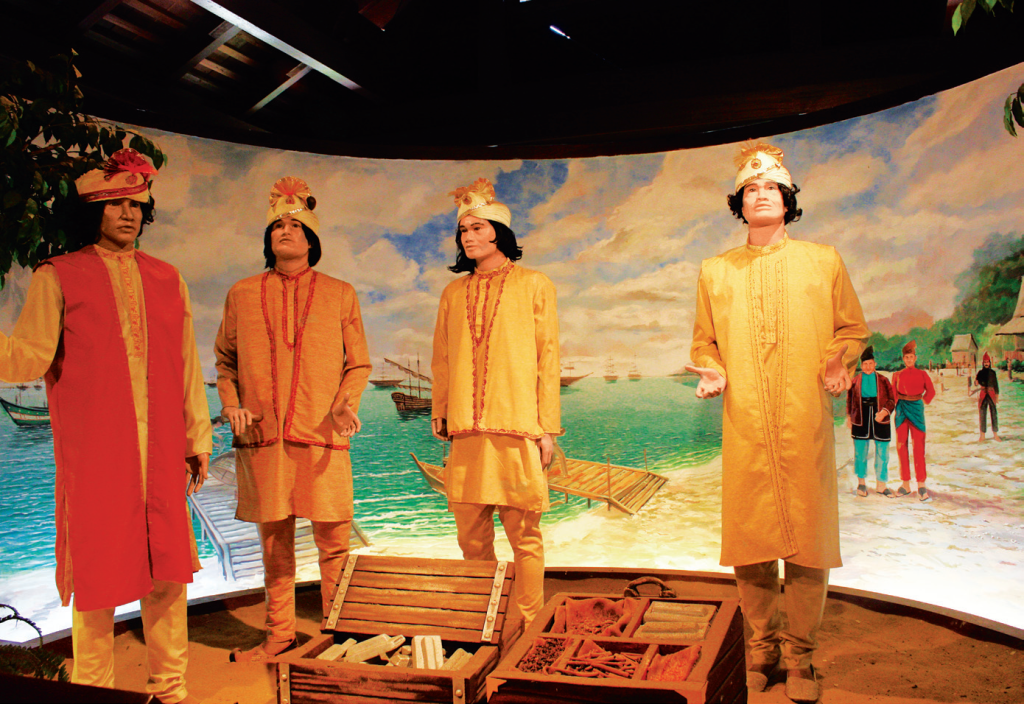
There are certain truisms that we need to acknowledge, not least of all is the fact that Malaysian and Southeast Asian culture as a whole was not developed in a vacuum. Instead, much is owed to India, as it was from there that Hindu-Buddhist influences were first introduced to these shores in the 1st century BC. Brought here mostly by traders; the influx lasted until the 15th century AD, and resulted in the Indianisation of the kingdoms in the region.
These kingdoms are considered by historians to have formed, along with the Indian subcontinent, “Greater India” – a term first used by European explorers in the 15th century. It is generally agreed that the earliest of these kingdoms were established in the 2nd century AD, and included the likes of Gangga Negara and Langkasuka, as well as Pan Pan in the 3rd century. All of these kingdoms were located in the area which today comprises northern Peninsular Malaysia and southern Thailand.
While it may be rather impressive that Indian culture has been part and parcel of society here for more than 2,000 years, its Indian roots are even older than that. In fact, in 2009, the Human Genome Organisation discovered that the first people in the region had arrived here after having migrated from India around 2500 and 1500 BC.
Indian cultural heritage runs visibly deep in the region’s history and language. Rulers in Malaya and elsewhere in Southeast Asia enthusiastically adopted elements of rajadharma (Hindu and Buddhist beliefs, codes, and court practices) to legitimise their own rule. It was here that the concept of devarāja (divine king) was created, helped by rites performed by Brahmins from India. The kings also constructed cities such as Angkor in Cambodia – the design of which were influenced by the cities of the great Indian epics Mahabhrata and Ramayana. Incidentally, these works of literary magnificence also formed the basis of early Malay literature.
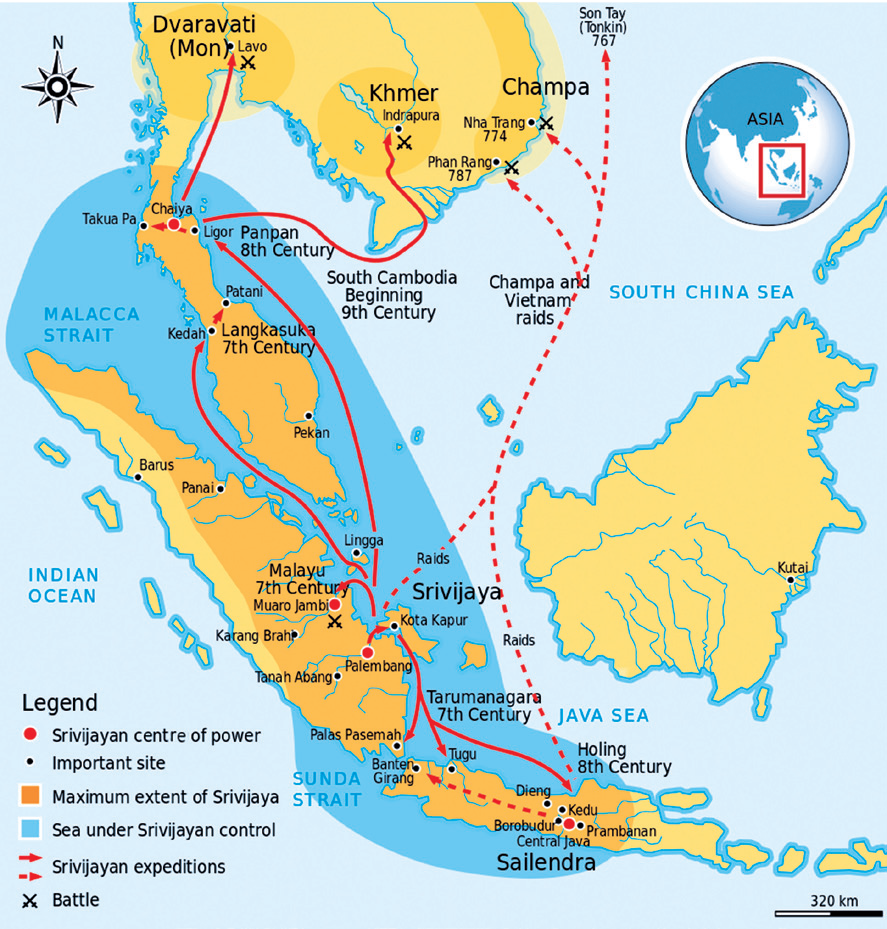
As time went on, the Malay territories including the older states such as Langkasuka came under the sway of the 6th century Sumatran kingdom of Srivijaya. A major maritime power, the kingdom also became instrumental in the spread of Buddhism throughout the region, with over a thousand monks in the capital of Palembang.
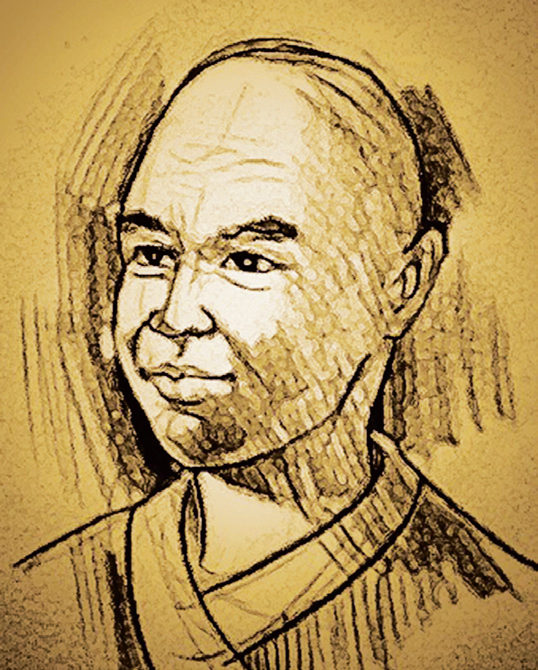
Over its history, the city attracted many pilgrims and scholars such as the famous Chinese monk I Ching (Yijing), who translated many scriptures from Sanskrit to Chinese and whose writings make up a great deal of what is known of Srivijaya today, and the Bengali teacher Atiāa, one of the major figures in the establishment of the Sarma Buddhist schools in Tibet after the repression of Buddhism there by King Langdarma (Glang Darma). A tantalising indicator of the buried Srivijaya presence in Malaysia is the Kota Gelanggi archaeological site in Johor, which was brought to the forefront of public consciousness by media coverage in 2005 but has yet to be properly excavated.
The overt influence of Indian states in Southeast Asia extended well into the 10th century. This was demonstrated in a particularly dramatic fashion in 1025, when Rajendra Chola I of the Chola Empire launched a naval expedition to subdue the Srivijaya, raiding and seizing numerous ports around the Malay peninsula and Indonesian archipelago.
Origins of a Great Sultanate
In the late 13th century, Srivijaya fell and was replaced by the Majapahit empire, through which Hindu-Buddhist power was retained up to the 16th century. Over the following years, several Srivijayan princes attempted to resurrect the old kingdom. One of them, an Indian or Indo-Malay ruler named Parameswara (also known as Iskandar Shah) went on to found Melaka, the trading port which became the most prominent Malayan sultanate.
Though lacking in domestic goods, Melaka achieved great economic and political clout thanks to its strategic location between India and China, with many merchants from both countries arriving to trade with one another and the surrounding kingdoms. The present-day Perak sultanate traces its lineage to the sultans of Melaka, and thus to Parameswara – thus creating another link between Indian and Malay heritage.
Eager to secure his new kingdom’s position, Parameswara established close diplomatic ties with China, cemented by diplomatic visits including the voyages of the famed Admiral Zheng He, who made numerous stops at Melaka on his great voyages, and a visit by Parameswara himself to the court of the Ming dynasty’s emperor in 1411.The partnership between China and Melaka would later prove invaluable in securing the latter’s security against the ambitions of Ayutthaya, the Siamese kingdom to the north.
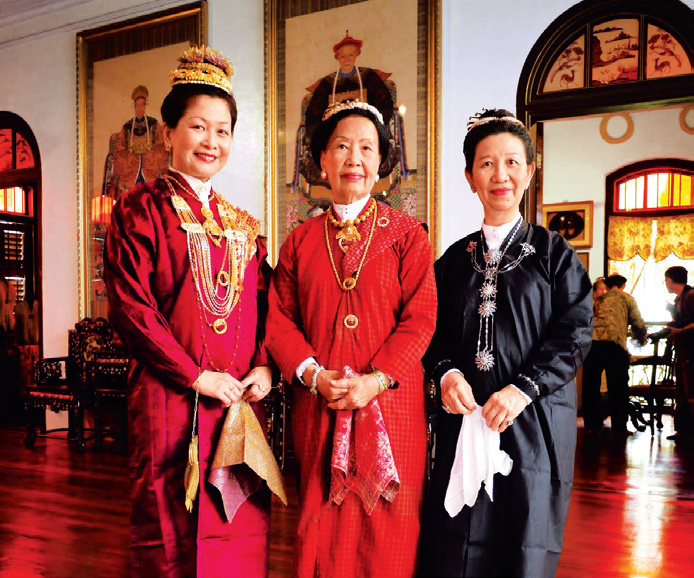
During this time, there was considerable Chinese immigration to Melaka, including the marriage of the princess Hang Li Po to the sixth Sultan, Mansur Shah (reigned 1459 – 1477). Hang Li Po and her entourage settled near what is now Bukit Cina, forming a community that developed through intermarriage into what are now known as the Peranakan people. They were not the only ones though. The Chitties – traders from Tamil Nadu in India – also made their home in Melaka during this time, and adopted the local customs and language.
Interestingly enough, the Melaka-China relationship was not the first interaction of its kind between a Malay kingdom and China. Kedah for instance had already been sending delegations to China for trade and diplomacy since the 7th century. Nevertheless, the Melakan experience was of great importance to the development of the socio-cultural make-up of the land. Melaka not only saw the convergence of trade between the Malay archipelago, India and China, but also a confluence of culture, interwoven into the very fabric of its society. In this, it foreshadowed the Malaysia of half a millennium in the future.
The Spread of Islam
Today, Islam is the dominant religion in Malaysia – practised by more than 60% of the population, and bestowed the status of being ‘the religion of the Federation’ in the Constitution. Yet, little is taught about its spread. Some have said that the early influences came from the Middle-East. However, the truth is much closer to home.
Following the disintegration of the Hindu Srivijaya, Islam began to enter the region, brought by Indian Muslim traders from Gujarat and south India. Interestingly, another person credited by parties such as Indonesian Islamic scholar Hamka with the spread of Islam in the region is Zheng He, who is said to have established Chinese Muslim communities in Palembang and along the shores of Java, the Malay Peninsula, and the Philippines.
There is some speculation that Parameswara was converted late in his life, but evidence indicates that he retained his existing faith until his death. In any case, the Islamisation and establishment of the sultanate only becomes certain by the time of the fifth ruler, Sultan Muzaffar Shah (reigned 1445 – 1459).
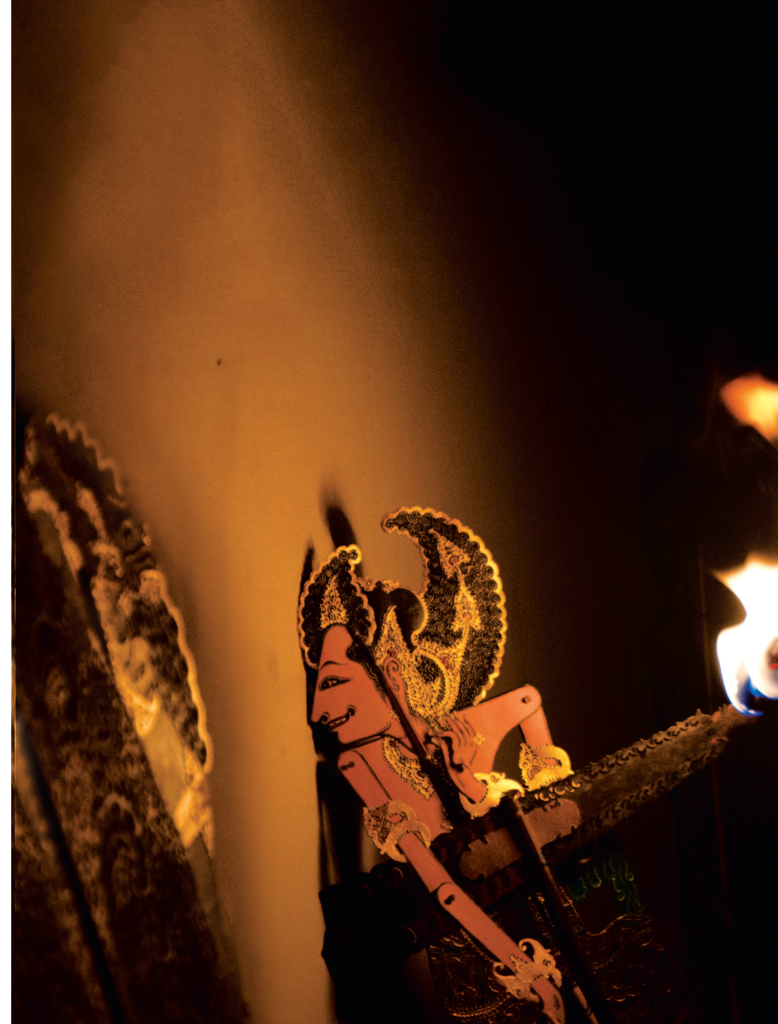
Of particular note concerning the Islamisation of the region is the way in which native cultural traditions were retained and incorporated into the new synthesis culture. Examples include the Javanese shadow puppet (wayang kulit) plays that were originally based on the Hindu epics, and the traditional dance-drama makyong practiced in northern Malaysia (particularly Kelantan) with animist and Hindu-Buddhist roots. Even in modern Malay, certain Islamic, monotheistic concepts are named or described in Sanskrit, often Hinduistic terms rather than Arabic equivalents, e.g. syurga (heaven), neraka (hell), puasa (fast) and sembahyang (prayer).
Language, Fabric and Motion
The reader who happens to be proficient in Sanskrit will no doubt have noticed by now the large number of Sanskrit names in the region’s history – an inevitability given the cultural origins involved. Take Langkasuka for instance: langkha for “resplendent land” and -sukkha for “bliss.” Likewise, Srivijaya means “fortunate”, “prosperous”, or “happy” (sri) and “victorious” or “excellence” (vijaya). Even Parameswara takes his name/title from Parameshwara, the Hindu concept of the Supreme God.
The Malay and Indonesian languages in general contain a large number of Sanskrit as well as Tamil and Hindi loanwords still in use today –there are up to 750 Sanskrit loanwords in Indonesian and over a thousand in Malay.
These include such everyday and even fundamental terms as agama (religion), bumi (earth), manusia (human being), nama (name) negara (country), roti (bread) and suria (sun). The very name Malaya/Melayu is Tamil in origin – Malai and ur, meaning “mountain” and “city, land” respectively. As described by Sabah Malay language expert Raymond Tombung Boin: “If we speak 10 words of Malay, often seven of them would probably be Sanskrit while the rest may be Tamil, Hindi and Persian, if not Arabic and English, Chinese too.”
The fact that Malay is influenced so much by other languages should be celebrated rather than suppressed, as it demonstrates the richness and diversity of the Malaysian people. Language is a binding force, and if only the powers-that-be had only the wisdom and foresight acknowledged the shared heritage of our national tongue, then we would have been all the much richer for it – both socially and culturally.
Much of what is known today as traditional Malay clothing, too, has roots in India – considerthe unmistakable family resemblance between the Malay sarung and the Indian lungi or dhoti. The heritage runs right down to the textiles used: both batik, the wax-resist dyeing technique, and the patterning with gold or silver threads that defines songket, are likely to have been introduced to Indonesia by Indian traders, following which they found their way to Malaysia.
Symbol of Multiculturalism
It will likely surprise many Malaysians, even those familiar with history, to learn that two symbols that have conventionally been held as exclusively Malay – Hang Tuah and the keris – in fact reflect, as shown by scholar Farish A. Noor, the region’s rich cosmopolitan history and traditions.
Although prototypical keris have been found in the early history of Southeast Asia, with a 1st century example from Dong S’on in Vietnam, it was during the height of Hindu-Buddhist influence in the region that the keris established itself as a lasting cultural symbol. The Indo-Malay craftsmen adopted the symbolism of the Hindu cults of Vishnu and Shiva into their designs, sculpting designs such as the garuda, the steed of Vishnu, and the trunk of Ganesh, elephant-headed son of Shiva.
With the rise of Islam in the region, the keris underwent further physical and cultural evolution, becoming a true cultural hybrid. Chinese and Japanese motifs were also popular in the designs during this period, such as being hollow-carved in ivory in the same fashion and decorated with bird and floral motifs such as peonies and chrysanthemums, which would not look amiss in Shanghai.
The mystical attributes were further emphasised – Hang Tuah’s Taming Sari is described in the Sejarah Melayu (Malay Annals) of taking to the air in search of the kingdom’s enemies. As time went by, however, Islamic design began to edge out the older Hindu-Buddhist elements. With the creep of foreign armaments from India, the Arab world and Europe into the region, a new emphasis was placed on the keris’s utility as a weapon. Meanwhile, devout Muslims objected to the prominent religious symbols common on hilts, which were subsequently stripped of Hindu elements or displaced by floral and geometric motifs.
Hero’s Global Outlook
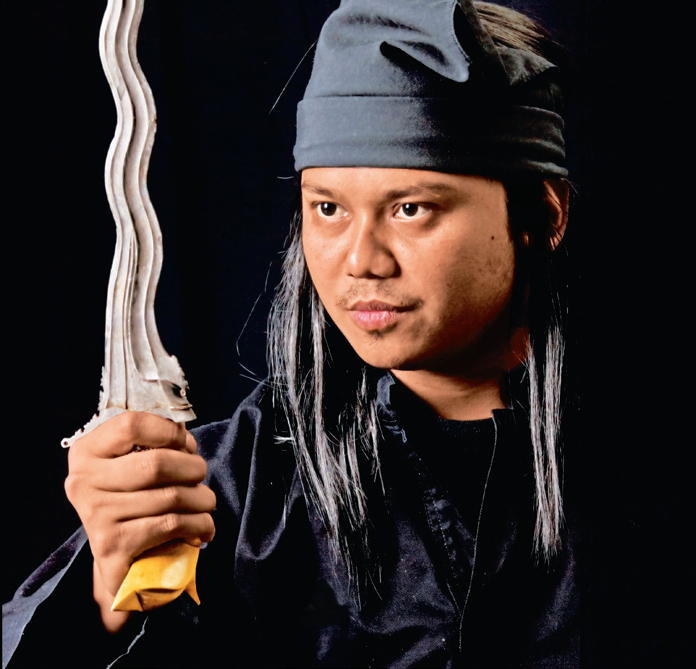
Most knowledge of Hang Tuah, the legendary Malay hero, is taken from the first half of the Hikayat Hang Tuah, with Tuah as a completely loyal, ruthless warrior. Few know of the other half of the story: Hang Tuah as a diplomat who eventually becomes an ascetic.
The Hikayat is ultimately a story of multicultural acceptance and openness to the world. In the second half, it describes Tuah serving as the sultan’s emissary to India, where he demonstrates his cosmopolitan persona by spending time visiting Hindu temples and admiring the native architecture, and by agreeing to act as the king’s envoy to China.
In China, Tuah eschews petty nationalism and racialism by freely representing himself both as a servant of both the Sultan of Melaka and the king of India. He further proves his international outlook by demonstrating knowledge of Chinese customs and again takes the time to immerse himself in the local culture. Amply demonstrated to be a man of the world, Tuah’s story in the Hikayat takes him on more globe-trotting diplomatic journeys to Siam, Egypt and the Ottoman Empire.
Hang Tuah is commonly quoted in modern times as saying “tak kan Melayu hilang di dunia,” which is commonly interpreted as saying “the Malays will never disappear from the earth.” As Farish Noor notes, however, a superior reading may well go “the Malays need never feel lost in the world.”
Colonial Turbulence
As one can see, for centuries, the three ethnic groups that make up Malaysia today were living together in harmony. The question that needs to be asked is, “What happened?” and the short and simple answer is, “The British arrived”. With the emergence of British colonialism, the socio-cultural landscape was turned upside down.
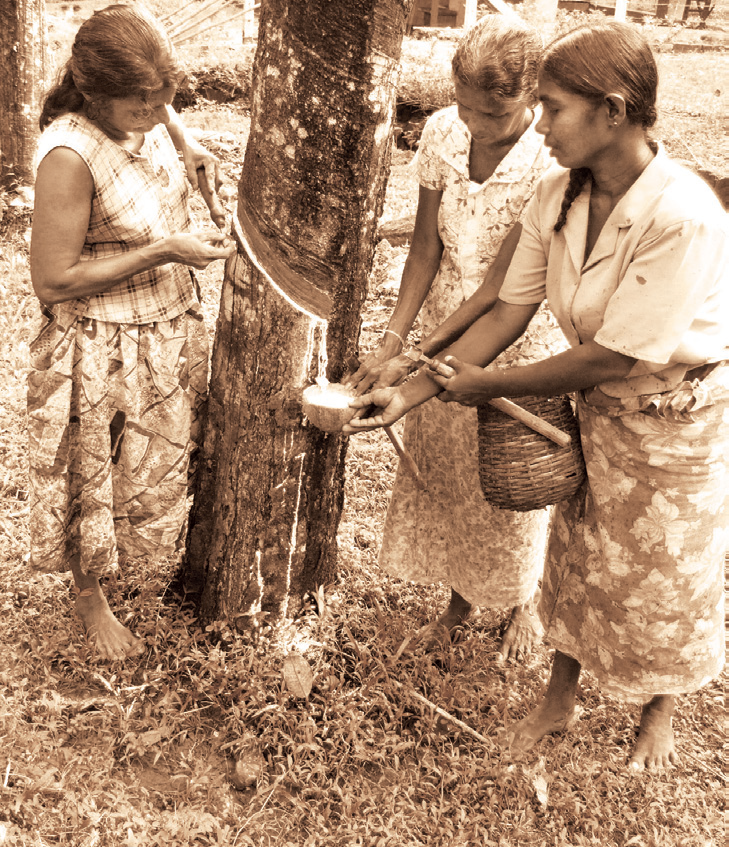
Some have said that the problem was contributed to by the British encouraging large-scale migration of either free or indentured labourers from China and India, particularly to work in the tine mines, then later the rubber plantations, and also in the building of roads, railways lines, and ports. However, to blame this second wave of migrants is to blame the victim for the crime.
The real fault laid in the British colonial administrators and their very conscious failure to bring these disparate ethnic groups together, preferring instead of keep that apart using the strategy of ‘divide and rule’. It was not done out of ignorance, but part and parcel of London’s colonial policy, as a people divided cannot rise up against them. Indeed, the situation in British Malaya was almost ridiculous when looked at with modern lenses, as generally speaking – with a few exceptions – Malays, Chinese and Indians were unable to communicate with one another.
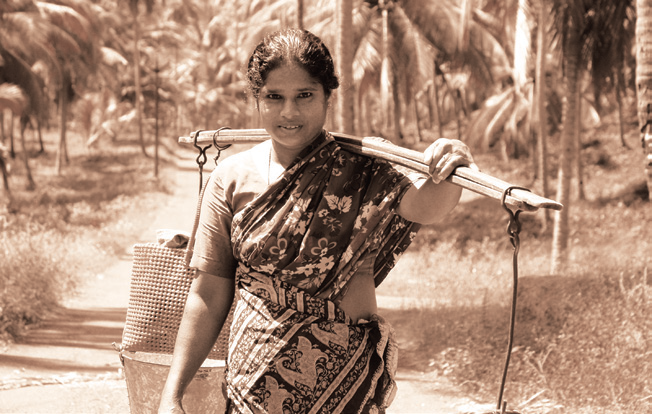
To further their aims, the British created an arbitrary classification of races that relied on hard and fast divisions between racial groups. It is particularly notorious today for foolishness such as (but not limited to) lumping together such disparate groups as Javanese, Dayaks, Bugis and Bataks under the single header of Malays. The reality, of course, is that this system was an artificial construct without biological, social or historical basis. It was completely at odds with the established hybrid, intercultural nature of the Malayan population that had existed for hundreds of years before.
Division also brought about mistrust, and the British did not discourage the surreptitious spread of suspicions that each ethnic group started having for one another. In fact, it suited them as they were able to present themselves as the ‘unifying force’ that is keeping peace in the land, and as the only force capable of protecting the country.
That illusion was broken in December 1941 when Japanese Imperial Army soldiers stormed onto the beach of Kelantan. A particularly disgraceful act was the Fall of Penang, when prior to the Japanese attack, all European residents were secretly evacuated to Singapore.
Penangites of Asian descent – Malays, Chinese, Indians – woke up the next day to find out that they had been betrayed. If there was one catalyst which started multi-ethnic Malayan nationalism, then the failure of the British in protecting the country from the Japanese would be it.
STRAINED,BUT NOT BROKEN
The economic contributions of the Chinese and Indians to nation building cannot be denied. Names such as Yap Ah Loy (founder of modern Kuala Lumpur) instantly conjure images of the labourers doing the backbreaking work of tin mining from which the nation earned a great deal of its early wealth.
Foresighted Sultan Abu Bakar of Johor, recognising the wealth-generating potential of the Chinese, brought considerable revenue to the state through the Chinese-run river plantations of pepper and gambier. The Indians, too, worked hard not just on the rubber plantations but also on the roads, railways, and ports, not to mention the civil service and the medical profession – the infrastructure on which the wealth and health of the nation rest.
Malaysia’s development continued apace under the watch of great businessmen such as Chung Keng Quee, the founder of Taiping and introducer of mechanised mining methods, and Loke Yew, who was not only responsible for a good degree of Kuala Lumpur’s economic development but also made many philanthropic contributions and co-founded the elite Victoria Institution.
In more recent times, Lim Goh Tong turned an unexplored hilltop into the world-renown Genting Resort. He is one of the many Chinese people who has made great national contributions. All in all, Malaysian Chinese today – making up 25% of the population – are estimated to contribute to 60% of the GDP, as noted by the Asia Sentinel.
Ironically, Malaysia’s post-colonial leaders had not only continued but also aggravated ethnic divisions. Though some farsighted individuals like Datuk Onn Ja’afar attempted to bring a common, non-racial system to the table, Malaysian politics has been controlled since its inception, starting with Tunku Abdul Rahman, by the notion of separate-but-equal parties and groups (with some being, naturally, more equal than others) and nigh-universal placing of everything in the context of race and religion.
A New Malaysia
Undoubtedly, the contributions of China and India to Malaysia’s cultural heritage have been little-discussed, some might even say suppressed. The same can be said about the truth behind the coming of ethnic Chinese and ethnic Indians to the country. As we can see, it did not just happen in the 19th century, but way beyond that.
Over the last five years or so, racial lines have been slowly blurred, and ethnic identity is no longer primary for many. Today, more and more urban youths are looking at themselves as being Malaysian rather than Malay, Chinese or Indian first. For them, only the most recalcitrant persons will look at themselves otherwise.
What history shows us when examined in depth is that, Malays, indians and Chinese in Malaysia are, on one level, a single common race. as we bridge the gap between cultural and social history, and look at all Malaysians as one race and not splinters of foreigners, the wall will fall, and a brave new world of Malaysia will rise up – a Malaysia with a past, present and future for all Malaysians.

