

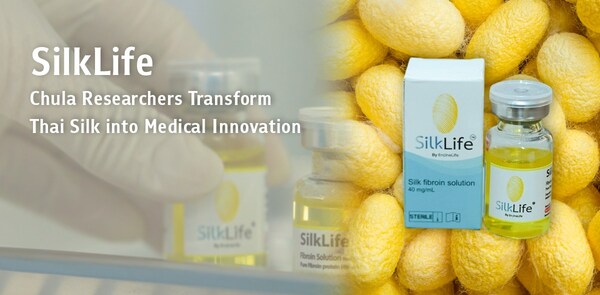
BANGKOK, Feb. 10, 2026 /PRNewswire/ — Researchers at Chulalongkorn University are redefining the role of Thai silk by developing silk protein into a versatile platform for medical products, aiming to reduce Thailand’s reliance on imported biomaterials while creating sustainable income for farmers.
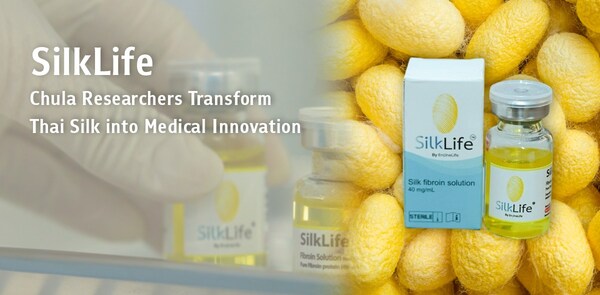
SilkLife: Chula Researchers Transform Thai Silk into Medical Innovation
The SilkLife research project, led by Associate Professor Dr. Juthamas Ratanavaraporn of the Faculty of Engineering, converts silk protein into various medical applications, including pain-relief and sleep-aid patches, artificial tissues, and injectable joint gels. The initiative addresses a key challenge facing Thailand’s rapidly expanding medical industry, which still depends heavily on imported materials such as collagen and hyaluronic acid.
Thai silk, traditionally valued as a cultural heritage textile, possesses unique biomedical properties. Its primary protein, fibroin, is naturally strong, biocompatible, and safely degrades into amino acids in the body. Unlike silk from other countries, Thai silk has a natural golden hue and a hydrophobic molecular structure, enabling it to bind effectively with certain drug compounds and making it suitable for targeted drug delivery systems.
The SilkLife project adopts a comprehensive approach spanning the entire value chain. The research team established an organic silkworm farming model on five rai of land in Ratchaburi province, certified under Thailand’s organic agriculture standards. Controlled, closed-system rearing facilities—certified under Thai Agricultural Standard 8203—ensure consistent quality year-round. Contract farmers are trained to follow strict operating procedures to minimize contamination.
High-quality cocoons are processed at a pilot plant meeting ISO 13485 manufacturing standards and ISO 10993 medical safety standards. Achieving medical-grade silk protein requires three to four years of development from upstream farming to midstream processing.
Initial products focus on external use to build safety and market confidence, including hydrogel skin patches that release herbal pain-relief compounds for up to eight hours, and CBD sleep patches designed as an alternative to high-dose oral administration. More advanced applications include biodegradable scaffolds for dental and tissue regeneration and injectable silk-based joint gels now entering early-stage clinical trials at King Chulalongkorn Memorial Hospital.
Beyond medical innovation, the project delivers economic impact. Participating farmers can sell medical-grade silk cocoons at prices several times higher than conventional market rates. Researchers emphasize that Silklife’s platform approach allows a single material to be developed into dozens of products, positioning Thai silk as a competitive, homegrown alternative in global medical markets.
Read the full article at https://www.chula.ac.th/en/highlight/285235/
Media Contact:
Chula Communication Center
Email: Pataraporn.r@chula.ac.th

