

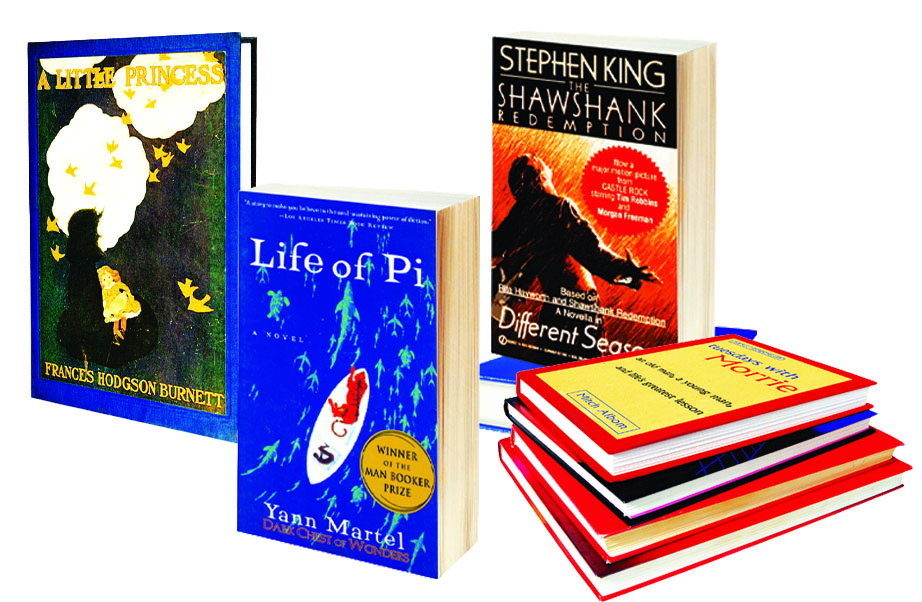
In collaboration with High Life: Living the Good Life, VOICE OF ASIA is proud to present timeless articles from the archives, reproduced digitally for your reading pleasure. Originally published in High Life Volume 2 in 2013, we present this story on some of the most critically acclaimed books that can lift your spirits.
When you turn the final page of a work of art, it feels as if you are saying goodbye to an old friend. You are submerged in a place where the real world does not intrude, one that holds you in the throes of gripping tales of wonder, optimism, whimsy and extraordinary feats of ordinary people. Be it a recollection of friendship and the hope that accompanies it, a triumph of the human spirit when all seems lost or lessons on life from someone at the very edge, a work of art captures the very essence of the human psyche in but a few engrossing pages.
Yann Martel, Life of Pi
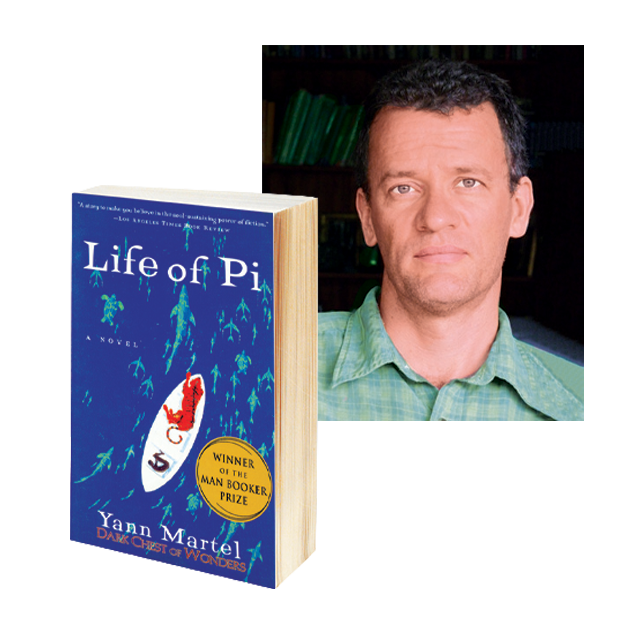
In an interview, Yann Martel stated that the theme of Life of Pi could be captured in three simple lines. Life is a story. You can choose your story. A story with an imaginative overlay is the better story. Life of Pi is an inventive tale of a young Indian boy who is the sole human survivor of a sunken Japanese cargo ship. We stress the “human”, because with him on the lifeboat are a wounded zebra, a melancholic orang-utan, a hyena that hasn’t had a meal in days and a 450-pound Bengal tiger.
This book has garned high praise and also spawned a movie about Piscine Molitor Patel, otherwise known as Pi, and his 227-day voyage in the middle of the Pacific Ocean, having to rely on his survival instincts and indomitable will to handle Richard Parker, the Bengal tiger he has come to know as a fellow castaway. The novel also deals with the multiple facets of Christianity, Islam and Hinduism. When Pi is questioned about all these beliefs, he replies with a meek “I just want to love God.”
In the end, this is not merely a novel about how a boy and a tiger live together in a lifeboat, like some defunct reality show. It is ultimately about grasping at the very threads of bare hope, clutching with both hands and trying not to give in, in the face of an the overpowering urge to do so. Despite so much tragedy and despair, beauty can be found in the simplest things, like the death throes of a dorado, the arrogant posture of Richard Parker and the single, calming eye of a blue whale. What is truly portrayed best in this book is that the story with the imaginative overlay is the one with the most truth.
Stephen King, The Shawshank Redemption

“I hope Andy is down there. I hope I can make it across the border. I hope to see my friend and shake his hand. I hope the Pacific is as blue as it has been in my dreams. I hope.” In this stunning tale by Stephen King in the compendium Different Seasons, we are overcome by the blind hope of Andy Dufresne, a falsely convicted man who has refused to let his spirit succumb to prison life. Narrated by fellow prisoner Red, this acclaimed story led to an award-winning movie starring Morgan Freeman and Tim Robbins.
The law, saviour of civilians and enemy of the guilty, has failed Andy Dufresne, a calm and confident stockbroker, and landed him in Shawshank Penitentiary. In a place where the hard and unforgiving routine of prison life has broken the other convicts, Andy maintains his quiet demeanour and reignites whatever dying embers of hope remain in his friend Red. He notes that brightly coloured, sweet singing birds are never meant to be caged. There is always a part of us that is filled with joy when one is released, but you know, your life will go back to being the same as it was before that little bird entered your life.
In an unusual and very real tale of what happens to the bad men we put behind bars, we are taken into the very heart of Shawshank and overhear the conversations of men who have spent their prime in orange jumpsuits. There are places beyond the stone walls, places outside the prison, but they don’t want you to believe this. They just want to break you down enough so that when you leave, you are completely useless in the eyes of respectable society. To encapsulate everything Andy tells Red over the course of their prison life, faith is only as indestructible as you make it.
Frances Hodgson Burnett, A Little Princess
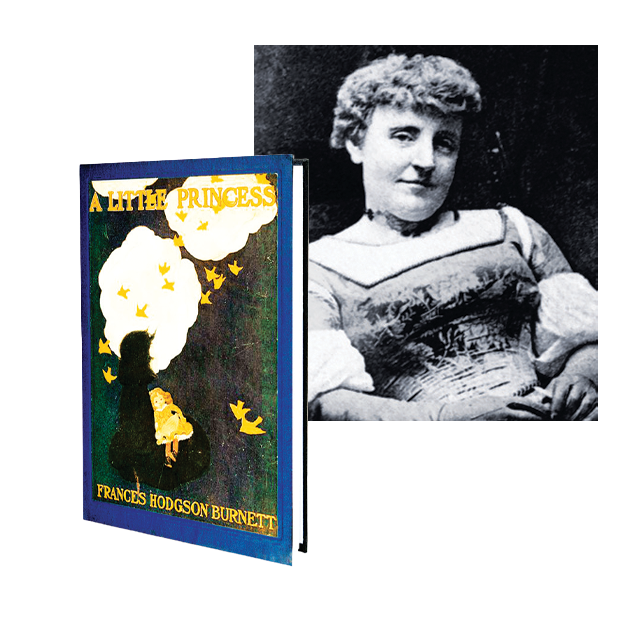
There are people who find it hard to break out of their comfort zone when given the opportunity to do so. Therefore, they find it easier to go with the flow and become as other people perceive them. Sara Crewe is not one of them. This riches-to-rags-to-riches story is that of a quiet and imaginative young girl who truly believes she is a princess, noble and fair, with the utmost respect for everyone of any class. The darling of her teachers and the envy of her friends, Sara’s life is one of bliss until tragedy suddenly hits.
After her father is killed in India, her friends and teachers act radically different. Her education is completely halted and she is stripped of her belongings, forced to wear rags and sleep in a tiny attic bedroom with only a rat for companionship. Despite the injustice and humiliation Sarah is faced with, including punishment from the cruel Miss Minchin, Sara continues to act like a little princess, thanks to her imagination, which she refers to as ‘the Magic’, the only solace during the cold and lonely nights.
Frances Hodgson Burnett is a supreme storyteller, spinning this tale of a young girl who refuses to let people tell her who she is, despite the fact that feeling sorry for herself and giving in would be the easiest thing to do. It is a story about the triumph of spirit over the body and we truly see a princess, not the storybook fantasy in candy pink gowns and bedecked in jewels, but a tale of courage in the face of adversity and a fierce determination to keep her head held high when it is being shoved further and further in a downward spiral. To quote Sara Crewe, “It would be easy to be a princess if I were dressed in cloth of gold, but it is a great deal more of a triumph to be one all the time when no one knows it.”
Mitch Albom, Tuesdays with Morrie

Wisdom grows with age. But the development of wisdom also accelerates when mortality approaches. For Morrie Schwartz, a happy not-quite-old man, a diagnosis of Lou Gehrig’s disease brought this closer. Despite the fact that his own life was coming to an end, he helped Mitch Albom, one of his old sociology students, learn to start living. As they meet every Tuesday to write Mitch’s final term paper, a study of his life in his society, the reader takes an uplifting journey of enlightenment as Morrie and Mitch confront societal mores and place stress on that age-old adage, ‘love or perish’.
At the age of 37, Mitch Albom figures he’s got it all with a successful job as a sports writer, his own radio show, a devoted wife and a large house. But these only mask the emptiness inside. After he sees his old college professor Morrie Shwartz on a TV show, he re-establishes contact with him when he realises that Morrie is dying. They decide to have a series of discussions on ‘how to live’ over the course of a few months, covering everything from ageing to forgiveness to death.
Mitch Albom captured the essence of what his old college professor taught him and reminds us that without love, we will all be suffocated by the hate and greed that society has become. The book has become an inspiration to many, offering the philosophy that truly, all we need is love.

