


In collaboration with High Life: Living the Good Life, VOICE OF ASIA is proud to present timeless articles from the archives, reproduced digitally for your reading pleasure. Originally published in High Life Volume 2 in 2014, we present this story on some sporting legends who faced adversity head on to become champions.
The road to success is never smooth. There will always be storms of fear, and gusts of doubt to face us. But it is the desire to triumph over these adversities that sets apart the successful, and persistence is a common denominator for such people. They confront life head on, spurred on by sustained belief that they will ultimately triumph, believing in themselves when others do not. Their undying spirit and determination to achieve propels them to extraordinary heights of success and differentiates them from their rivals.
HIGH Life turns the spotlight on those who refused to give in, on those champions who rejected throwing in the towel, on those who stared failure in the face and said, “Not today.”
Fuelled By Rejection, Michael Jordan
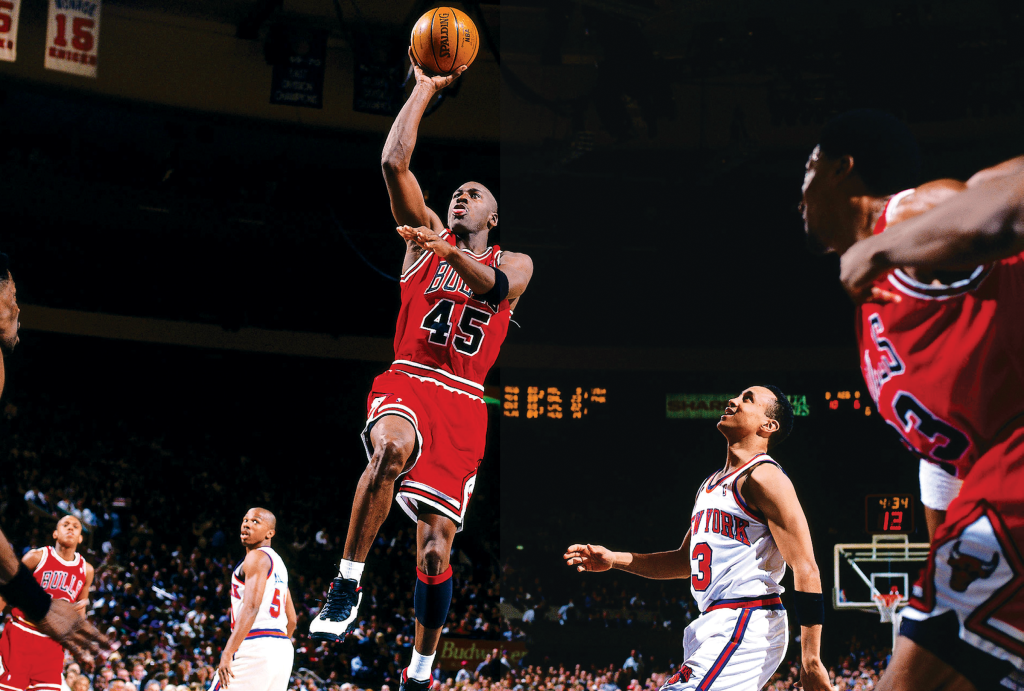
One of the most famous stories of a sporting legend enduring the agony of rejection is that of Michael Jordan. Being told that he ‘was not good enough’ by his high school basketball team coach was a snub that spurred MJ to hone his abilities by spending extra hours on the court to improve his game. This effort set him on the path to become the greatest player in basketball. By his junior year, he had earned redemption by making the varsity team.
Jordan’s growing reputation as an immensely talented and determined player prompted the University of North Carolina (UNC) to offer him a scholarship, and he played a big part in the college winning the National championship title by sinking a last minute shot, giving UNC the title by 1 point.
His desire to win was such that after losing one game in a championship series, Jordan was spotted practising alone at the gym right after the game. It was this attitude which would catapult him to the pinnacle of sporting success.
Later he enjoyed a phenomenal professional career with the Chicago Bulls, leading them to six national championships, and he earned the National Basketball Association’s (NBA) Most Valuable Player Award five times. Yet even during his Hall of Fame acceptance speech in 2009, the then 46 year-old still mentioned the high school rejection that fuelled his success.
Considered by many as the greatest basketball player ever to grace the court, Jordan was famed for his iron-willed determination and persistence. He once said: “It has always been said that when I can’t find a way to do anything, I will find a way to do it.”
The Race Against Racism, Jesse Owens
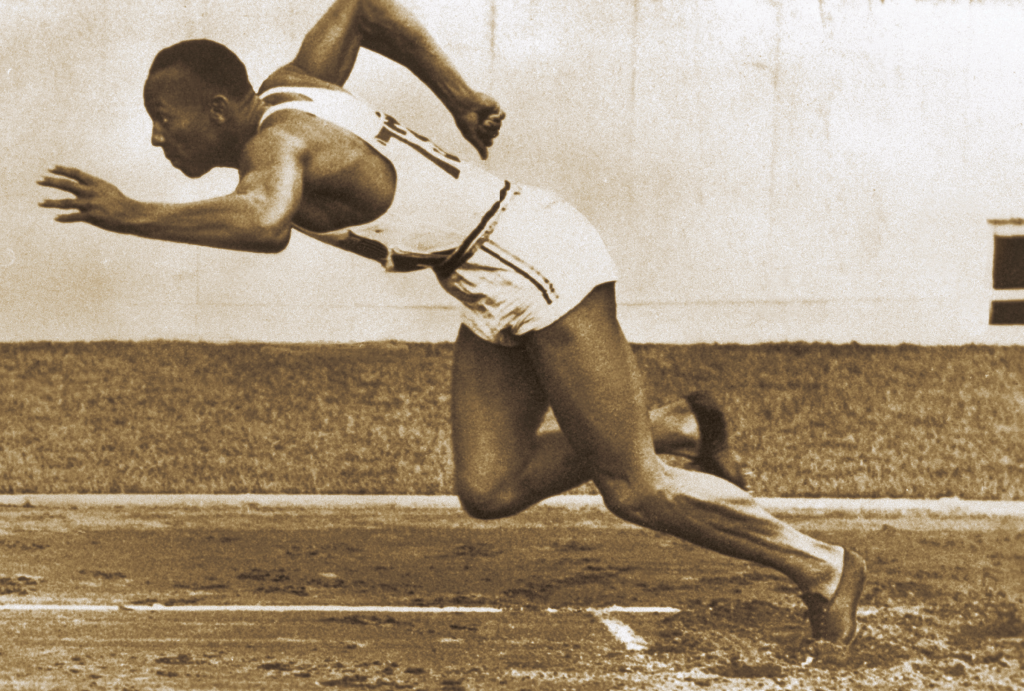
It is said that winners find strength in the face of adversity and Jesse Owens certainly personified this statement. He was an American track and field star who rose to prominence in 1933 when he equalled the world record for the 100-metre dash, but it was not only on the track that he made his mark on history.
The 1936 Olympics were held in Berlin which was under Nazi rule, and even at a sporting event meant to be free of political point-scoring, Hitler used the games to promote his concept of ‘Aryan racial superiority’. Owens and other black athletes faced extreme prejudice from a regime which considered ethnic Africans as inferior.
Nicknamed ‘the buckeye bullet’, Owens’ response to abuse was to win four gold medals – one each in the 100 metres, 200 metres, long jump, and as part of the 4×100 metre relay team. By showing persistence and character, Owens even blitzed his way to two Olympic records and emerged victorious in a hostile environment.
Although other Olympian athletes have garnered more gold medals than Owens, it is the sporting and social meaning behind Owens’ medals that matter. During a time of deep-rooted segregation, he not only managed to shatter the Nazi’s ‘master race’ dogma, but also affirmed that individual excellence, rather than ethnic origin, distinguishes one man from another.
Prevailing Against Poverty, Manny Pacquiao
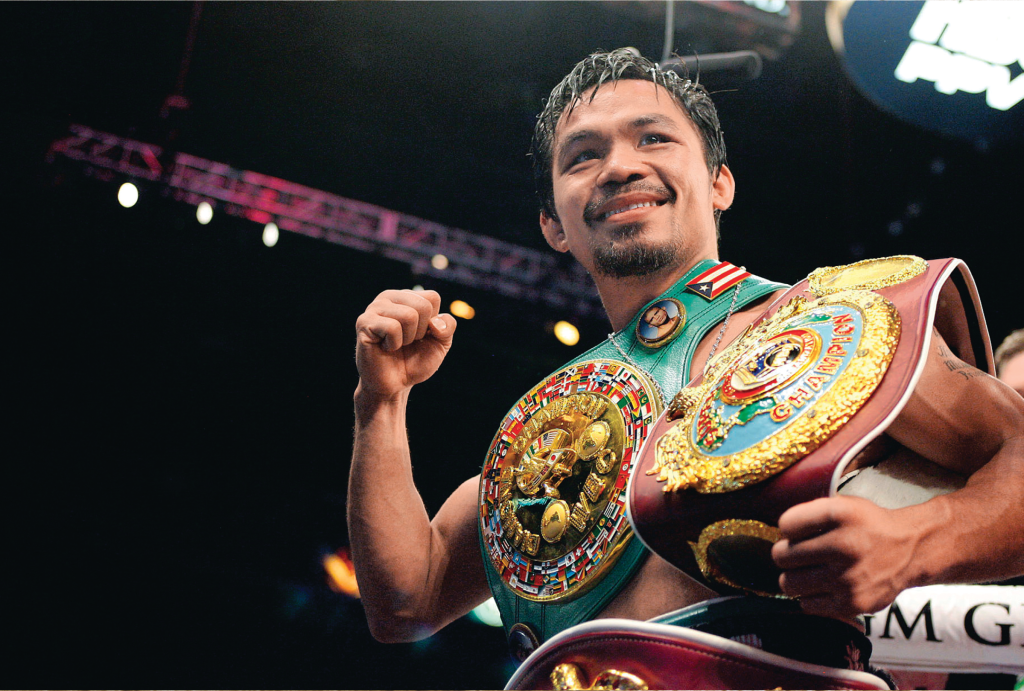
Pacquiao was born into extreme poverty and was forced to earn a living at a very young age. Pacquaio’s mother was a single parent who had difficulty coping with supporting her six children, and working in the rough streets of the Philippines shaped the tough and relentless individual later seen in the boxing ring.
Pacquiao saw boxing as his ticket out of the slums and left home for Manila without his mother’s approval, to pursue a career in the sport with hopes of becoming a star and supporting his family. At age 16, he stepped into the ring for his first professional bout and won the fight in a unanimous decision, in just four rounds. That victory propelled him into a successful boxing career spanning the better part of two decades.
Pacquiao has been deemed one of the world’s finest boxers, with a net worth of US$85 million, and the recipient of the “Fighter of the Decade” title for the 2000s by the Boxing Writers’ Association of America. His fight against poverty has come full circle, and determined to ease the poverty in his childhood hometown, he became an elected congressman in the Sarangani Province in May 2010.
Redefining Womanhood, ‘Babe’ Didrikson Zaharias
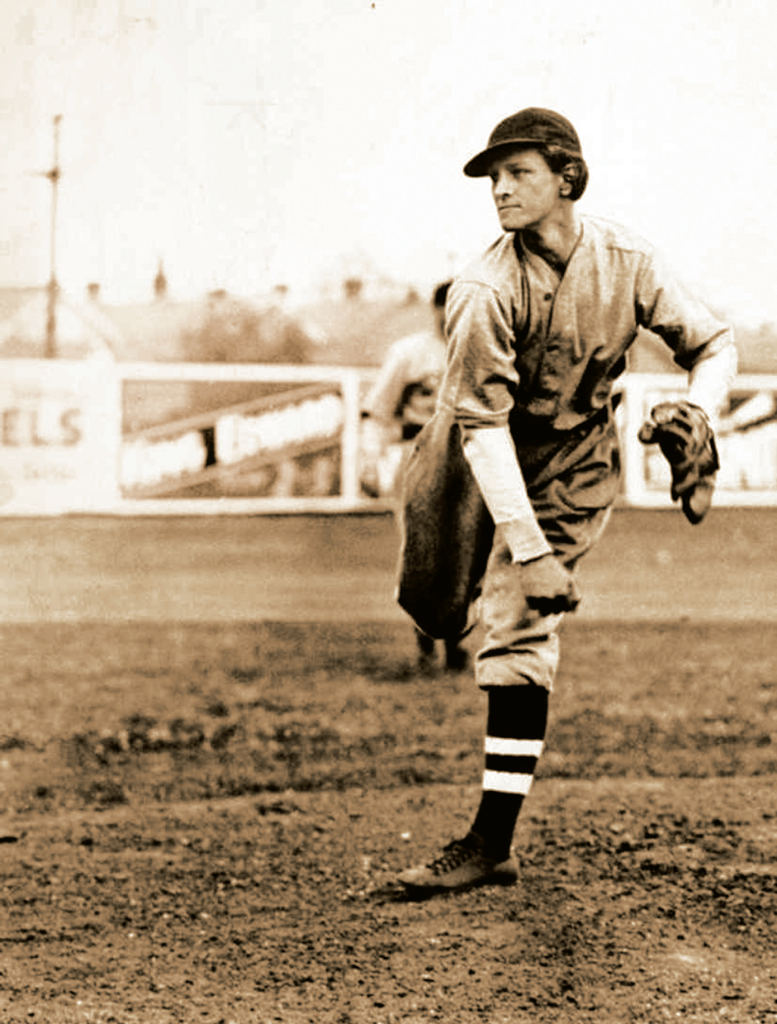
An outstanding all-round athlete, Zaharias challenged traditional parameters of ‘femininity’, during a time when women were expected to stay at home and tend to their husband and children.
Zaharias won two gold medals and a silver in track and field at the 1932 Olympics, and managed to break 4 world records in the process. After her Olympic success, the press labelled her ‘too boyish’, ‘unfeminine’ and insinuated that she was a ‘sexual deviant’.
Zaharias became a champion golfer despite being a latecomer to the game. Her extreme talent and dedication led her to take up golf seriously and in 1947, she became the first American woman to win the British Ladies Amateur Championship.
A woman ahead of her time, Zaharias once said: “You can’t win them all – but you can try.” Her sporting records certainly indicate that she won a battle of the sexes, and succeeded in a male-dominant world.
Triumphing Over Nature, Edmund Hillary & Tenzing Norgay
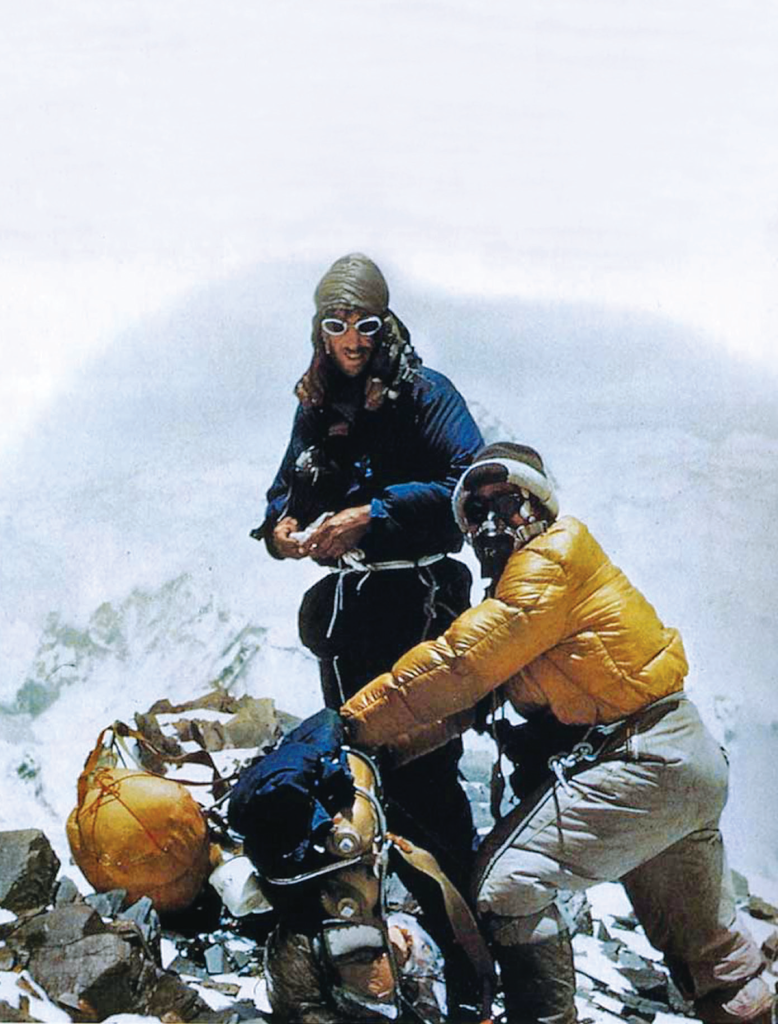
They are the first men to step foot where others had not yet trodden, reaching the pinnacle of human endurance where countless before them had tried – and failed. Edmund Hillary joined in Everest reconnaissance expeditions in 1951 and again in 1952, and his exploits brought him to the attention of Sir John Hunt, leader of an expedition to make an assault on the mountain in 1953. The expedition reached the South Peak in May, when all but two of the climbers who had come this far were forced to turn back due to exhaustion. The wind and cold had taken their toll.
Only Hillary and Tenzing Norgay (a native Nepalese climber) carried on to make the final surge. At 11.30 on the morning of the 29th of May 1953, Edmund Hillary and Tenzing Norgay reached the summit of Mount Everest, standing at 29,029 feet above sea level, the highest spot on earth.
They planted a flag, not for themselves but for all mankind, and their monumental achievement signalled man’s triumph over the elements.
The Unlikely Champion, Oscar Pistorius
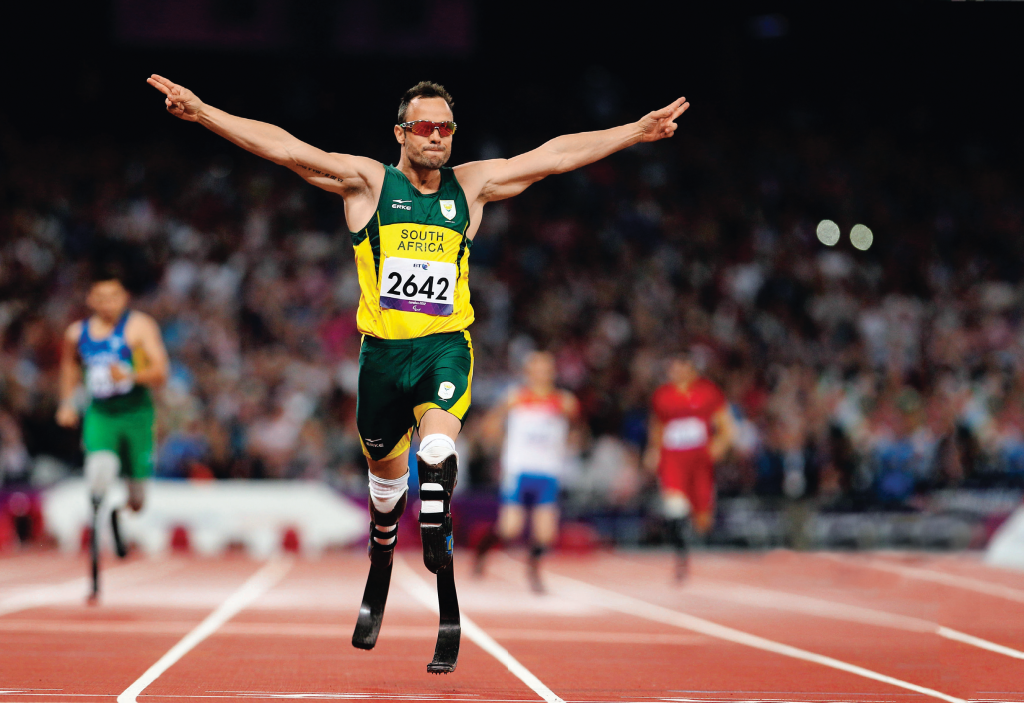
It is a tremendous challenge to qualify for the Olympics and an even greater feat doing so with no legs. Born without a fibula in either of his legs, Pistorius had both of them amputated below the knee just before his first birthday. For many, this would rule out any idea of being an athlete, let alone dreams of being a sprinter at the Olympics. Not for the determined Oscar.
During his school years, Pistorius participated in sports such as rugby, tennis, water polo and wrestling. At the age of 16, he took up running and won a gold medal at the 2004 Athens Paralympics.
Initially prohibited to participate in international competition (single-leg amputees felt he held an unfair advantage over them), Pistorious successfully appealed the ruling and at the 2012 Summer games in London, became the first amputee to compete in the Olympics.
The South African sprinter is widely known as the “Blade Runner” and the “fastest man on no legs”.
In the spring of 2012, Pistorious realised his ultimate dream when he qualified for the 400-metre race at the London Olympics. “It’s just an unbelievable experience,” Pistorious said shortly after his first Olympic race. “I found myself smiling on the starting blocks, which is very rare.
”His influence on the sport has extended beyond achievement on the track, and he continues to serve as an inspiration and paves the way for disabled athletes in the future.

