

In collaboration with High Life: Living the Good Life, VOICE OF ASIA is proud to present timeless articles from the archives, reproduced digitally for your reading pleasure. Originally published in High Life Volume 2 in 2014, we present a glimpse into Malaysia’s Baba-Nyonya culture and its long history.
Throughout history, Malaysia has enjoyed a unique and mutually beneficial relationship with China, one of the world’s oldest and most established civilisations. HIGH Life explores some of the most important milestones in this relationship which has shaped both nations.
During its golden era in the 15th century, Melaka (a city located in the southern region of Malaysia) was a well-governed, strategically placed port, a premier hub for trading in herbs and spices that enjoyed very strong political and trade relations with China. An alliance with Melaka, which exercised considerable influence over neighbouring kingdoms, was considered a valuable asset by the Chinese Ming Dynasty, and led to the birth of the Baba-Nyonya heritage, with settlements also in the northern state of Penang, and Singapore.
The Ming dynasty was the ruling dynasty of China for 276 years (1368-1644), and is described by some as “one of the greatest eras of orderly government and social stability in human history.” To demonstrate their power and authority over the ‘Asia’ region, the first emperors initiated campaigns to decisively defeat any domestic or foreign threat. This prompted the third Chinese Ming Dynasty Emperor Zhu Di (also known as the Yongle Emperor) to take steps in reviving the traditional tribute system, in which countries on China’s borders presented gifts to the Chinese Emperor in exchange for certain benefits like military posts and trade treaties. Deeming the sphere of China’s influence insufficient, Emperor Zhu Di chose one of his most trusted generals, the eunuch Admiral Zheng He (also known as Admiral Cheng Ho), to command expeditionary voyages to Southeast Asia, South Asia, the Middle East and East Africa, for international tributary missions, and it was during one of the Admiral’s journeys that he visited Melaka.
Emperor Zhu Di, at the urging of Admiral Zheng He, sent an envoy bearing gifts to Melaka’s ruler, Sultan Mansur Shah, who reciprocated by despatching a delegation to China. So impressed and delighted by the Melaka envoy was the Emperor, he selected 500 youths of noble birth and appointed a High Officer in command, to escort the Princess Hang Liu (also known as Princess Hang Li Poh) on her journey to Melaka, along with several hundred beautiful maidens as part of her retinue. When Sultan Mansur Shah saw the Princess, he was enamoured by her beauty and urged that she embrace Islam so he could marry her.
The princess’ marriage set a precedent, and her entourage soon followed suit by marrying the local Malay inhabitants. Their offspring are known as the Baba-Nyonya people, referred to as ‘Peranakan’, which means ‘Descendants’ in the Malay language. They are also known as Straits-Chinese, an apt term to describe a people whose lineage began with the marriage of a Princess of China to the Sultan of Melaka. Baba refers to the male descendant, and Nyonya the female. The Baba-Nyonya have proudly maintained their Chinese culture while incorporating elements of Malay culture, especially in food, language, and dress.
Source of Affluence
Many of the early Baba-Nyonya people were entrepreneurial traders and merchants, with a significant number also involved in the real estate, shipping and banking sectors, and prospered to the point where they even financed and provided loans for the development of Kuala Lumpur and Singapore. By the turn of the 20th century, as the Baba-Nyonya started receiving their education in British institutions and were fluent in English, the British authorities appointed them as community and civic leaders, which further elevated their social status.
AN ILLUSTRIOUS LINEAGE
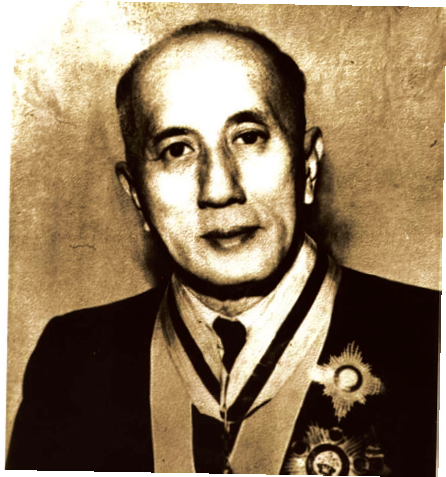
The Baba-Nyonya legacy also lives on through the impact made by prominent personalities, one of whom was the late Tun Tan Cheng Lock, one of the founding fathers of modern day Malaysia.
Tun Tan Cheng Lock was born a fifth-generation Peranakan, whose ancestor had migrated to Melaka from Fujian province in China. A gifted and diligent student, he won the Tan Teck Guan Scholarship, which was awarded to top performers, and later continued his education at Raffles Institution in Singapore, but was unfortunately not able to study law in England due to a lack of finance. After a brief stint in teaching, he took up the position of assistant manager in a rubber estate company which belonged to his maternal cousin. Tan excelled in the job, and later was involved in the founding of three rubber companies. Three years later in 1912, he was appointed as Malacca Council Commissioner and a Justice of the Peace for Malacca by the British government.
Like many Straits-born Chinese of his time, Tan was partial towards Britain but was deeply influenced by the ideas of independence, which were sweeping across many British colonies at the time. In 1926, in a speech to the 91council, he advocated the concept of a “united self-governing British Malaya”. From 1933 to 1935, he was an unofficial member of the Straits Settlements Executive Council, and championed social causes like opposing opium smoking, promoting Chinese vernacular education, legislating against polygamy and pressing for immigration policy reform. During the Japanese occupation of Malaya, Tan and his family lived in exile in India, where they witnessed the struggles of Mahatma Gandhi for independence, and were inspired to do the same for Malaya when they returned.
After the Japanese surrendered, Tan returned to Malaya and founded the Malayan Chinese Association (MCA) in 1949, with the goal to unite the Chinese population in the country, to ensure the protection of their rights and interests, and also to work with the colonial government to stop the spread of communism and achieve the independence of Malaya. Strongly anti-communist, he was trusted by British colonial officials, and was the only Chinese with the stature to engage with senior Malay leaders such as Tunku Abdul Rahman and Datuk Onn Jaafar.
He is best remembered for his contribution in the business and political arena, and also his work to integrate the Chinese and Indian communities into the nascent Malayan society. Under Tan, the MCA played a vital role in negotiating Malaya’s independence from the British. In honour of Tan being one of the founding fathers of modern day Malaysia, Melaka’s Heeren Street – the place of his birth and also his family home – was renamed Jalan Tun Tan Cheng Lock. His son, Tun Tan Siew Sin, continued the strong family legacy by becoming the third MCA President, and went on to become Malaysia’s longest-serving Minister of Finance.
Common Traditions
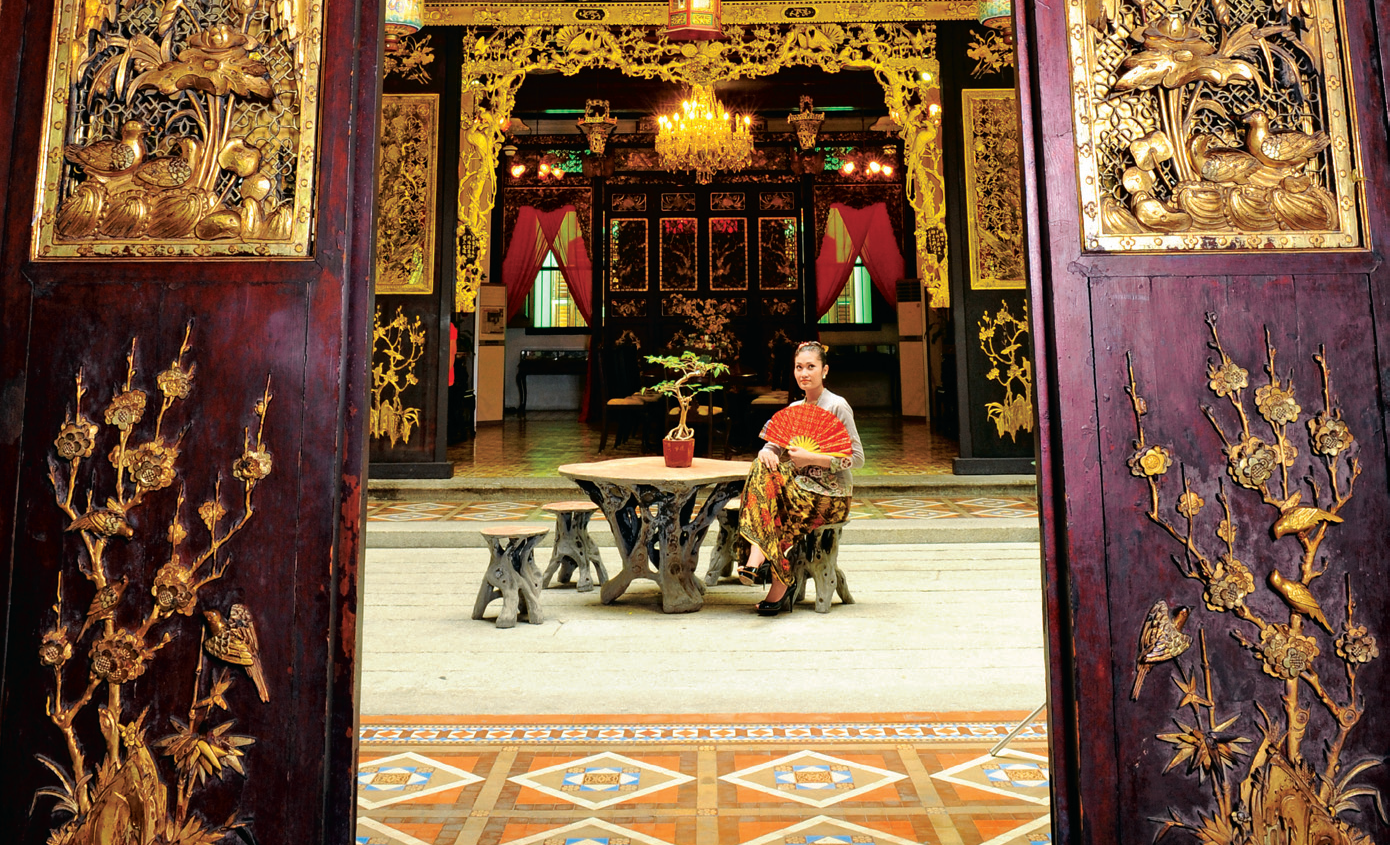
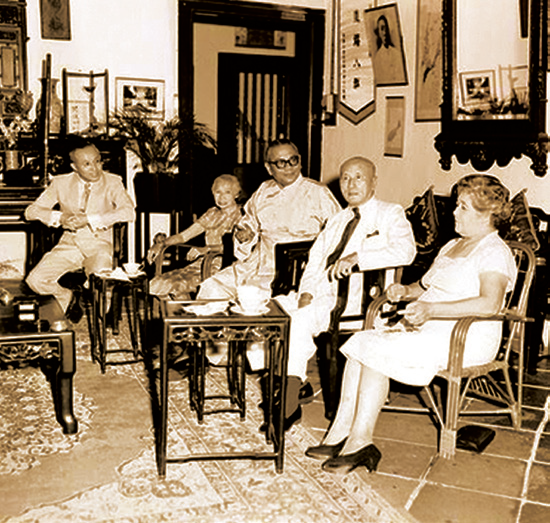
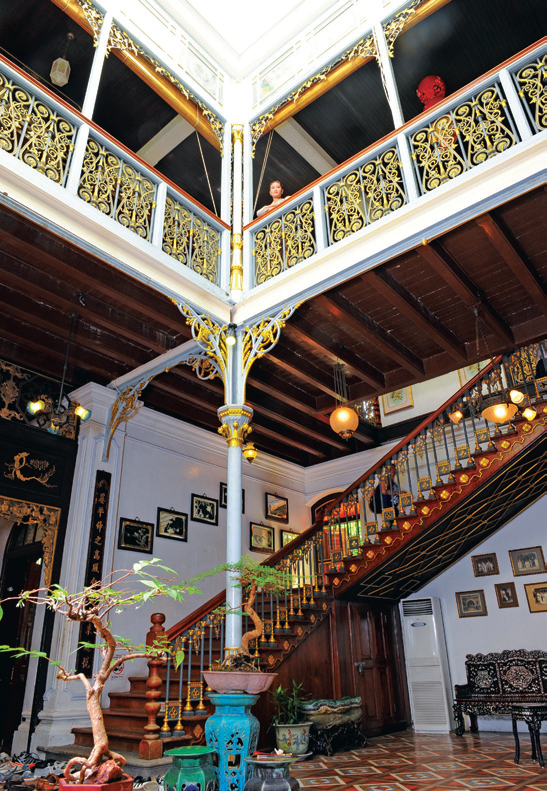
This further gave rise to changes in their lifestyle, and the Baba-Nyonya began to display their hard-earned wealth by lavishly furnishing their homes. The interior of a typical Baba-Nyonya house of the period contained Chinese, Malay and European architectural elements, and favoured pastel colours and intricate designs. There were also different sets of intricately designed tableware, to be used for the appropriate occasion.
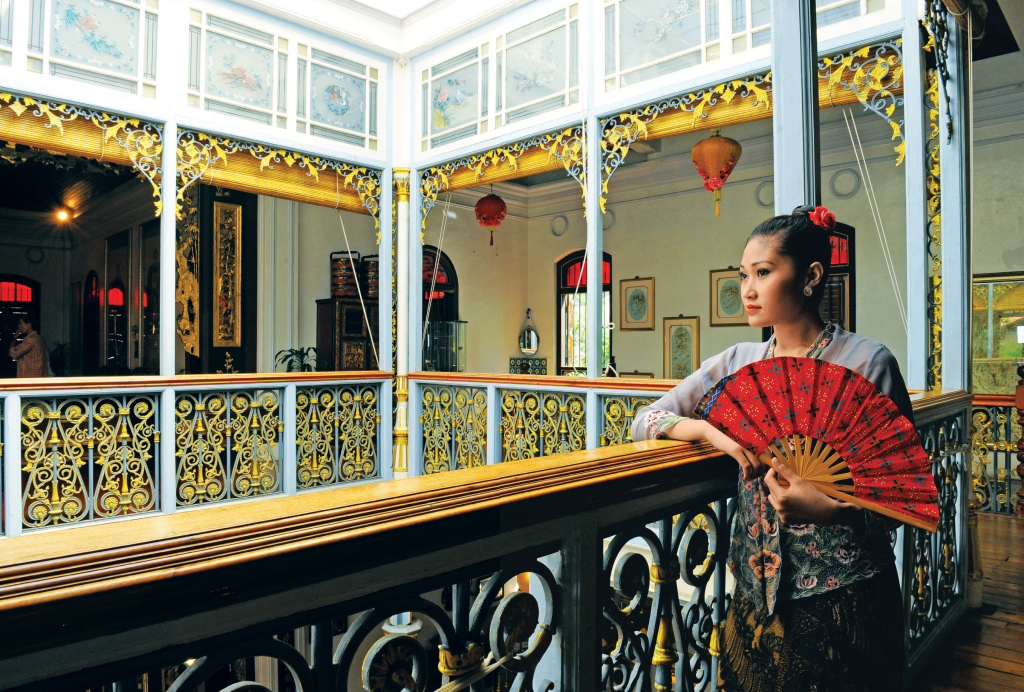
In Peranakan houses the floors were tiled with floral and colour motifs, and silk-embroidered artwork depicting birds and animals (believed to bring prosperity) were imported from China and mounted on the walls. Tables and chairs carved of marble, jade, and wood of the best quality furnished the halls, proclaiming the owner’s status and wealth, and in some Peranakan houses, even staircase rails were gilded.
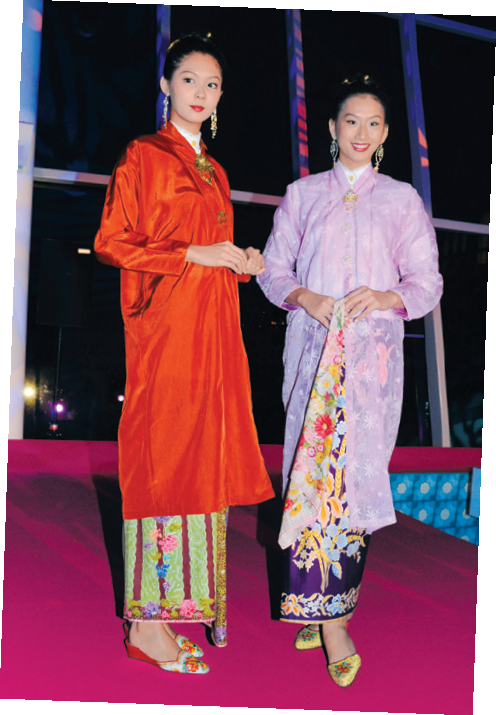
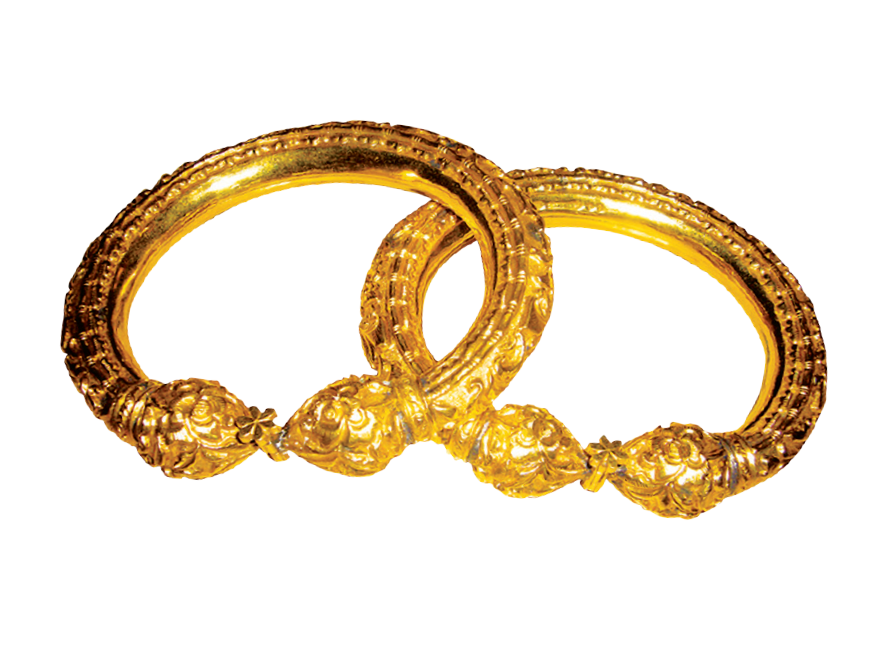
Nyonyas adorned themselves with exquisite jewellery, incorporating jade and gold, and often inset with pearls, sapphires and rubies. Intricately hand-made beaded shoes and slippers were the hallmark of an accomplished Nyonya, and were required to complement her sarong kebaya outfit.
Lanterns hanging outside Baba-Nyonya homes had the family crest emblazoned to identify the owner. The extravagance of the lanterns on display also masked a subtle competition to be called the richest family in town.
WEDDING TRADITIONS
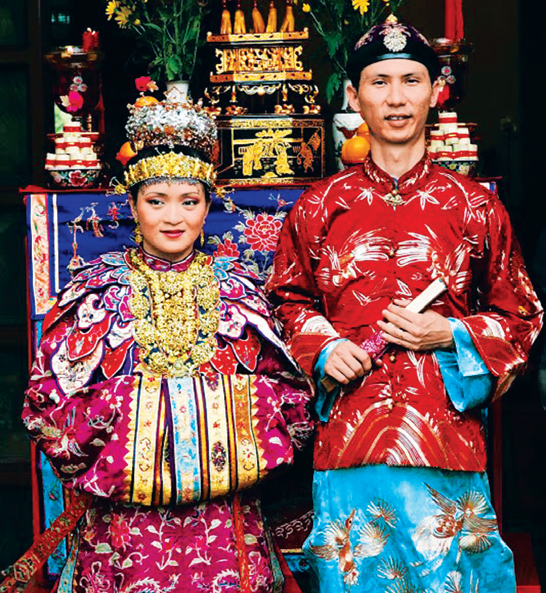
The wedding ceremony of the Baba-Nyonya is largely based on Chinese tradition and is one of the most elaborate and colourful celebrations found in Malaysia. It usually lasts for 12 days because of the various rites and traditional ceremonies which are conducted during this period, and incorporates Chinese rituals and attire, with a mix of Malay form, manner, and language.
The Lap Chai ceremony, a Chinese gift-exchange tradition, takes place a month before the wedding, when the bride and groom serve tea to each other’s parents in a display of filial piety. It also symbolises acceptance into their extended families.
The Cheo Tau, a Hokkien ceremony that symbolises the ‘coming of age’ of the bride and groom, marks the first occasion that they don their traditional Baba-Nyonya ceremonial apparel. The bride leads the groom into the bridal chamber where he removes her veil and gazes upon her for the first time.
Included in the wedding banquet, which comprises mainly dishes of Malay origin, is the quintessential nasi lemak. This rice dish cooked in rich coconut milk, is served during the wedding feast, along with its must-have sambal belacan (Malaysian shrimp paste) accompaniment. It symbolises the harmony of a successful match between the newly weds. Other wedding foods also include apom bok kwa (sourdough pancake) and nasi ulam (steamed rice dish mixed with various herbs). Any surplus food is packed in colourful and gaudy tiffin carriers and offered to guests when they leave, as an extended gesture of hospitality.
A Unique Language
The Baba-Nyonya language was influenced by their local surroundings. In Melaka and Singapore the Peranakan spoke Baba Malay, a patois of the Malay language with many loan words from Hokkien and English, while in Penang, Hokkien was used instead. Over the years, the Baba-Nyonya gradually incorporated more than 50,000 Malay words into their vocabulary, including words like sayang (love) and bunting (pregnant), which married and expectant Nyonya used to communicate instructions to hired maids and confinement ladies. The Baba-Nyonya’s adoption of the Malay language and race was often reflected in some of the specially commissioned items which are still found in pristine condition in some of their homes today, like the tiffin-carriers with engraved wishes of Slamet Untong (Good fortune).
Malaysia is a multi-racial country with a rich cultural heritage – a melting pot of cultural diversity. The Baba-Nyonya people embody that diversity and have adapted with ingenuity, resourcefulness, and open minds to develop their colourful and unique culture. Their lifestyle is a unique balance between Chinese and Malay world traditions.
Today, they thrive in communities in Melaka, Penang and Singapore. Through globalisation and further migration, the Baba-Nyonya have also settled all over the world with notably large communities in Melbourne, Sydney and London. The Baba-Nyonya are an indelible part of Malaysia’s identity, a part of its glamorous history and have enriched Malaysian and Singapore cultural heritage in cuisine, fashion and the arts. They are an everlasting and influential link to China, and remain a dazzling study in anthropology as a uniquely Malaysian development.

