

In collaboration with High Life: Living the Good Life, VOICE OF ASIA is proud to present timeless articles from the archives, reproduced digitally for your reading pleasure. Originally published in High Life Volume 1 in 2015, we learn more about the trailblazers who sought to learn more about the world.
The Earth’s surface area is approximately 510.1 million sq km, of which around 129 million sq km is land and the rest are the seas and oceans. From time immemorial, man has explored this world, driven by natural curiosity – that same curiosity which inspired our earliest ancestors to seek new lands in which to settle.
Every explorer is driven by wanderlust, with a desire to broach new frontiers and unravel the mysteries of the world. These men, to whom we pay tribute, took this ferocious hunger and achieved milestones that none had ever accomplished before.
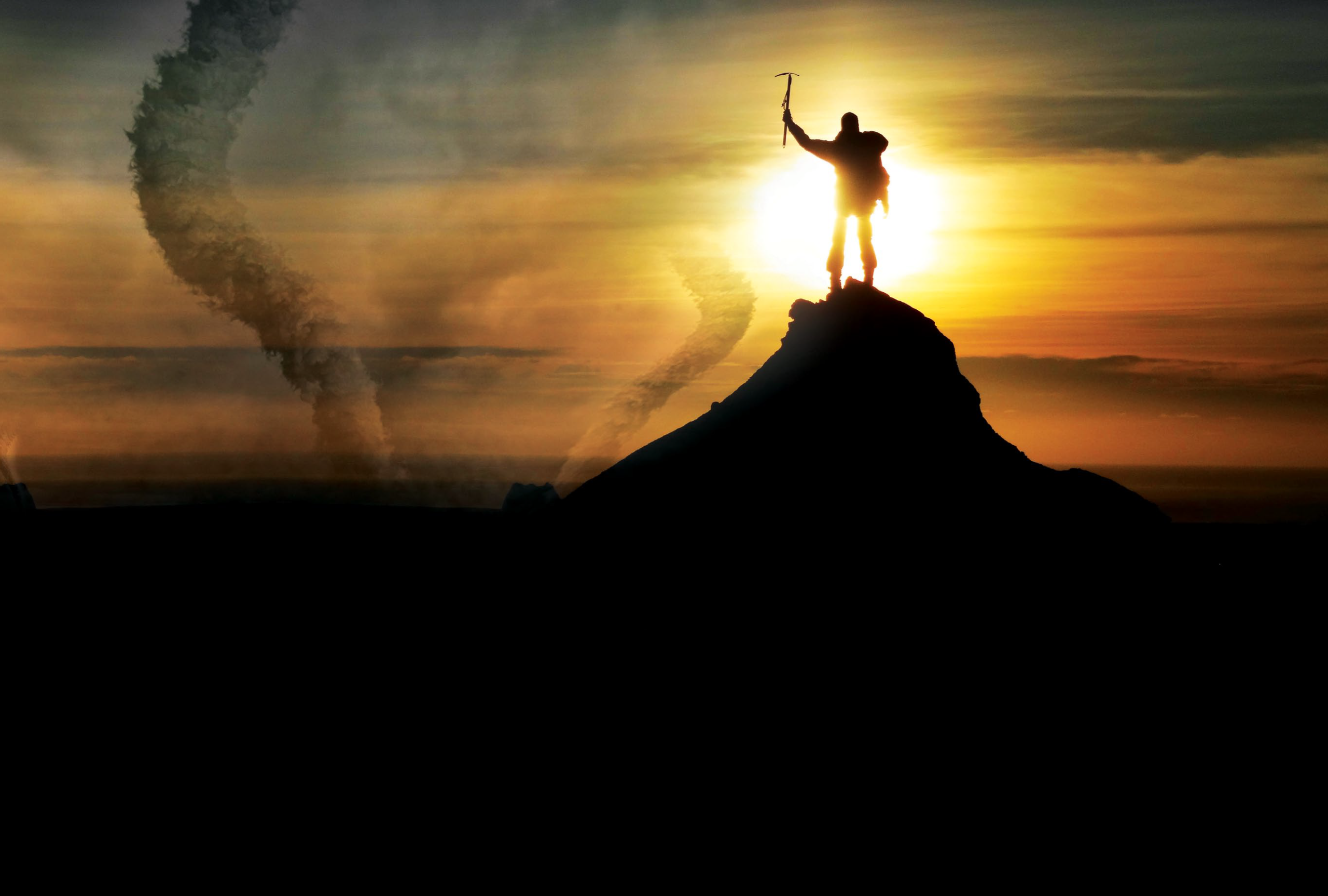
They were men who, despite the dangers, challenged the forces of nature by sailing the vast and stormy oceans without modern navigational aids, risked life and limb by scaling seemingly insurmountable mountains, braved the extremes by trekking over the frozen wastelands, and dived into the mysterious depths of the seas to explore the world underneath. And they even went beyond the confines of Mother Earth to touch the stars. They are the ultimate adventurers, and through their triumphs, we have gained a greater appreciation of the true limits of human endeavour.
Conquering The Seas
Admiral Zheng He
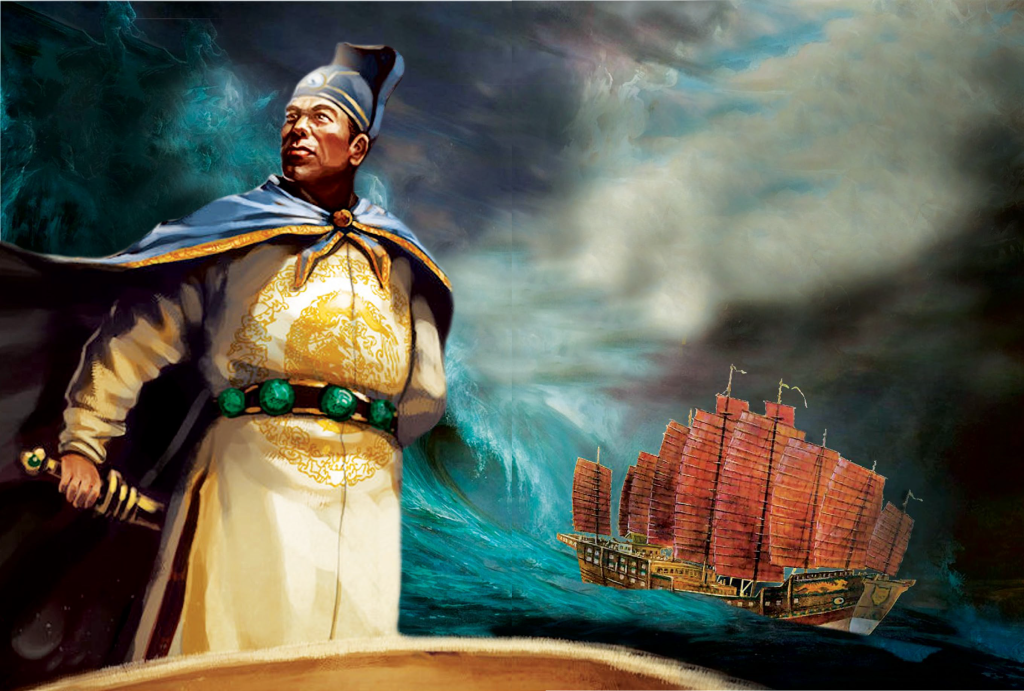
In Western history books, great explorers such as Columbus, Magellan, and Da Gama are lauded as examples of adventurous spirits who braved the unknown to seek out new lands. Yet, nearly a hundred years before any of them made their first trip on the seas, one man had already ventured into then unknown waters and in doing so, established diplomatic and trading ties which cemented China’s status as the dominant power of the East.
That man was Admiral Zheng He – who was entrusted with command of the fabled Ming Dynasty Imperial fleet – an armada comprising more than 300 vessels and a force of more than 28,000 men. It also carried treasure such as jewels and silks, and the size of the fleet and the treasure it carried was part of the message Zheng He hoped to convey to countries around the region.
Simply put, they could either accept the Ming Dynasty’s dominion and receive the gifts, or reject it and risk its displeasure. Most acquiesed and throughout his seven voyages – ranging from 1405 to 1433 – the fleet collected and brought back exotic gifts from the new vassal states such as a giraffe from Bengal and ivory from Africa.
The fleet called in at many ports including but not exclusively Bengal and Kerala in modern India, Mogadishu in Somalia, the Maldives, and Sri Lanka. In fact, Zheng He also visited Melaka, and it is believed that his trip there helped bring the earliest Chinese settlers to what is now Malaysia. Zheng He was no mere explorer though. A former military officer, he used his armada and his expertise to crush pirates in the South China Sea and bring a measure of peace to the waters.
Going From Pole to Pole
Sir Wally Herbert
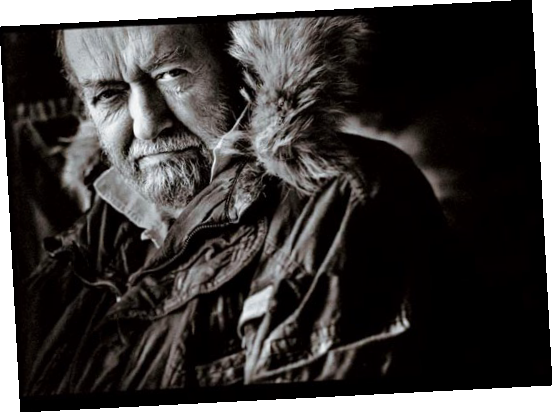
When Sir Walter ‘Wally’ Herbert led the British Trans-Arctic Expedition to the North Pole in 1969 – the culmination of 16-month journey which started in Alaska, he managed to answer one of the great mysteries of polar exploration – “Has anyone ever reached the North Pole by foot?” While Robert Peary claimed to have done so in the early 20th century, his account has been disputed owing to inconsistencies in his records.
There was no disputing Herbert’s achievements though. Together with Allan Gill, Dr Roy Koerner, Dr Ken Hedges, and 40 dogs, he travelled through 5,825 km of Arctic ice, braving temperatures that dropped to as low as -43 degrees Celsius. The studies they carried out during that expedition confirmed the phenomenon of melting ice caps and the effects of climate change – a full 30 years before the concept became a worldwide concern.
In many ways, Sir Wally Herbert, who passed away in 2007, was the last great land explorer. While most of the world had already been explored, the Polar regions remained both mysterious and inaccessible. Given what happened to the Scott Expedition, the Antarctic and (to a lesser extent) the Arctic took on the mystique of being icy death-traps.
After spending 15 years living in the polar wilderness, publishing a book of his experiences, and travelling a total of 55,000 km over 50 years, in both Arctic and Antarctic, across many previously unexplored areas, Sir Wally Herbert managed to lift the veil on the faces of the two poles. Like all great explorers, he set out to seek truth and to bring truth to those who come after.
Standing on top of the World
Sir Edmund Hilary and Tenzing Norgay
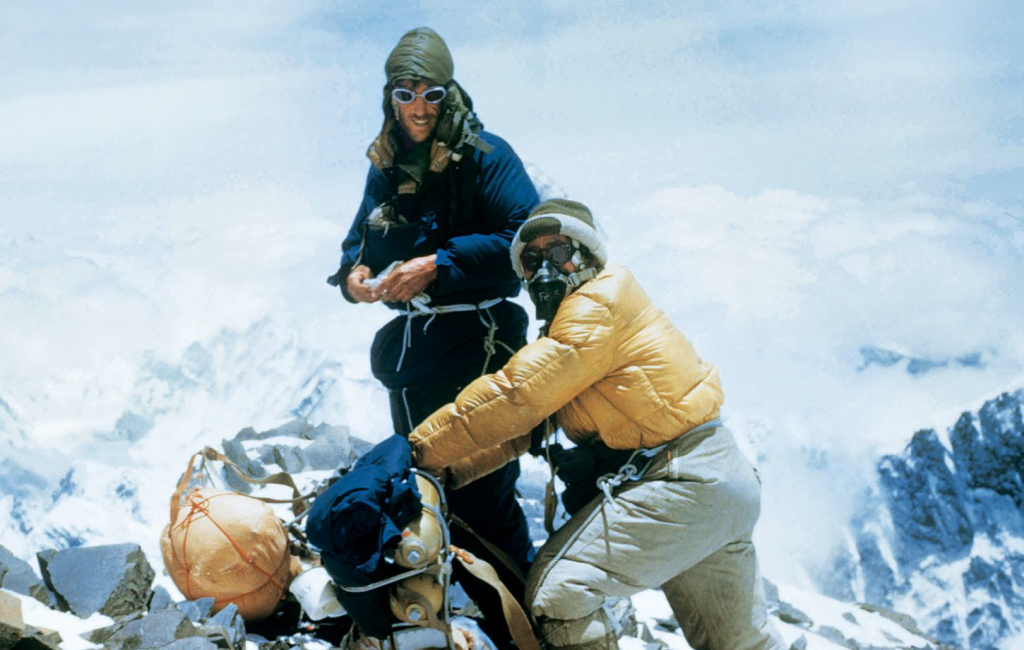
With an elevation of 8,848 metres, Mt Everest in the Himalayan mountain range has the distinction of being the tallest mountain in the world. For years, it was regarded as impossible to climb. One could reach near the top, perhaps, but the summit was considered a step too far. The air was too thin, the winds too strong, the terrain too treacherous. And yet despite the warnings, many tried to conquer the peak, and many failed, with some losing their lives.
So, when New Zealander Edmund Hilary placed his foot on the summit at 11.30 am local time on the 29th of May 1953, it marked the triumph of man over nature, and showed the world that the seemingly impossible could be made possible. The intrepid duo – Hilary and his guide Tenzing Norgay – a member of the Sherpa mountaineering community of Nepal – took the south-eastern route up the mountain.
Interestingly, they were fortuitously saved from being pipped at the post by two fellow climbers in the British Mount Everest Expedition – Tom Bourdillon and Charles Evans – who were forced to abandon their climb just 100 metres short of the top as they were running out of oxygen and a darkening sky would together, make it impossible for them to get back down if they had continued.
On their way to the summit, both Hilary and Tenzing would no doubt have been aware of those who already tried to conquer the mountain and failed – their frozen bodies forever entombed as a sinister reminder of the price of defeat. These two men, however, were driven by the desire to be the first to stand on top of the world – and this they did.
Giant Leaps For Mankind
Neil Armstrong and the Space Pioneers
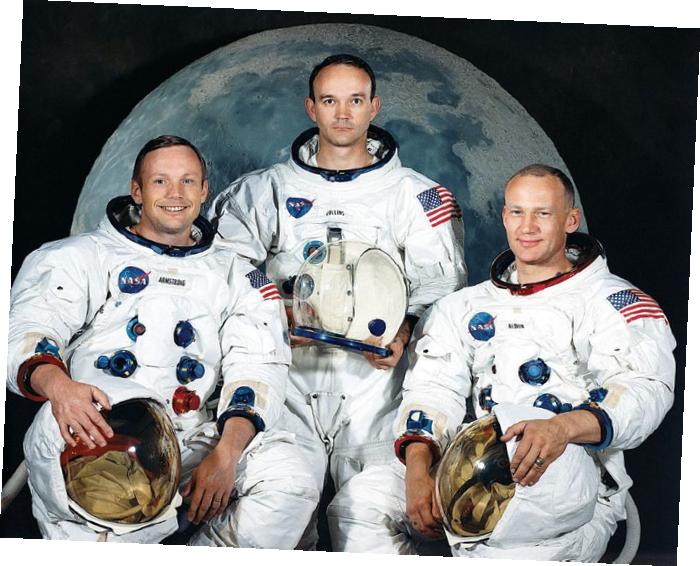
“Space, the final frontier…” so goes the famous introduction of the Star Trek TV show franchise. Throughout the Cold War, the then Soviet Union and the United States were involved in the Space Race – a game of one-upmanship with each trying to outdo the other to make milestones in space.
The Russians took an early lead, by launching the first artificial satellite, the first living creature (the dog Laika) and the first human being (Yuri Gagarin) into space in the period from 1959 to 1961. After Gagarin had made a successful orbit of Earth and then returned, the Americans were spurred into action. Then President John F Kennedy realised that the continued Russian success was not only a boost for Soviet propaganda, but also a demoralising influence on the American public. There was, however, one more place that the Soviets had yet to conquer – the Moon.
On the 20th of July 1969, radio operators in NASA headquarters listened to a call coming from the Moon, “This is one small step for a man, one giant leap for mankind”. These words spoken by Neil Armstrong signalled that a human being had finally stepped foot on Earth’s natural satellite. While Armstrong deserves credit for his command of the mission, the success of Apollo 11 – for that was the name of the rocket which took three men to the Moon – was down to an entire team of men and women who had been working on the project since 1961.
Nevertheless, the risks that the Apollo 11 team – Armstrong, Michael Collins and Edwin Aldrin (pictured, right) – faced were immense. When they walked into the rocket, they did so with the realisation that any mishap may leave them stranded in space forever, or killed in a midair explosion. And this is the same risk that all space travellers take. They fly out to journey among the stars, and in doing so awaken in us the imagination that maybe one day, we can settle on new worlds… and wouldn’t that be the ultimate adventure indeed?
A Raft in Time
Thor Heryedahl
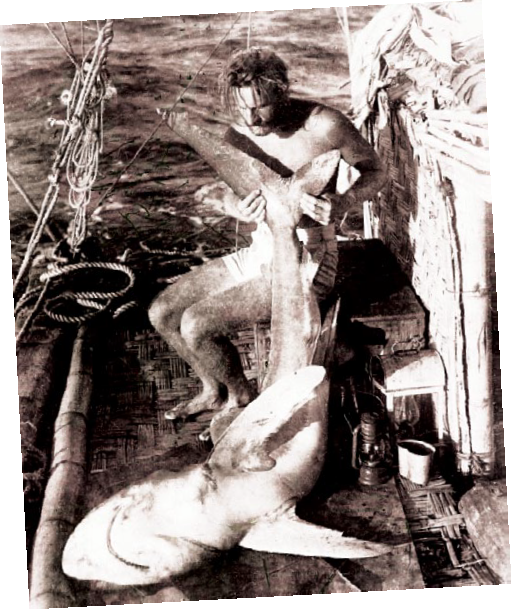
How far would a person go to prove his point? For Norwegian explorer Thor Heryedahl, the answer was to spend more than 3 months on a raft made of balsa wood, drifting on the Pacific Ocean for a distance of 6,900 kilometres. Together with his 5-men crew, he set out from Peru on 28 April 1947, with the vessel – named Kon-Tiki after an Incan deity – fitted to resemble (as much as possible) a raft made by the Peruvians before the European discovery of the Americas.
Heryedahl was driven by the desire to validate his theory, that people from the Polynesian islands were descended from South Americans, and that the first settlers on Easter Island were those who travelled the Pacific Ocean, from East to West. Even though the Kon-Tiki sailors had the advantage of certain technologies not available to the ancient Peruvians – such as a sextant, a communications radio, and metal knives, there can no doubt of the risks involved.
For one thing, the raft was rudderless and subject to the mercy of the wind and the waves. In fact, the initial part of the journey saw the Kon-Tiki heading off towards the southwest, bringing it and the crew closer to increasingly choppy waters which threatened to wreck the raft. They also risked rainstorms and other forms of turbulence, as well as sharks.
Heryedahl pressed on, and to remain true to history, he refused to use the radio to call for help. He also reputedly threw away wires, offered to him by a crew member to repair the craft, as he was adamant that the ancient Peruvians had none, and so he would not use them either. When the Kon-Tiki finally ran aground in August 1947, they were a short distance away from other inhabited islands. It might have been a long and arduous journey, but ultimately, it proved that there was an element of truth to Thor Heryedahl’s theory.

