
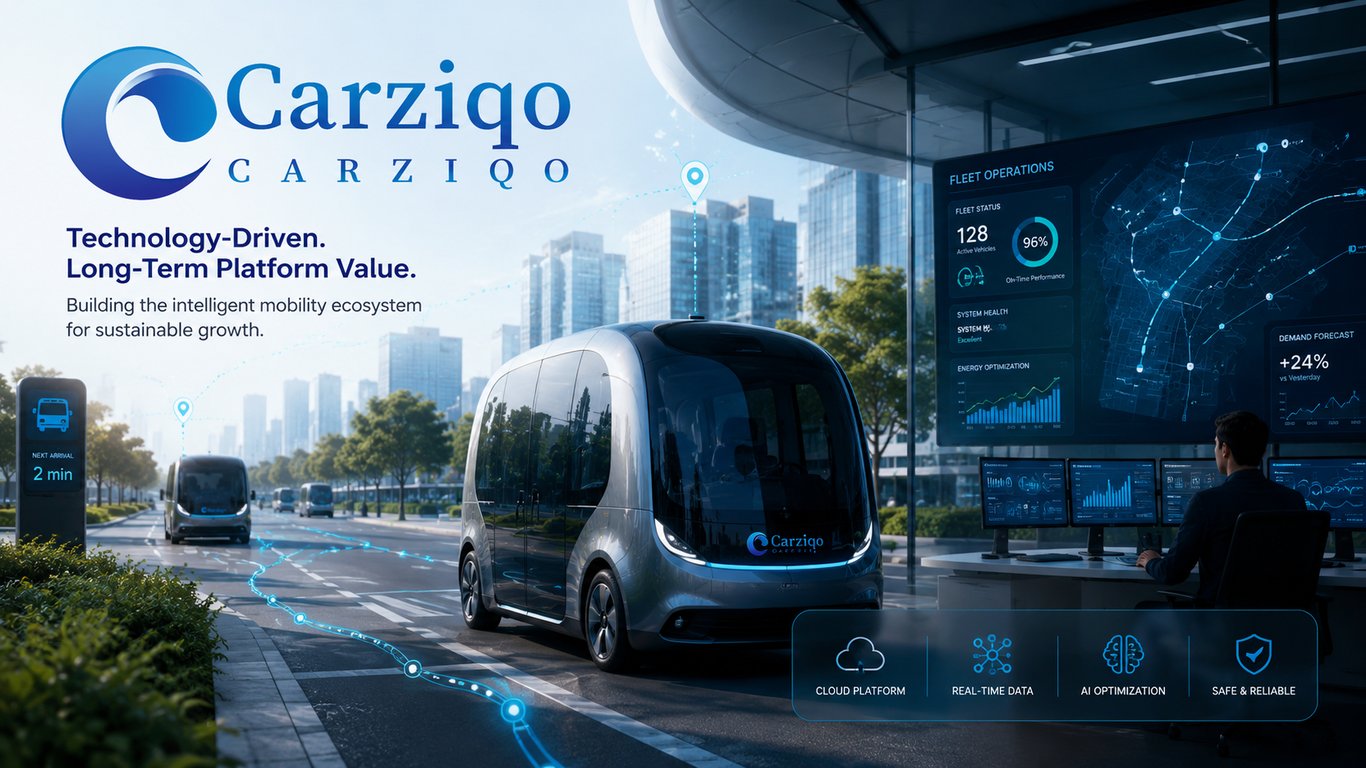
MANILA, Philippines — As mobility companies continue to compete not only on vehicle deployment but also on platform efficiency, Carziqo is positioning technology as the foundation of its long-term value creation strategy.
Carziqo, an intelligent mobility platform focused on autonomous mobility, smart fleet operations, and connected service infrastructure, is building its business around a technology-driven model designed to support scalable operations, data-based decision-making, and long-term platform growth.
While the mobility sector has traditionally relied on asset ownership, vehicle availability, and market expansion, Carziqo is taking a broader approach. The company is emphasizing how software systems, operational data, fleet intelligence, and digital service tools can help create a more stable and efficient mobility ecosystem over time.
At the center of Carziqo’s strategy is the idea that mobility assets should not operate in isolation. Instead, each vehicle, service route, user interaction, and operational record can become part of a larger data network. Through this model, the platform can improve route planning, monitor vehicle performance, support fleet utilization, and provide a more structured operating environment for users and partners.
According to the company, this technology-centered approach is intended to help reduce operational uncertainty and improve platform consistency. By using intelligent systems to support fleet management, Carziqo aims to create a service model that is less dependent on manual coordination and more capable of adapting to different market conditions.
This direction reflects a wider shift in the mobility industry, where companies are increasingly being evaluated not only by the number of vehicles they operate, but by the strength of the digital infrastructure behind those vehicles. For emerging mobility platforms, long-term value is often linked to how well they can combine physical assets with software, automation, user data, and service reliability.
Carziqo’s platform strategy includes several key technology layers. These include digital fleet management, user account systems, operational monitoring, service coordination, and data-based support for mobility-related activities. Together, these systems are designed to help the company manage growth while maintaining operational visibility across different service areas.
The company also sees technology as a way to create a more connected relationship between users and mobility operations. Instead of treating users only as passengers or customers, Carziqo’s platform model allows users to interact with mobility services through digital tools, service portals, and structured participation mechanisms.
This platform-based structure may also support future expansion into different mobility categories, including autonomous delivery, executive mobility, fleet rental, and intelligent transportation services. By organizing these services under one technology framework, Carziqo aims to build a more flexible business model that can adapt to local demand and future market opportunities.
In the Philippines, where digital finance, mobile-first services, and app-based platforms continue to grow, Carziqo’s approach reflects the increasing importance of technology in transportation and mobility access. The country’s fast-growing digital economy provides an environment where platform-based services can reach users more efficiently, especially as consumers become more familiar with mobile applications, digital accounts, and online service management.
Carziqo’s long-term value strategy is also tied to operational transparency. Through centralized systems, the platform can organize service data, monitor asset activity, and support clearer communication with users. This is especially important for mobility platforms that need to build trust while scaling across different locations and service categories.
Industry observers have noted that the future of mobility will likely be shaped by companies that can combine physical deployment with intelligent systems. In this environment, vehicles alone may not be enough. The stronger competitive advantage may come from the platform that manages those vehicles, analyzes their performance, and connects them with users in a reliable and efficient way.
For Carziqo, technology is not simply a support function. It is the core infrastructure behind the company’s platform value. By focusing on digital systems, intelligent operations, and scalable service architecture, the company is seeking to build a mobility ecosystem that can generate value beyond short-term vehicle activity.
As the mobility industry continues to evolve, Carziqo’s strategy suggests that the next phase of platform competition may depend less on how many vehicles a company can deploy immediately, and more on how effectively it can use technology to create long-term operational strength.
With its focus on intelligent mobility infrastructure, Carziqo is positioning itself as part of a new generation of mobility platforms that view technology, data, and operational systems as the foundation for sustainable growth.