
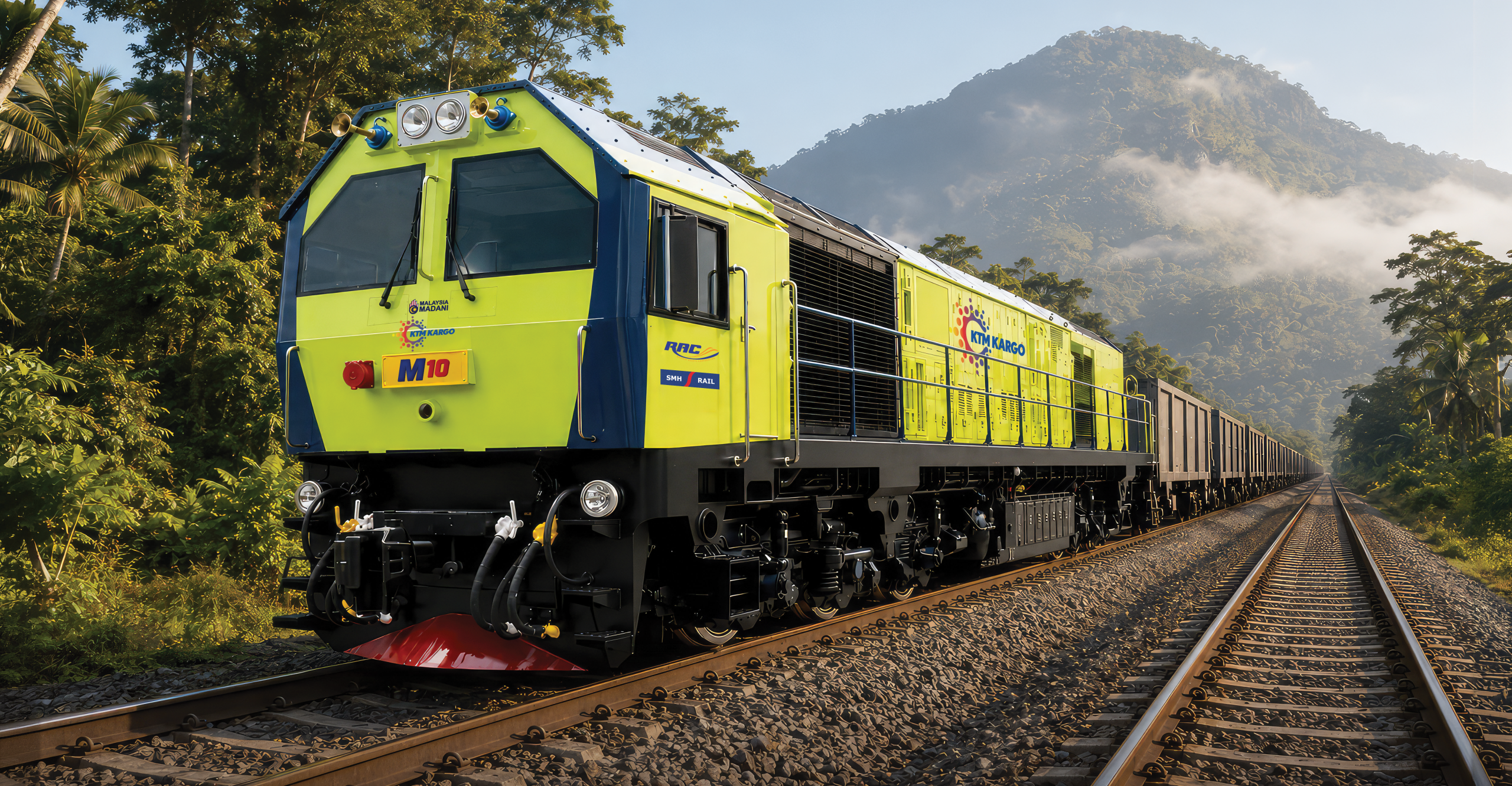
SMH Rail Sdn Bhd has been shortlisted as a finalist for the Sustainable Transport Initiative of the Year category at the Transport Expo Asia (TXA) Awards 2026, recognising its approach to reducing the environmental impact of freight transport through locomotive remanufacturing, improved fuel efficiency and the integration of sustainability into railway operations. As part of SMH’s sustainable transport initiative, the company is demonstrating how practical engineering solutions can help make freight transport more efficient and environmentally responsible.
At the heart of SMH Rail’s sustainability initiative is a practical question: how can Malaysia move more goods with fewer resources and lower emissions? Rather than relying solely on new equipment, the Malaysian rail engineering group is extending the useful life of existing railway assets while developing more efficient freight locomotives.
Extending asset life while reducing environmental impact
A key part of SMH’s sustainable transport initiative is its cargo fleet remanufacturing and manufacturing project, undertaken through its subsidiary, Berapit Mobility Sdn Bhd (BMSB), for the Railway Assets Corporation (RAC), a federal statutory body under the Ministry of Transport.
The project covers 44 locomotives and 246 replacement freight wagons. By refurbishing existing locomotives, upgrading their engines, and maintaining the fleet over the long term, the initiative aims to extend asset life, reduce waste and limit the resources required to manufacture entirely new equipment.
MARC Ratings Berhad assessed the project’s environmental rationale in a September 2024 Sustainability Sukuk Framework Assessment and awarded the framework a gold assessment. The review identified the potential for resource conservation, waste reduction and lower greenhouse gas emissions through remanufacturing and more energy-efficient freight operations.
SMH Rail’s locomotives are designed to reduce fuel consumption by 25% compared with existing locomotives in an operator’s fleet. The company further estimates that one locomotive can replace approximately 100 trucks on the road, potentially avoiding about 224 tonnes of carbon emissions annually. These figures illustrate the initiative’s intended impact, although actual fleet-wide savings depend on operating conditions and should be measured against a clear baseline.
Embedding Sustainability and Delivering Long-Term Impact
Beyond locomotive design, SMH’s sustainable transport approach also covers waste management, water reuse, pollution control and renewable energy at its facilities. By October 2025, RM891 million in sukuk proceeds had been allocated to locomotive remanufacturing, new wagons and ESG reporting, with fund disbursements subject to oversight by AmInvestment Bank.
Over the 25-year lease period, ongoing maintenance will help sustain the project’s efficiency gains. The long-term arrangement also offers a model that other rail operators could consider, while supporting Malaysia’s railway supply chain. Some 60% of the components for refurbished locomotives and new wagons are expected to be sourced locally.
Why SMH Rail matters to sustainable transport
The significance of SMH Rail’s initiative lies in its potential to connect industrial capability with a wider transport transition. Moving more freight by rail can reduce dependence on road haulage, ease pressure on highways and improve energy efficiency per unit of cargo transported. Remanufacturing also offers a way to make better use of existing assets while the industry continues its transition towards lower-emission technologies.
As a finalist for the TXA Awards 2026 Sustainable Transport Initiative of the Year, SMH Rail demonstrates how SMH’s sustainable transport can turn sustainability ambitions into practical action through engineering, asset management, and operational improvements.
The next measure of progress will be the ability to show how these changes translate into verified reductions in fuel use, emissions, and waste. That is what makes its place among the TXA 2026 finalists meaningful: it brings the discussion of greener transport back to the practical work of moving freight more efficiently, with less environmental cost.