

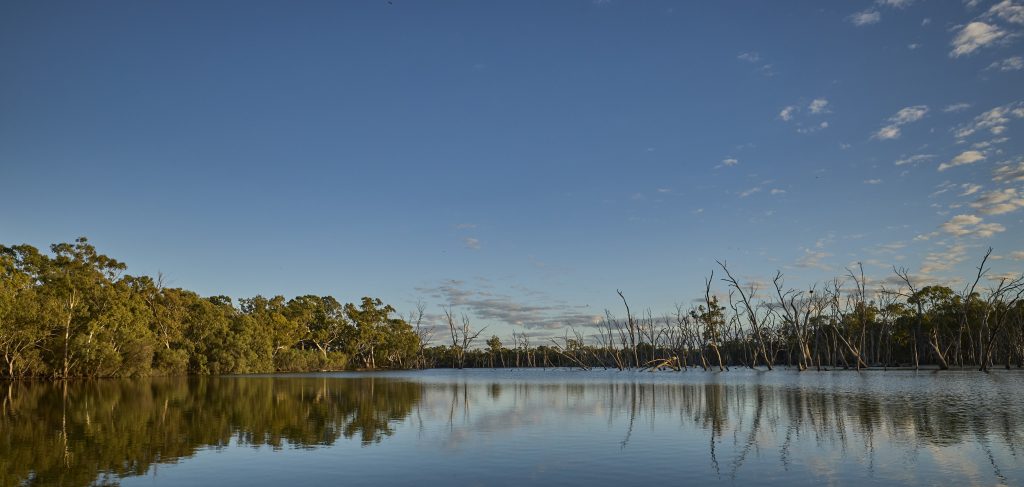
Traditional Owners, UNSW scientists, government and conservation groups join forces to get Gayini wetlands thriving again.
Gayini – meaning “water” in the Nari Nari language – is part of 80,000 hectares of culturally and ecologically rich land in south-west NSW, owned and managed by the Nari Nari Tribal Council, an Aboriginal-led not-for-profit organisation.
Conservation scientists from UNSW Sydney’s Centre for Ecosystem Science – supported by Charles Sturt University, Commonwealth Environmental Water Holder, The Nature Conservancy, the Murray Darling Wetlands Working Group, and the NSW Biodiversity Conservation Trust – are working with the Nari Nari Tribal Council to measure how this landscape can recover after more than two centuries of land and water exploitation – practices that have led to ecosystem degradation, the spread of invasive species, and the decline or extinction of native flora and fauna.
“By restoring natural flooding regimes and managing livestock grazing, our collaboration with the Nari Nari Tribal Council is a study of how Country responds when it’s given a new lease on life,” says UNSW’s Professor Richard Kingsford.
For more on Gayini, including striking aerial imagery and on-Country insights from Traditional Owners and scientists, visit UNSW’s interactive feature at: https://news.unsw.edu.au/en/gayini-healing-country-supported-by-science

