

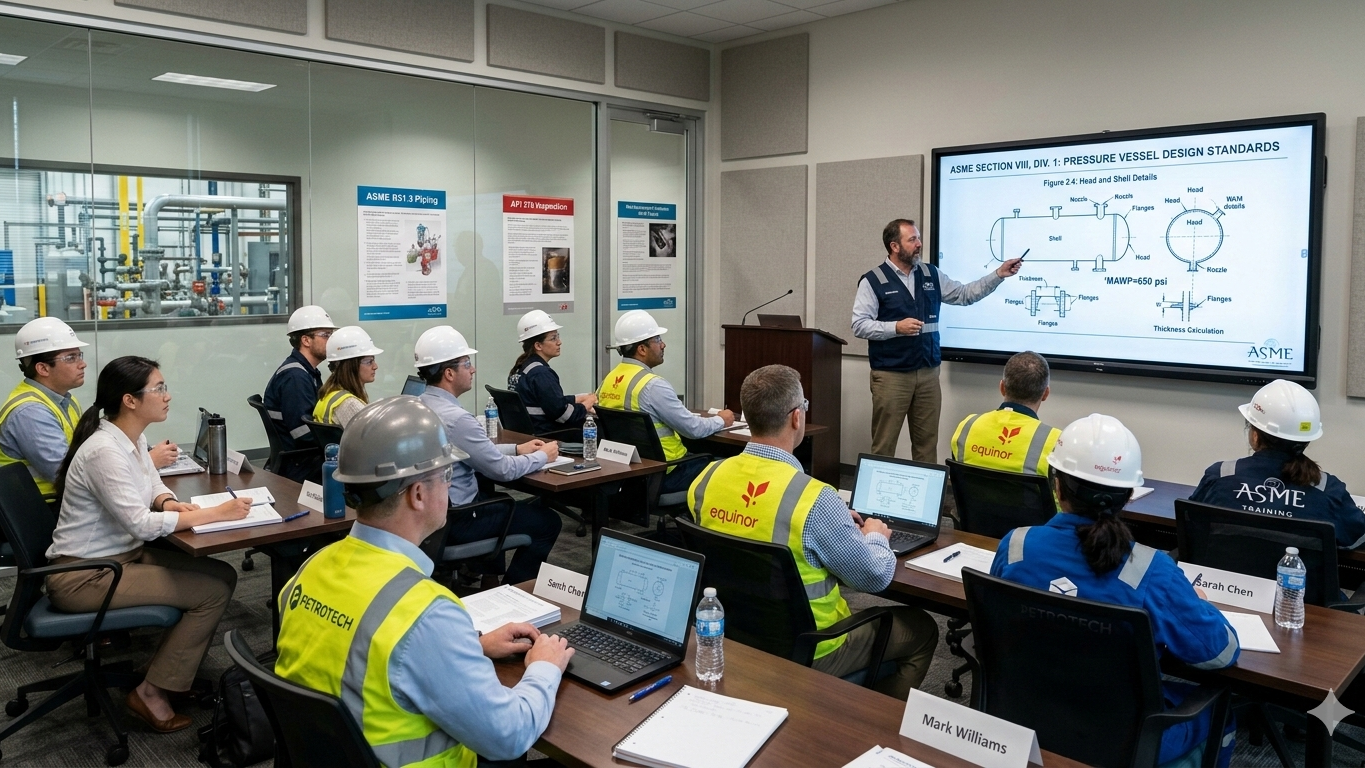
Enhance your expertise with PetroSync ASME Training. Learn global engineering standards and advance your professional skills today.
As the global energy industry continues to evolve, companies are facing increasing pressure to maintain operational safety, comply with international standards, and ensure their engineering teams remain technically competent. For many organizations in the oil and gas sector, technical training has become a strategic investment rather than a simple professional development activity.
PetroSync, a global B2B training provider specializing in technical programs for the energy sector, continues to support engineering professionals and companies seeking to strengthen their understanding of internationally recognized standards. Through its ASME-focused training programs, PetroSync aims to help professionals improve their ability to interpret engineering codes and apply them in real-world operations.
For decision makers responsible for engineering performance, reliability, and asset integrity, ensuring that teams understand these global standards is becoming increasingly important.
The Growing Demand for Global Engineering Standards in Oil & Gas
Operating in the oil and gas industry means working with complex infrastructure, from process piping systems to pressure equipment and processing facilities. These assets must be designed, maintained, and inspected according to internationally recognized engineering standards to ensure safe and reliable operations.
Many companies rely on widely adopted codes developed by the American Society of Mechanical Engineers to guide engineering practices across projects worldwide. These standards provide clear frameworks for design, fabrication, inspection, testing, and maintenance of critical equipment.
For example, engineers responsible for process piping systems frequently refer to ASME B31.3 when designing and maintaining piping networks in refineries, petrochemical plants, and LNG facilities. The code outlines detailed requirements that help ensure piping systems can safely operate under demanding industrial conditions.
Similarly, maintenance and integrity engineers often rely on ASME PCC-2 when performing repairs on pressure equipment. The standard provides recommended practices for repair methods that allow equipment to return to service safely while maintaining compliance with engineering codes.
As infrastructure expands and aging facilities require more maintenance attention, organizations are realizing that having engineers who truly understand these standards is essential for long-term operational reliability.
Why Decision Makers Invest in Technical Training Programs
Within most oil and gas companies, training initiatives are typically driven by senior professionals responsible for operational performance. Engineering managers, maintenance leaders, and technical directors often play a key role in identifying the training needs of their teams.
From a business perspective, investing in technical training offers multiple strategic benefits. Companies can strengthen internal technical expertise, reduce operational risks, and ensure that engineering decisions align with globally accepted standards.
For decision makers, the goal is not simply to send employees to training. Instead, they aim to build teams capable of interpreting engineering codes correctly, solving technical challenges efficiently, and maintaining compliance with safety regulations.
Structured programs such as ASME B31.3 Training help bridge the gap between theoretical understanding and practical implementation. Through instructor-led sessions and case discussions, engineers gain deeper insight into how international standards apply to real operational scenarios.
For companies managing complex assets, this type of knowledge can directly impact equipment reliability, maintenance efficiency, and overall operational performance.
From Technical Consultation to Corporate Approval: How Companies Enroll in Training
Unlike individual training programs, technical training in the oil and gas industry typically follows a structured B2B process. Companies often begin by discussing their technical needs with training providers before deciding which program best fits their operational requirements.
These discussions may involve engineering managers, learning and development teams, or department heads who are responsible for identifying capability gaps within their organization. In many cases, companies seek training programs that address specific technical challenges, such as piping design interpretation, pressure equipment repair practices, or asset integrity management.
Once a suitable training program is identified, the registration process typically moves through several internal stages. This may include technical evaluation, departmental approval, and budget confirmation before participants are officially registered.
While the process may involve multiple stakeholders, it ensures that the selected training aligns with the company’s operational goals and delivers measurable value to the organization.
Training providers like PetroSync are familiar with these corporate workflows and often support companies throughout the process—from the initial consultation stage to final participant registration.
Building Engineering Confidence Through PetroSync ASME Training
In high-risk industries such as oil and gas, engineering decisions carry significant responsibility. Engineers must ensure that equipment operates safely, maintenance procedures follow approved standards, and operations remain compliant with industry regulations.
Technical training plays a critical role in strengthening the confidence of professionals responsible for these decisions. By gaining deeper knowledge of engineering codes, participants are better equipped to interpret standards, analyze real-world challenges, and implement best practices within their organizations.
PetroSync’s ASME training programs are designed to support professionals working with critical infrastructure and pressure systems. Through practical discussions, technical case studies, and expert-led sessions, participants gain valuable insights that help them apply engineering standards more effectively.
For companies, the benefits extend beyond individual learning. Organizations gain stronger technical teams capable of improving reliability, maintaining compliance, and supporting long-term operational success.
As the energy industry continues to evolve, mastering global engineering standards is becoming an essential capability. For many companies, investing in structured technical training is one of the most effective ways to ensure their teams remain prepared for the challenges ahead.

