

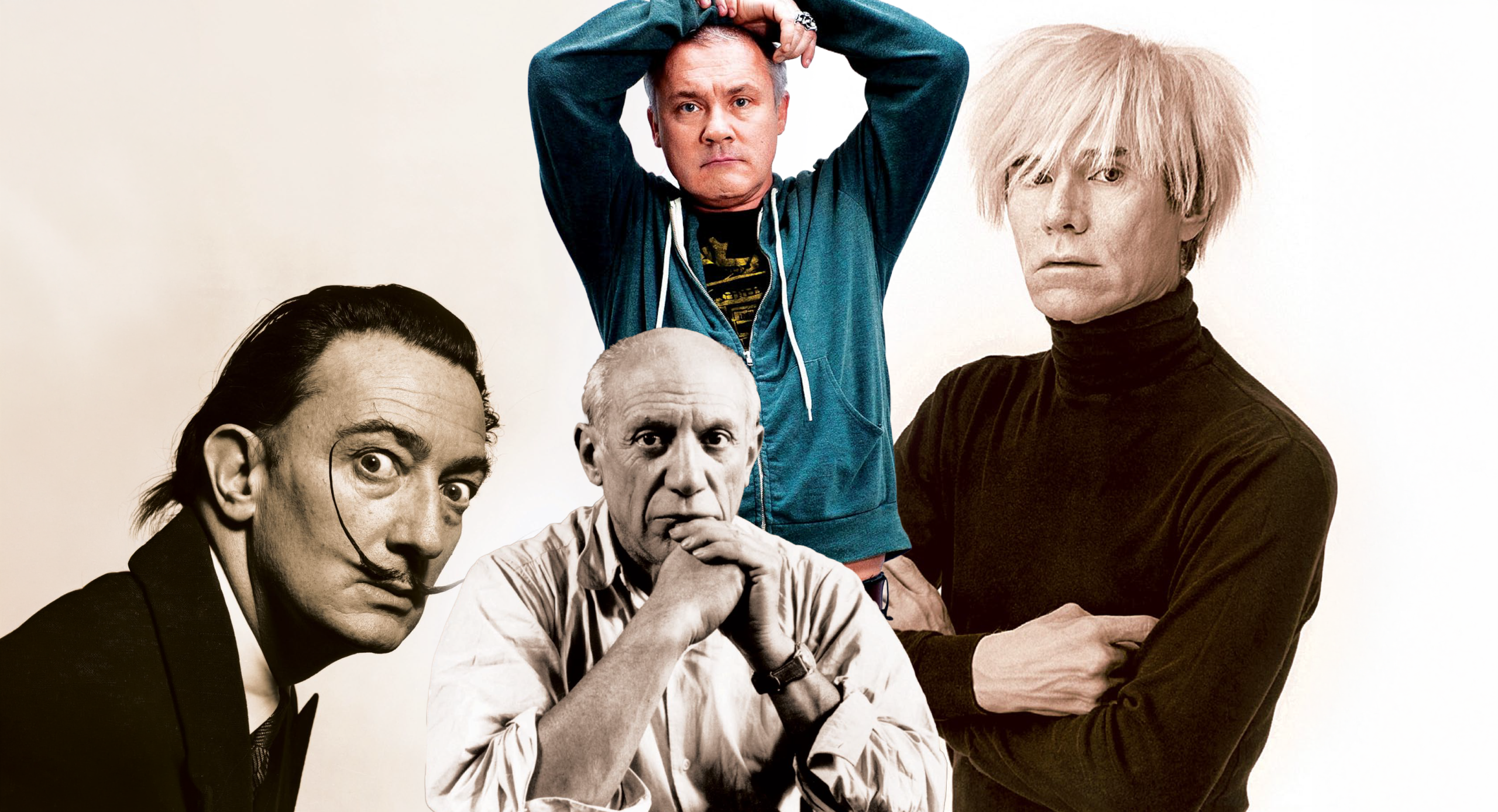
In collaboration with High Life: Living the Good Life, VOICE OF ASIA is proud to present timeless articles from the archives, reproduced digitally for your reading pleasure. Originally published in High Life Volume 1 in 2015, we present a glimpse into the masterpieces created by some of the world’s most avant garde artists.
In the minds of the purists, there are certain rules which must be followed and nowhere is this more prevalent than in the art world. Then there are those who ignore the rules and begin to challenge the established norms, expanding the perception of what art can be, opening a range of new possibilities. And none challenged the status quo like these four – Warhol, Picasso, Hirst and Dali – whose artistic impact will forever resonate. They bridged the gaps of cultural generations, and made cultural generations gasp.
Maestro of Madness, Salvador Dali
Dali’s entire life was an adventure in itself, worthy of a spellbinding novel. His justified bravado is evident in tales such as when he was expelled from his academy for criticising his teachers, saying they couldn’t grade his work because he knew more about art then they did. Later in life, having scaled the heights of success, a ball was held in his honour and he duly arrived wearing a glass case across his chest containing a brassiere. The man constantly challenged opinions in his own unique, bombastic, opinionated way.
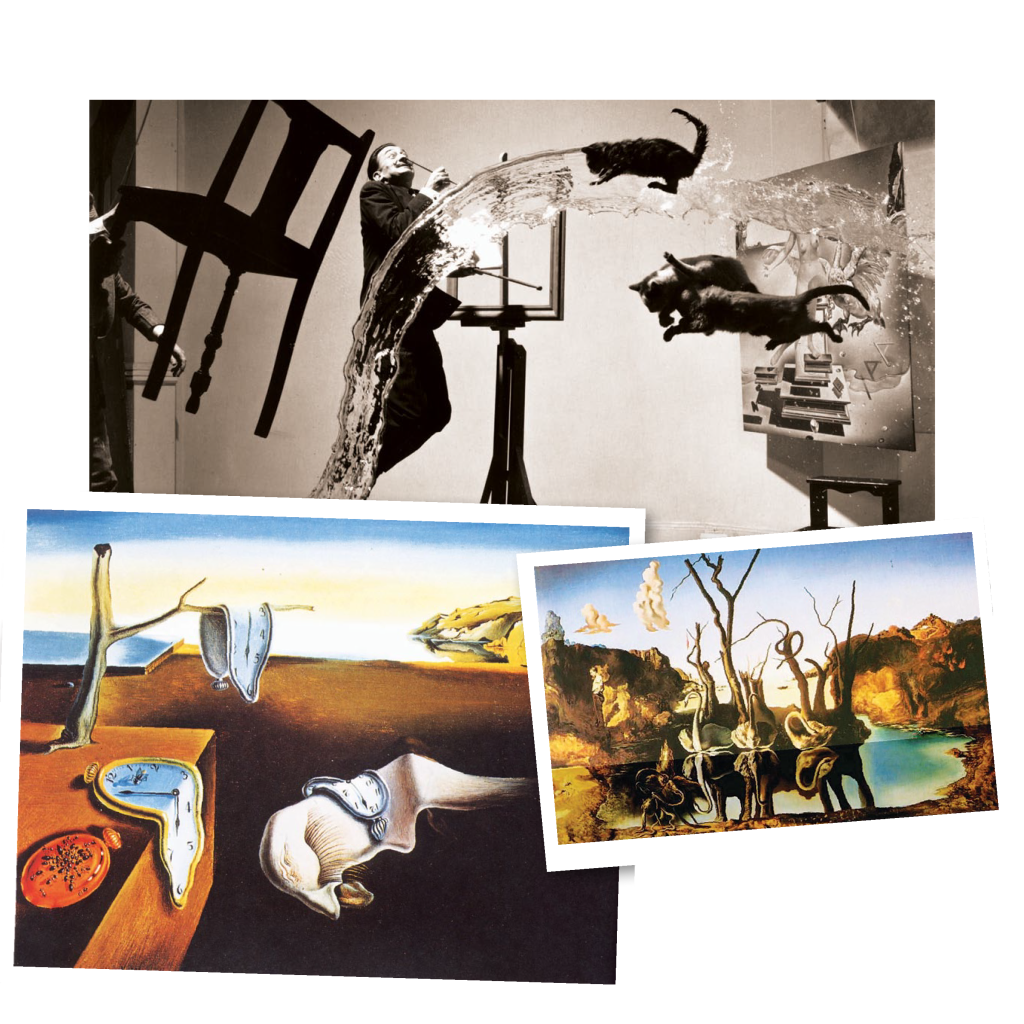
With his attention-grabbing moustache and his larger-than life personality, it was on canvas that the eccentric genius of the swashbuckling Spaniard was galvanized. A Surrealist painter, he is known for using bizarre images in his paintings, as encapsulated in The Persistence of Memory, which features melting clocks against the backdrop of a deserted landscape.
Dali drew inspiration from his dreams, and this gave his work a dark undertone. Another of his paintings, Dream Caused by the Flight of a Bee Around a Pomegranate a Second Before Awakening, contained the strange image of a tiger emerging from a pomegranate holding a gun, while an elephant with flamingo legs lingers in the background. Sounds insane? “There is only one difference between a madman and me. The madman thinks he is sane. I know I am mad.” Dali proclaimed.
He made a stark analysis of his legendary, self-assured genius when he said , “Each morning when I awake, I experience again a supreme pleasure – that of being Salvador Dali.”
What is a television apparatus to man, who has only to shut his eyes to see the most inaccessible regions of the seen and the never seen, who has only to imagine in order to pierce through walls and cause all the planetary Baghdads of his dreams to rise from the dust.
Pop Goes the Warhol, Andy Warhol
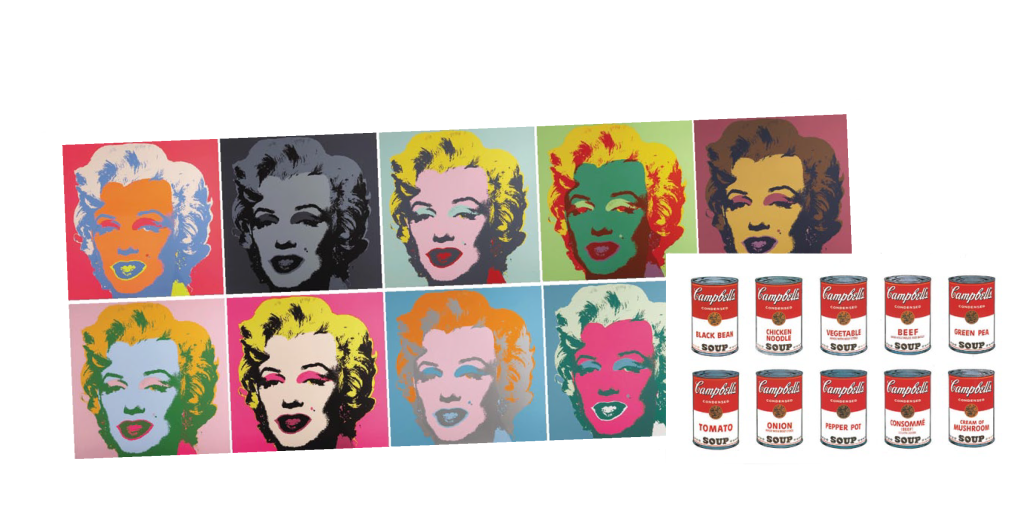
“Once you ‘got’ pop, you could never see a sign the same way again. And once you thought pop, you could never see America the same way again,” Andy Warhol once said. His name conjures images of ‘Campbell’s Soup Cans’, a ‘Gold Marilyn Monroe’ (pictured above), as well as vividly-coloured celebrity portraits of everyone from Elvis Presley to Elizabeth Taylor to Mick Jagger and more. It was these pieces that transformed the way that observers saw art, and how it was created.
Where did the idea emerge from? “My fascination with letting images repeat and repeat – or by film’ definition, ‘run on’ – manifests my belief that we spend much of our lives seeing without observing.” Warhol changed how people viewed art by focusing on ordinary, everyday objects. He abandoned the notion of three-dimensional arrangements for objects, and chose commercial objects and their packaging, satirising and celebrating both the material and celebrity obsessed culture.
His legendary art journey was inexplicably shaped by a TV – “When I got my first television set, I stopped caring so much about having close relationships” – and his audience was attracted by seeing popular silver screen stars and everyday objects translated to canvas. Consumer culture and mass production reimagined as art – audacity and the adventure of a new approach at its best.
People sometimes say the way things happen in the movies is unreal, but actually, it’s the way things happen to you in life that’s unreal.
Disturbing Brilliance, Damien Hirst
Dead animals as art? It could only be from the adventurous mind of concept-art extraordinaire Damien Hirst, who shocked the art world right from his first foray into the macabre with a 1990’s exhibition entitled A Thousand Years. Among the haunting pieces was a dead cow’s head in a glass case surrounded by flies and maggots, his first major animal installation.
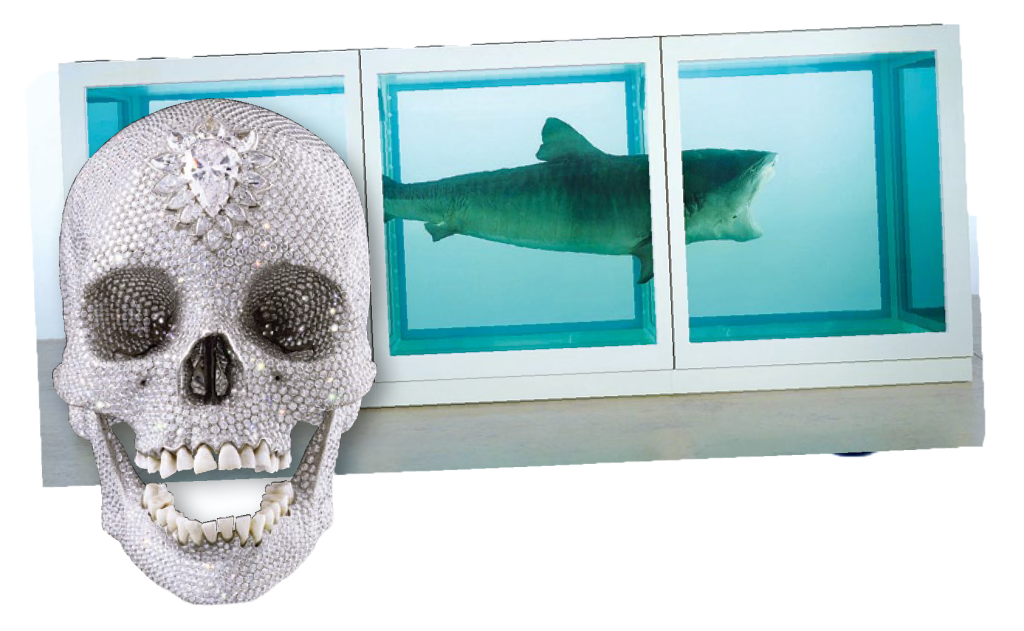
Hirst’s attention-grabbing portfolio includes his most famous piece, The Physical Impossibility of Death in the Mind of Someone Living (below), which jaw-droppingly featured a pickled 14-foot tiger shark separated into three adjoining glass cases. Another rotting-exhibition was banned by health officials because of the fear it would cause nausea in visitors.
It fear and wonder that have driven his legendary creations, and he continually draws crowds who clamour to discover what the latest wonder his ambitious mind has dreamed up. Hirst has mastered the free-standing exhibit discipline – his 8,601 flawless diamond-encrusted skull piece, called For the Love of God (below), left art-lovers in awe. “The skull is out of this world, celestial almost. It proclaims victory over decay. At the same time it represents death as something infinitely more relentless. Compared to the tearful sadness contained in the still-life scene of a vanitas, the diamond skull is glory itself,” proclaimed historian Richard Fuchs.
Others debated whether his adventurous art even deserves to be considered in the same breath as the classics because ‘anyone could have done it’. “But no one did, did they?” is Hirst’s defiant retort.
It’s amazing what you can do with an ‘E’ grade in A-Level art, a twisted imagination and a chainsaw.
So Amazing, Picasso
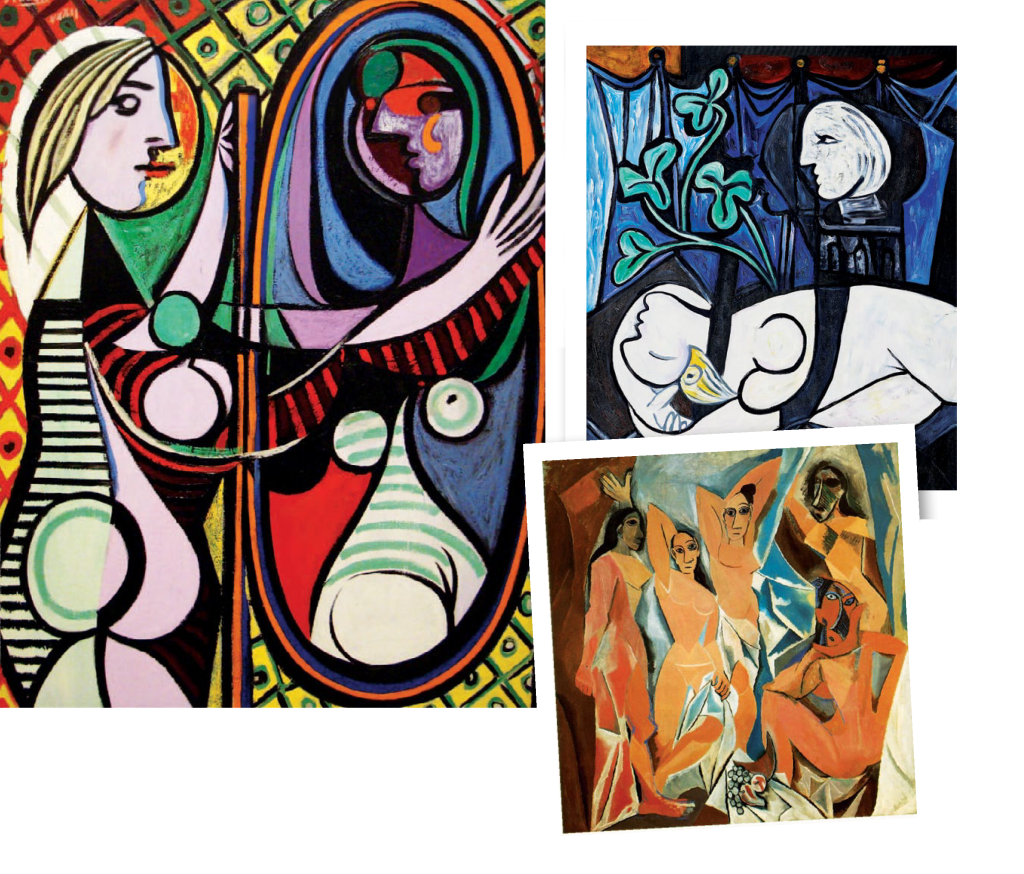
Picasso has become a synonym for ‘abstract,’ but there was a method to his adventurous mayhem.
He looked at the traditional canvas and decided not to follow the rules of 3-dimensional art, so instead created paintings that highlighted the two dimensionality of the canvas, with objects taken apart and reconstructed in geometric forms.
The Spanish-born painter was one of the leaders of the Cubist art movement which denied the traditional idea of three dimensional objects as art subjects. His paintings were different because of the use of various shapes, and the addition of coloured pieces of paper, but Picasso was a talented artist and he could re-create and be a master in any genre. Cubist painters did not believe that art should copy nature and they did not adopt the techniques of perspective and modelling – and Picasso was the trailblazer who led the way into the unknown.
His most famous piece is also a protest against war and a cry for peace, painted in 1937, after the German bombing of the Spanish village Guernica, highlighting the brutality of war and the death. Picasso said of the painting, “The Spanish struggle is the fight of reaction against the people, against freedom. My whole life as an artist has been nothing more than a continuous struggle against reaction and the death of art.”
His tremendous output, exploration of two-dimensional art, and new way of looking at the world were an adventure that consumed his whole life – one brushstroke at a time.
My mother said to me, ‘If you are a soldier, you will become a general. If you are a monk, you will become the Pope.’ Instead, I was a painter, and became Picasso.

