

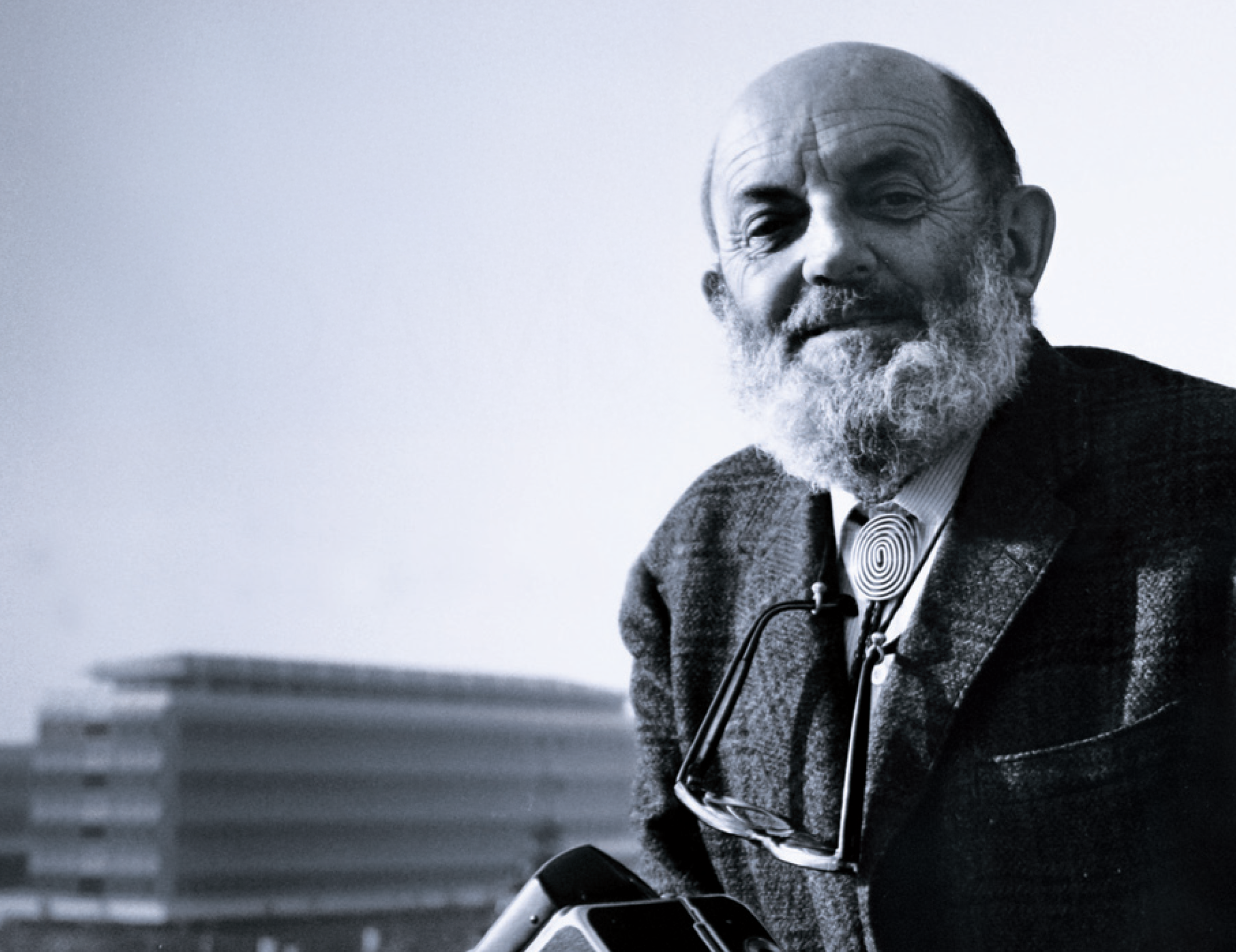
In collaboration with PASSIONS, VOICE OF ASIA is proud to present timeless articles from the archives, reproduced digitally for your reading pleasure. Originally published in PASSIONS Volume 46 in 2011, we present this story on Ansel Adams, a man who captured the dynamism of life in his still photography.
For some the harsh realism of photography is the antithesis of the romanticism of art. While a painting shows the artist’s interpretation of reality, a photograph is an exact visual replica of the subject. That is not to say that photographs cannot be artistic. In the hands of an expert, the camera becomes more than just a tool for capturing a view of the physical world. Through masterly knowledge and utilisation of timing, lighting and positioning, the photographer extraordinaire is able to capture both the physical and metaphysical – that is the spirit and soul – aspects of the subject. The late, great Ansel Adams was one such man and PASSIONS celebrates his life and work in the following pages.
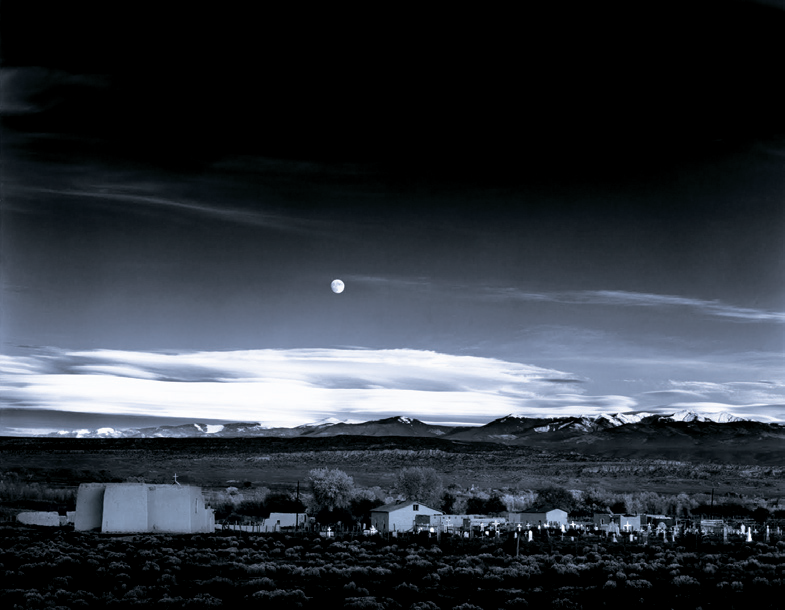
Ansel Adams was first exposed to photography when his father gave him a Kodak Brownie box camera during a trip to Yosemite National Park in 1916. Writing about his first encounter with the place that would become the subject of many of his later photographs, Ansel Adams noted “The splendour of Yosemite burst upon us and it was glorious… One wonder after another descended upon us… There was light everywhere… A new era began for me.”
Buoyed by his new found interest in photography, Adams became a keen amateur enthusiast of the art, and devoured photography magazines as well as become a frequent attendee of camera club meetings. The discipline developed by his piano training also came into good use as he took to exploring the Sierra Mountain ranges with his mentor – a retired geologist by the name of Francis Holman – where he built up his stamina and photography skills in high altitudes and harsh weather conditions.
The one rule which drove Ansel Adams as a photographer and also as a conservationist was an overwhelming desire to celebrate beauty, and inspire others to do the same. He once said, “I believe in beauty. I believe in stones and water, air and soil, people and their future and their fate.”
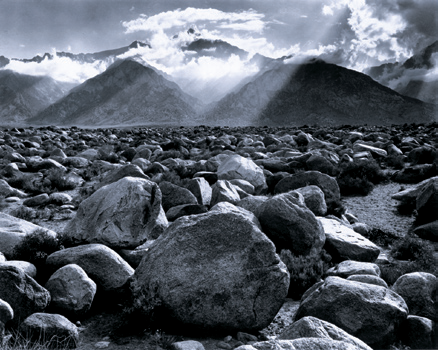
By 1927, Adams had pioneered a new technique of photography, which was revealed in his portfolio Parmelian Prints of the High Sierras, which contained one of his most famous shots Monolith, the Face of Half Dome – a photograph which depicted the stunning façade of the granite Half Dome in Yosemite National Park in an aesthetic composition of black and white. He would later write, “I had been able to realise a desired image: not the way the subject appeared in reality but how it felt to me and how it must appear in the finished print.”
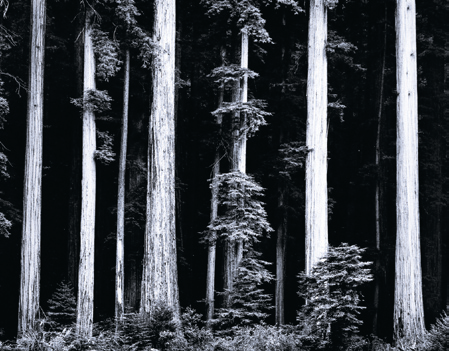
The successful reception of the collection also enabled Adams to confidently write, “My photographs have now reached a stage when they are worthy of the world’s critical examination. I have suddenly come upon a new style which I believe will place my work equal to anything of its kind.”
By the time of the early 1930s, Ansel Adams’ photographs had allowed him to gain fame and respect throughout the United States. Of greater note though was the psychological effect his depictions of the grandness of the American natural world – the Sierra Mountains and Yosemite National Park – had on a country that was wrecked by the Great Depression. In fact, his work was even described as “pictorial testimonies of inspiration and redemptive power.”
The Legend of Ansel Adams
To understand what Ansel Adams meant to the world of photography, we have to consider the impact he made on it. His 1941 photograph – Moonrise, Hernandez, New Mexico is probably one of the most celebrated in the world, and the total value of the 1,300 prints he had made is estimated to be US$25 million.
He made photography an art form by itself, which is testified to by the fact that art galleries – many of which had never exhibited photographs – decided to start exhibiting his. Such was the power of his work that his photograph The Tetons and the Snake River was included in The Voyager Golden Record. This incidentally was a golden vinyl record of images and sounds from Earth placed on the Voyager spacecraft which would serve as examples of the beauty and splendour of Earth to extra-terrestrials who may chance upon the spacecraft.
In 1980, Ansel Adams received the Presidential Medal of Freedom – the highest civilian award in the United States – from then President Jimmy Carter. Four years later, he would be dead from a heart attack, having lived up to a ripe old age of 82.
The greatness of Ansel Adams’ work is such that no matter which part of the world you may be from, if you appreciate beauty, then you will likely admire his photographs. It is because they reveal more than just scenes of nature or life. They are celebrations of the wonders of the world and reflections of the artistic soul who captured them in film.

