

In collaboration with PASSIONS, VOICE OF ASIA is proud to present timeless articles from the archives, reproduced digitally for your reading pleasure. Originally published in PASSIONS Volume 52 in 2014, we present this story on Cambodia, where Barbara Prinz takes us on yet another journey as captured through her lens.
In this PASSIONS exclusive, we take you to the most far-flung corners, exploring the magic, majesty and minute detail that the world has to offer. From people to places and vistas to soaring scenery, photo-journalist Barbara Prinz captures for PASSIONS the most breathtaking elements of landscapes that seem to exist on another planet.
Cambodia is a country with a dark recent history, contrasted with a supremely bright future. Of course, in between these two extremes is a colourful spectrum of culture, of architecture that has survived and of a people who have endured to smile again. Cambodia is a nation on the rise, yet its pride and beauty is anchored in the echoes of its past – a proud reminder of resilience and steely resolve. Barbara unveils the hidden treasures of this intriguing, educational and alluring destination.
Astounding Angkor
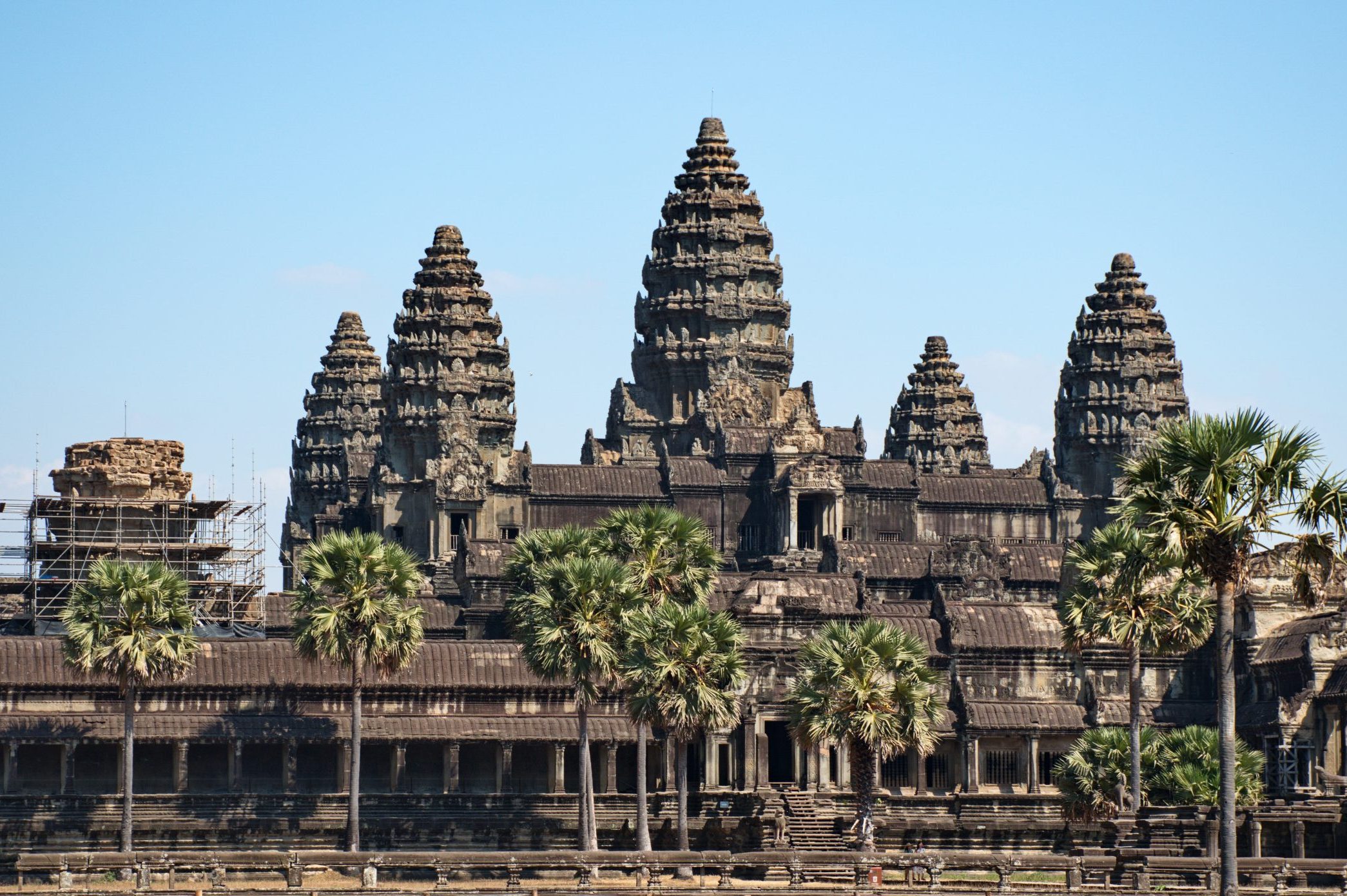
With its recent past of horrifying dictatorship, Cambodia seems a strange place to rank so highly as a destination on my travel list for more than 15 years. However the allure of the “City of Temples” Angkor Wat finally prompted me to make the trip – and my curiosity was rewarded when I finally journeyed there. My interest was piqued upon seeing the beauty of the temple complex, once hidden for centuries by a straggling jungle and discovered in 1860 by missionaries. They came across its ruins in the Cambodian jungle — and discovered a breathtaking lost city, twice as large as New York’s Manhattan.
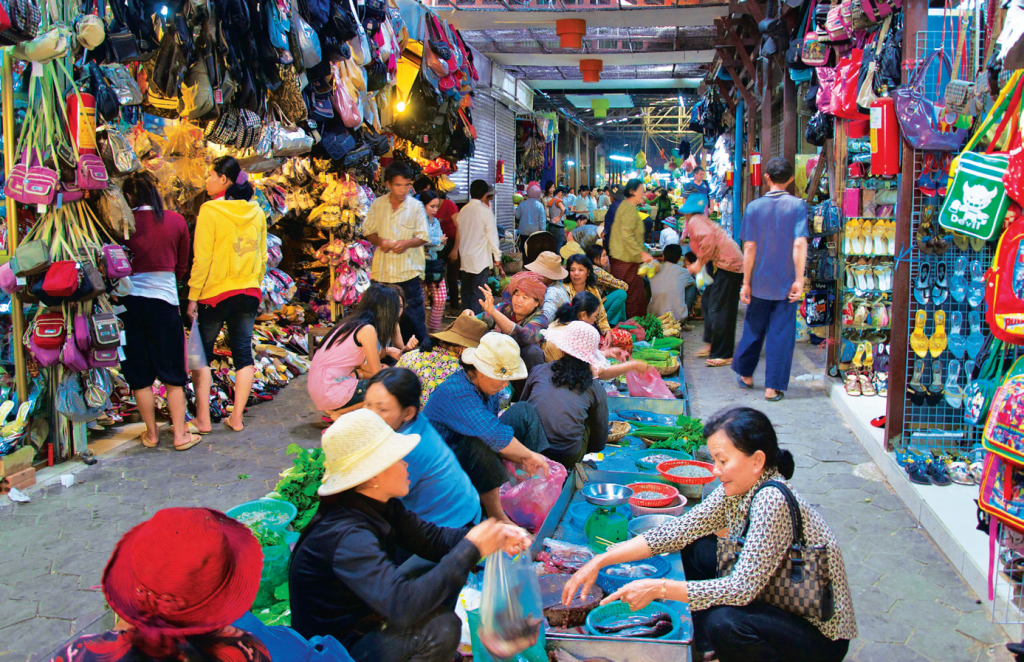
Excited and filled with respect for an ancient culture, I arrived at Siem Reap – a charming city close to the complex. I was surprised by this fascinating little town with its lingering traces of an Indochina past, with vibrant markets selling daily food produce or handcrafted souvenirs for curious tourists trying to take home an example of Cambodian life.
The morning after my arrival, I woke early to see the sunrise at the lotus pond situated in front of the Hindu temple in Angkor Wat, which is dedicated to the god Vishnu. This largest religious monument in the world was built by King Suryavarman II in the early 12th century in what was formerly the capital of the Khmer Empire Yasodharapura (which is known today as Angkor). It is the best-preserved temple in the area, and the only one to have remained a significant religious centre since its foundation – first Hindu, then Buddhist. The temple is the epitome of the high classical style of Khmer architecture and has become a symbol of Cambodia, even appearing on its national flag. Little doubt or wonder why it is a prime attraction for visitors, and an emblem of national pride.
Allure of the Lotus
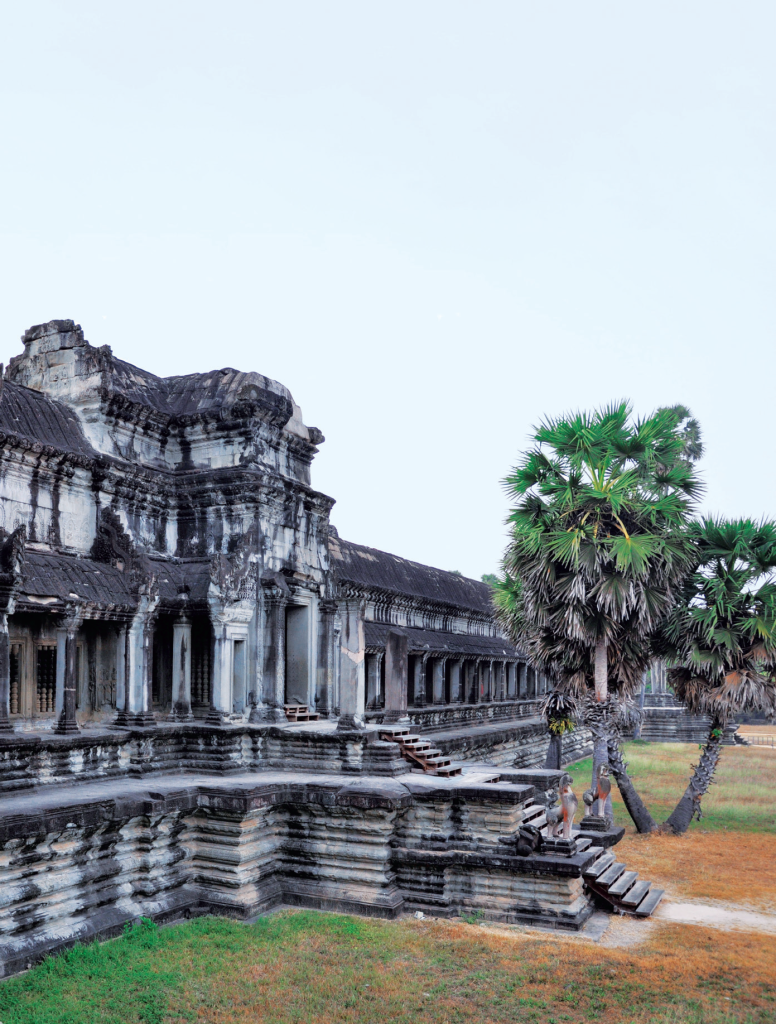
I soon understood why the prime spot to welcome the sun was the picturesque lotus pond. It is an ideal vantage point to watch the sun rise, as its rays and reflections glimmer on the water’s surface, illuminating the pink lotus blossoms. If you prefer to experience a unique, tranquil moment, this is the time to enter the temple premises as all other visitors are waiting for the sunrise. I spent two days in Angkor Wat from early in the morning until late afternoon when the temples were closed and was stunned by the grandeur and harmony of the architecture, its extensive bas-reliefs, and for the numerous devatas (deities) adorning its walls.
Bas-reliefs are individual figures, groups of figures, or entire scenes cut into stone walls, not as drawings but as sculpted images projecting from a background. Narrative bas-reliefs depict stories from mythology or history, and at Angkor Wat, the external gallery wall is covered with nearly 12,000 or 13,000 square metres of them, some of them historical, some mythological. Similarly, the outer gallery at the Bayon – the second most important temple after Angkor Wat – contains extensive bas-reliefs documenting the everyday life of the medieval Khmer as well as historical events from the reign of King Jayavarman VII.
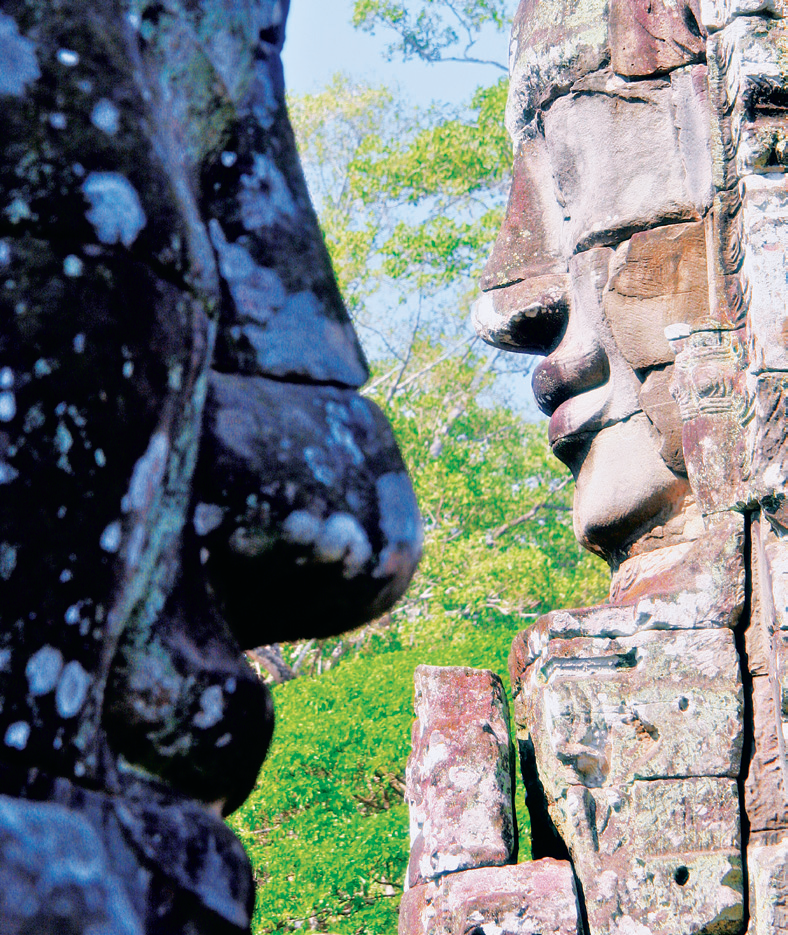
The Bayon temple and its outer gallery left a deep impact on me. Huge stone faces of the bodhisattva Avalokiteshvara occupy many towers and from the vantage point of the temple’s upper terrace, I was struck by the serenity and nobility of these stone faces. No wonder that the curious smiling image thought by many to be a portrait of Jayavarman himself has been dubbed by some the “Mona Lisa of Southeast Asia.”
Ta Prohm is the modern name of a temple built in the Bayon style dating back to the 12th and 13th century, and originally called Rajavihara. When reconstruction efforts on the Angkor-area temples began in the 19th century, it was decided to leave Ta Prohm largely untouched with the trees growing out of the ruins, so it is now the Angkor-area temple that best shows the effects of the encroaching jungle with its large Spung trees.
A Phnom-enal City
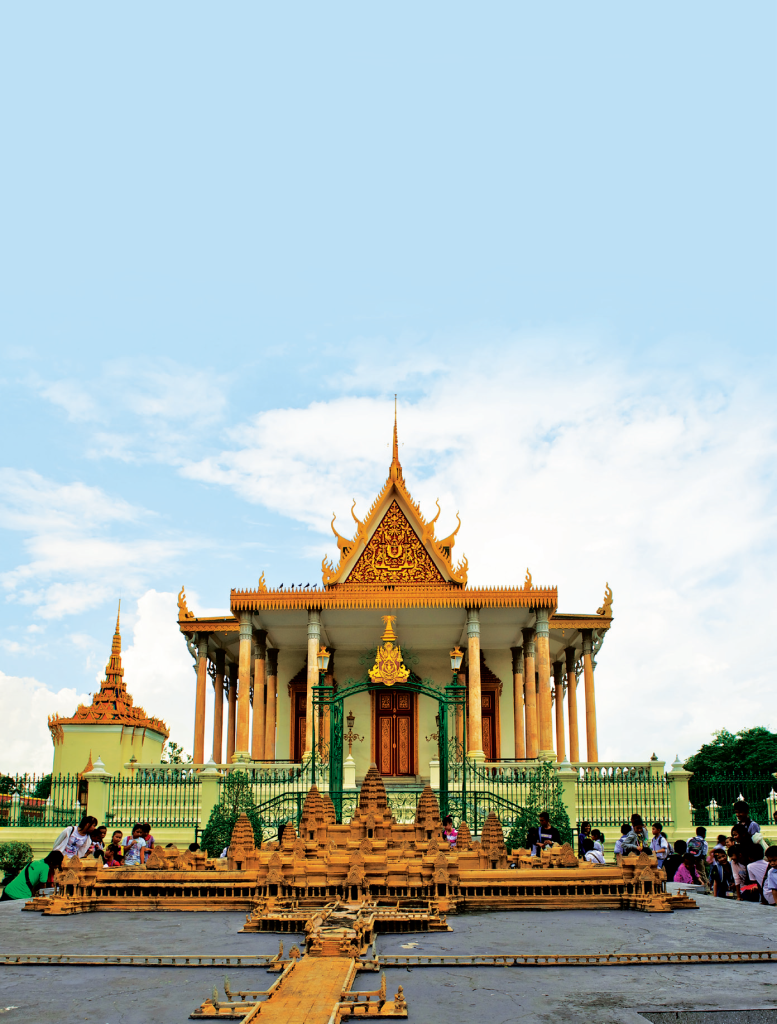
From Siem Reap I travelled to the Cambodian capital of Phnom Penh – an inevitable trip to take to the city which was founded in 1434. This largest city in the country is located on the banks of the Mekong River, becoming the capital during the French colonisation. Once known as the “Pearl of Asia”, it was considered one of the loveliest French-built cities in Indochina in the 1920s.
A number of surviving French colonial buildings scattered along the grand boulevards, cannot hide the fact that there was a dark side in Cambodia’s recent history. I took a walk along the riverside in the evening. This recently built promenade is where old and young generations gather to enjoy their limited spare time. Groups of young people dance to modern music and each group tries to be more outstanding than the others. Elders watch them dancing and I felt that they were somehow bewildered to see this public outward expression of life.
Nights in Phnom Penh are colourful and vibrant, and with the country on the cusp of making a splash commercially and globally, this is definitely a place that I was happy to visit before it becomes too globalised. Of the “more prestigious” spots in Phnom Penh which testify to a beautiful culture, are places such as the National Museum. Inspired by Khmer architecture, the museum hosts more than 14,000 items of sculptures, ceramics, bronzes, and ethnographic objects dating from prehistoric times to all periods before, during and after the Khmer Empire.
From here it is just a short walk to the Royal Palace of Cambodia, a complex of buildings housing the royal abode of the King of Cambodia. The compound was the citadel of King Ponhea Yat (1393-1463), rebuilt to its present state in 1886, when King Norodom (1834-1904) relocated the royal capital from Oudong to Phnom Penh. The buildings with beautiful towering spires are a great example of classic Khmer architecture.
Another place of historical significance is the Phnom Penh Royal Railway Station, as Cambodia’s railway network originates from the time when the country was part of the French Indochina. During the latter half of the 20th century the network was neglected and damaged by the civil war and all services were suspended by 2009. A Cambodian-Australian joint venture wants to reopen the railway network to complete the missing link in the Trans-Asian Railway, but till today you will get vague answers at the station counter when you ask when the next train will come. Yet the railway staff are proudly and persistently on duty, even though it is not know when the trains will be expected…
A trishaw conveniently brought me to my next stop, Wat Phnom, also known as Mountain Pagoda. This Buddhist temple was built in 1373 and stands 27 metres above the ground. It is an auspicious and sacred site where people make blessings and pray and the prominent stupa contains the ashes of the previous ruling King and his royal kin. From here you can see the luxurious Raffles Hotel – the Royal Phnom Penh Cambodia.
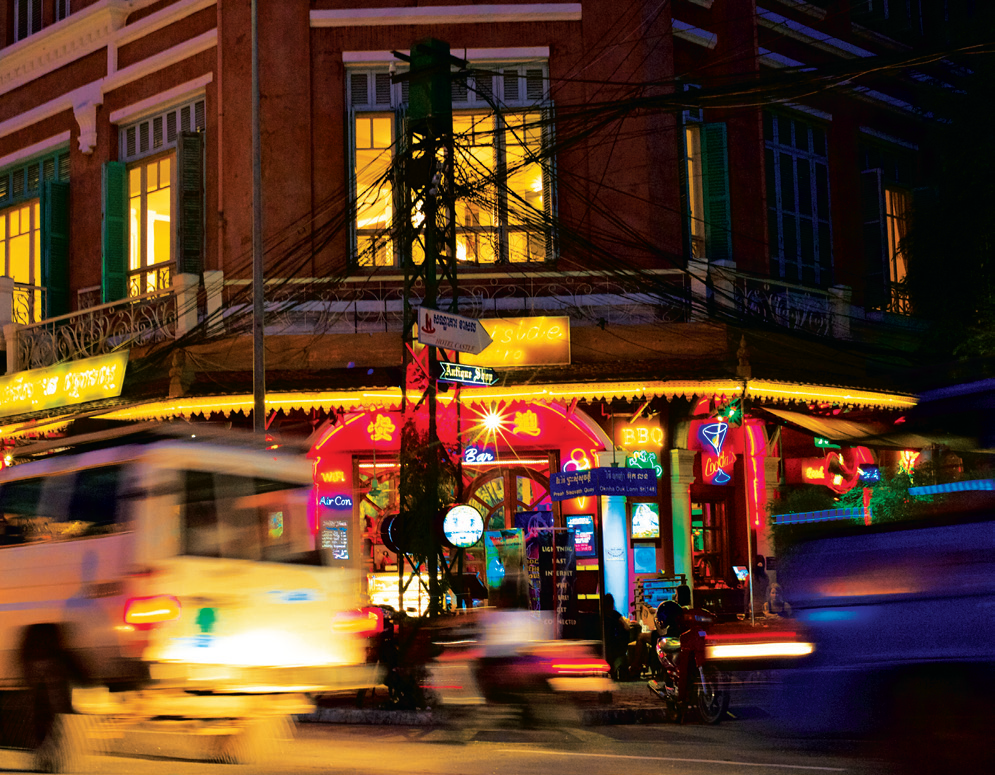
Arena of Indulgence
After a recharging break at the 5-star Royal Phnom Penh, I needed a contrast and took another trishaw to Psar Thmai, also known as Central Market or New Market. Psar Thmai is arguably the best of the markets in Phnom Penh and has become a major landmark for the city. The yellow Art Deco building has a large central domed hall with four wings protruding from it and is certainly hard to miss, with stalls offering a wide variety of goods from gold and silver jewellery to antiques, electrical goods, clothing, household items and a large variety of flowers and plants. After a shopping spree in this market you will find lots of food stalls around the main building mostly on the western side facing Monivong Boulevard.
Monuments of Mourning
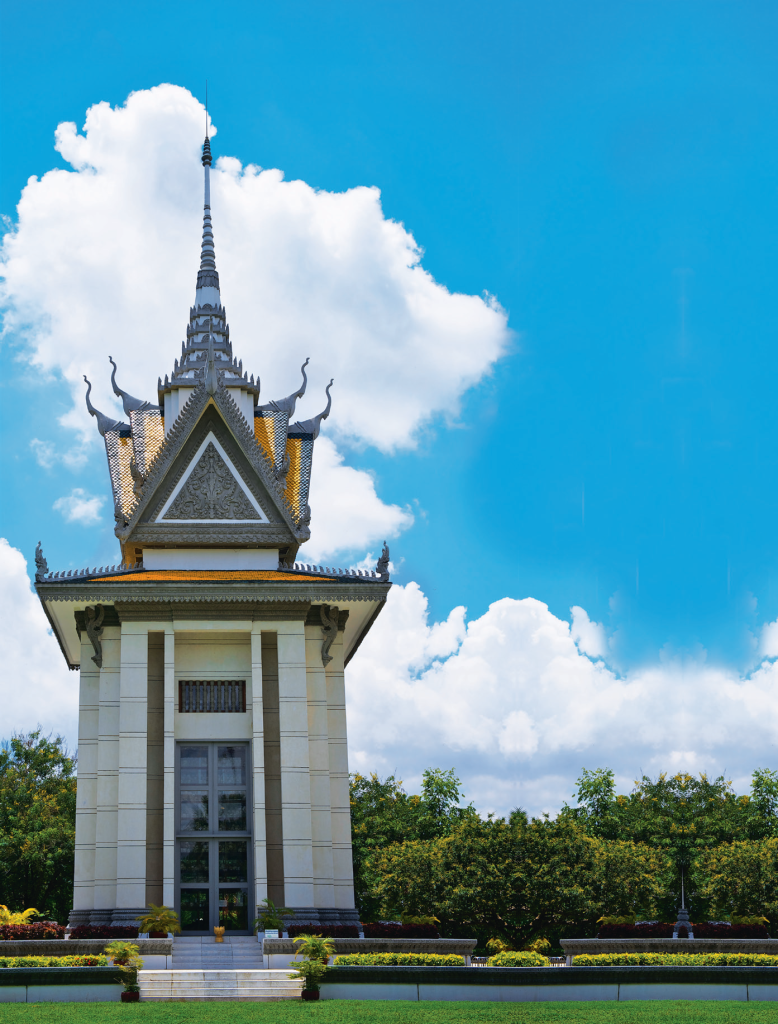
One of the major tourist locations here is the Tuol Sleng Genocide Museum, a former high school used as the notorious Security Prison 21 (S-21) by the Khmer Rouge regime, whose control of the country ranged from 1975 to its fall in 1979. Tuol Sleng means “Hill of the Poisonous Trees” or “Strychnine Hill”, and was only one of at least 150 execution centres in the country. As many as 20,000 prisoners were executed there.
During the era of Cambodian communist rule, agrarian socialism was imposed. Phnom Penh was almost depopulated as the Khmer Rouge attempted to turn Cambodia into a classless society by driving the urban population (“New People”) into agricultural communes, forcing them to become farmers in labour camps in the countryside. The combined effects of executions, forced labour, malnutrition, and poor medical care caused the death of approximately 25 % of the Cambodian population. In all, an estimated 1 to 3 million people (out of a population of slightly over 8 million) died due to the policies of a three-year rule of terror.
The atmosphere at Tuol Sleng Genocide Museum is extremely depressing: barbed wire prevented any possible escape, harrowing torture instruments were used and now, photographs of thousands of tortured and killed detainees are displayed. The extremely small cells for so many souls left a shocking impression on me. I wanted to understand the full story, so took a trip to the outskirts of Phnom Penh, to the village Choeung Ek where the “killing fields” are located.
They refer to the number of sites in Cambodia where large numbers of people were murdered and buried by the Khmer Rouge regime. The memorial park at Choeung Ek is where the mass graves of many thousands of victims are located, most of them executed after they had been transported from the S-21 Prison in Phnom Penh. Walking on these grounds is very thought-provoking and a commemorative stupa filled with skulls of the victims leaves the visitor speechless and emotionally reflective.
On my way back to town, I passed by the Olympic Stadium built in the 60’s to host the 1963 Southeast Asian Peninsular Games, but the games were cancelled due to political problems in Cambodia. Today this place looks a bit abandoned though there is still activity going on. Since 2007 it’s a popular attraction for Phnom Penh residents, who attend daily exercise sessions here – a wonderful glance into everyday life…
I left Phnom Penh with extremely mixed feelings after 5 days. I was fascinated by the rich culture from the past, the shocking nightmare of a terror regime that almost extinguished the talent, culture and people of a whole country and left so many scars behind. While Cambodia continues to cope with its past, I was happy that I had the opportunity to see this country before it loses its unique charm.

