

In collaboration with High Life: Living the Good Life, VOICE OF ASIA is proud to present timeless articles from the archives, reproduced digitally for your reading pleasure. Originally published in High Life Volume 1 in 2013, we present this story on the timeless nature of love, and how some artists chose to capture it in their art.
As St. Valentine’s Day approaches, every yearning heart sighs with relief at the arrival of a day when love can be expressed toward the one it adores – be it through a romantic greeting card, candlelit dinner, flowers, or a heart-shaped box of chocolates. However as any true romantic knows, love is not just for a day and the desire to express such deep adoration is a long-standing human trait. There is only one word to describe love, yet a thousand different ways to portray it. HIGH LIfe looks at some masterpieces that capture the soul of amour.
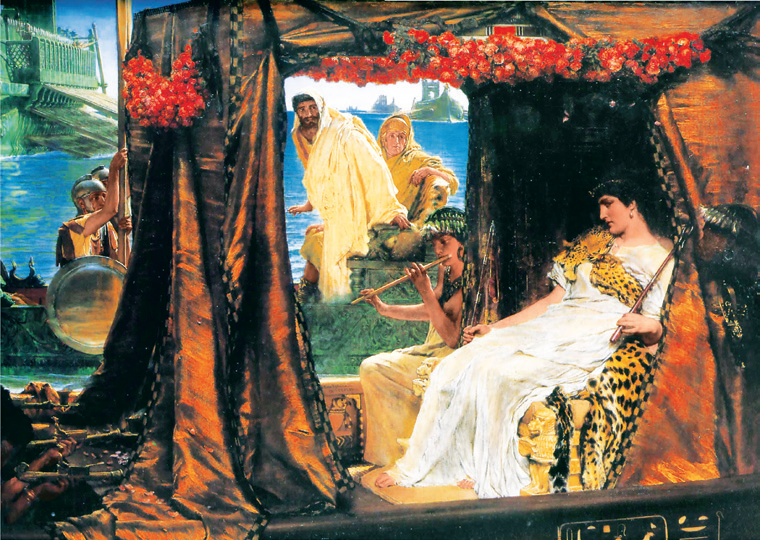
The Meeting of Antony and Cleopatra by Sir Lawrence Alma-Tadema
In the beginning, every stolen glance counts. The foundation of love is built upon the first meeting of eyes, searching for the slightest sign of requited adoration. Though she would later be known for bolder personality traits, this reticent Cleopatra shies away from the curious, searching stare of Mark Antony in this painting by Alma-Tadema of their meeting in 41BC. This 1885 depiction captures in its historic setting the first moment of a courtship that led the pair to succumb to the power of their love – in defiance of logic, sense and reason.
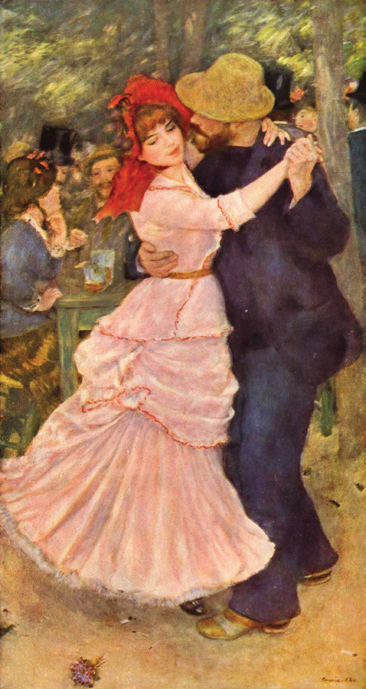
Dance at Bougival by Pierre-Auguste Renoir
Renoir painted this full-length portrait of both love and his mistress Suzanna Valadon. Dance at Bougival is his most romantic work in a series of paintings that depicts lovers locked in the embrace of intimate dance. The tender yet passionate pose of the couple emotes an ardour through body language and trust, with the female following the male lead and both oblivious to the crowd behind. Lost in their own private moment, the closeness of their faces and the clutch of an ungloved female hand – which would have certainly have enflamed the senses of a 19th century audience – the couple are at ease with each other, feet following the music and bodies echoing the harmony of love.
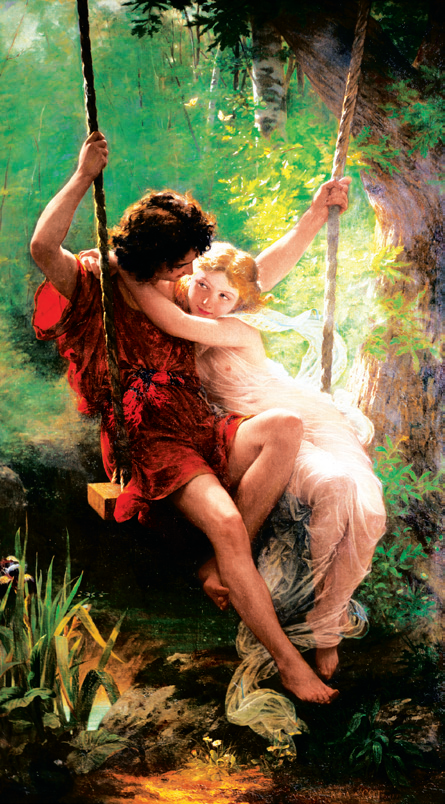
Le Printemps (Springtime) by Pierre Auguste Cot
Love can be playful, innocent and charming, and Cot captures on canvas the dawning of tenderness and also the seasons, as a warm spring sun greets the first buds of dew-glistened flowers. Exposing the neck to one’s partner is a sign of pure trust and openness, as the nape is considered the most vulnerable part of the body. As her arm drapes around the boy’s shoulder, the girl entangles her feet with his as she nestles within the protection of the boy’s arms. Le Printemps captures those final halcyon days of youthful innocence and the giddy first days of blossoming love, an awakening of the senses and the season.
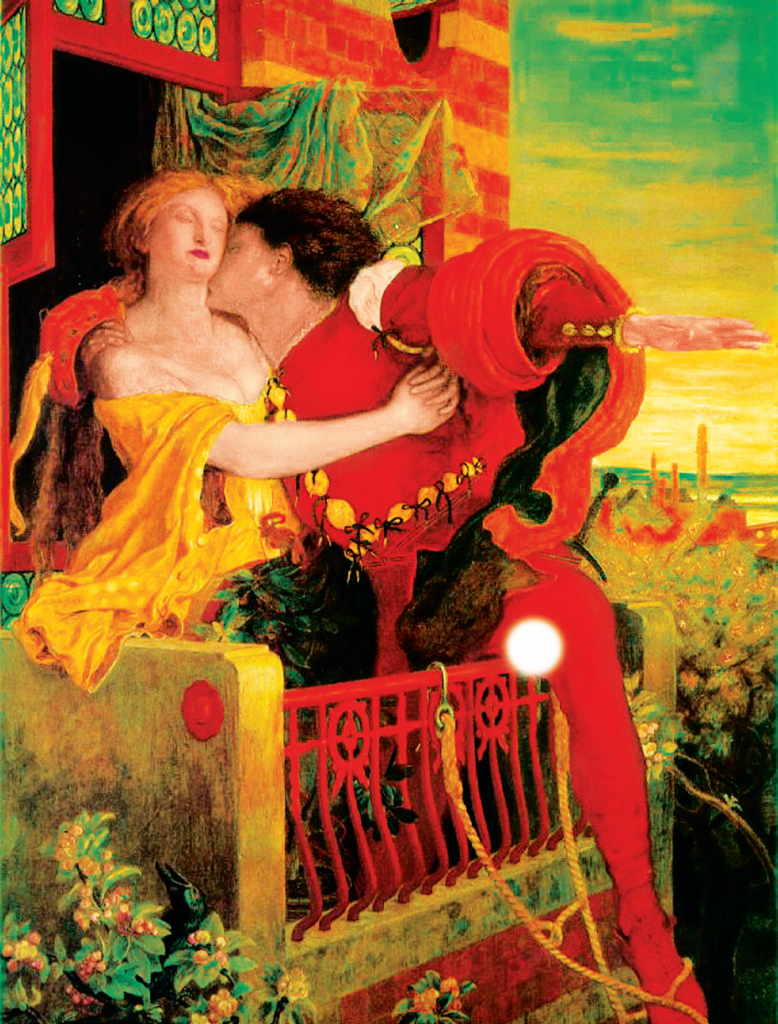
Romeo and Juliet by Ford Madox Brown
Perhaps the most famous love story of all time, Shakespeare’s Romeo and Juliet is the ultimate example of ill-fated ardour. Their love burnt as bright as a supernova yet lasted just as briefly. This painting captures one of the fleeting moments that the pair managed to be together, as Romeo straddles the balcony, about to make his escape yet unable to resist one final kiss on Juliet’s soft skin before he departs. As the dawn light through yonder window broke, alas, the sun arose to kill the envious moon; instead the star-crossed lovers had to take their own lives to be together forever. Ford Madox Brown captures one of the fleeting moments when they were allowed to enjoy the sweetness of their overpowering connection.
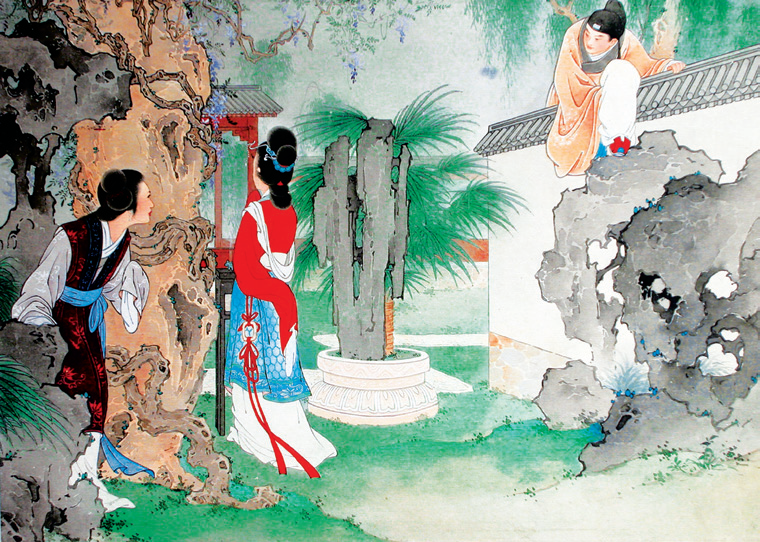
Romance of the West Chamber by Wang Shifu
The story of these two lovers has been re-told and re-interpreted over many centuries. However the tale closest to the original is seen in this woodblock print, which tells the sweet-sided version of a quest for love against the odds. The protagonist falls in love with the daughter of the Prime Minister while staying at a temple, though he could not snatch a second alone with her due to the ever-presence of her protective mother. His chance to impress emerged when the group was besieged by robbers, with the mother proclaiming that whoever could rescue them would have permission to marry her daughter. The hero saves the day but the mother reneges on her promise, citing his lack of wealth and poor life prospects. Thus, he embarks on a career path driven by vindication and fuelled by his undying love. Finally he marries the girl he sang so sweetly to over the perimeter wall, never conceding in the uphill struggle to prove his eternal love, and ultimate self worth.
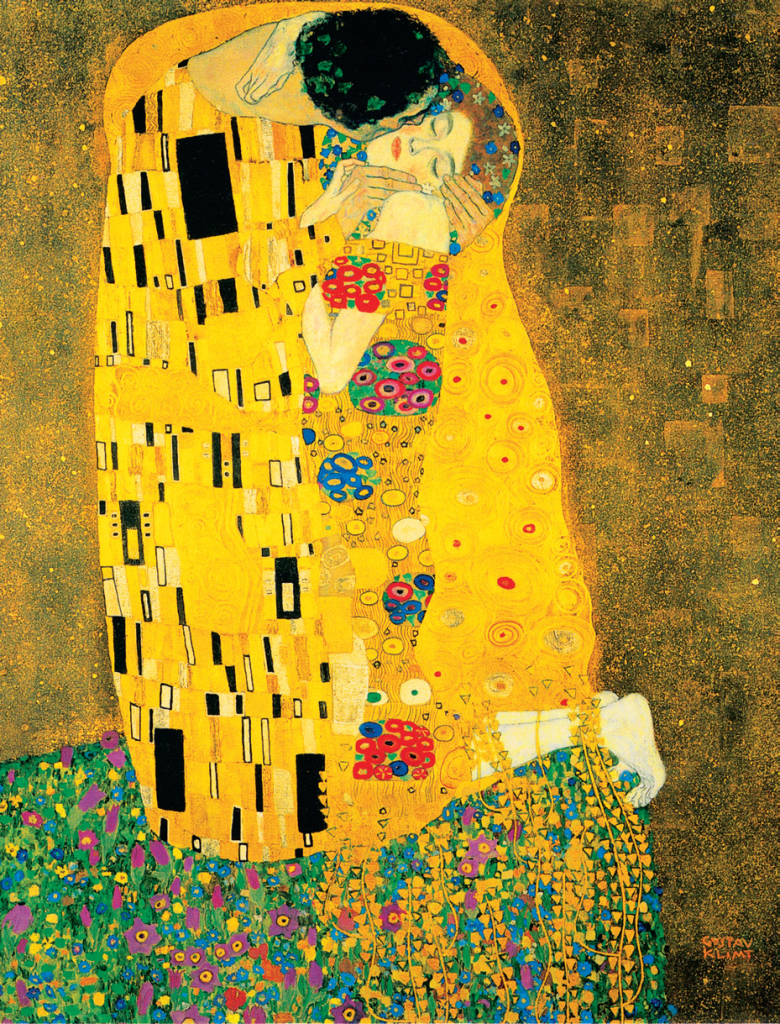
The Kiss by Gustav Klimt
One of the most famous paintings of all time, the tenderness and unison of love is no better depicted than in this Klimt masterpiece. The oil painting with its gilded depiction and elaborate robes enhanced with actual gold leaf, parades the decadence and grandeur that love evokes within its recipient. In this ultimate depiction of intimacy, Klimt captures such an evocative moment that one is inclined to shy away, fearing to intrude upon the embracing couple. The stance of the woman is almost submissive in this union, immortalised in captive rapture.
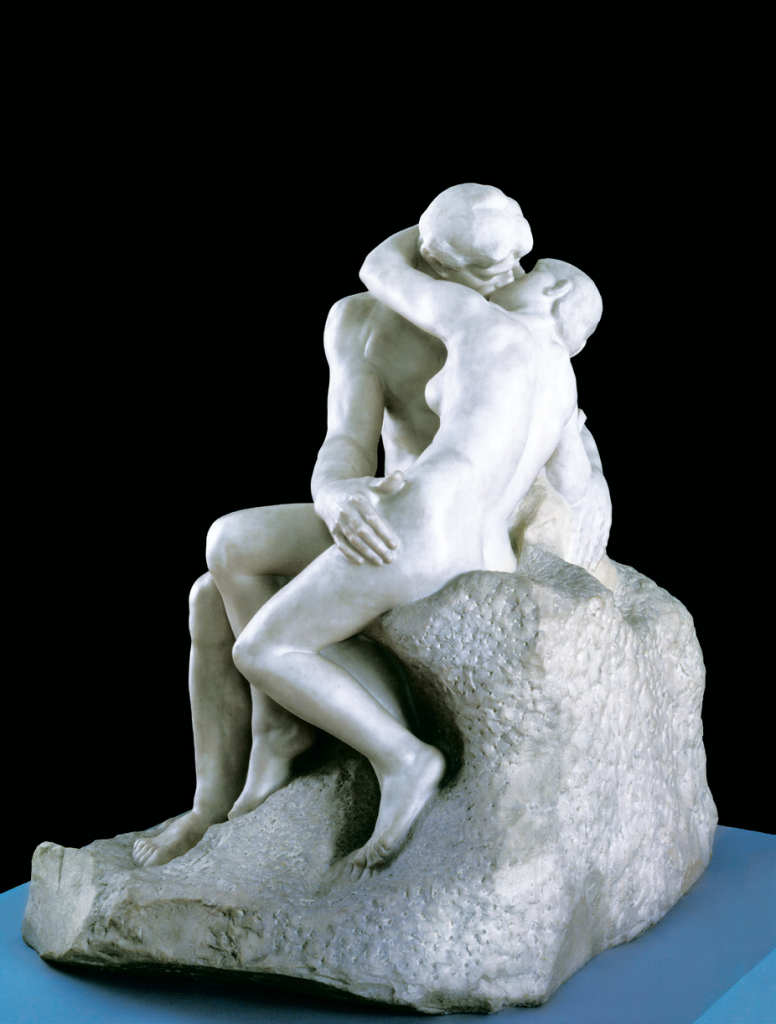
The Kiss by Auguste Rodin
‘You cannot help who you fall in love with’ – a mantra for every immoral, forbidden or logic-defying love that has ever existed. Sculpted from marble and unveiled in 1889, this statue of Francesca da Rimini and Paolo Malatesta locked in embrace recalls the 13th Century tale of the Italian noblewoman who fell in love with her husband Giovanni’s younger brother. While reading the story of forbidden love between King Arthur’s Guinevere and the knight Lancelot, the couple became besotted with each other. In the sculpture the book can be seen in Paolo’s hand, and the couple’s lips are not actually touching. They are reminded of the source of their love while the culmination of their desire is frustrated for all eternity.
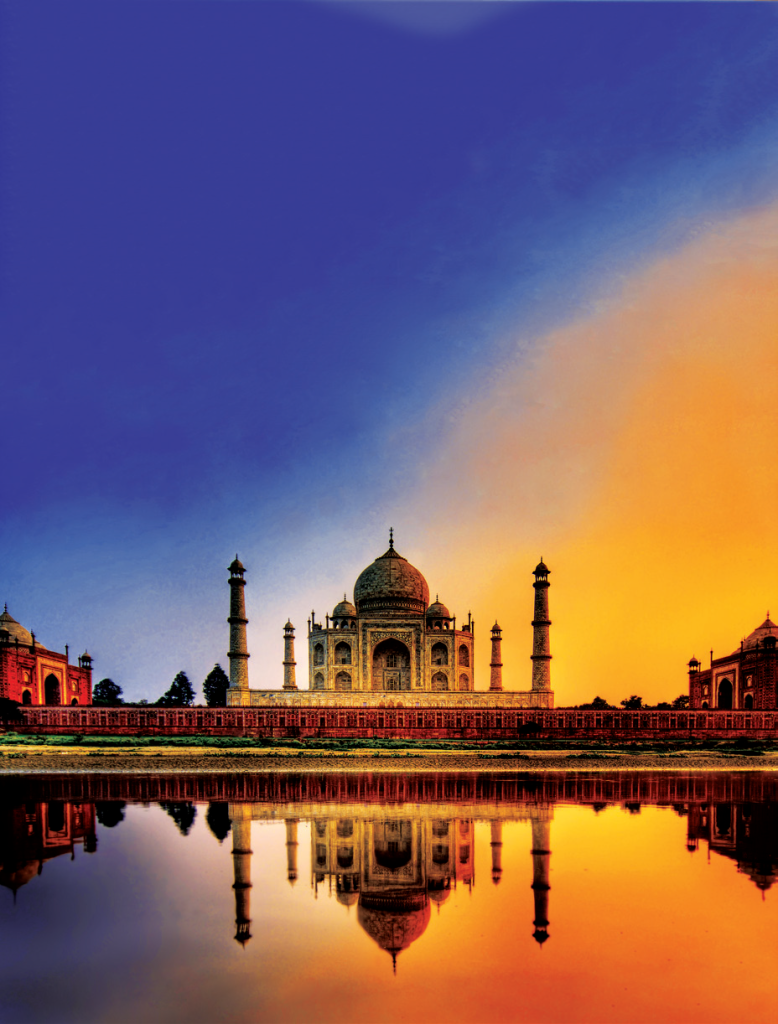
The Taj Mahal by Emperor Shah
A monument to unending love, the Taj Mahal is a dedicated to the memory of the Emperor’s third wife, supposedly the love of his life. Combining the architectural styles of Persia, India and the Turkish-Ottoman Empire, the design is perfectly symmetrical, with the great care and devotion put into every detail echoing the depth of the Emperors’ love and his loss, and reflective of the perfection he must have seen in his wife. The most extravagant symbol of love ever created, the white marble Taj Mahal in all its glorious splendour, whispers for all who can hear it, the words “I will never forget you, my love.”
It is not only a picture that speaks a thousand words. Other forums of artistic expression besides canvas can also capture the overwhelming tsunami of the emotion that is love. Devotion, dedication and time have been spent depicting the subtlety of every joyous detail. To paraphrase a popular Shakespearean quote, “If art be the food of love, paint on”.

