

In collaboration with High Life: Living the Good Life, VOICE OF ASIA is proud to present timeless articles from the archives, reproduced digitally for your reading pleasure. Originally published in High Life Volume 4 in 2013, we present this story on a selection of authors once derided, but who have since been vindicated through the lasting nature of their work.
Some of the most revered writers are those who push boundaries. In time, and context, their work is lauded, and often their boldness and defiance against the ordinary is only belatedly acknowledged. Until then, they are shunned by society, or fail to get any support or recognition for challenging the status quo and being ahead of their time.
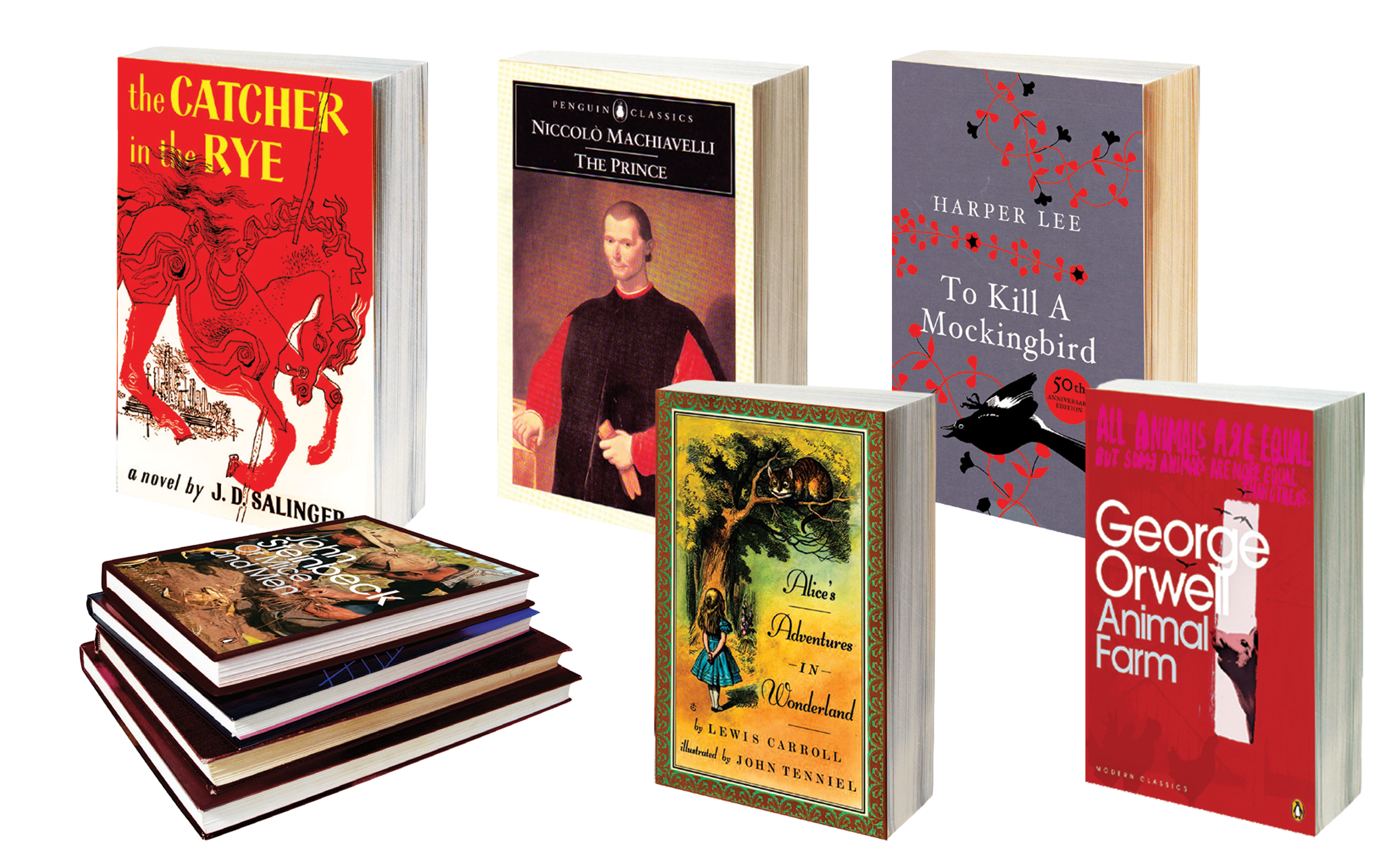
Here we compile a collection of books whose authors endured a frosty reception, yet in retrospect are now respected and whose novels are now considered timeless classics.
George Orwell, Animal Farm
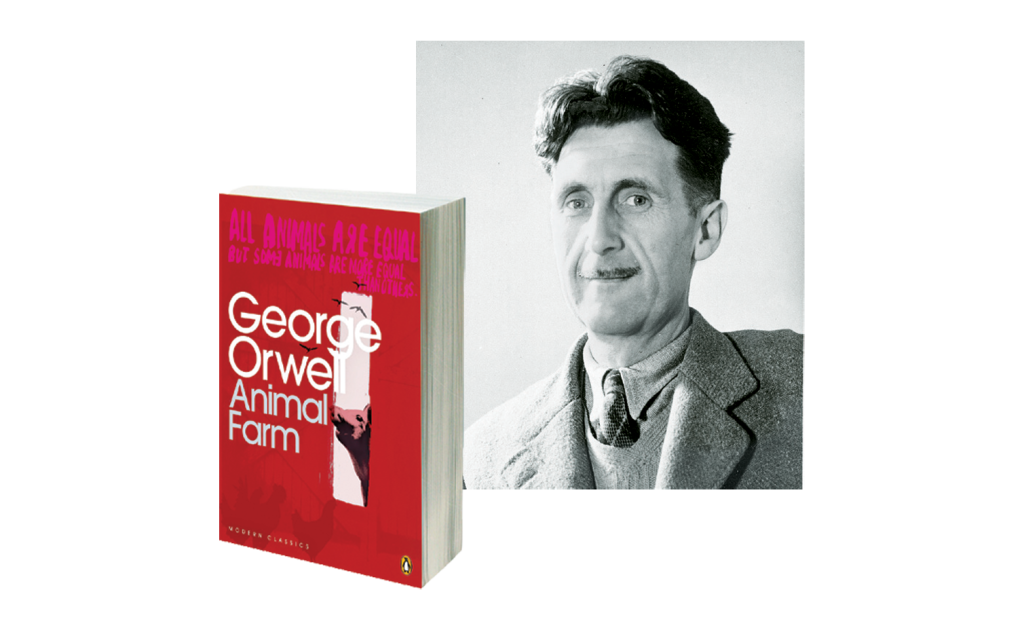
Dystopic master George Orwell is known for the wildly popular 1984, a novel published in 1949 that people of all generations can still relate to. Animal Farm is no different in that aspect, serving as another watershed literary release from the same author.
An allegory of the Russian Revolution and socialism, the novel is about a lazy and often drunk farm owner who neglects to feed his animals, prompting those same animals to assume control of their own survival by taking over the farm. The animal revolution quickly changes tack when the animals find themselves gradually altering the rules they had initially laid down for their own protection, to better suit their new agenda – which ironically, and unwittingly, causes them to become more like the human they rebelled against.
Orwell finished writing the book in 1944 and it was published the following year despite being rejected by almost all the publishers he had approached. The political overtones of the novel and the strong symbolism of the communist takeover in Russia upset the US-UK-Soviet Union Alliance at the time, and Orwell was considered anti-Russian, socialist, anti-communist, and communist all at once. Ultimately, it was banned for its subliminal criticism of the Soviet Union and how they governed the people, and was considered by many to be a direct insult to Joseph Stalin.
Whether or not any of those allegations held water, Animal Farm is a thought-provoking read, reflecting not only the events of past decades but also very recent ones. It stokes the idea that a revolution might not be the solution for people’s sufferings as much as examining what the real problems are, identifying what people are unhappy about, and tackling the issue head on.
Time Magazine named it one of the 100 best English novels of all time, and in 1996, almost 50 years after it was first published, it received a Hugo Award given to the best science fiction and fantasy writers. The ice toward Orwell had finally thawed.
Lewis Carroll, Alice’s Adventures in Wonderland
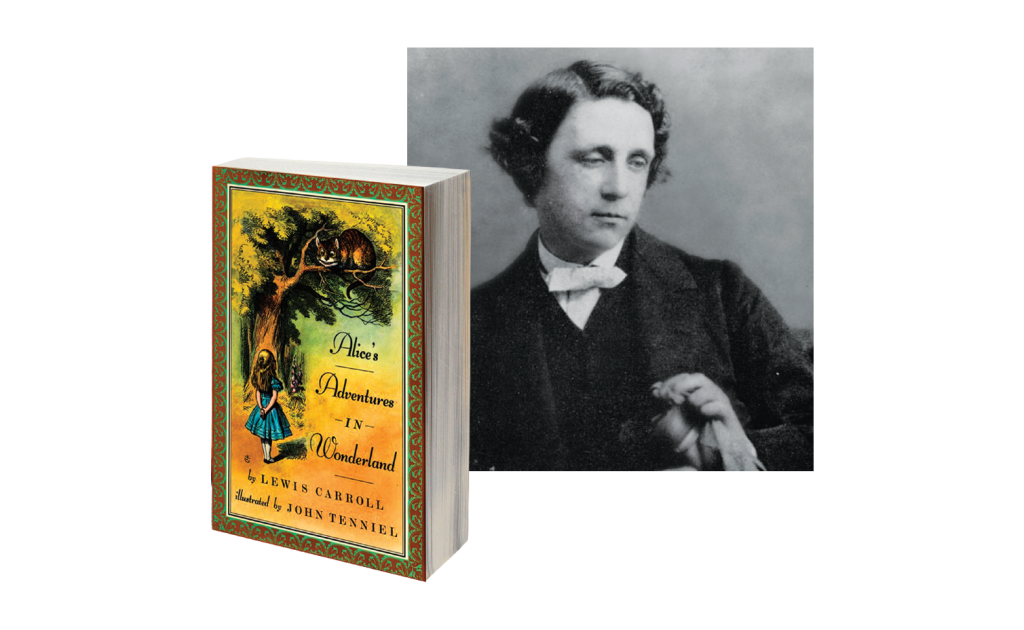
Also known as just Alice, this classic is loved by both children and adults for its delightful characters, their entertaining chit-chat, and the fantastical events that happen to everyone in the book. The famous tale follows a girl who falls down a rabbit hole into a world of strange-looking, stranger-talking animals and objects. Deceptively categorised under the genre ‘literary nonsense’, Alice was actually written by Carroll with mathematics and philosophy in mind, as evidenced by the themes and dialogues in the book.
One of the most memorable moments of the book, for instance, sees Alice struggle with her ‘size’ as she literally grows and shrinks. Here, she starts on mathematical concepts as she wonders if and how she can shrink forever, and later she is confused when she makes calculations that do not seem to add up – mostly because even as she calculated in base ten, she would slip to higher bases with her answers.
Although there were many who appreciated the genius buried in the book, Alice was still the subject of much criticism as Carroll was accused of promoting cannibalism, the use of drugs, and even racism. The mathematical and geometric concepts interwoven in the story, as well as his play on words to signify that most everything is subjective, befuddled the average reader and caused some to become suspicious of the intention behind the prose. Several schools and states banned the book from their schools, though some critics liked the illustrations.
Alice has become one of the most popular children’s books, spawning many adaptations in the form of books, essays, TV shows and movies, proving that despite the controversy, people still find her Wonderland wonderful.
Machiavelli, The Prince
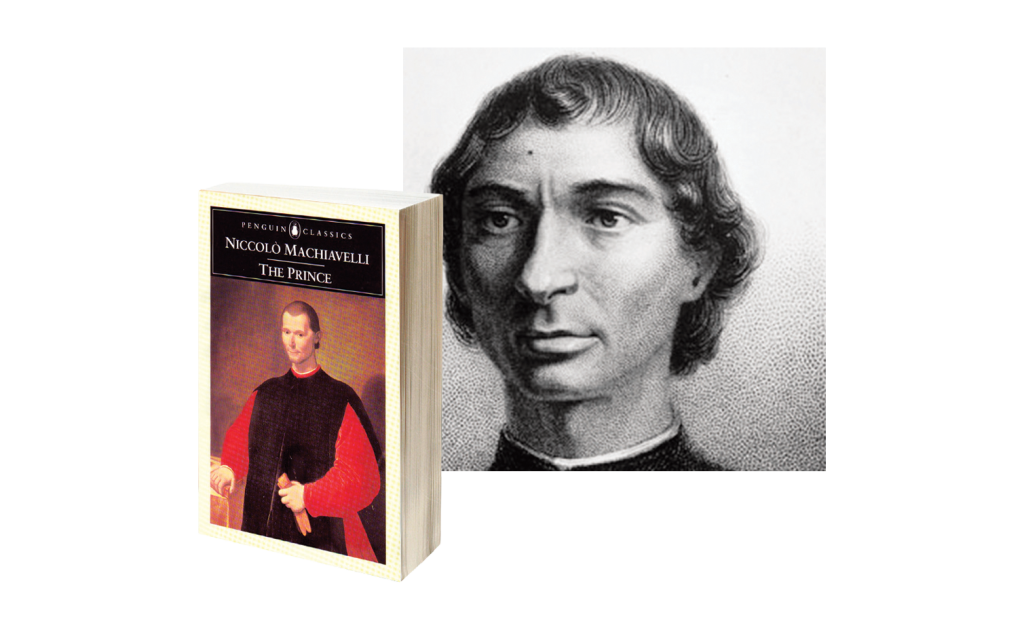
This political masterpiece by Niccolo Machiavelli made controversial waves in the mid-16th century when it was the first of its kind to be published in the Italian vernacular as opposed to the usual Latin. That is not all – it was also the first to tackle modern political philosophy, and unflinchingly contained themes that conflicted with Catholicism. It was banned by the Pope in 1559 for being anti-Christian, the very subject of the book’s satire.
In The Prince, Machiavelli declares that “the end justifies the means,” no matter how immoral those means may be.
He also argues that the best ruler is one whose people love him, and the second, one whose people fear him. He further analyses political structures, and continually promotes the benefits of military rule. This impertinently bold attitude both attracted and turned people away from the book, the latter more vocal and more powerful in the writer’s time.
Despite the upheaval, Machiavelli influenced many major philosophers like Descartes and Locke, as well as political leaders like Benjamin Franklin and Mussolini. A book for the thinking man (or woman).
JD Salinger, The Catcher in the Rye
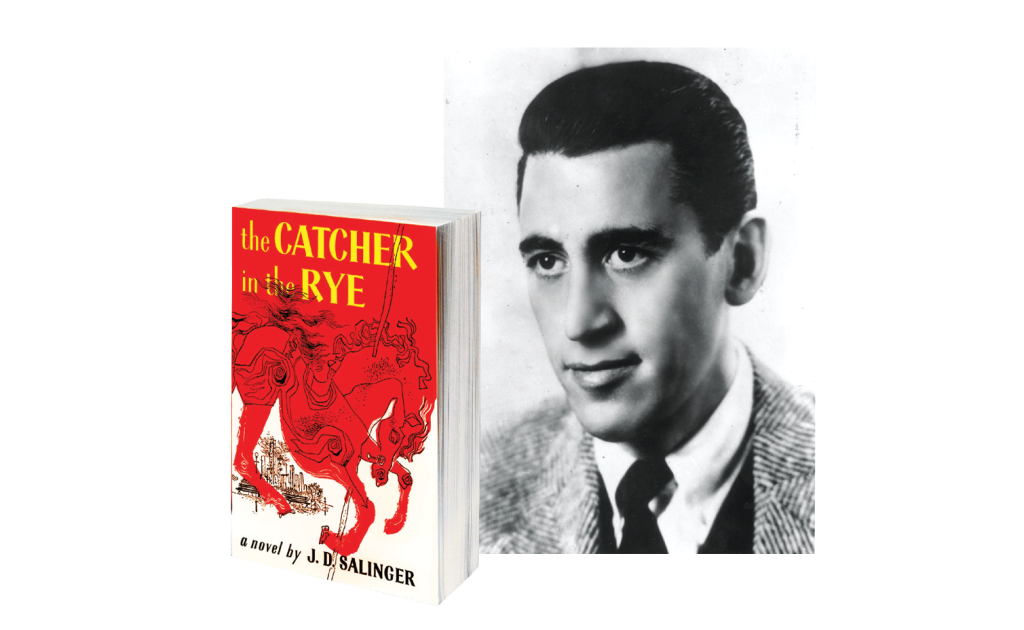
Salinger’s novel on teenage angst, rebellion, alienation and identity holds the distinction of being the most censored and, at the same time, the most taught book in different parts of America. The novel’s hero, Holden, goes on a journey, both metaphorically and literally, to figure out his life, as adolescents – and many post-adolescents – are wont to do. The book follows him on this journey as he makes decisions, meets people, and tries new things.
The book was written in the teenage slang of the time (1950s), and typical of any generation, contains a lot of profanity. It is little wonder that parents protested the presence of the book in the curriculum. Other themes unpopular with parents that are also present in the novel are sexuality, deconstruction of family values, and relationships.
To this day, The Catcher in the Rye is on many lists as one of the best English novels ever written, with people drawn to its aching despair and empathising with the tortured soul of its protagonist. Its rights continue to be sought by filmmakers and authors alike to produce adaptations.
Harper Lee, To Kill a Mockingbird
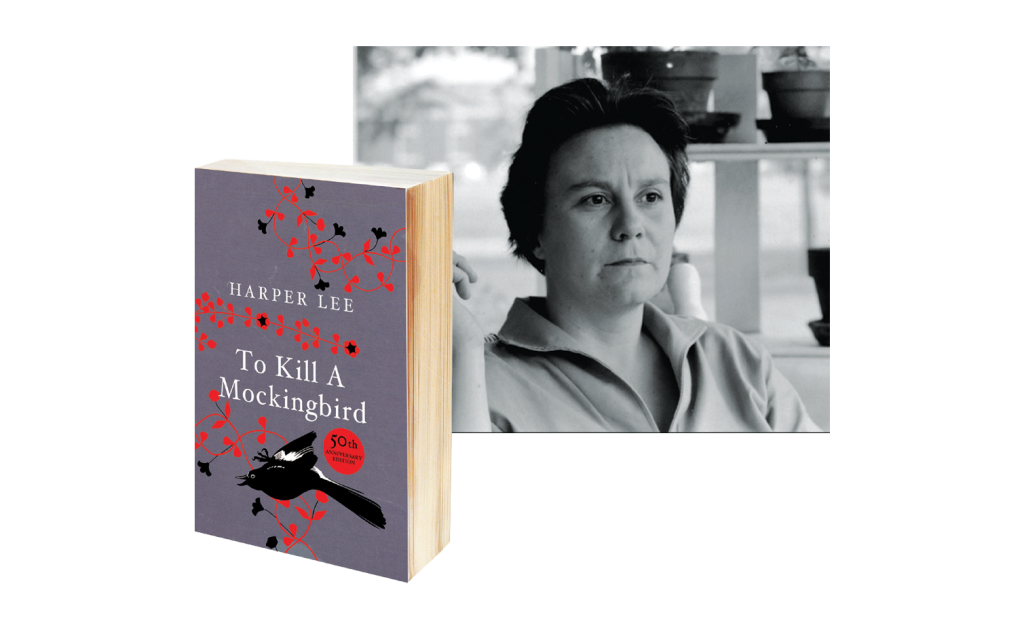
An American classic, this novel is a story of how a little girl in a small town learned about racial inequality and heroism through a case her lawyer father was working on, and a separate incident in which she found herself involved. The second half of the book focuses on her father’s defence of African-American Tom Robinson, a man falsely accused of rape in a case that stirred up the prejudices of the town where it is set. It was her father’s involvement in this case that made her the recipient of taunting from the other children.
This is Harper Lee’s lone novel, and little is known about her as she does not give interviews. However, critics agree that she is a master storyteller, managing to retain a mature self-awareness while writing from a child’s perspective as she tells the story.
Because of controversial themes like racial injustice, rape, and class and gender stereotyping, this book sat uncomfortably with the public at first. The use of vulgar language did not aid its cause and was deemed heavily inappropriate for young students. It is now accepted as a way to introduce the subject – and eventual understanding – of tolerance, and continues to be popular, with many plays, books, and movie adaptations.
Harper Lee’s tour de force is, undoubtedly, a force to be reckoned with.
John Steinbeck, Of Mice and Men
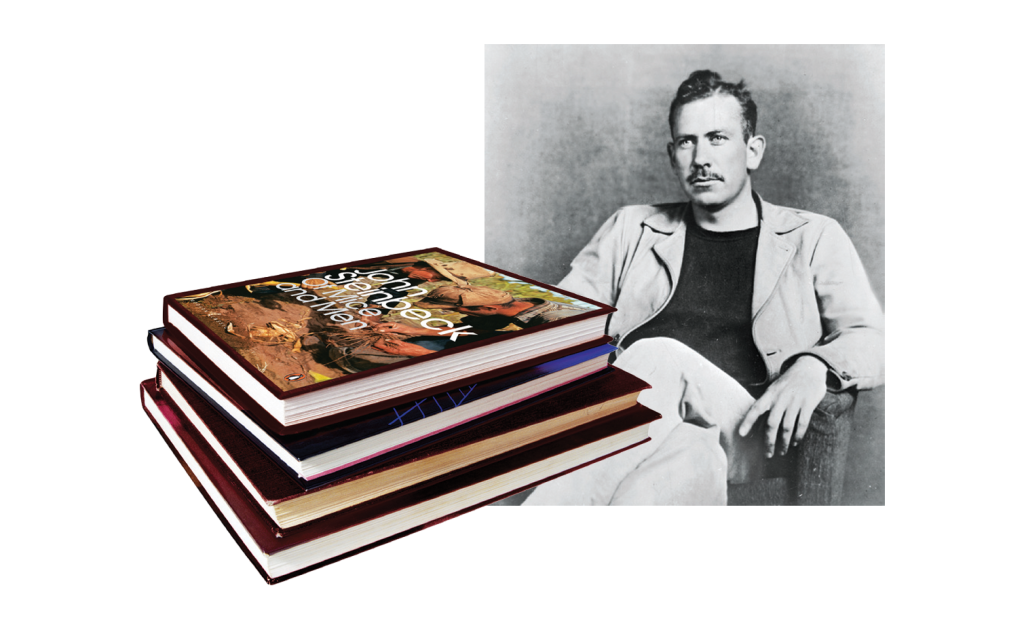
This novelette by Nobel Prize winner Steinbeck is about two migrant ranch workers looking for jobs during the Great Depression. In Steinbeck’s signature writing style, he touches on such deep themes as individuality, independence, self-respect, and human interactions.
He writes about mental illness and racism, and uses somewhat ‘offensive’ language in that he wrote the book in the ‘voice’ and language of the people – unfiltered and unrefined. Steinbeck peers into the darker issues of life, including sexism, death, and poverty which were too uncomfortable a mirror to look into.
Early on the book was – like all our conclusions here – banned in response to the outrage, but has subsequently become required reading in schools. Scholars fought to keep the book in schools, citing its literary integrity as reason enough, and readers have warmed to the tenderness and warmth between the two main characters – enough to melt ice around any heart.

