

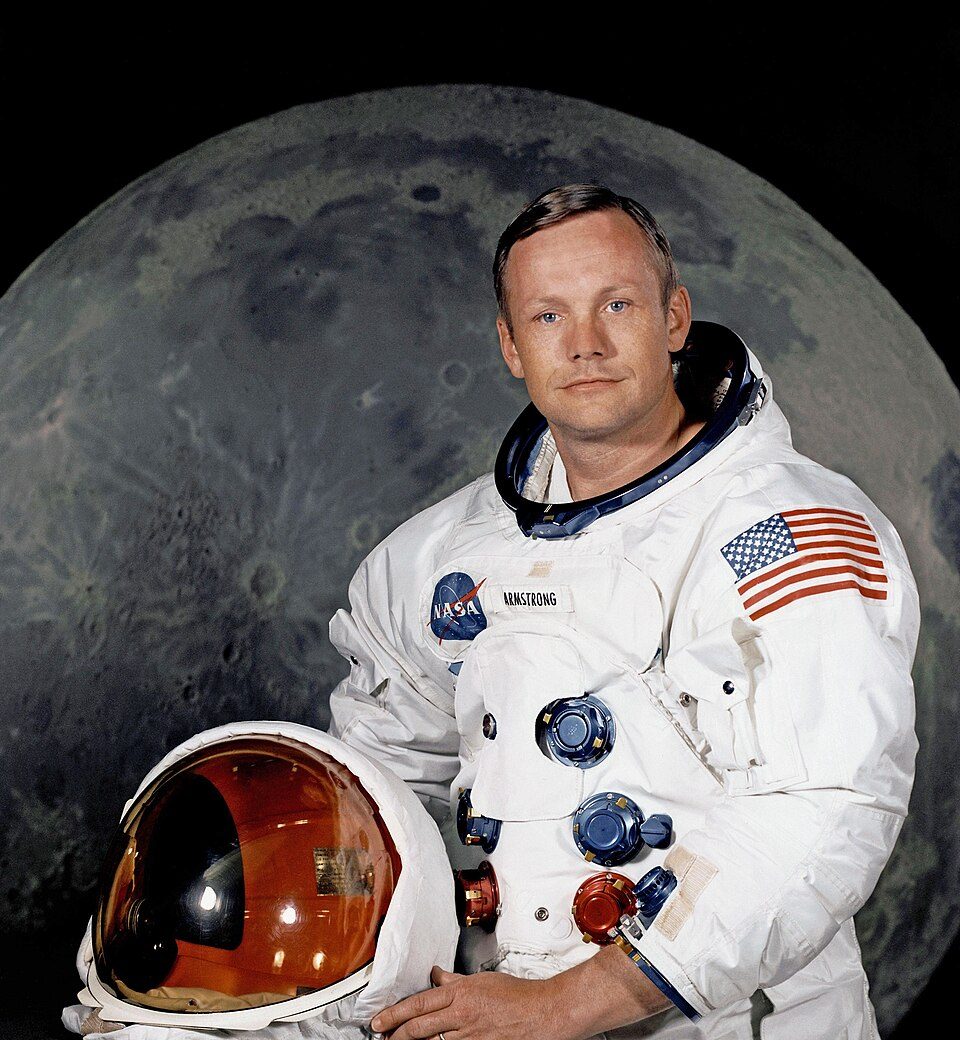
In collaboration with PASSIONS, VOICE OF ASIA is proud to present timeless articles from the archives, reproduced digitally for your reading pleasure. Originally published in PASSIONS Volume 49 in 2013, we present this story on Neil Armstrong, the Moon’s first son of Earth.
As the first human being on the surface of our celestial neighbour the Moon, Neil Armstrong uttered the immortal phrase, “One small step for a man, one giant leap for mankind.” It was not until he returned to Earth that we found out how appropriate it was for Armstrong to represent ‘man’. PASSIONS looks back on that the iconic moment of the quiet, unassuming and brave astronaut, whose 82 years on this Earth were defined by the 21 hours and 36 minutes he spent above it, walking on the Moon.
Race Against Time
Earth’s only lunar satellite has long had a gravitational effect on the Earth, but it was in the heat of the ‘Space Race’ in the 1960’s that the gravity of putting humankind onto the Moon’s surface became apparent. Through its Apollo missions, test flights had been conducted by NASA for years prior to the Moon landing, and it was through these that the American space programme honed its technology and skills to ‘get the job done’. Apollo 1 never launched. Apollo’s 7-9 were manned orbits of the earth. Next in the series was Apollo 10, which served as a dress rehearsal for the lunar landing, descending to 8.4 nautical miles above the surface but never landing.
Competition between the Americans and Russians meant the race had Cold War and political undertones, but this was largely ignored by the dedicated scientists and astronauts. They were pilots, pioneers, and pushing mankind forward, not pushing a political agenda. Theirs was a race of pride, not prejudice. On the 20th of July 1969, Apollo 11 was first to touch down on the surface, its commander, 38 year-old astronaut Neil Aiden Armstrong.
Neil, Diamond
Though the trip to the moon was fraught with danger, Armstrong’s level-headedness, his practical approach and attention to detail made him the obvious choice to lead the mission. Within the fraternity of test pilots, he was among the brightest of stars. Before being chosen in 1962 by NASA, Armstrong was one of the elite pilots selected to fly the X-15 rocket plane, a powerful machine that could accelerate to five times the speed of sound and operate in the fringes of our atmosphere. He showed cool composure when a malfunctioning thruster caused the X-15 to tumble end over end.
This was not his only brush with near-death. While testing the Lunar Landing Module near Texas prior to Apollo 11, the craft made a sudden unexplained roll, and plummeted to the ground in flames, with Armstrong making a spectacular last second ejection. Later Armstrong said, “Research is creating new knowledge” and “I believe that every human has a finite number of heartbeats. I don’t intend to waste any of mine.” Suffice to say that by 1969 he was ready, both mentally and physically.
Along with Buzz Aldrin and Michael Collins, he was one of the trio chosen for the Apollo 11 mission. As Armstrong said, “I wasn’t chosen to be first. I was just chosen to command that flight. Circumstance put me in that particular role. It wasn’t planned by anyone.” Planned or otherwise, timing and fate had plucked him to be the first on the moon. 22 men since 1969 have achieved the accolade of following his journey, but the man from a small-town in Ohio was the first. Armstrong will always be the pioneer and his was the inaugural step into the great unknown.

The Landing
With the world watching in awe, the moment he descended the steps onto the surface is an image that will be an everlasting flashbulb memory. However far we travel into space and whichever worlds we explore, 1969 will always have the distinction of being the first time. The crew will go down in legend – Armstrong as the first man on the moon, Buzz Aldrin as the second, and Michael Collins as the man who went so close, yet so far, as he remained in orbit, piloting the spacecraft that would bring them safely home. They were not only American heroes, but heroes of nations and creeds, hopes and dreams.
“Houston, Tranquility Base here, The Eagle has landed,” Armstrong said as the module landed on the Sea of Tranquility, his ‘Eagle’ referring to the national bird of America that adorned the mission-badge of the Apollo 11 voyage. Placing a silver boot on the ground, the crackled message of being “For mankind” was relayed back to Earth. They had made history. They had made us proud. They went about their job on a grey rock in the blackness of space, collecting samples and recording data to assist in future missions, and further our understanding of our celestial neighbour.
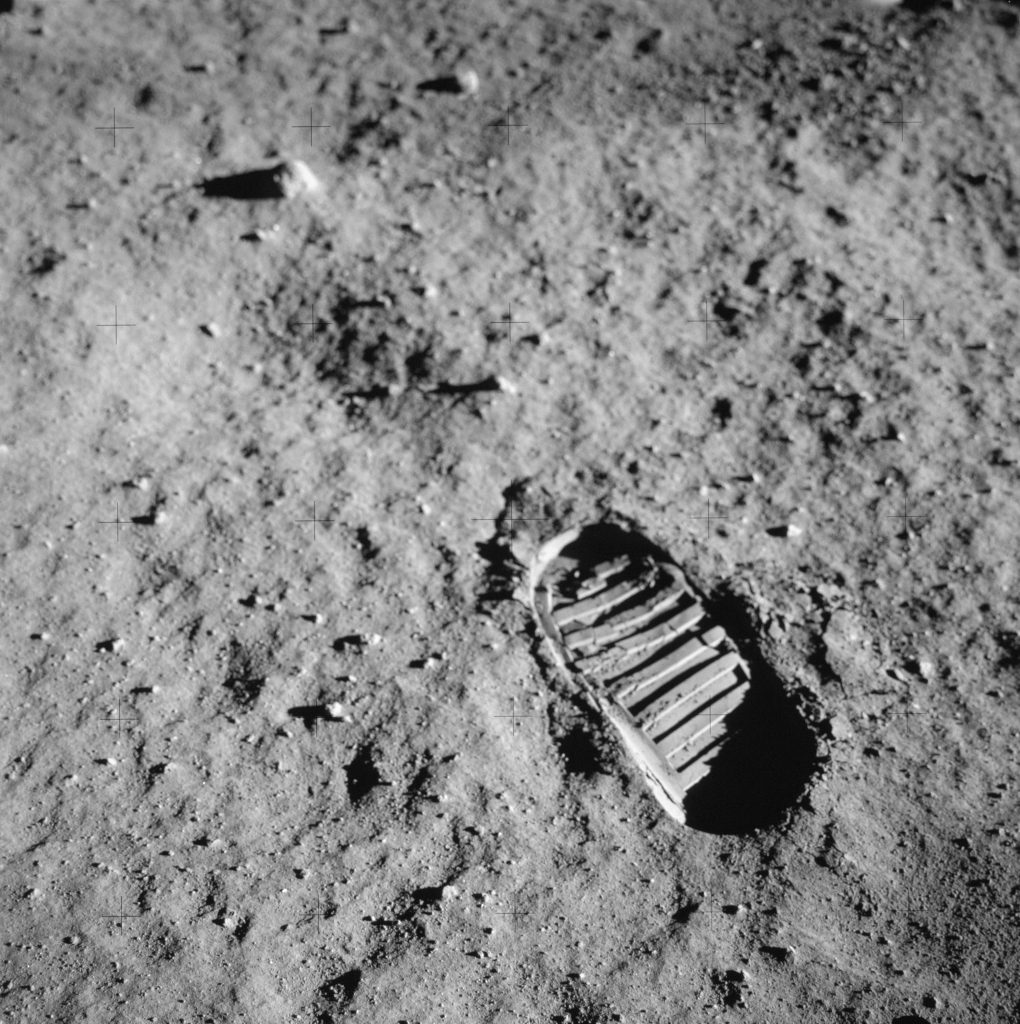
With the American flag behind him, the footprints of Aldrin and his own boots the only disruption of the soft sediment, and with scientific paraphernalia littered on the Moon’s surface, Armstrong turned to his homeland. “It suddenly struck me that that tiny pea, pretty and blue, was the Earth. I put up my thumb and shut one eye, and my thumb blotted out the planet Earth. I didn’t feel like a giant. I felt very, very small.”
After-Burner
Upon their safe return to Earth, Neil Armstrong and his crew met President Nixon, and spent a period in quarantine for observation. And then the unassuming man, who had stood on the surface of a place that can be seen the world over, disappeared from view. He did not fly into space again, and Armstrong never once courted the fame and publicity that would seem the obvious conclusion for a man who had, literally, been out of this world.
Aside from a visit to the White House every five years on the anniversary of the moon landing, Armstrong was out of the public eye. After Apollo, he took a role as Professor of Aerospace Engineering at Cincinnati University and raised his family. He was unassuming, intelligent and respectful of his place in history, a perfect role model and true professional. Though he declined interviews over the years, the immensity of his achievement will never be diminished. The lunar legacy of the mission commander – who became the icon for both the hard work of an entire NASA organisation and for the aspirations of a generation – will be a lasting footprint in human history, just like the one that he left on the surface of the Moon. Acknowledging his achievement, President Jimmy Carter awarded Armstrong the Congressional Space Medal of Honour in 1978 and he received the Congressional Gold Medal with his former crewmates in 2009.
On the 25th of August 2012, at the grand old age of 82 Neil Armstrong passed away, the moon’s first son of earth. Said his loving family in a statement addressed to the world, “For those who may ask what they can do to honour Neil, we have a simple request. Honour his example of service, accomplishment and modesty, and the next time you walk outside on a clear night and see the moon smiling down at you, think of Neil Armstrong and give him a wink.”
One of his own statements on the Moon was, “Here men from the planet Earth first set foot upon the Moon. July 1969 AD. We came in peace for all mankind.”
May he rest in the peace that he carried for us all.
“One small step for man, one giant leap for mankind.“

