

In collaboration with PASSIONS, VOICE OF ASIA is proud to present timeless articles from the archives, reproduced digitally for your reading pleasure. Originally published in PASSIONS Volume 46 in 2013, we present this story on St Patrick’s Day and how the world – the Irish and non-Irish alike – celebrate it in their finest green drapes.
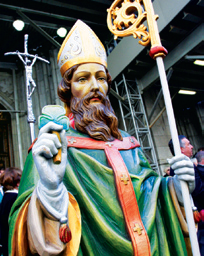
It has been a Christian custom to honour the extraordinary lives of saints and celebrate their induction into sainthood by observing the anniversary of their deaths, which is the designated feast day of a saint. Since the early 17th century, the 17th of March has been the date the Irish commemorate St Patrick (c. AD 387-461), the patron saint of Ireland who brought Christianity to the land.
Traditionally observed as a religious holiday in the Emerald Isle, St Patrick’s Day has evolved into a multiday circular celebration of Irish culture. The annual festivities bring together Irish expatriates, people of Irish descent, and ever-growing crowds of people with no Irish connections whatsoever worldwide.
St Patrick’s Legacy
The very mention of St Patrick’s Day brings to mind grand parades, throngs of people wearing green with shamrock emblems embedded and loud parties where large amount of beer is consumed as well as party goers dressed as leprechauns.
The origins of all the traditional symbols and associated customs can be traced hundreds of years back to the fifth century when the Welsh missionary, Patrick, arrived on Ireland to Christianise the pagan Irish.
Legend has it that he used the three-leaf clover known as the shamrock – a plant considered sacred by the ancient Irish as it symbolises the rebirth of spring – to explain the doctrine of the Holy Trinity to the Druids. Hence, the green colour and pagan symbolism of the shamrock made its way into the Irish Catholic faith and also came to be associated with Irish nationalism when Irish lands were seized by invading English in the 17th century.
The Irish Way
Although Irish emigrants have brought the St Patrick’s Day festivities to other parts of the world, in Ireland, the celebration retains much of its religious significance. On this auspicious day, people attend church services and don green attires with shamrocks. While the day actually falls during the fasting season of Lent, the Lenten prohibitions against eating meat and drinking alcohol are lifted so the Irish can celebrate the feast day of their patron saint with rye drinking, feasting on the traditional meal of Irish bacon and cabbage as well as dancing to Celtic folk music.
Until the 1970s, pubs were required by law to close on the 17th of March. Of course, that restriction is now a thing of the past. As the Irish government saw St Patrick’s Day as the perfect opportunity to showcase Irish culture to the world, the occasion was declared as a nationwide public holiday as well as a multiday celebration.
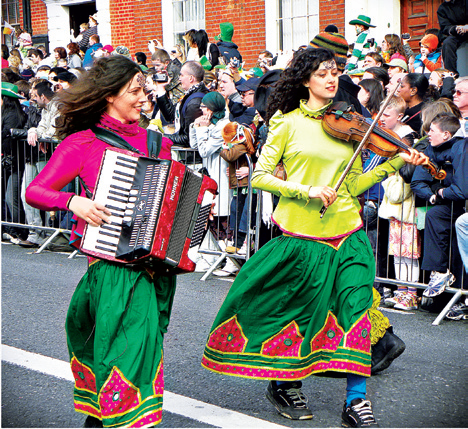
The not-to-be-missed event for visitors to Ireland during this week-long celebration is the St. Patrick’s Festival in Dublin. The spectacular event which draws a crowd of millions each year encompasses outdoor concerts, street theatres as well as the traditional parade of performers, marching bands and floats. The main attraction of the festival is the fireworks show called Skyfest, which was inaugurated in 2006. The highlight of the event involves fireworks display accompanied by background music compiled by renowned DJ, Mark McCabe. Even away from the Irish capital, parades of varying sizes can be seen throughout the festive week in other cities, towns and villages across the country.
Besides being a spiritual and festive occasion, St Patrick’s Day is a terrific time for sports fans to visit Ireland as it is also the traditional day for several big national sporting championships, especially the finals of schools’ rugby and football cups.
Made in America
Pinching the Green-Abstainers
It is customary in the US to affectionately pinch a family member or friend for not wearing green on St Patrick’s Day. The exact origins of this novel practice is unknown, although there are speculations that it started around the 1700s as a reminder that wearing green makes one invisible to leprechauns who will be causing mischief on that day.
The Friendly Leprechaun
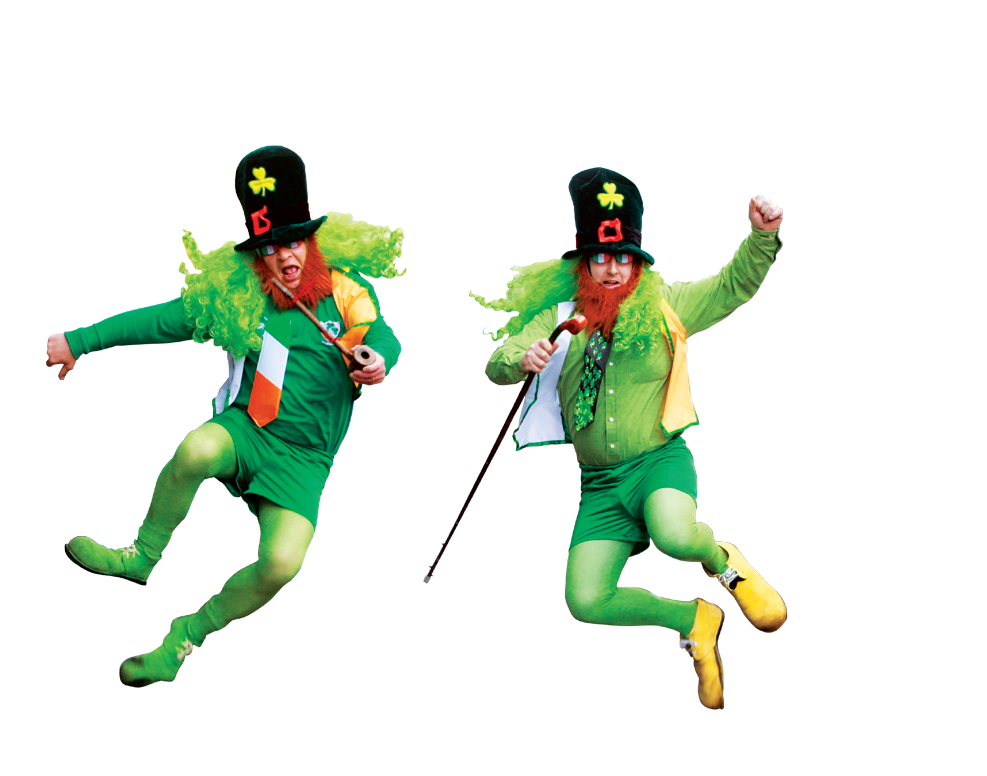
Originally known as lobaircin (literally meaning “smallbodied fellow”) in Celtic Folklore, leprechauns were known for employing trickery to protect their treasures. Traditionally, these minor folktale characters have nothing to do with St Patrick’s Day.
The cheerful and friendly leprechaun that has became inseparable with St Patrick’s Day was an American invention, first introduced in 1959 with the released of the released of a Walt Disney film called Darby O’Gill & the Little People. It did not take long for the lovable leprechaun characters to become easily recognizable symbol associated with St. Patrick’s Day and Ireland.
Wearing Green Worldwide
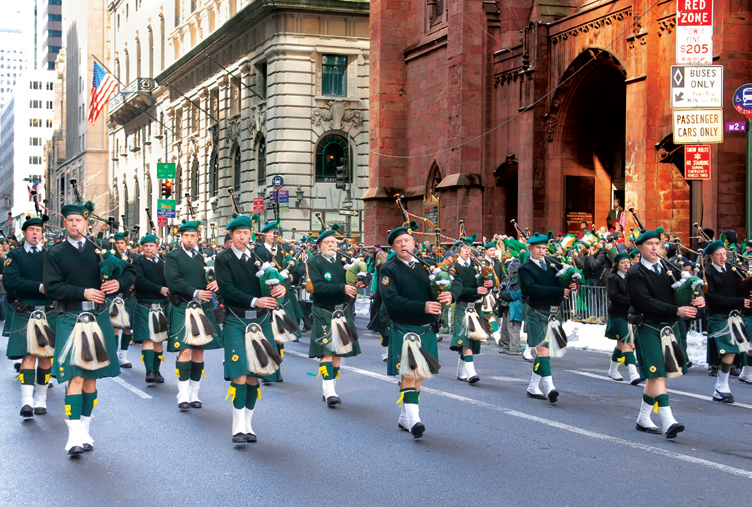
The St Patrick’s Day parade actually started, not in Ireland, but in the United States in 1762. On the 17th of March of that year, Irish soldiers serving in the British military marched through New York City in a parade that united fellow Irishmen in the army and reconnecting them to their Celtic heritage. The monumental event led to a rise in Irish nationalism in America.
Today, with more than 40 million residents of Irish descent, the US host more than 100 annual parades across the country. New York is the home to the largest and oldest St Patrick’s Day parade with more than 150,000 participants including bands, uniform bodies, county associations, and emigrant societies as well as social and cultural clubs marching along 5th Avenue.
Along with most widespread parades, US also contributed to some of the most unique of St Patrick’s Day customs. One of the most notable of these customs takes place each year in Chicago, where 40 pounds of vegetable dye are poured into the Chicago River to turn the water green for several hours.
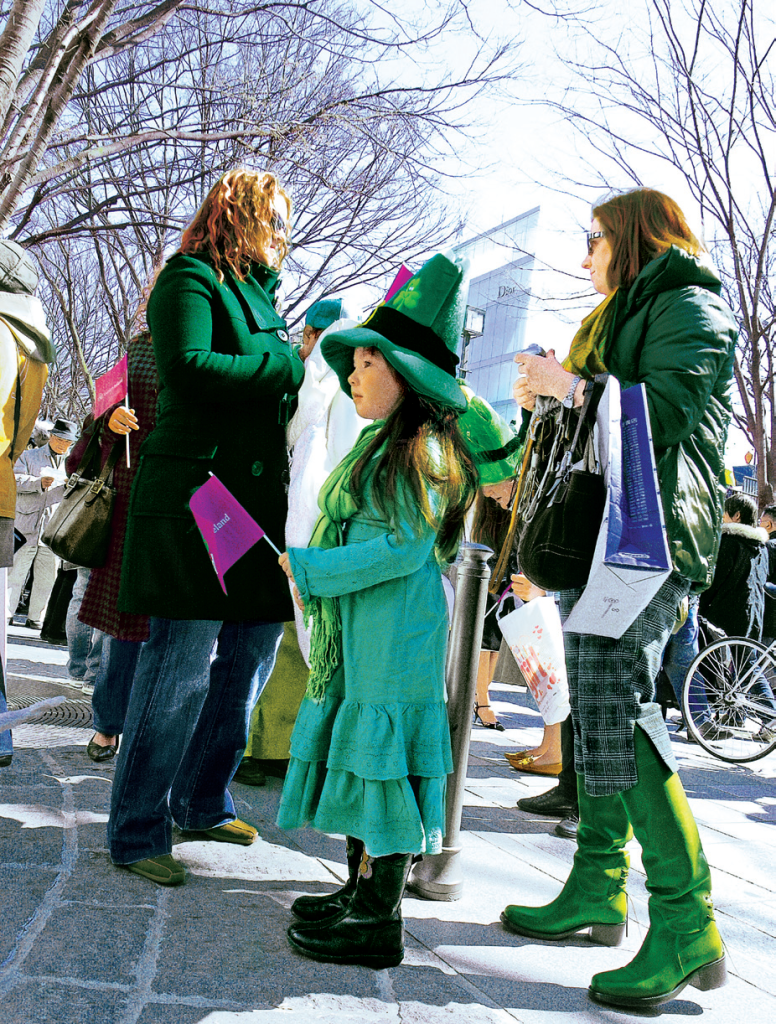
As the St Patrick’s Day celebrations continue to gain prominence as a global event, parades and pub parties are being held at cities across America and Europe as well as Asia. Just as the festive spirit of Christmas is no longer limited to those of the Christian faith, everyone is invited to don something green, join the crowd and be Irish for a day on the feast day of St Patrick.

