

In collaboration with PASSIONS, VOICE OF ASIA is proud to present timeless articles from the archives, reproduced digitally for your reading pleasure. Originally published in PASSIONS Volume 43 in 2013, we present this story on the long lasting, adrenaline pumping legacy of Wimbledon.
One of the four great Grand Slams – alongside the Australian Open, French Open and US Open – The Championships, Wimbledon (or Wimbledon, as it is simply known) is the oldest and most prestigious tennis tournament in the world. Annually held at the All England Club in Wimbledon every June since 1877, the competition has seen tennis royalties and legends such as the likes of Pete Sampras, Fred Perry, Björn Borg, Jimmy Connors and Martina Navratilova, battle it out on the courts for victory. In a tribute to the tournament this year, PASSIONS takes a brief look at the history of the competition throughout the century to see why it is one of the most anticipated sporting events of the year.
Birth of a sport

Indoor ball games which resemble tennis have always been around since the Middle Ages – played by monks and kings – but it wasn’t until the late 19th century that the game was adapted into the form we recognise today. Then known as sphairistrike (based on an ancient Greek game, pronounced sfee-rees-ti-ki), it was introduced by Major Walter Clopton Wingfield in 1873 at a Christmas party, heavily borrowing rules from existing games such as royal tennis and badminton. Played in an hourglass-shaped court with a net five-feet-across, the sport became popular with the upper classes and its name was eventually changed for something easier to remember and pronounce. “Lawn tennis” was born.
Popularity of the sport gave way to various clubs, and chief among them was the All England Croquet Club – founded in 1868 off Worple Road in Wimbledon, London. Changing its name to the All England Croquet and Lawn Tennis Club in 1877, it was the first to announce a tennis championship – Gentlemen’s Singles – as a means to help raise money for a pony-drawn roller for its croquet lawns. Over 22 participants joined the competition, and the final match played in front of 200 spectators – all of whom paid one shilling to watch. Won by Spencer Gore, a Harrovian rackets player, the first Wimbledon Tournament showed lawn tennis to be a profitable success – one of the reasons which led to the decline of croquet.
After Gore’s astounding win at the first championship, other players came along the way to refine the game into the tennis that we know today – revolutionising how the ball was returned to one’s opponent. There was the invention of the lob shot by a man named Frank Hadow, and the establishment of the Renshaw Smash, which twin brothers William and Earnest used to earn the former seven titles, and one for the latter. Also known as the “Renshaw Boom”, the two brothers attracted thousands to the stands to watch them play, as the competition began attracting international participants. Tennis was going places.
Evolution of the game
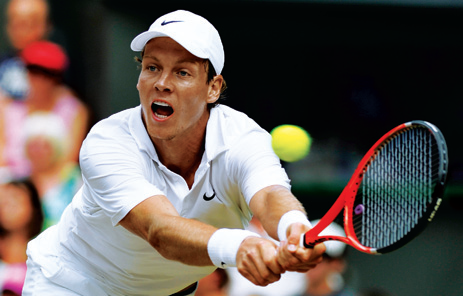
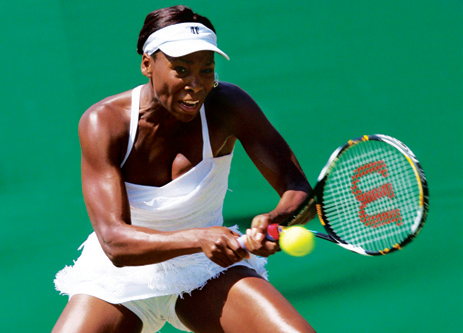
It must be said that Wimbledon was not always the domain of the finest or most professional tennis players, as the earlier championships only allowed “amateurs” to compete. Although amateur status evokes a different meaning today, it was an elegant word then that Wimbledon’s organisers felt resonated with “gentleman”, quite unlike the term “professional” which bore the stigma of “manual labour”. After all, to the elites of that day and age, a sport wasn’t a sport unless it was played in one’s spare time.
It was only in 1968 that Wimbledon opened its doors to professional players – which by definition, included those who were paid for the ability to play the sport well – allowing them to compete at the championships. This ushered in an open era for the sport, although the advent of open tennis was said to have come too late, with the decades-long insistence on amateurism having held back the entire sport of tennis from advancement.
In addition to the sport, the tournament itself was also flourishing. In 1884, seven years after the first championship, women were allowed to participate in the tournament. Cultural developments also saw changes to the dress styles, as the ‘20s saw the first woman play without wearing a corset, and the ’30s introduced shorts to the court. It is also interesting to note that yellow tennis balls, which are more easily captured by television cameras, were not used at Wimbledon until 1986.
One thing that has stayed the same way since the inception of tennis, however, is Wimbledon’s use of lawn courts. The last of the four Grand Slam tournaments where the game is still played on grass, Wimbledon’s courts are challenging because each play requires players to quickly adapt to the changing surface. Another tradition of the games at Wimbledon is the eating of strawberries and cream by courtside crowds, which according to popular legend was introduced by King George V. However, strawberries actually date back to the time of the first Wimbledon tournament in 1877, which signified the arrival of summer. Strawberries eaten at Wimbledon are of the Elsanta variety, and it is believed that spectators consume over 59,000 pounds of strawberries and 2,000 gallons of double cream each year.
Wimbledon today
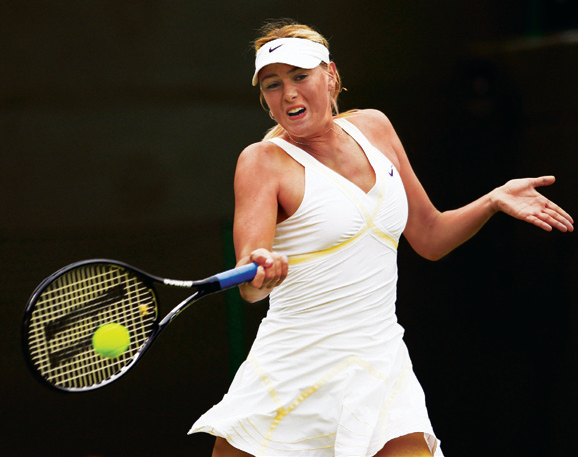
Today, the tournament takes place over two weeks in late June and early July, culminating with the Ladies’ and Gentlemen’s Singles Final, which is scheduled for the second Saturday and Sunday respectively. Over five major events are contested, as well as four junior events and four invitational events. Patronised by royalty including Queen Elizabeth, Wimbledon continues to be the tennis event of the year, with its Centre Court, the primary arena for some of the biggest matches in the game.
As the tournament is as old as the sport of tennis itself, Wimbledon has seen many memorable matches and sensational games played at its courts. There was the unforgettable tie-break in 1980 between legends John McEnroe and Björn Borg which ended with the victory of the latter, Boris Becker’s win in 1984 at the senior tournament which he played at the age of 16 and became its first unseeded winner, and the arrival of Billie Jean Moffitt in 1962, an 18-year-old history student who knocked out Margaret Court – the then World No. 1.
There was the intensive match between Arthur Ashe and Jimmy Connors in 1975, which was a surprise following Connors’ win over Ken Rosewall who was 18 years his senior, while John Isner and Nicolas Mahut’s game in June 2010 churned out the longest match in tennis history (which was also known as The Endless Match), as they played over three days, lasting for more than 8 hours 11 minutes.
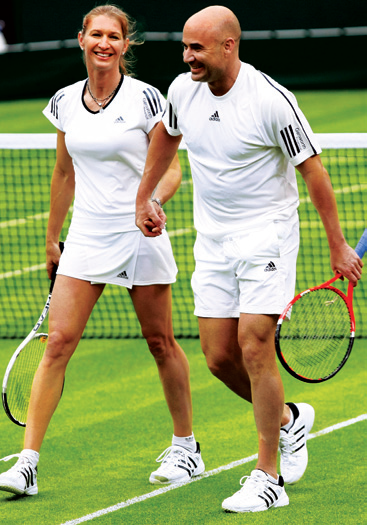
Then there were those who went against the grain and strait-laced Wimbledon, causing a scene that would be forever etched in our mind. First there was Pat Cash, who leapt into the stands and clambered up to the player’s box where he greeted his family, girlfriend and coach – having crushed Ivan Lendl in a straight-set. Not the first, Venus William’s victory in 2000 also saw an unrestrained celebration, as she climbed the players’ box to embrace her sister, Serena, whom she had beaten in the semi-final.
On a funnier note, streaking also caught Wimbledon by surprise in 1996, when Melissa Johnson – a 23-year-old student – dashed from one end of the court to the other wearing nothing except a pinafore, which she lifted to the players and the crowd. The incident which took place at the Centre Court before the start of the match between Richard Krajicek and MaliVai Washington, was the first of its kind in the competition’s history, although this was later repeated in 2006 when Dutch radio DJ, Sander Lantinga interrupted a match between Elena Dementieva and Maria Sharapova. 1996 was also packed with more surprises, as it would also be remembered as the year Sir Cliff Richard performed an impromptu music set to an appreciative crowd in 1996, with Martina Navratilova, Pam Shriver, Hana Mandlikova and Virginia Wade as backing singers.
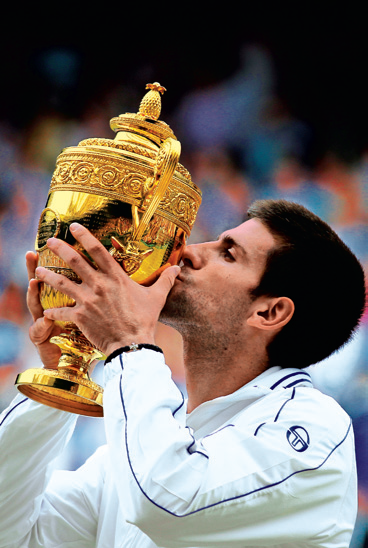
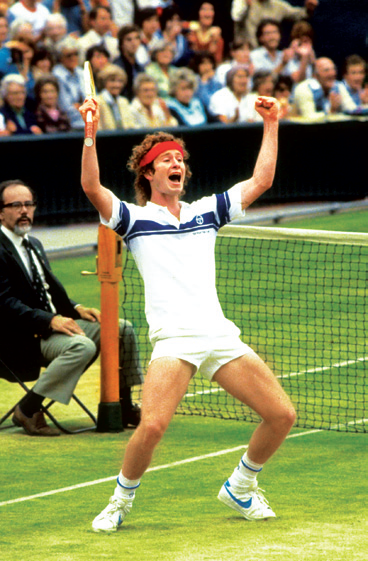
Retaining the same prestige and reputation as when it was first established in 1877, Wimbledon is a pioneer and the place to watch and compete in the sport of tennis. The birthplace of tennis legends and greats, there is no question that this is where the world looks to each June and July, for years and years to come.

