
AeroDarat Services Sdn. Bhd. (AeroDarat) has been shortlisted as a finalist for Sustainable Transport Initiative of the Year at the Transports Expo Asia (TXA) Awards 2026, following its efforts to reduce emissions from airport ground operations. Its approach to sustainable transport combines practical emissions reductions with improvements to operational efficiency, offering a relevant example of how ground handling can become more sustainable.
The Emissions Challenge Beyond the Runway
Aircraft are not the only source of emissions at an airport. Baggage tractors, aircraft tow vehicles, belt loaders and other ground support equipment (GSE) consume fuel throughout daily operations. Replacing these vehicles also requires substantial investment, making the transition to lower-emission alternatives a complex task for ground handlers.
AeroDarat, which serves Malaysia Airlines and more than 50 other airlines, has taken a combined approach at Kuala Lumpur International Airport (KLIA), focusing on electric equipment, alternative fuels and fleet replacement. These measures form the basis of AeroDarat sustainability efforts.
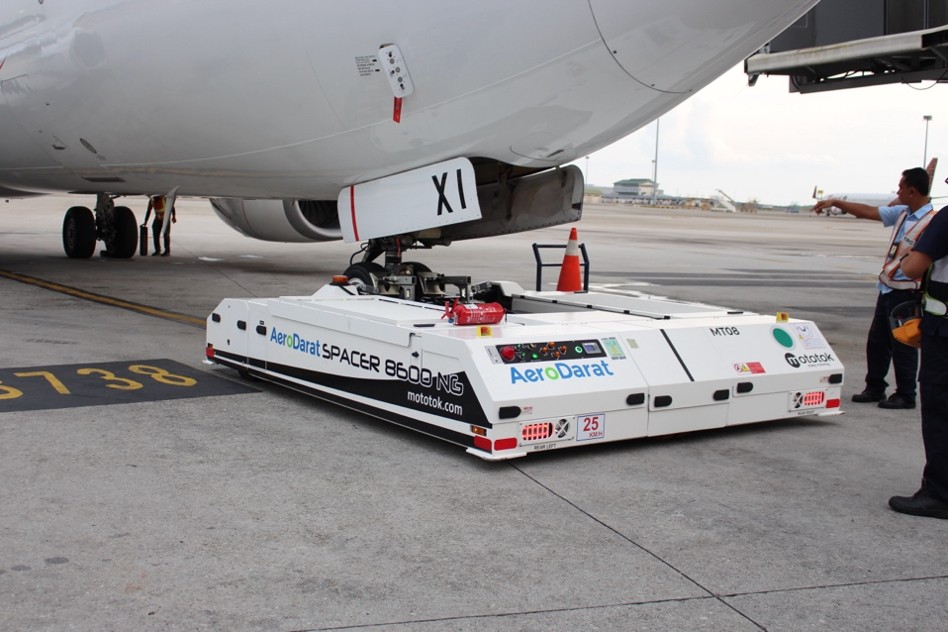
Since 2024, the company has used 13 fully electric Mototok units to push narrow-body aircraft away from airport gates, replacing conventional diesel-powered tractors. By May 2026, the units had completed 47,932 pushbacks, displaced an estimated 36,988 litres of diesel and avoided 92.47 tonnes of direct carbon dioxide emissions.
The figures offer a measurable indication of what targeted electrification can achieve. The operational change also reduces staffing requirements, with one trained operator able to handle a pushback that may otherwise require up to three staff.
Why Replacing Every Vehicle Is Not the Only Answer
As a ground-handling subsidiary of Malaysia Aviation Group (MAG), AeroDarat is part of a wider group effort to reduce emissions from airport operations.
Since 2023, MAG has transitioned approximately 900 diesel-powered vehicles and pieces of equipment at KLIA to Biodiesel B7. Between 2023 and 2025, the fleet used 7.9 million litres of the fuel, avoiding an estimated 953 tonnes of lifecycle greenhouse gas emissions compared with conventional diesel.
Alongside this group-wide initiative, AeroDarat invested RM141.6 million in 1,451 new pieces of GSE between 2023 and 2025, reducing the average age of its KLIA fleet from 20 years to 5.5 years. Together, these initiatives show how AeroDarat sustainable transport extends beyond electrification to include cleaner fuels and more efficient equipment.
The Next Stage of the Transition
AeroDarat’s approach illustrates how sustainability measures can be introduced alongside day-to-day operational demands. However, expanding electrification across airport fleets will require more than purchasing new vehicles. This will involve developing adequate charging infrastructure, ensuring sufficient electrical capacity and balancing investment with operational requirements.
The company is preparing to purchase 20 electric baggage tractors, while MAG plans to extend its biodiesel approach to other stations. These next steps will build on the progress already achieved at KLIA.
As a finalist for Sustainable Transport Initiative of the Year at the TXA Awards 2026, AeroDarat demonstrates how a combination of electrification, alternative fuels and fleet renewal can deliver measurable progress towards lower-emission ground operations. Its experience reinforces the value of practical solutions that reduce environmental impact while keeping essential transport services running efficiently.