
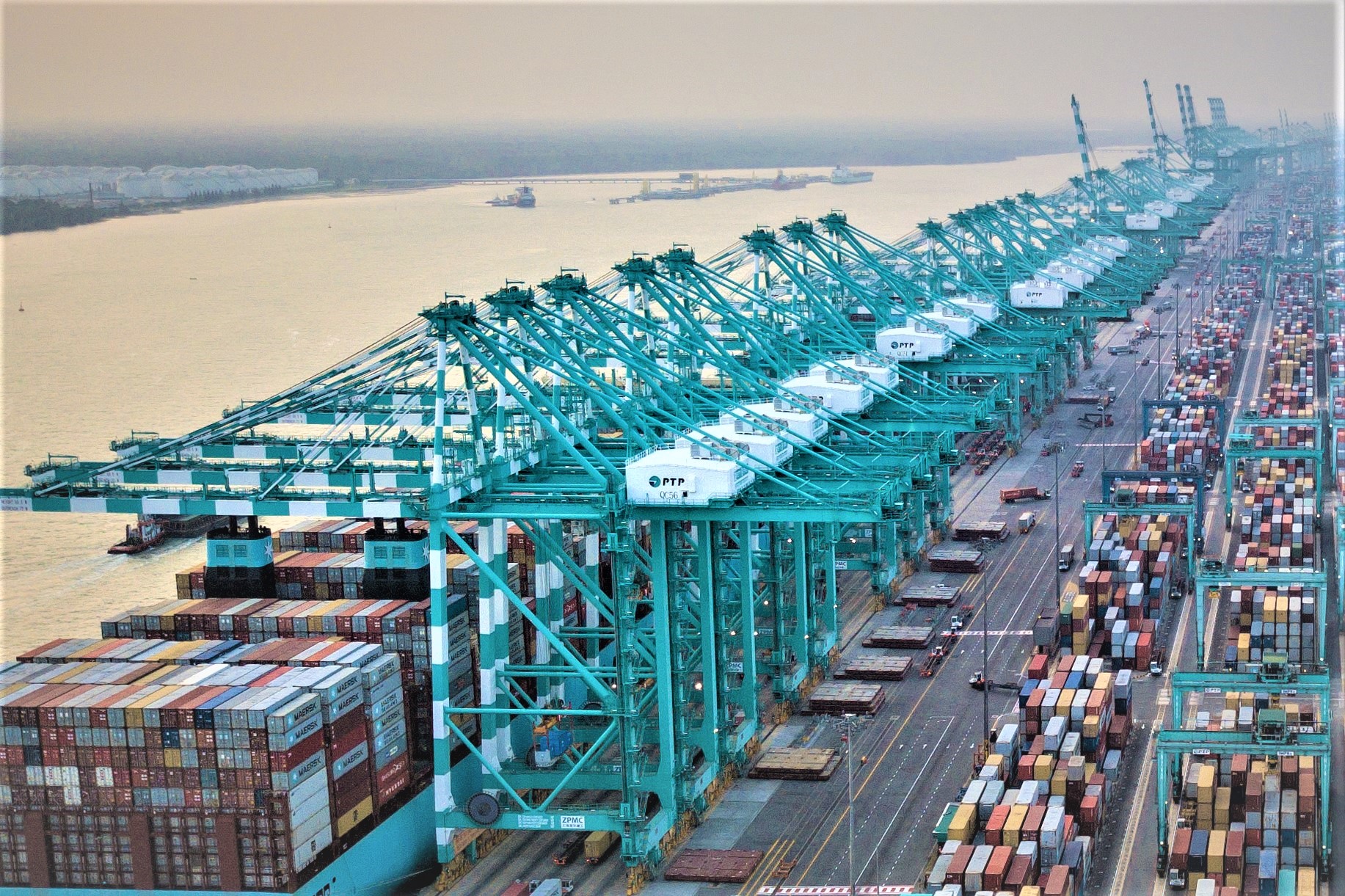
Port of Tanjung Pelepas Sdn Bhd, Malaysia’s largest transshipment hub, has been shortlisted for the Best Port Operator category at the Transport Expo Asia (TXA) Awards 2026. Located in Johor, the port connects major international shipping routes and plays a vital role in facilitating cargo movement and supporting global trade.
Growing Beyond Volume
Strategically located along the Straits of Malacca, Port of Tanjung Pelepas connects major East-West shipping routes with regional feeder services. Its throughput increased from 12.25 million TEU in 2024 to 14.03 million TEU in 2025, making it the first single container terminal in Malaysia to exceed 14 million TEU in a year.
Its growth also stood out internationally. According to shipping consultancy Alphaliner, Port of Tanjung Pelepas recorded the fastest throughput growth among the world’s 30 largest container ports in the first half of 2025, with volumes rising 15.4% to 6.87 million TEU.
Yet volume alone does not determine a port’s competitiveness. Port of Tanjung Pelepas ranked fifth globally in the World Bank and S&P Global Market Intelligence’s Container Port Performance Index 2023, which evaluates port performance based on vessel time in port. The ranking highlights another important measure: how efficiently a port turns capacity into operational performance.
Making Every Movement Count
Port of Tanjung Pelepas operates 14 deep-water berths along 5.04 kilometres of quay, supported by 67 quay cranes, 252 electric rubber-tyred gantry cranes and 644 prime movers. Its current annual handling capacity stands at 15.3 million TEU.
Keeping this infrastructure productive requires coordination across equipment, personnel and vessel schedules. Port of Tanjung Pelepas reports productivity of 302 port moves per hour and equipment availability exceeding 90%.
Technology also plays a growing role. Its investments include the Navis N4 4.0 terminal operating system, a real-time digital twin and an artificial intelligence-enabled yard optimiser. According to Port of Tanjung Pelepas, these initiatives have reduced berth idling by 25%, while its Lean and continuous improvement programmes have generated RM67 million in validated savings.
Together, these measures show how operational planning and digital tools can help a terminal accommodate higher volumes without relying on physical expansion alone.
Resilience When Shipping Routes Change
The value of operational efficiency becomes more apparent when global shipping faces disruption. During the Red Sea crisis, vessels rerouted around Africa, extending some journeys and placing additional pressure on ports across international shipping networks.
Port of Tanjung Pelepas reports handling 1.08 million TEU in a single month during this period without congestion. Throughout 2025, it maintained average monthly throughput of approximately 1.2 million TEU, also without congestion.
Its role as a main hub for the Gemini Cooperation, the shipping alliance between Maersk and Hapag-Lloyd, further reflects its position in global shipping. Port of Tanjung Pelepas reported schedule reliability of 94% for mainline vessels and 98.4% for shuttle services, both above the alliance’s 90% target.
For a transshipment hub, reliable schedules extend beyond the terminal itself. Delays can affect connecting feeder services and onward cargo movements, making the ability to maintain operational flow an important part of the wider supply chain.
Preparing for the Next Stage
With throughput approaching its current annual capacity, Port of Tanjung Pelepas is pursuing its KILAT capacity acceleration project to increase annual handling capacity to 16.3 million TEU by 2029. Longer-term plans include autonomous gate operations and AI-led port planning by 2030.
Beyond the terminal, the adjacent Pelepas Free Zone supports warehousing and related logistics activities. Its seven million square feet of warehouse space recorded 98% occupancy in 2025, reinforcing the port’s role in the wider logistics ecosystem.
As operations expand, maintaining safety, workforce capabilities and environmental performance remains equally important. Port of Tanjung Pelepas reports an 88% reduction in its lost-time injury frequency rate and has retrained more than 1,500 employees in digital tools, data analytics and automation.
The port also reported a 22.55% reduction in emissions per TEU handled in 2025 compared with 2021, reflecting its ongoing efforts to improve environmental performance alongside operational growth. As it continues to expand capacity and modernise its operations, Port of Tanjung Pelepas aims to reduce its total carbon footprint by 45% by 2030 and achieve net zero by 2050.
Measuring Performance Beyond the Numbers
Port of Tanjung Pelepas’s performance reflects more than the volume of cargo it handles. Its ability to maintain vessel schedules, manage disruptions and improve operational efficiency demonstrates the importance of reliability in a global shipping network.
Record throughput, international efficiency rankings and reported improvements in berth utilisation and schedule reliability provide measurable indicators of its operational capabilities. Meanwhile, planned capacity expansion and continued investment in technology and sustainability will test how effectively these standards can be maintained as demand grows.
As global shipping networks increasingly depend on efficient and resilient transshipment hubs, Port of Tanjung Pelepas’s continued growth will depend on how effectively it expands capacity while upholding safety and sustainability standards. Its record throughput, strong vessel schedule reliability and ability to navigate shipping disruptions demonstrate its contribution to keeping global trade moving. These achievements make PTP a strong contender in the Best Port Operator category at the Transport Expo Asia (TXA) Awards 2026, reflecting its role in strengthening Malaysia’s position in international maritime trade.