

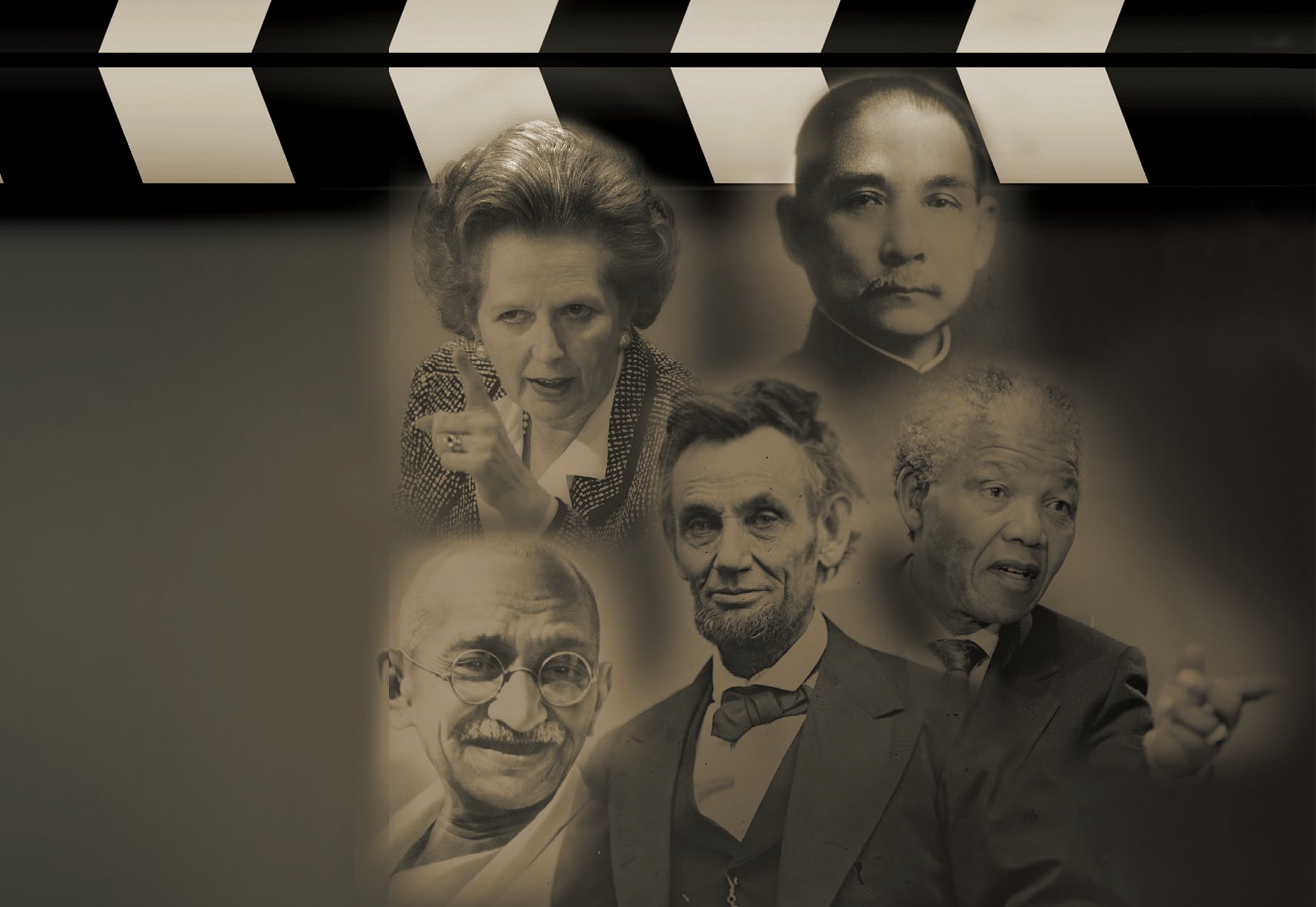
In collaboration with High Life: Living the Good Life, VOICE OF ASIA is proud to present timeless articles from the archives, reproduced digitally for your reading pleasure. Originally published in High Life Volume 3 in 2015, we take a look at the men and women whose names have been burned into the annals of history and retold on film.
There are men and women who have left their marks on the world; whose deeds have changed lives and shaped history. Their legacies were felt and are still being felt today, such was the impact they made in various fields from civil rights to social reform to politics. But more than just leave legacies behind, they also lived lives that made them ideal for the silver screen. The force of their personalities, their struggles and their achievements have been captured on film – not just once but multiple times, because each and every portrayal presents a different yet complementary depiction of the character. And through these films, our understanding and appreciation of these legends become stronger.
The Man Who Freed America – Abraham Lincoln
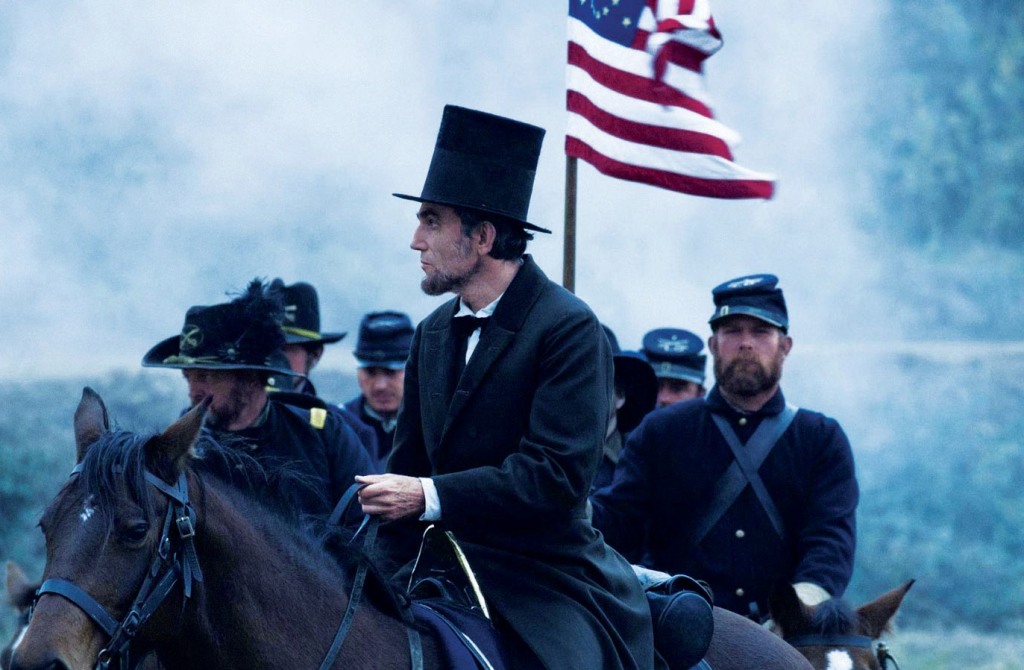
Heralded as America’s greatest President, Abraham Lincoln’s legacy can be found in the current occupant of the same office which Lincoln held from 1861 to 1865. The historic moment in November 2008, when Barack Obama became the first African-American to be elected President of the United States, could not have happened were it not for the first step taken by Lincoln nearly 150 years before when he freed the slaves and set the ball rolling for Black Americans to enjoy the same rights as their white counterparts.
Even if he had only been President without fighting (and winning) the Civil War and freeing the slaves, Lincoln’s story would still be Hollywood material. He was the quintessential personification of the American Dream – born in a Kentucky log cabin, lost his mother at a young age, grew up in poverty, taught himself how to read and write and eventually became a famous trial lawyer before successfully running for the Presidency.
And Hollywood does indeed love the 16th President of the United States of America. In fact, Honest Abe (as Lincoln was nicknamed) has been portrayed in over 130 feature films, more than any other occupant of the Oval Office. Unsurprisingly, many of these depictions were of him as President during the Civil War although there have been a few rather outlandish plots including Lincoln as a zombie hunter or as a vampire killer.
Portrayals of a Lincoln as a young man however are far and few between. Perhaps the best known movie which does so is the aptly titled 1939 film Young Mr Lincoln. Starring Henry Fonda in the titular role, this movie showed Lincoln as a young lawyer fighting his first big case where he defends two brothers charged with murder.
Fonda’s portrayal won praise from The New York Times which noted his “warmth and kindliness, the pleasant modesty, the courage, resolution, tenderness, shrewdness and wit that Lincoln, even young Mr. Lincoln, must have possessed. His performance kindles the film, makes it a moving unity, at once gentle and quizzically comic.”
Coupled with the uncanny physical resemblance between actor and subject, Fonda was a natural as Lincoln and the movie has been immortalised after being added to the National Film Registry of the Library of Congress for being “culturally, historically, or aesthetically significant”.
Closer to the present, the 2012 film Lincoln with Daniel Day-Lewis as the protagonist, showcases the American President in the final four months of his life. Day- Lewis, an accomplished Method actor himself, won an Academy Award for his performance of Lincoln in the closing weeks of the Civil War, his fight to get the 13th Amendment abolishing slavery passed and the events leading up to his assassination.
The Method, which demands total immersion into the character, is physically and emotionally demanding. So it was for Daniel Day-Lewis too, but the results were stunning. To quote producer Kathleen Kennedy, “Every day you get the chills thinking that Lincoln is sitting there right in front of you.
New York Times critic A.O. Scott echoed that sentiment in his review where he wrote, “The experience of watching Daniel Day-Lewis in this role is nothing less than thrilling. This is Lincoln… There are entire stretches in Lincoln, especially in the Cabinet scenes, as you hear the complexity of his legal and strategic thinking that you might very well forget you’re seeing acting – even forget you’re in a movie theater – and instead believe that you’re sitting in a room with the 16th President. To be on the receiving end of that is more than entertainment. It feels like a gift.”
The Iron Lady Who Changed Britain – Margaret Thatcher
One of the most iconic figures in British politics, Margaret Thatcher took office as Prime Minister in 1979 and would go on to spend a record-breaking 11 years in 10 Downing Street – the longest for any modern holder of the office. Even if she had done nothing of note, she would have gone down in history as Britain’s first woman Prime Minister. However, that is all moot. The fact is Margaret Thatcher did more than any Prime Minister to change the face of Britain.
She took over a Britain that was at its nadir. All-powerful unions went on frequent strikes resulting in hospitals being closed, rubbish piled on floors and even bodies were left unburied.
The country was bankrupt and had to take a loan from the IMF, unemployment was high and inflation was raging. In 1979, the voters, tired of the situation, voted Thatcher’s Conservative Party into power, what they got was nothing short of a revolution.
Her methods might not have been pleasing to all but they worked. The unions, which had previously managed to bring governments to their knees, were put in place by stringent legislation which banned wild cat strikes. She privatised nationalised industries such as telecommunications and electricity, making them more efficient. And people who had paid rent to local council for generations for the roof over their heads were given the opportunity to own their own homes.
In foreign policy, she was no less uncompromising. When Argentina invaded the British colony of the Falklands in 1982, she refused to negotiate and instead sent the armed forces across he Atlantic Ocean to claim back what she saw as British territory. A fervent anti-Communist, she and Ronald Reagan of the United States formed a duo with a firm commitment against socialism, which led to the eventual fall of the Iron Curtain.
Perhaps the greatest legacy of Thatcher is that her political opponents soon adopted her philosophy. Thatcherism, which focused on aspiration – the desire to be successful, to be rich, to own your own home – and the power of the individual over society was taken up by the Labour Party. Today, no one in Britain – save for a few dreamers – talk about renationalisation or giving the unions back the power they had in the 70s. Memories of the bad old days still remain strong in the national psyche.
Unsurprisingly, the Iron Lady has been the subject of several movies. One of which, 2009’s Margaret – with Lindsay Duncan in the title role – showed Thatcher in her final weeks in office before she was ousted in a Cabinet coup. There is a certain irony in the choice of lead actress, given Duncan’s stated disdain for Thatcherism.
Nevertheless, she managed to do so in a way which evokes sympathy for Thatcher. As Guardian critic Michael White wrote, “… A dozen actors have tackled Thatcher. What Duncan unexpectedly conveys in Margaret, as none did before her, is her enduring vulnerability beneath the armour-plated exterior.”
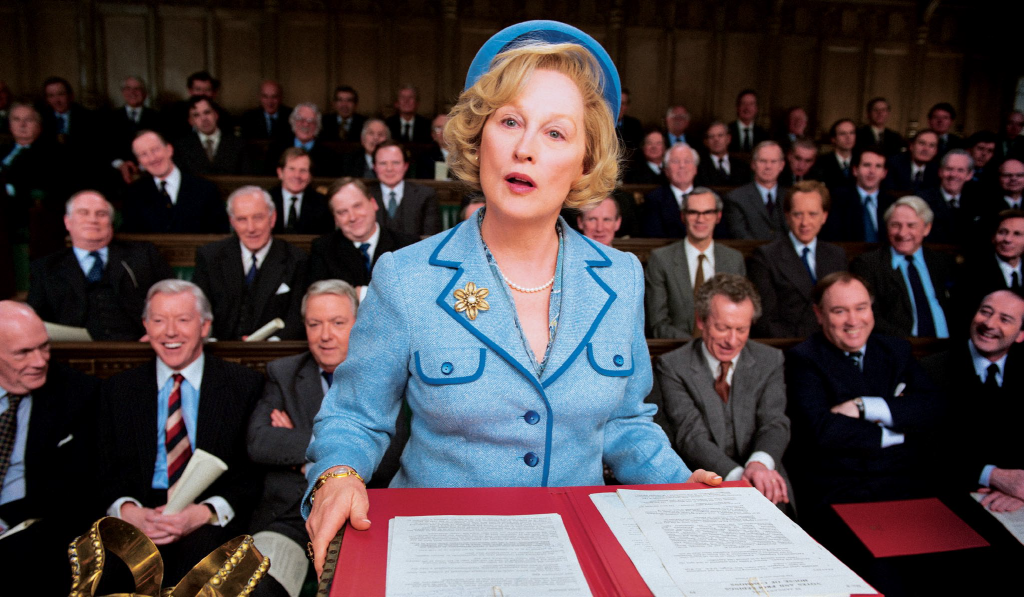
Also acclaimed was the 2011 portrayal of Thatcher by multi- Academy Award winner Meryl Streep in The Iron Lady. Depicting Thatcher in her later years, where the images of her dotage – ignored by her children and society – form a powerful contrast to flashbacks of her glory days, Streep’s acting saw her receive her third Best Actress Oscar.
The fact that most critics panned the movie but praised the portrayal is testament to the prowess of the lead actress. As Mick LaSalle of SFGate wrote, “Streep’s performance is so true and so uncannily accurate… Through meticulous study, Streep gets every external detail of Thatcher’s expression and movement and then, through some profound gift of intuition, she gets everything else, the thoughts, the inner life, the strengths and limitations, even the unconscious motivations of the character.”
The 20th Century’s Icon of Freedom – Nelson Mandela
The 11th of February 1990 will go down as a pivotal moment in the latter part of the 20th century, as one of the most famous political prisoners walked out of jail a free man. For nearly 30 years, Nelson Mandela was the face of the struggle against South Africa’s racist Apartheid laws.
Sentenced to life imprisonment in 1964 for his role in the resistance, Mandela’s defiant statement at his trial still ranks as one of the most powerful ever given. “I have cherished the ideal of a democratic and free society in which all persons will live together in harmony and with equal opportunities. It is an ideal which I hope to live for. But, my lord, if needs be, it is an ideal for which I am prepared to die.”
Such was the courage of Nelson Mandela. Like his fellow freedom fighters in the African National Congress (ANC), he knew that fighting the Apartheid regime will bring about a long prison sentence, or worse. The government then ruled using fear and intimidation, cracking down on dissenters who dared protest against a system which marked them as second-class – even third-class citizens – because of their skin colour.
Mandela’s time in Robben Island, the prison where he would spend most of his sentence, is a study on how oppressive governments try to break the will of political prisoners. He was kept in a cell that was just 8 feet by 7 feet, and had to perform hard labour. He and his fellow prisoners conducted clandestine study groups where they discussed politics, current affairs and most importantly, what would happen in a post-Apartheid South Africa.
The opportunity came when, in 1989, after decades of international isolation, then South African President F.W. De Klerk announced the relaxation of Apartheid, followed by Mandela’s release. Soon, the stage was set for the first general elections where the Black majority were allowed to vote. Despite a campaign of terror by White supremacists, polling went through and Mandela became South Africa’s first democratically elected President.
The revolutionary was now the statesman. There are those who expected the Black majority, after all the indignities they suffered, to wreck vengeance on the White minority. But none of that happened, and it was Mandela who was foremost in ensuring that such acts did not happen. To him, the end of Apartheid was the opportunity to help build a fairer and more equitable nation for all South Africans, and so he extended his hand to his former persecutors.
And this is Nelson Mandela’s greatest legacy – the power of forgiveness. In a country torn in two, he had the moral authority to heal the wounds. His story was also one that has been told several times on film by some of the most acclaimed actors of their time.
We start off with Danny Glover in the 1987 tele-movie Mandela. A straight-forward biopic, it garnered Glover a Primetime Emmy Award for Outstanding Leading Actor in a Miniseries or a Movie. It was produced at a time when Mandela’s chances of freedom were still unknown, yet movies like Mandela helped keep the name alive in people’s conscience.
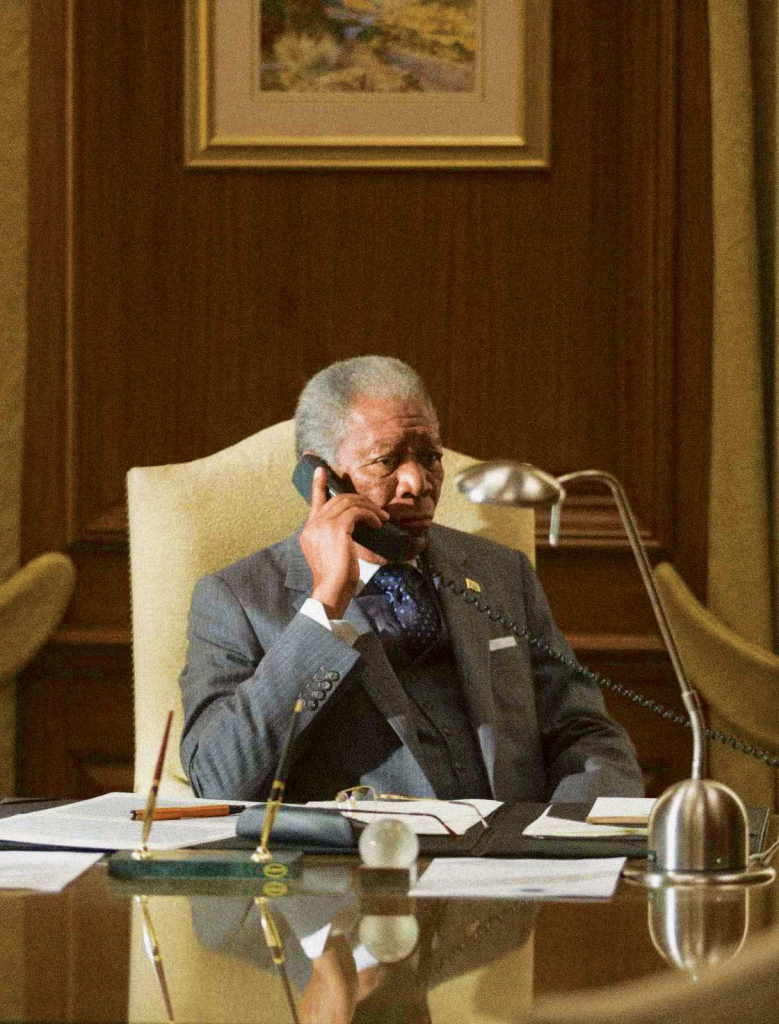
However, no major movie was made of him until 2009 when Clint Eastwood took a shot at directing Invictus. Starring Morgan Freeman as the South African statesman, the movie revolves around South Africa’s hosting of the 1995 Rugby World Cup – the first major sports event held there since its international ban was lifted.
Freeman’s portrayal of Mandela was lauded and he was even nominated for an Oscar. It definitely did not hurt that the highly acclaimed actor also had the benefit of looking like Mandela, which – when added to his masterful acting – made the depiction even more lifelike. It probably helped also that, in 1994, when asked who should portray him in a movie, Mandela identified Morgan Freeman as his choice. A great vote of confidence indeed.
The Father of Modern China – Sun Yat-sen
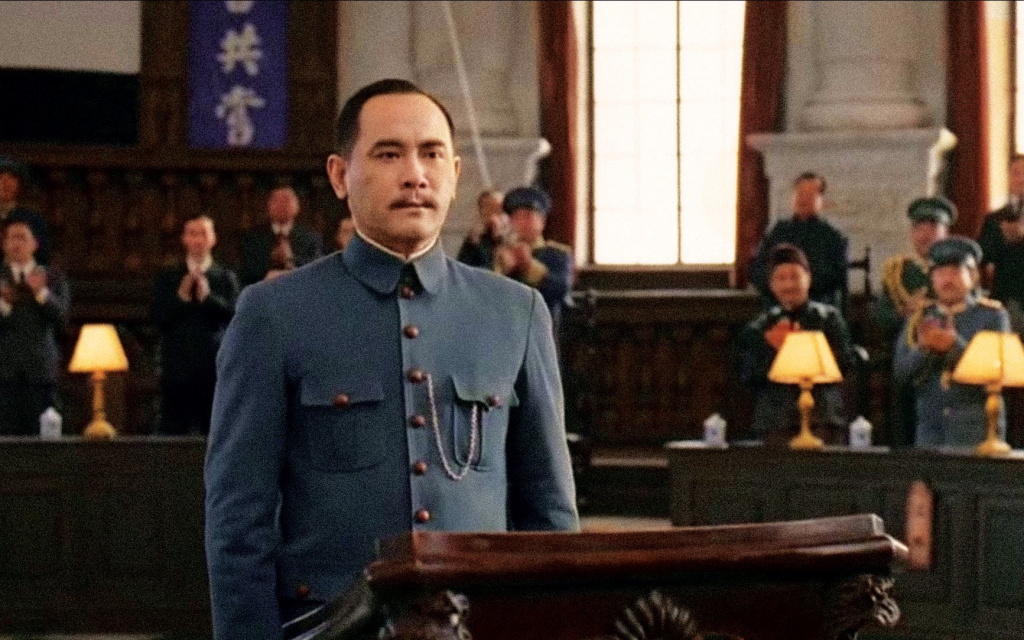
Few people can be heralded as founding fathers in two countries, least of all when each is ideologically opposed to the other. Such is the case with Sun Yat-sen, who is equally revered in both China and Taiwan. In fact, both the Communist Party on mainland China and the Kuomintang on the other side of the Taiwan Straits hail Sun as the Father of Chinese Nationalism and claim legitimacy by purporting to be his true spiritual heirs.
Sun is remembered as the man who inspired the 1911 Revolution which overthrew the Qing Dynasty in China and ended Imperial rule in the country. The path was not easy though, as he had to spend nearly two decades – including several failed uprisings – trying to get his message through while facing assassination threats from Qing agents and hostility from its sympathisers.
Interestingly, when the Revolution started, Sun was nowhere near China. Having fled into exile in 1895, Sun soon became an emissary to the overseas Chinese community, travelling to countries where they converged to seek out support. In fact, it would be reasonable to say that there was not one city with a significant Chinese population that Sun did not visit, as he had homes in Hong Kong, Singapore, Penang, London and Hawaii to name a few.
He was driven by a sense of pride and love for his country, which had been undergoing the indignity of foreign incursion owing to the ineffectual and corrupt Qing. For Sun, replacing the Imperial dynasty with another one was out of the question. Times had changed, and China needed to change with it. Republicanism, nationalism, socialism and democracy were the ways forward, and so he went around preaching his philosophy to those who would listen.
Naturally, such an iconic figure in Chinese history has been celebrated in popular culture and Sun has appeared in several films, either in a supporting role or as the protagonist. One of the earliest hits is the 1992 martial arts movie Once Upon a Time in China. Starring Jet Li as the legendary Chinese martial artist Wong Fei-hung, the movie also featured Zhang Tielin as Sun.
Depicting a fictionalised account of how the two men met at a medical conference (both Sun and Wong were medical practitioners), the plot revolves around Wong helping Sun as he tries to leave Guangdong for Hong Kong in his mission to overthrow the Qing.
While Zhang’s character had a minor role in the film, the same can’t be said for the Sun Yat-sens played by Taiwanese actor Winston Chao, who portrayed China’s national hero not just once, but three times. These were in 1997’s The Soong Sisters, 2007’s Road to Dawn and 2011’s 1911.
The first movie focuses more on Sun’s wife Soong Ching-ling, as well as her sisters May-ling (wife of Sun’s successor Chiang Kaishek) and Ai-ling (wife of H.H Kung, China’s richest man) than the man himself. In Road to Dawn – a joint Chinese-Malaysian production – however, Sun’s character comes to the forefront as the movie tells the tale of his time in Penan where he gathered support among the diaspora for his movement.
For his efforts, Chao won the Most Popular Actor Award at the 10th China Movie Channel Media Awards. He was also nominated in 2011 for the Best Actor prize in the 100 Flowers Awards (China’s equivalent of the Golden Globes) for his depiction of Sun in 1911, which was released for the 100th anniversary of the 1911 Revolution. Having played the character three times, one can say that Winston Chao has become the go-to actor when it comes to portraying Sun Yat-sen.
The Peacemaker – Mohandas Gandhi
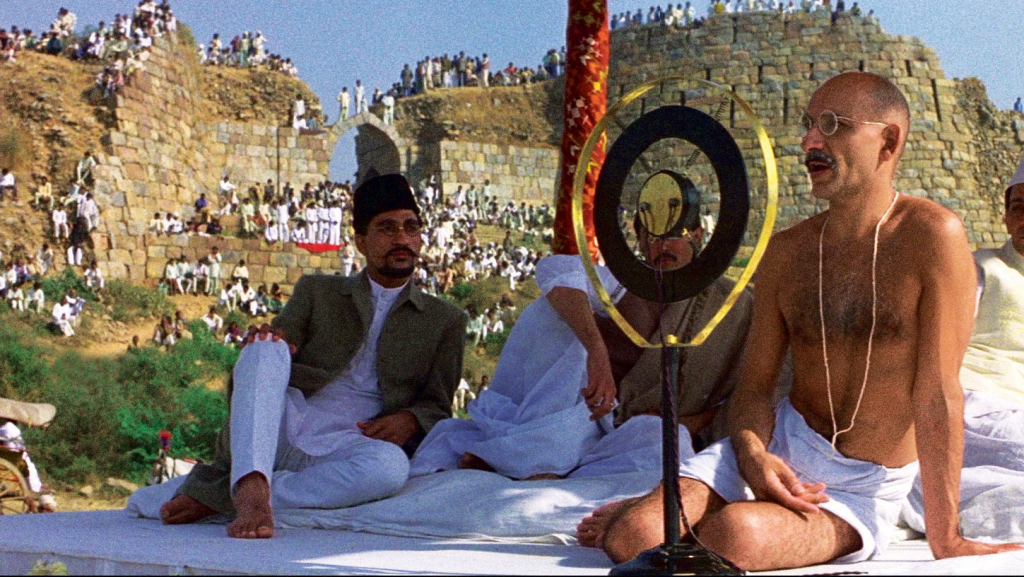
For many, Mohandas Karamchand Gandhi is better known by the Sanskrit honorific “Mahatma” which means “Great Soul”. It is a very apt title for a man who is also affectionately called “Bapu” or father in his native India. However, it is not because he led the struggle for independence from British rule that qualified him for the title, but the means through which he did it. Unlike so many nationalist leaders, Gandhi espoused a philosophy of peaceful non-cooperation and non-violence, which has cemented his legacy throughout the world.
Calling his philosophy satyagraha, which means “seeking truth”, Gandhi’s belief in non-violent resistance was based on his rejection of the idea that the means justify the ends. For him, to use force and violence – which he viewed as fundamentally unjust – to gain an advantage would have tainted the achievement.
It is a teaching that requires great forbearance and self-sacrifice to the point of martyrdom. For Gandhi, non-violence does not mean passiveness as demonstrated by the 15 fasts/hunger strikes he underwent throughout his public life, a number of which were performed when he was in British custody. By disciplining himself and refusing to eat, he managed to force the British hands as any harm coming to him while in prison would have been highly embarrassing.
Before Gandhi, the idea that any effective change of an unfair system can come about through non-violent means was unthinkable. Yet, since India’s independence in 1947, other similar movements have found success, including the Civil Rights Movement in the United States led by Martin Luther King in the 1950s and 60s, People Power in the Philippines of 1986 and Solidarity in Poland of the 1980s.
India’s flourishing film industry – Bollywood for Hindi cinema and Kollywood for Tamil cinema – naturally means that Gandhi has been portrayed in several feature films. However, the most famous depiction was not from an Indian production, but the 1982 Sir Richard Attenborough-directed epic Gandhi.
The film won eight Academy Awards including Best Actor for Ben Kingsley in the title role. In a true masterclass performance, Kingsley’s acting was praised by Time film critic Richard Schickel as “nothing short of amazing”. Another critic, Kathleen Carroll of the Daily News in New York wrote, “Kingsley is simply astounding. Displaying a combination of gentle spirituality and stubborn strength, he is so magnetic that one completely understands the hold that this wily politician had over India’s teeming millions… Through Kingsley, Gandhi does indeed live again.”
Another award-winning performance for a portrayal of Gandhi came in 1996 when Rajit Kapur played the Mahatma in The Making of the Mahatma. Concentrating on the earlier period of Gandhi’s life, namely his time as a lawyer in South Africa, the movie introduced audiences to a little-explored aspect of the great man. Many know of Gandhi after he became famous, few know the story of how he reached that stage. Kapur’s masterful performance of the younger Gandhi saw him receive the Indian National Film Award for Actor that year.

