

In collaboration with High Life: Living the Good Life, VOICE OF ASIA is proud to present timeless articles from the archives, reproduced digitally for your reading pleasure. Originally published in High Life Volume 1 in 2017, we shine the spotlight on some of the greatest Chinese leaders, and why they are considered as such.
What makes a leader? Throughout history, there are many who have been called to lead, and while the circumstances of their ascent may differ, they share many commonalities. They are inspirational, they are able to connect with their followers, they are visionary and see opportunities where others see obstacles. But most of all, they are passionate. Because true leadership requires fire in the heart and the soul. In line with the upcoming Year of the Fire Rooster, and in a tribute to fiery Chinese trailblazers this Chinese new year, we present eight Chinese figures who have shown burning ambition and fiery leadership in their respective fields.
Wu Zetian
The Daughter of Heaven
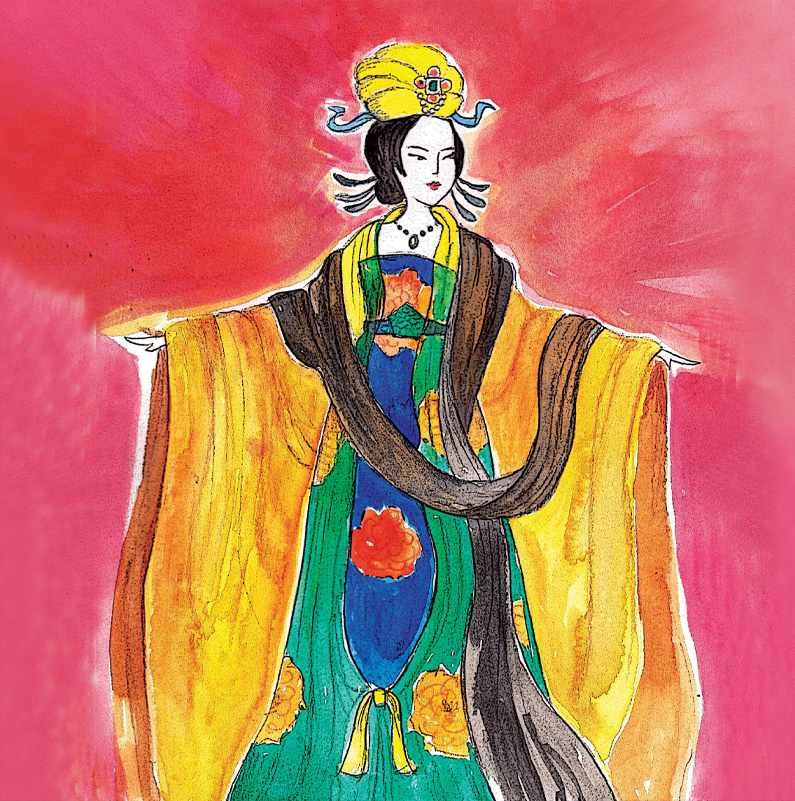
In four thousand years of Imperial rule, China has had its fair share of good and bad emperors, and when compared with the others, Wu Zetian belongs in the category of the good ones. Originally the daughter of a Tang dynasty official, Wu became a concubine of Emperor Gaozong in 650 at the age of 26. Five years later, the then Empress was removed in disgrace and Wu named to the position. It was there and then that she demonstrated a talent for administration, as the Emperor deferred many important decisions to her in recognition of her wisdom and intelligence.
Wu continued to be the power behind the throne, even after the death of Gaozong in 683. When her son Li Zhe, who became Emperor Zhongzong, clashed with her, she had him removed and installed her other son Li Dan as Emperor Ruizong in 684. By 690, she came upon a realisation. Since she was Emperor in all but name, why not end the pretense and become Emperor officially? And so she did, by removing Ruizong from the throne and taking it over herself as the first Empress in the newly created Zhou dynasty.
By becoming Empress Regnant, Wu threw thousands of years of tradition into the wind. However, tradition meant nothing compared to the good of the country, and she would prove to be quite iconoclastic yet effective in her reign. She reformed the civil service, opening up positions for capable people regardless of birth. She encouraged agrarian reforms that improved food production, and reopened trade to Central Asia. In matters of administration, she promoted those who excelled in their jobs and punished the corrupt and those who abused their power.
By the time she left the throne in 705 because of ill-health, after some persuasion, to be replaced by a restored Emperor Ruizong, Wu Zetian had left China with a stronger, more centralised government and a healthier economy. While she might be seen as dictatorial in modern times, as she made heavy use of mass executions and a secret police, she was no different from her contemporaries, and whatever she did, she did so in the passionate fervour of advancing the Empire.
Yue Fei
The Scholar General
“My wrath bristles through my helmet, the rain stops as I stop by the rail;/ I look up towards the sky and let loose a passionate roar./At the age of thirty, my deeds are nothing but dust, my journey has taken me over eight thousand li/So do not sit idly, for young men will grow old in regret.”
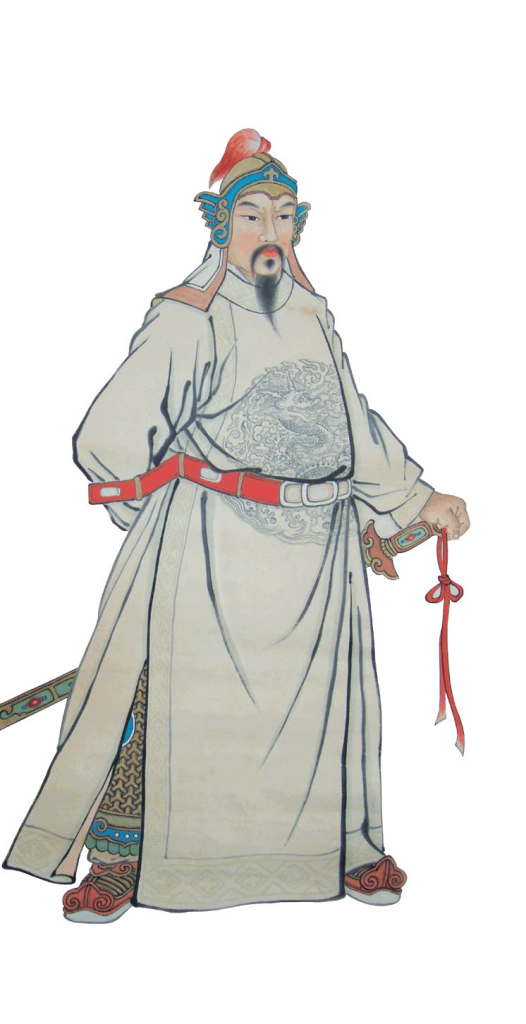
Those were the lines from the first stanza of Ma Jiang Hong (The Whole River Red), a classic Chinese poem reputedly written by General Yue Fei of the Southern Song dynasty during the 12th century. The poem railed against the defeat of the Song by the Jin dynasty, and vowed revenge for the humiliation that they suffered. While the authorship of the poem is disputed, popular legend gives credits Yue Fei as it reflects the passion and patriotism for which he has become renowned.
Born of a poor peasant family, Yue Fei rose up the ranks in the army, from a lowly private to the overall commander of the Southern Song military. He is reported to have fought in more than 120 battles, and never lost one. His nationalism was such a fervent one that he was even alleged to have had the words “Serve the nation with utmost loyalty” tattooed on his back.
It is said that Yue Fei’s success as a commander comes from him following six rules of conduct. First, he was very careful with selecting his soldiers, choosing a small band of well-trained men rather than having a large but poorly trained army. That leads to the second rule of command, which was to concentrate on training, thus ensuring that his men were in top fighting condition.
Yue Fei also believed that to be a good leader, he had to treat people fairly. He was generous with rewards but also strict when it came to punishments. He understood the importance of clear communication and gave his orders in a way that they could not be misinterpreted. Last but not least, he developed a strong relationship with his men, sharing their food and sleeping rough like they did.
Unfortunately for Yue Fei, his military abilities were not matched by his political skills. Instead he was betrayed by enemies at the court and executed. He was later rehabilitated and posthumously elevated into a status that affirmed him as one of the greatest patriots in Chinese history.
Xiahou Dun
Leading by Example
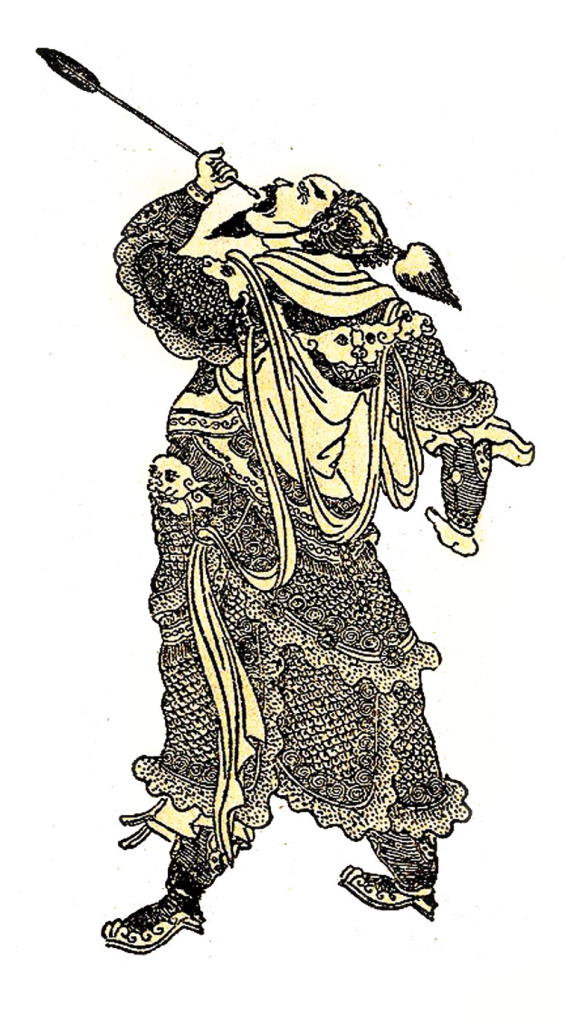
Fortitude…the ability to persevere in the most adverse of circumstances, is something all great leaders need. The Eastern Han Dynasty General Xiahou Dun was someone who could be said to have had a lot of that. After all, how else can one describe a man who, having been shot in the eye by an arrow during the heat of battle, reputedly pulled the missile out of his eye socket and ate his own eyeball before continuing the fight?
Although the story of him eating his eyeball is from the Chinese classic Romance of the Three Kingdoms, Xiahou Dun (who died in the year 220) was an actual historical figure. He served under the warlord Cao Cao during the civil war which engulfed the later Han Empire from 169 to 280, and while not noted as the most strategically adept commander, Xiahou Dun was a man who managed to inspire his soldiers through leading by example.
One particular incident came about during his time as Governor of Jiyin. Drought and locust attacks had caused agriculture output to drop dangerously low. In response, Xiahou Dun ordered a dam to be built at the river, and even participated in the physical work himself. The sight of the Governor himself, working like a peasant, earned him great respect among his men and the locals.
Such was Xiahou Dun’s reputation as an administrator that Cao Cao gave him carte blanche in managing the provinces, a distinction that few others, if any, had. He was renowned for his humility and frugality, and known for giving his money to the masses. Because of his concern for the people, his personal integrity and his fortitude in fighting on while seriously injured, Xiahou Dun is on this list as an inspirational leader in Chinese history.
Anita Mui
The Queen of Canto-Pop

When famed Hong Kong artiste Anita Mui passed away in 2003 from cervical cancer, thousands of fans lined the funeral procession to pay tribute to she whom they affectionately called “Mui Jie” (Big Sister Mui). In more than 20 years of public life, Anita Mui gave her all to her fans, and it was only fitting that they paid tribute to her when she passed.
Born in Hong Kong in 1963, Mui was brought up in poverty, as the youngest child of four whose father had passed away when she was very young. She began performing at the tender age of four, singing Chinese operas on the streets with her siblings, in order to help supplement the family’s income.
Her shot to fame however came much later, when she was 19 years old and she beat 3,000 other contenders to win the 1982 New Talent Singing Awards. She would go on to win the RTHK Top 10 Gold Songs Award in 1983 and 1984. Then in 1985, she won her first Top 10 Jade Solid Gold Best Female Singer Award, which she would go on to win for another four consecutive years.
Those awards were testament to Anita Mui’s prowess as a performer. She was not only a talented singer, but also had a tremendous stage presence. Her natural charisma shone through in her work, both as a singer and an actress. In fact, she demonstrated her versatility when she was named Best Actress for the movie Rougue in the 1988 Golden Horse Awards, the 1989 Asia-Pacific Film Festival Awards, and the 1989 Hong Kong Film Awards.
Her concerts were renowned for their glitz and glamour, as well as for their elaborate stage sets. Mui herself would be dressed in extravagant costumes during the performance, often changing in between sets. Some called her “the Madonna of Asia”, but that was a left-handed compliment if anything. Anita Mui was an original artiste in her own right.
And her fans loved her. They adored her, not only because of her talent but also because they knew that whether it was in a live performance or in the recording studio, Anita Mui gave her all. She was driven by her passion for her fans, and perhaps the best evidence of this came in early 2003 when she was diagnosed with cancer. Faced with impending death, she did what came naturally to her; she went on a concert tour and gave her fans one last thrill.
Jack Ma
From Teacher to Tycoon
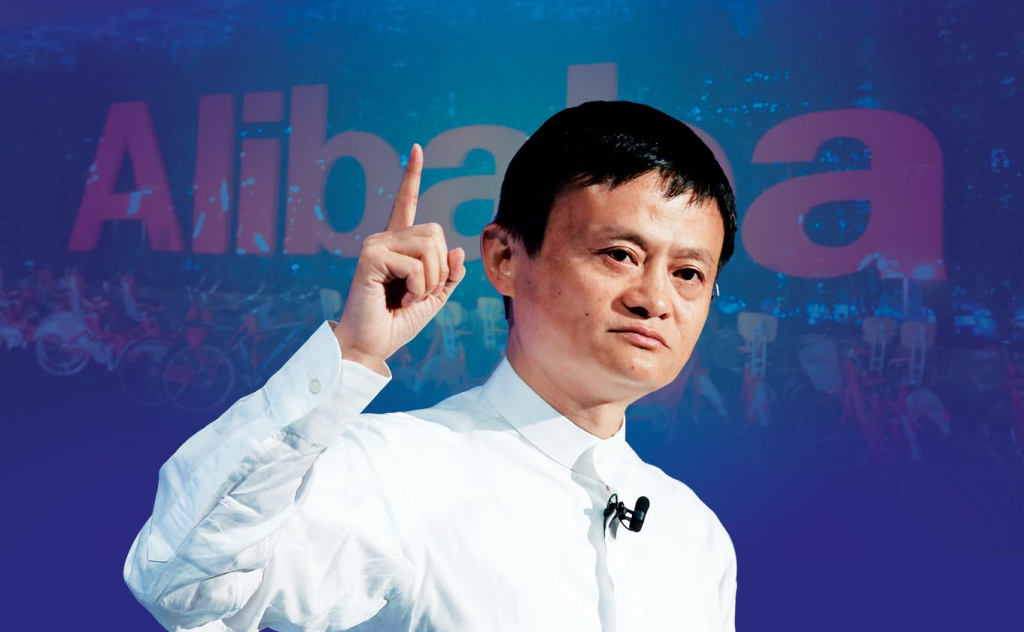
One long standing stereotype about the Chinese people is that they are hard working. Definitely, one cliché in the modern industrialised China is that if you work hard and have the smarts, then you can achieve anything. While this is not strictly the case all the time, people like Jack Ma show that there is some truth to such an assertion.
Jack Ma is the founder and executive chairman of Alibaba. China’s largest e-commerce group, Alibaba is the fifth largest internet company in the world, with revenue of more than US$15 billion and a market cap of US$204 billion. Its main business is as an internet marketplace, providing the platform for business-to-business, business-to-consumer, and consumer-to-consumer transactions, to users in China as well as in the rest of Asia.
Ma’s life story makes Alibaba’s rise remarkable. Unlike many internet entrepreneurs who had a grounding in computer science or a related field, Jack Ma’s educational and professional background prior to founding Alibaba was not a conventional one. The Hangzhou-born native, age 53, was a lecturer of English and international trade at the Hangzhou Dianzi University, a career far away from the world of e-commerce he now dominates.
What Ma has however is tenacity and a vision. It was this vision that led him to see the potential for e-commerce in China during his visit to the United States in 1995. And when he decided to start an internet company with 17 friends in 1999, that tenacity helped him break through barriers despite not having any experience in coding or programming.
Jack Ma is also known to be a people person. It was a skill he picked up as a youth when he would approach foreigners in his native city and asked them to teach him English. This gregariousness also came in useful during Alibaba’s early days when he had to raise capital for the venture, and from October 1999 to January 2000, he secured US$25 million worth of investments.
Today, Jack Ma is worth an estimated US$25 billion. Alibaba has also entered the record books, with its 2013 IPO on the New York Stock Exchange raking in US$150 billion, the largest in the history of the NYSE. Not a bad result for a man who was once rejected for a job at KFC.
Robin Li
China’s Search King
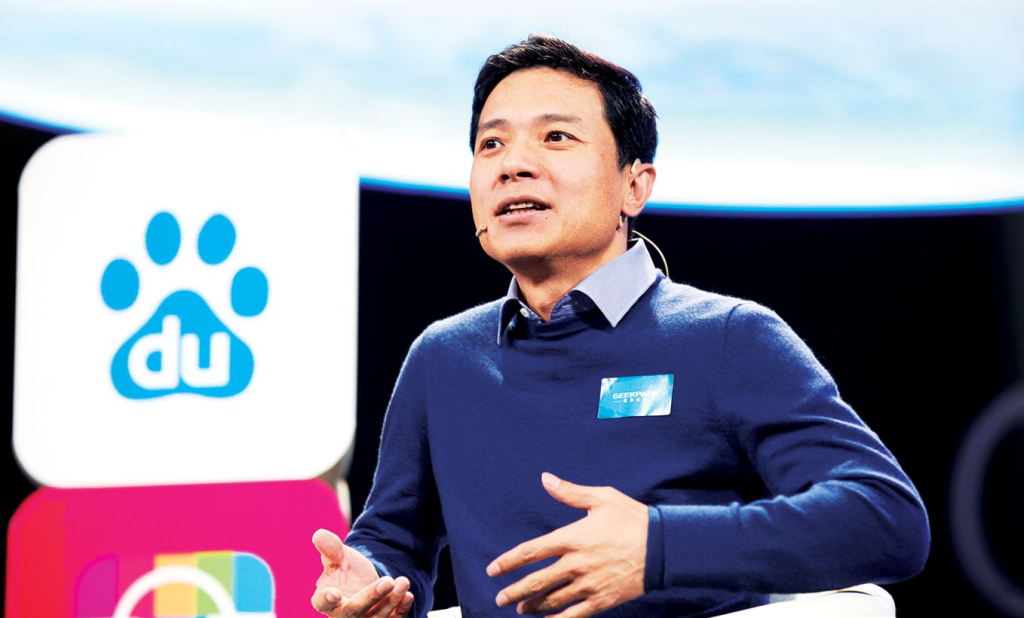
When it comes to search engines, Google is seemingly ubiquitous, so much so that its name has entered common parlance as a verb for performing a search on the Internet. Yet, despite its apparent dominance, there is one market that the company from Palo Alto has been unable to make significant inroads. And whereas we might say, “let’s Google it”, people in China are more likely to say, “Let’s Baidu it.”
Baidu is the undisputed leader of search engines in China, accounting for more than 80% of all queries made in the country. To call it a search engine however does not begin to describe the position that Baidu holds in China’s fast growing Internet market. It hosts music and video files, it runs online forums and discussions, it has its own messaging service, its own online encyclopedia, and its own cloud sharing service. In May 2015, it was ranked by Internet traffic analyst Alexa as having the highest web traffic in China and the fourth highest in the world.
At the helm of Baidu is Robin Li, who founded the company in 2000 with Eric Xu. The archetypical modern Chinese entrepreneur, the 47 year old Li grew up at a time when China was slowly shedding its Communist state-run economy for a more market driven one. This was a China that was on the rise, and Li knew that ICT would be one of the key areas of growth.
And so he enrolled to study information management at Peking University, and then went to the University of Buffalo in New York to pursue a Masters in computer science. It was during his time in the United States that he began honing the skills that would later prove invaluable in Baidu’s success. While working at a Down Jones subsidiary in New Jersey, he developed a search algorithm, which he would use in Baidu. He would also cut his teeth in the search engine business as a software engineer for Infoseek from 1997 to 1999.
In 2000 Robin Li went back to China. He saw that Internet use was on the rise in his homeland, and yet there was no dedicated Chinese language search engine. Thus Baidu was conceived, brought to life and then nurtured into becoming the juggernaut it is today. Not content with just China, Li is looking to expand Baidu to other markets, and with his track record of determination, we will not bet against him becoming a success in that area.
Liu Chuanzhi
The Godfather of Lenovo
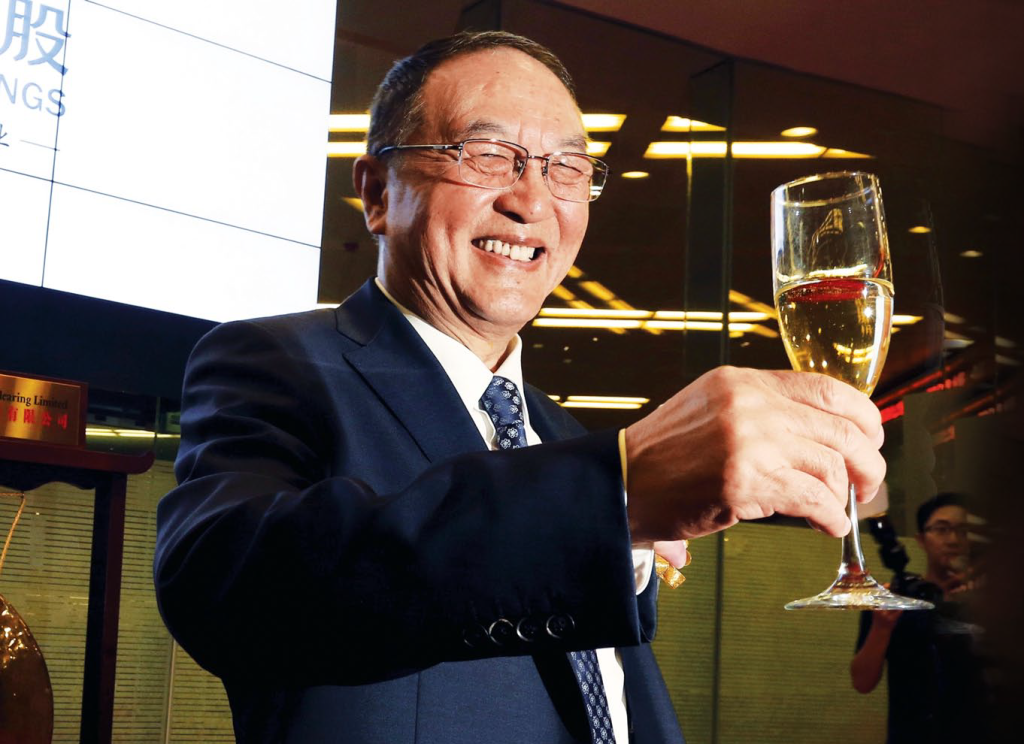
Liu Chuanzhi is in some way indirectly responsible for this article, as it is being typed out on a Lenovo Ideapad. Of course, even if a Lenovo computer was not used to write this article, Liu would still be on this list on the merit of being the founder of the largest computer vendor. Lenovo is the reflection of the modern Chinese corporation, which took on Western giants at their own game and beat then, and Liu is the visionary behind its meteoric rise.
A computer scientist by training, Liu Chuanzhi first envisioned the idea of Lenovo when he was working at the China Academy of Sciences (CAS) in the early 1980’s. Together with 10 other colleagues from the CAS (all of whom were engineers and scientists), Liu secured a loan to start the company that would go on to become Lenovo.
It was a revolutionary move. China then was not the same as China today. It was still very much a controlled economy and private enterprises were few and far between. Whereas China is now the home of many entrepreneurs, back then the idea of government workers leaving their employment to set up a company was unthinkable. However, Liu had a dream and he was not going to be denied.
That gamble has since paid off. Today, Lenovo is worth approximately US$44 billion, with Liu having an estimated net worth of US$9 billion. It is remarkable that the company which first found success developing a circuit board for foreign-made computers to process Chinese characters, would now be responsible for 19% of the world personal computer market.
Liu was very much the prime mover behind this. In 1990, he shifted Lenovo from being a service provider and supplier to foreign computer companies into becoming a computer manufacturer in its own right. Then in 2005, he led the acquisition that shocked the business world when Lenovo purchased IBM’s personal computer business. For the first time ever, a Chinese company had brought over a major American firm.
More than just bragging rights, the US$1.25 billion deal also secured important expertise and technology for the Chinese firm. Although Liu Chuanzhi is no longer involved in the day-today running of Lenovo, he remains the Chairman of its parent company Legend Holdings. Now age 72, he is still looking at new business opportunities, expanding Legend into other areas beyond IT. Such is the power of the entrepreneurial spirit that burns in his heart.

