

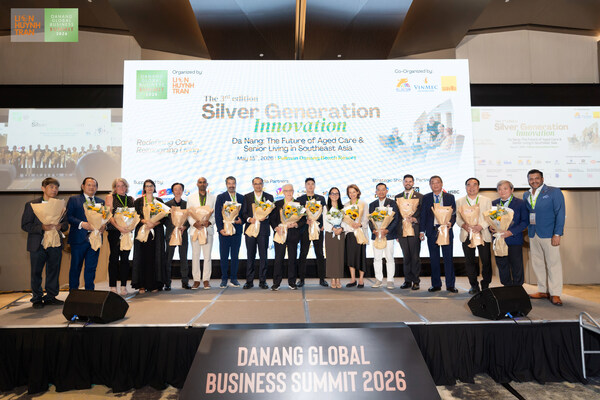
POSITIONING DA NANG AS SOUTHEAST ASIA’S INTERNATIONAL HUB FOR THE SILVER ECONOMY & MEDICAL TOURISM
DA NANG, Vietnam, May 28, 2026 /PRNewswire/ — The 3rd Da Nang Global Business Summit 2026, themed “Silver Generation Innovation”, concluded successfully on May 15 at Pullman Danang Beach Resort, bringing together more than 120 delegates, including government leaders, healthcare experts, international investors, technology companies, real estate developers, financial institutions, and healthcare operators from Vietnam and around the world.
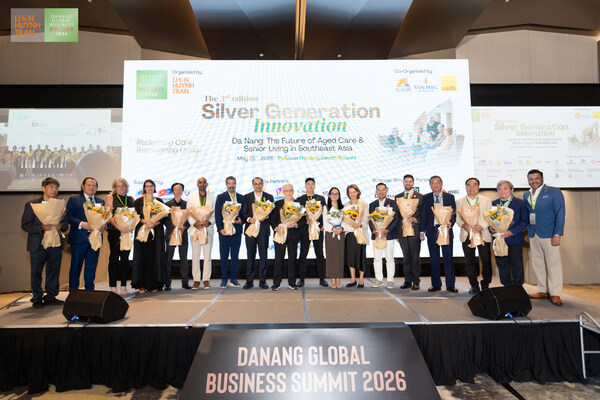
Danang Global Business Summit 2026 – Silver Generation Innovation Edition
The event was organized by Lion Huynh Tran Company Limited in collaboration with domestic and international enterprises and strategic partners, with support from organizations including Vinmec Da Nang International Hospital, Savills Vietnam, AmCham Central Vietnam, and numerous global organizations in healthcare, investment, and urban development.
The summit was held amid the rapidly accelerating population aging trend across the Asia-Pacific region. According to international studies, the “Silver Economy” — the economic ecosystem serving senior communities — is emerging as one of the fastest-growing sectors globally, creating significant opportunities for cities with high living standards, advanced infrastructure, and strong healthcare ecosystems.
With its natural advantages, livable environment, growing healthcare capacity, and sustainable development vision, Da Nang is increasingly recognized as a promising destination for retirement living, medical tourism, and international wellness services in Southeast Asia.
MORNING SESSION
STRATEGIC VISION & DEVELOPMENT MODELS
Vision from the Da Nang City Government
In her opening remarks, Ms. Nguyen Thi Hoai An – Deputy Director of the Da Nang Department of Culture, Sports and Tourism – affirmed that Da Nang is strategically positioning itself as a leading regional hub for resort tourism, healthcare, and wellness.
According to Ms. Hoai An, during the first four months of 2026, the city welcomed nearly six million visitors, reflecting Da Nang’s growing appeal through its harmonious combination of natural beauty, modern infrastructure, safe living environment, and friendly local culture.
She emphasized that the “Silver Economy” is not merely an emerging economic trend, but also an opportunity to redefine quality of life for the future. The city is progressively developing a wellness and medical tourism ecosystem through recovery retreats, preventive healthcare, traditional therapies, and proactive healthcare models.
Ms. Hoai An stated that Da Nang aspires to become a city where people and visitors come not only “to travel,” but also “to live healthier, live longer, and live happier.”
Perspective from the International Business Community
Mr. Chris Vanloon, Chairman of AmCham Central Vietnam, remarked that Vietnam possesses strong advantages for developing the retirement living and medical tourism industry, although its potential remains underutilized compared to regional competitors such as Thailand and Malaysia.
He highlighted the rapid advancement of Vietnam’s healthcare system over the past five years, particularly in Da Nang, with the presence of high-quality medical institutions such as Vinmec Da Nang International Hospital, Da Nang Heart Hospital, and Hoan My Hospital.
According to him, Da Nang’s strongest competitive advantage lies in its balance of beaches, mountains, mild climate, safe living conditions, and affordable cost of living, all highly attractive to the international retirement community.
However, he also noted that Vietnam still needs to address several critical barriers, including:
- Long-term visa policies for retirees
- Foreign ownership regulations for real estate
- Investment incentives for elderly care ecosystems
- International promotion of Vietnam’s healthcare capabilities
Mr. Chris Vanloon shared that international searches and interest related to retirement living in Da Nang have been rising significantly across global platforms, signaling strong potential for the city to become a leading destination for the global silver generation.
Expert Perspective
Keynote 1: Da Nang’s Vision for a Healthy & Age-Friendly City
Dr. Dilshaad Ali, Founder & CEO of Axel Health Group, delivered a global perspective on longevity and healthcare trends for aging populations.
He shared his personal experience of undergoing a major 10-hour surgery in Ho Chi Minh City with international-standard care, affirming the rapidly improving medical expertise of Vietnam’s healthcare sector.
According to him, successful retirement destinations such as Costa Rica, Mexico, Greece, Thailand, and Malaysia share several common characteristics:
- Comfortable living environments
- Strong healthcare systems
- Retiree-friendly visa policies
- Affordable living costs
- Strong community connectivity
He emphasized that the future of healthcare will shift from centralized hospital-based treatment toward decentralized, digitalized, and personalized care models. The ultimate goal, he noted, is no longer simply “treating illness,” but preserving health, independence, and quality of life for as long as possible.
Keynote 2: Global Trends in Aged Care, Senior Living & Longevity
Mr. Yusuke Hirai, Representative of Kitahara Medical Strategies International in Hanoi, shared insights drawn from Japan’s experience as one of the world’s fastest-aging societies.
He introduced the Kitahara healthcare model, which integrates preventive care, emergency medicine, rehabilitation, and home-based care to help seniors maintain independent living for as long as possible.
According to Mr. Hirai, the gap between average life expectancy and “healthy life expectancy” in Japan remains approximately ten years, meaning many elderly individuals spend the later stages of life living with dependency or chronic illness.
He stressed that the objective of future societies should not simply be extending lifespan, but extending the years in which people can live healthy, meaningful, and independent lives.
He also advised Vietnam against directly replicating Japan’s older nursing home models, recommending instead the development of a care ecosystem grounded in scientific data, technology, and human-centered values aligned with local culture.
Keynote 3: Simple Steps to Building Vietnam’s Medical Tourism Sector: Enhancing Patient Experience & Optimizing Marketing.
Mr. David T. Boucher, Senior Brand Ambassador and Former CEO of Bumrungrad International Hospital Phuket, stated that the global medical tourism market is projected to exceed USD 230 billion by 2033.
According to him, Vietnam has tremendous potential to strengthen its position within this market thanks to:
- Competitive healthcare costs
- Rapidly improving medical expertise
- Expanding tourism infrastructure
- High-quality healthcare workforce
However, to attract international patients, Vietnam must focus on six critical factors:
- Transparency in international patient data
- International certifications such as JCI
- Stronger networks connecting international and overseas Vietnamese doctors
- Five-star hospitality-driven healthcare experiences
- Improved logistics and telemedicine infrastructure
- Development of medical travel insurance systems
He concluded that the most essential factor in global medical tourism is ultimately “trust.”
SPECIALIZED PANEL DISCUSSIONS
Panel 1: Policies, Bottlenecks & Investment Climate for Vietnam’s Senior Living Sector
The discussion focused on unlocking international capital flows and addressing legal barriers to developing Vietnam’s elderly care ecosystem.
Mr. Matthew Powell – Director, Savills Vietnam
Mr. Matthew Powell stated that international investment capital for healthcare and senior living real estate remains highly abundant, particularly from Japan, Australia, and Singapore. However, Vietnam’s key challenges lie in the shortage of experienced operators and the lack of a sufficiently clear legal framework to support long-term investment confidence.
He emphasized that healthcare real estate is no longer a traditional property model, but rather a convergence of healthcare, hospitality, and community operations.
Mr. Oscar Njuguna – Director, Membership Board, Vietnam International Financial Center
Mr. Oscar Njuguna shared that Da Nang is developing special financial mechanisms aimed at attracting international investment funds focused on healthcare and the silver economy.
According to him, the Vietnam International Financial Center (VIFC) will serve as a bridge connecting REITs, international healthcare investors, and Da Nang’s development ecosystem through:
- Tax incentives
- Investment support policies
- Fast-track visa procedures
- Regulatory sandbox mechanisms
Dr. Vo Thu Tung – Deputy Director of the Da Nang Department of Health
Dr. Vo Thu Tung stated that Da Nang’s healthcare sector is rapidly transitioning from a “disease treatment” model toward a comprehensive lifecycle healthcare approach.
The city is currently:
- Implementing universal electronic health records
- Expanding home-based care models
- Developing daycare services for seniors
- Collaborating with the tourism sector to create specialized medical tourism products
He revealed that Da Nang aims to launch at least five integrated medical tourism packages for international visitors in the near future.
Ms. Nguyen Thi Hong Tham – Director of Da Nang Tourism Promotion Center
Ms. Nguyen Thi Hong Tham highlighted Da Nang’s luxury accommodation ecosystem, with more than 160 five-star hotels and an expanding international airport infrastructure, creating favorable conditions for the development of premium retirement living and wellness tourism.
She also shared that the city is actively working with relevant authorities to propose long-term visa policies for the international retirement community.
Mr. Nguyen Van Quoc – Director, Da Nang IOC
From a smart city perspective, Mr. Nguyen Van Quoc explained that Da Nang is implementing sandbox mechanisms allowing businesses to pilot AgeTech, AI, and IoT healthcare solutions even before comprehensive legal frameworks are finalized.
He believes this will become a key foundation for positioning Da Nang as a future innovation hub for elderly care technology.
Panel 2: Senior Living & Elderly Care Models in Vietnam – What Solutions Are Most Suitable?
This panel discussion focused on developing care models that align with Vietnamese culture and the practical demands of an aging society.
Mr. Le Quoc Huan – Deputy CEO, Wecare247
Mr. Le Quoc Huan stated that Vietnam is aging at an exceptionally rapid pace, while preparation time remains limited. According to him, the country’s most urgent priority today is not infrastructure development, but rather the training and professionalization of caregivers.
He proposed a suitable development roadmap for Vietnam:
- Home care
- Daycare
- Long-term care
Among these, home care would be the most practical and realistic starting point.
Dr. Quach Huu Trung – Director, Vinmec Da Nang International Hospital
Dr. Quach Huu Trung emphasized that the healthcare system serves as the “anchor of trust,” influencing seniors’ decisions on where to live and retire.
He highlighted five critical issues that elderly care systems must address:
- Falls and injury prevention
- Stroke and cardiovascular diseases
- Chronic illnesses
- Dementia
- Rehabilitation
He also identified several major barriers currently facing the sector, including:
- Cultural stigma
- Workforce shortages
- Insurance limitations
- Lack of standardized operational models
Dr. Ngo Duc Hai – Founder, Chairman & CEO of Thien Nhan Medical System
Dr. Ngo Duc Hai noted that many Vietnamese families still feel hesitant about placing parents in long-term nursing homes. Therefore, daycare and homecare models are likely to be more culturally appropriate during the current stage of development.
He emphasized the role of technology in building trust among families through:
- Electronic medical record sharing
- Safety monitoring cameras and sensors
- Remote health monitoring
- International-standard healthcare data systems
Mr. Chris Vanloon – Chairman, AmCham Central Vietnam
Mr. Chris Vanloon stated that the ideal model for Da Nang’s international retirement market would integrate:
- Real estate
- Hospitality
- Healthcare and rehabilitation services
According to him, if Vietnam successfully addresses long-term visa policies and foreign property ownership regulations, Da Nang could strongly compete with the region’s leading retirement destinations.
Mr. Yusuke Hirai – Chief Representative Office in Hanoi City of Kitahara Medical Strategies International
Closing the panel discussion, Mr. Yusuke Hirai emphasized that Vietnam should develop elderly care models grounded in scientific data while maintaining a strong human-centered approach.
According to him, the future of elderly care is not about requiring patients to continuously visit hospitals, but rather about creating a comprehensive care ecosystem integrated directly into their everyday communities and living environments.
AFTERNOON SESSION
INNOVATION & BUILDING A GLOBAL ECOSYSTEM
The afternoon sessions focused on innovative solutions in longevity, digital healthcare, wellness real estate, and international operational standards for aging communities. Discussions provided multidisciplinary perspectives from experts in healthcare, technology, architecture, and operations, all aimed at building an integrated healthy living ecosystem for the Silver Generation.
Panel 1: Longevity – Preventive Healthcare & the Future of Aging
This session explored the global transition from simply “extending lifespan” toward optimizing “healthspan” — the number of years people can live healthy, independent, and fulfilling lives.
Dr. Mason Cobb – Chairman, Golden Sunrise Senior Life
Dr. Mason Cobb shared insights into the rise of “Medicine 3.0” — a next-generation healthcare model focused on prediction, prevention, and personalized treatment rather than intervention only after disease develops.
He highlighted the growing role of biohacking, personal health data, advanced diagnostics, and lifestyle optimization in extending healthy longevity. According to him, the future of healthcare will revolve around proactive care, where individuals understand their bodies early enough to prevent age-related chronic diseases before they emerge.
Mr. Nathan Gehlert – Psychology Lecturer, Fulbright University Vietnam
Professor Nathan Gehlert shared perspectives on behavioral psychology and mental well-being during aging. He stressed that regardless of how advanced technology becomes, it can never replace social connection, a sense of community belonging, and emotional health.
He particularly emphasized that:
- Chronic stress and loneliness are among the fastest accelerators of aging
- Medical knowledge alone is insufficient to change health behavior
- Healthy communities require environments where seniors can maintain purpose, social engagement, and a sense of personal value
Dr. Tang Thi Bich Thuy – Specialist in Traditional Medicine, Head of Advanced Treatment Department, Traditional Medicine Hospital
Dr. Tang Thi Bich Thuy presented an Eastern medicine perspective on longevity and the balance of body, mind, and spirit.
She compared the human body to a “symphony orchestra,” where sustainable wellbeing can only be achieved when yin-yang balance, emotions, nutrition, and lifestyle are harmoniously aligned.
According to her, Vietnam possesses unique advantages in medical tourism and wellness development through:
- Traditional medicine
- Acupuncture
- Natural herbal remedies
- Eastern-inspired rehabilitation therapies
These strengths could become Vietnam’s distinctive competitive advantage in the global healthcare and wellness industry.
Mr. Nguyen Hoai Nam – Founder & Chairman, MedArmor Vietnam
Mr. Nguyen Hoai Nam introduced the concept of the “biological silent phase” — the period before diseases become clinically apparent.
According to him, the future of longevity will depend on the ability to:
- Analyze molecular data
- Monitor the microbiome
- Predict disease risks
- Intervene early in lifestyle behaviors
He emphasized that the ultimate goal is not simply living longer, but maintaining a higher quality of life throughout the aging process.
Panel 2: Technology – Digital Healthcare, Remote Care & AI for Healthy Aging
This discussion focused on the role of technology in building smarter, more personalized, and more accessible healthcare ecosystems for seniors.
Mr. Francis Nguyen – Founder & Investor, OneMedic
Mr. Francis Nguyen emphasized that healthcare data is the foundational infrastructure for the future of global healthcare.
He stated that Vietnam should rapidly:
- Standardize healthcare data systems under international FHIR standards
- Develop cross-border data-sharing mechanisms
- Apply anonymized data encryption technologies to protect privacy while leveraging the power of global AI systems
According to him, when data is properly connected, AI can support:
- Disease risk prediction
- Personalized treatment
- Optimization of care processes
- Reduced pressure on traditional healthcare systems
Mr. Truong Minh Chuong – Founder & CEO, Smart Health Solutions
Mr. Truong Minh Chuong shared perspectives on designing healthcare technology specifically for seniors.
He emphasized that many current applications remain unsuitable for older adults because they are overly complex or create operational stress.
According to him, effective AgeTech solutions should include:
- Minimalist interfaces
- Large, easy-to-read icons
- Fixed interaction layouts
- Voice support features
- A strong sense of safety and comfort for users
The goal of technology, he noted, is not to force seniors to learn technology, but to make technology adapt naturally to seniors.
Dr. Quach Huu Trung – Director of Vinmec International & Phuoc Tran – Chief Revenue Officer of DataHouse
Dr. Quach Huu Trung emphasized that healthcare digital transformation is not solely about technology, but about redesigning operational systems around patient-centered care.
He stated that healthcare data may be decentralized, but patient care must remain integrated, seamless, and continuous throughout the treatment journey.
Sharing a similar perspective, Mr. Phuoc Tran stressed that data security and privacy are prerequisites for building trust among elderly users.
According to him, digital healthcare ecosystems can only develop sustainably when users feel fully confident that their personal health data is completely protected.
Session 3: Real Estate, Infrastructure & Urban Planning – Building Age-Friendly Communities
This session explored the role of urban planning, architecture, and community models in creating environments suitable for aging societies.
Mr. Jacky Ong – Founder & Chairman, CHG Global Organization
Mr. Jacky Ong stated that the greatest barrier to the senior living market in Asia is not financial, but cultural.
According to him, many Asian families still feel uncomfortable with traditional nursing homes because of perceptions of isolation and separation from family. Therefore, Vietnam should move toward models such as:
- Wellness communities
- Intergenerational living spaces
- Wellness real estate
These models focus on building multi-generational communities where seniors remain connected to family, nature, and society rather than being completely isolated.
Mr. Le Quoc Huan – Deputy CEO, Wecare247
Mr. Huan continued to emphasize the importance of “human touch” in elderly care.
According to him:
- Home care remains the most suitable starting point for Vietnam
- Daycare serves as an effective transitional model
- Long-term residential care will require more time for market acceptance
He particularly stressed that training and formalizing the caregiver workforce is the core foundation for building a sustainable elderly care ecosystem in the future.
Mr. Romain Duval – Founder & Managing Partner, France Vietnam Architecture
Mr. Romain Duval shared architectural and spatial design perspectives for elderly communities.
According to him, future senior living facilities should no longer feel like hospitals, but rather become:
- Emotionally enriching living spaces
- Community-centered environments
- True wellness and resort destinations
He emphasized that human-centered architectural design can directly influence emotional well-being, quality of life, and recovery outcomes for older adults.
Session 4: Quality Standards – Building Credibility to Attract International Retirees & Investors
The final session focused on international operational standards aimed at strengthening trust and enhancing the competitiveness of Vietnam’s healthcare ecosystem.
Mr. Dilshaad Ali – Founder & CEO, Axel Health Group
Mr. Dilshaad Ali emphasized that today’s greatest challenge lies in transforming traditional hospital models into “hospitality healthcare” standards, where patients are cared for like long-term hospitality guests.
According to him, user experience will become the defining factor in international competitiveness, including:
- Service quality
- Accommodation standards
- Emotional experience
- Personalized services
Mrs. Emily Chanon – Director & Wellness Development Partner, Lumina Wellbeing
Ms. Emily Chanon stated that international retirees today are not only seeking healthcare services, but also a comprehensive lifestyle ecosystem.
According to her, communities designed for seniors should ensure:
- Connection with nature
- Social engagement
- Mental wellbeing
- Local cultural experiences
- A sense of belonging
Ms. Olivia Wood – Founder & CEO, Lotus Vietnam Consulting Group
Ms. Olivia Wood shared experiences related to the “Continuity of Care” model — continuous and personalized care.
She explained that in Australia, displaying each resident’s photos, life stories, and personal memories outside their rooms not only helps caregivers better understand those under their care but also creates a sense of family, dignity, and respect for elderly residents.
Mr. David T. Boucher – Senior Brand Ambassador & Former CEO, Bumrungrad International Hospital, Phuket
Closing the discussion, Mr. David T. Boucher reiterated that the foundation of global medical tourism and international retirement ecosystems ultimately comes down to “trust.”
According to him, to build global trust, Vietnam must:
- Ensure safe clinical quality standards
- Achieve international certifications such as JCI
- Maintain patient-centered leadership cultures
- Continuously listen to and improve user experience
He concluded that if Da Nang successfully combines healthcare quality, hospitality standards, and its distinctive living environment, the city has every potential to become one of Asia’s most attractive retirement and healthcare destinations in the future.
CONCLUSION & FUTURE VISION
Da Nang Global Business Summit 2026 concluded with numerous strategic directions that lay the foundation for the development of Vietnam’s Silver Economy ecosystem.
The summit served not only as a platform for innovation in healthcare, technology, and real estate, but also as a catalyst for practical collaboration between local authorities, international investors, and professional organizations in shaping healthier, longer, and higher-quality living models for future generations.
With the support of international organizations, healthcare corporations, investment funds, and the global business community, Da Nang is steadily advancing toward becoming:
- An international hub for wellness and healthcare
- A premier destination for the global retirement community
- A leading Southeast Asian innovation ecosystem for longevity and the Silver Economy
FOR PARTNERSHIPS & COLLABORATIONS, PLEASE CONTACT:
Ms. Huynh Thanh Thuy
Founder & CEO – Lion Huynh Tran Company Limited
Phone: +84 937 173 768
Email: thuy@lionhuynhtran.com
Event Website: Da Nang Global Business Summit Official Website

