
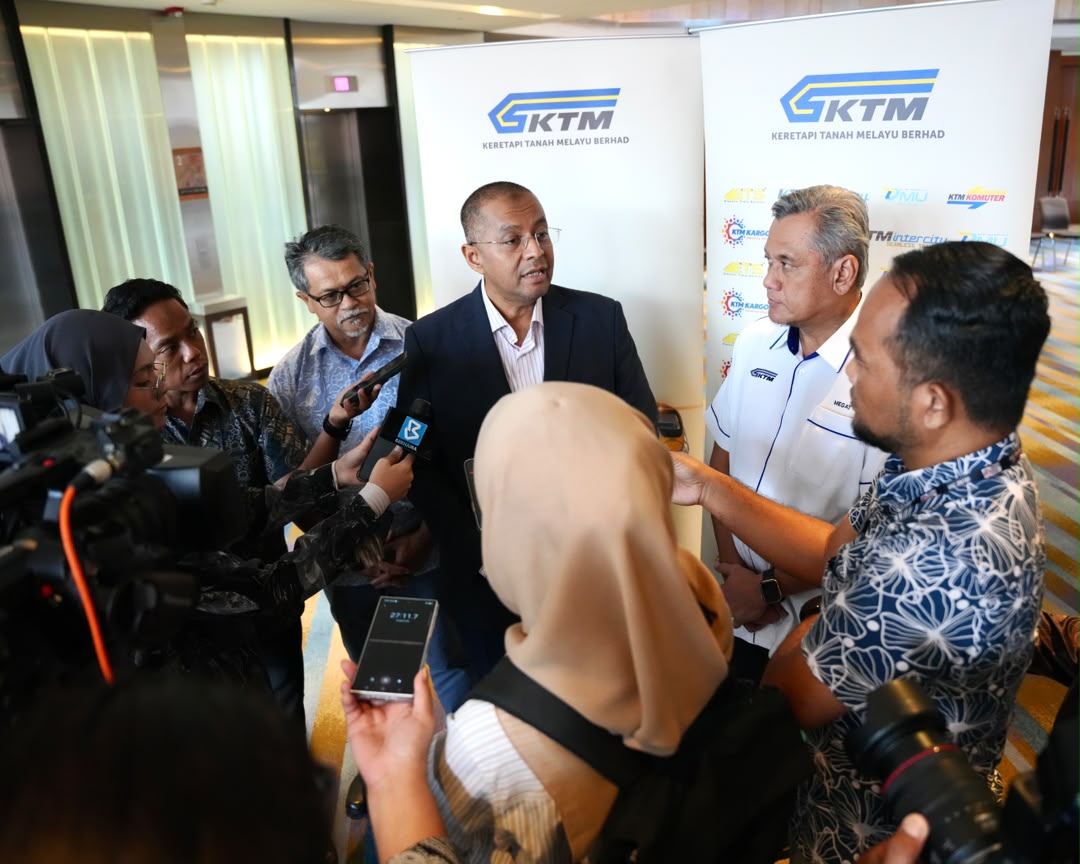
Malaysia’s national railway operator, Keretapi Tanah Melayu Berhad (KTMB), has been named a finalist for the Minister’s Laureate for National Transport Leadership at the Transport Expo Asia (TXA) Awards 2026, placing its evolving role in passenger mobility, freight logistics and regional connectivity in the spotlight.
KTMB’s rail transformation comes at a time when Malaysia is looking to strengthen public transport, reduce reliance on road freight and build more connected supply chains. The nomination recognises this railway operator with a history dating back to 1885 is adapting to the country’s changing transport needs.
Faster journeys, better connections
One of the most significant changes is the completion of the Gemas-Johor Bahru Electrified Double Track, which entered full operation in December 2025. Direct Electric Train Service (ETS) journeys between Kuala Lumpur and Johor Bahru have cut travel time from around seven hours to four hours and 20 minutes.
The impact is reflected in ridership. From January to September 2026, ETS carried 4.8 million passengers, a 56% increase year-on-year, while KTMB’s total passenger numbers reached 19.5 million, up 6%.
New services are extending that connectivity to more communities. The Shuttle Selatan, launched in Johor in June 2026 and extended to Paloh in August, links residential areas with urban centres and industrial zones. These developments show how the KTMB rail transformation is not limited to upgrading infrastructure; it also involves making rail more relevant to everyday travel.
From domestic tracks to regional trade
Rail’s role in Malaysia’s economy extends beyond passengers. Through the ASEAN Express, launched in June 2024, KTMB has helped connect Malaysia with Thailand, Laos and China by rail. Its rail-sea partnership with COSCO Shipping Lines Malaysia also combines railway and maritime transport for container movements.
Between January and September 2026, KTMB moved 1.3 million tonnes of cargo and 173,800 twenty-foot equivalent units (TEUs) of containers. It operated about 4,300 block trains, an 11% increase from the same period in 2025, while road-to-rail volumes rose 10%.
The planned revival of Segamat Inland Port could further strengthen the network, with an expected annual capacity of 50,000 to 60,000 TEUs at full operation. The shift towards rail freight could also reduce heavy vehicle movements and improve logistics efficiency.
Leadership beyond the numbers
KTMB’s rail transformation also involves changes in how the railway develops its capabilities. Its leasing model for Malaysian-built locomotives supports local manufacturing and maintenance, while collaborations with engineering firms and universities contribute to the domestic rail ecosystem.
Under Group Chief Executive Officer Datuk Azlan Shah Al Bakri, who took up the role in January 2026, KTMB is also drawing on leadership experience spanning railway operations and national public transport policy. Social initiatives, including the MyRailLife pass for school students and persons with disabilities, demonstrate another dimension of its public service role.
KTMB’s digital ticketing programme has also received international recognition, winning Best Smart Ticketing Programme at the Transport Ticketing Awards 2026 in London.
As a finalist for the TXA Awards 2026 Minister’s Laureate for National Transport Leadership, KTMB is being considered for a distinction that looks beyond individual projects or headline growth. Its story brings together faster passenger journeys, expanding regional freight links, local industry development and wider access to public transport. KTMB’s rail transformation is ultimately more than an upgrade to Malaysia’s railway system; it is an opportunity to build a more connected, competitive and sustainable future for the nation.