
Discover how Italian Atelier’s flagship panel redefined branded residences, turning European craftsmanship into tangible commercial value for Indonesia’s top developers.
As Southeast Asia’s luxury real estate and hospitality sectors enter a period of rapid transformation, branded residences and high-end mixed-use developments are reshaping the region’s property landscape. In Greater Jakarta and beyond, developers are increasingly looking for ways to differentiate their projects while responding to a more sophisticated market of luxury homeowners, hotel guests, and international investors.
Yet translating global luxury into a successful local development presents its own set of challenges. Developers must deliver distinctive, culturally resonant spaces while managing the demanding quality standards, delicate finishes, and extended lead times often associated with international luxury design.
The ability to connect European craftsmanship with the practical realities of Southeast Asian development is therefore becoming an increasingly important competitive advantage.
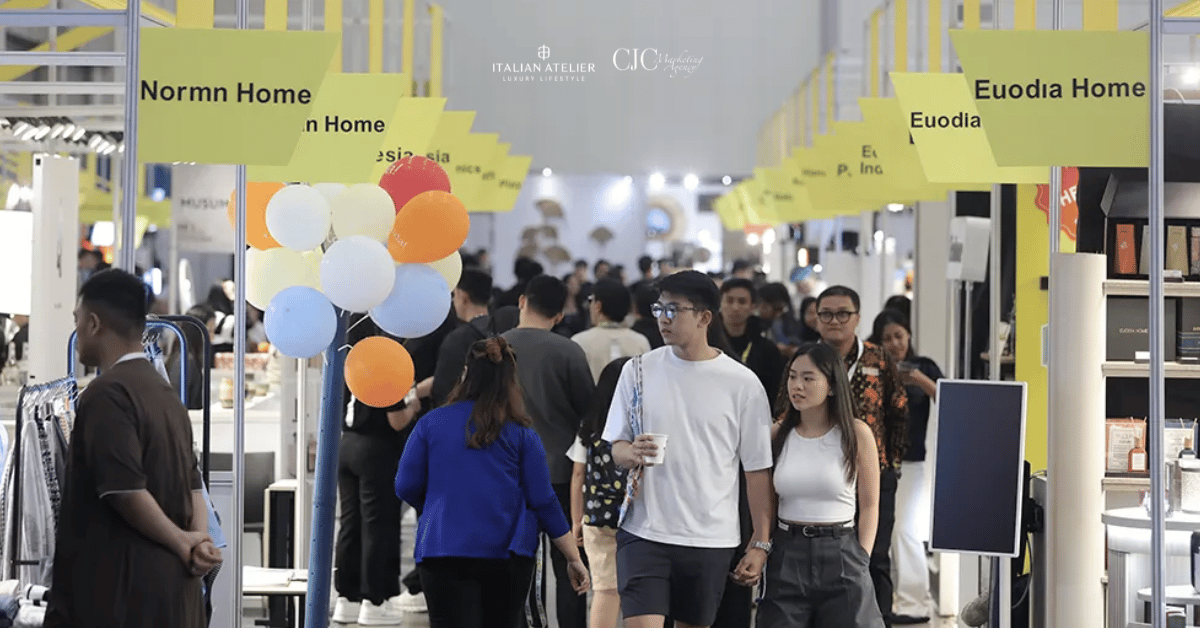
This intersection of design, procurement and real estate value will take center stage at IFFINA+ 2026, where Italian Atelier, in collaboration with CJC Marketing Agency, will curate the Day 1 grand finale on Thursday, September 24, from 5:00 PM to 5:45 PM WIB at the Main Stage in Hall 3 of the Nusantara International Convention Exhibition (NICE), PIK2, Jakarta.
Organized by Nine Koeln Indonesia, IFFINA+ 2026 brings together a high-profile audience of C-suite real estate developers, hotel owners, principal architects, interior designers, and VIP international buyers. Against this backdrop, Italian Atelier’s flagship panel will examine how European luxury design and bespoke FF&E procurement can be integrated into contemporary hospitality and branded residential projects without losing sight of local context or commercial realities.
From European Craftsmanship to a Sense of Place
One of the central questions surrounding branded residences today is how international luxury can be adapted to local markets without becoming generic.
Successful branded developments increasingly move away from simply reproducing European aesthetics. Instead, they seek to combine established international design codes with the cultural identity of their location, creating spaces that feel both globally sophisticated and distinctly local.
For Indonesia, this creates an opportunity to bring together the country’s rich craft heritage with the precision and material sophistication associated with Italian luxury design. The resulting environments can establish a stronger sense of place while giving residential and hospitality developments a more distinctive identity in an increasingly competitive market.
This approach is particularly relevant as developers seek to appeal to consumers who are exposed to global luxury standards but continue to value authenticity and cultural relevance. A branded residence cannot rely on an international name alone. Its design needs to feel considered within its geographical and cultural setting.
For Jasmine Chau of Italian Atelier, this balance sits at the heart of contemporary luxury hospitality and real estate.
“True luxury in modern hospitality is born where world-class European craftsmanship meets deep respect for local context. Our goal is to provide developers with a seamless blueprint from design vision to execution.”
Her perspective points to a broader shift in the role of luxury design. Rather than functioning solely as a visual layer added toward the end of a development, design is increasingly becoming part of the strategic process through which an asset establishes its identity and market positioning.
Where Design Meets Commercial Reality
For developers, however, the value of an international design partnership is ultimately measured not only by its aesthetic impact but also by its ability to perform within the realities of a complex project.
Cross-border procurement introduces considerations around lead times, logistics, material specifications and installation. In tropical markets such as Indonesia, engineering materials for climate durability adds another layer of complexity, particularly when projects involve delicate finishes and highly specified European FF&E.
Managing these factors effectively can have a direct impact on project timelines and overall asset performance.
This is where the relationship between design and commercial value becomes increasingly important. Premium interior design partnerships can contribute to capital appreciation and long-term asset valuation by strengthening the positioning, quality and differentiation of a property.
For major property conglomerates, the objective is therefore not simply to source exceptional furniture or finishes. It is to establish a procurement and design strategy capable of protecting the integrity of the original design vision while remaining feasible within the project’s operational and commercial framework.
The conversation at IFFINA+ 2026 will explore precisely this intersection, establishing a strategic blueprint for integrating European luxury and bespoke FF&E procurement into modern hospitality and branded residential projects.
Building a Bridge Between Two Luxury Ecosystems
The discussion also reflects the growing need for stronger connections between European design suppliers and Southeast Asia’s expanding real estate market.
Italian Atelier has positioned itself within this ecosystem as a bridge between iconic European design heritage and Asia’s rapidly developing luxury hospitality and real estate landscape. Its role at IFFINA+ extends this positioning into the Indonesian market, bringing design curation and luxury furniture procurement into a conversation with the developers and professionals shaping the region’s next generation of properties.
As branded residences continue to gain momentum across Southeast Asia, these relationships are becoming increasingly significant. Developers require access to international design expertise, while European suppliers need a deeper understanding of the local development environment, project requirements and market expectations.
Creating a meaningful connection between the two sides can open the way for more sophisticated collaborations, from bespoke residential developments to luxury hospitality projects.
A Meeting Point for Indonesia’s Property Leaders
The IFFINA+ panel is expected to bring together senior representatives from Indonesia’s leading real estate and hospitality networks, with participation from major property conglomerates, architectural practices and five-star hotel ownership groups.
Beyond the stage discussion, the gathering creates an opportunity for high-value conversations between local developers and European design suppliers, potentially laying the groundwork for future luxury residential collaborations.
This executive-level exchange is particularly relevant as Indonesia continues to attract investment into high-end residential and hospitality developments. For decision-makers, access to the right design partners can become an important component of a project’s wider strategy, from initial concept and brand positioning through to procurement and execution.
Italian Atelier’s role as the exclusive content and curation partner for the Day 1 grand finale reflects this broader ambition. By bringing the conversation around luxury furniture procurement, architectural branding and real estate development into the same space, the company aims to address luxury design as part of a wider commercial ecosystem rather than as an isolated creative discipline.
Looking Beyond IFFINA+
The conversation at IFFINA+ 2026 is expected to extend beyond the event itself, with Italian Atelier continuing to expand cross-border design dialogues and support upcoming luxury residential masterplans across Southeast Asia.
Post-event executive networking dinners and exclusive media features across regional publications will further extend these conversations, creating additional opportunities for developers, designers and international suppliers to connect around future projects.
As Southeast Asia’s luxury real estate market continues to evolve, the relationship between European craftsmanship and local development expertise will become increasingly important. The most compelling projects are likely to be those capable of combining the precision and heritage of global luxury with a genuine understanding of place, climate, culture and commercial reality.
For Italian Atelier, the ambition is clear: to help create that connection, transforming exceptional European design into enduring value for the next generation of Southeast Asian hospitality and real estate.