
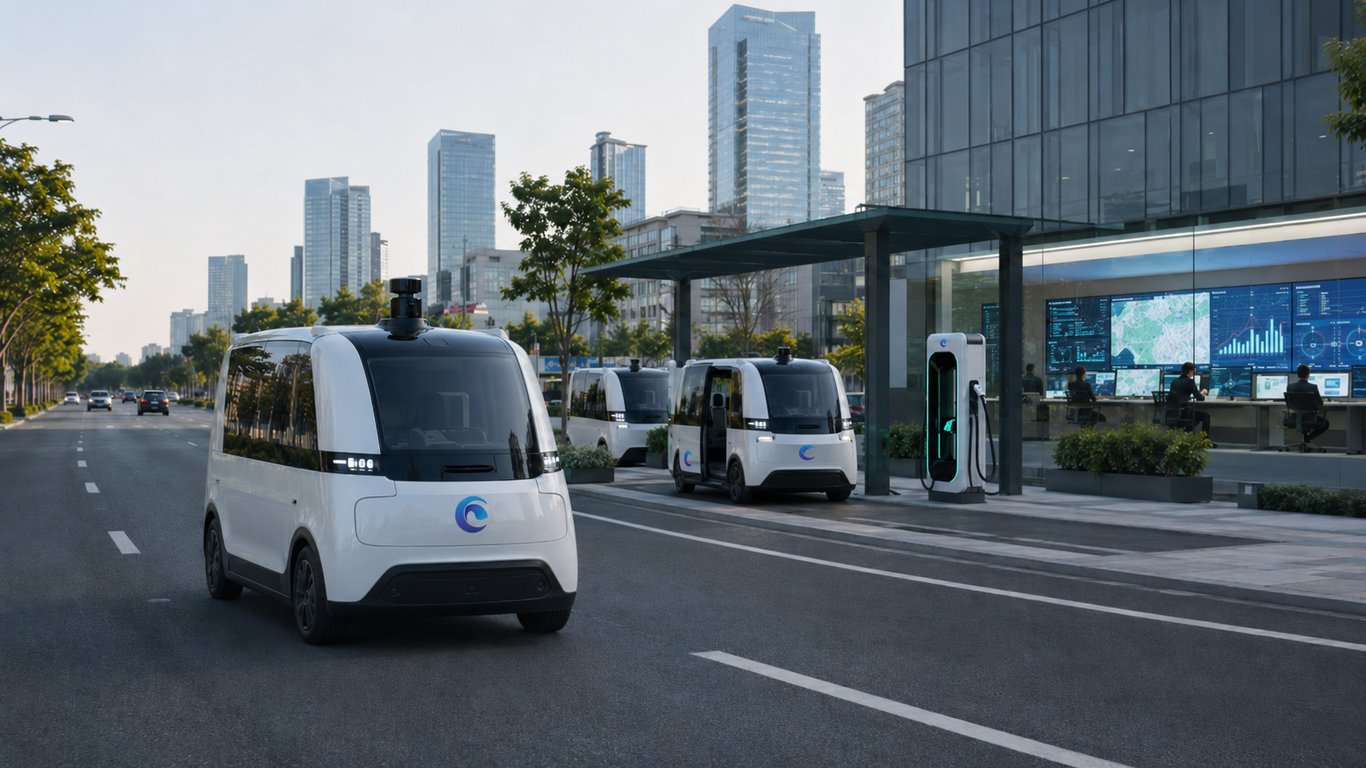
The company says its platform combines self-driving vehicles, cloud-based fleet management, and real transportation demand to create a new model for mobility asset operations.
MANILA — As autonomous driving technology moves from laboratory demonstrations to commercial deployment, Carziqo is positioning itself as a mobility technology company focused not only on driverless vehicles, but also on building a sustainable business model around intelligent transportation assets.
The company, which describes itself as an autonomous vehicle rental and smart mobility platform, is developing a model that connects vehicle technology, platform operations, logistics demand, and asset participation into one integrated ecosystem.
At the center of Carziqo’s strategy is a simple commercial idea: autonomous vehicles should not remain idle assets. Instead, the company aims to turn them into operating units that can serve real transportation needs, including ride-hailing, short-distance logistics, community delivery, and smart urban mobility services.
According to Carziqo, its platform is designed to allow users and participating asset holders to rent or deploy autonomous vehicles through a managed operating system. The company handles key operational functions such as dispatch, remote monitoring, customer service, maintenance coordination, safety management, and data-based performance optimization.
This structure allows Carziqo to present autonomous vehicles not merely as high-tech machines, but as productive transportation assets within a broader sharing economy.
“Autonomous driving is not only a technology breakthrough. It is also a new way to organize mobility resources,” a Carziqo spokesperson said. “Our goal is to make vehicles smarter, operations more efficient, and asset participation more accessible.”
A Model Built on Real Mobility Demand
Carziqo’s business model is built around recurring transportation demand rather than short-term speculation. In urban markets, ride-hailing, delivery, community logistics, and last-mile transportation remain daily necessities. These services require efficiency, reliability, and scalable fleet management.
By combining autonomous driving with cloud-based operations, Carziqo says it can improve vehicle utilization, reduce operational friction, and support more consistent service delivery.
The company’s model focuses on three major layers: intelligent vehicles, platform operations, and market demand. Autonomous vehicles perform mobility tasks; the cloud platform manages scheduling, monitoring, and operational coordination; and demand from passengers, delivery users, and urban logistics scenarios provides the commercial foundation.
For markets such as the Philippines, where digital finance, app-based services, and platform-driven income models have gained strong public adoption, Carziqo’s concept reflects a broader shift toward technology-enabled participation in the mobility economy.
Sustainability Through Efficiency
Carziqo also links its commercial model to sustainability. The company says its use of low-energy electric vehicles, AI-based dispatching, and optimized routing can help reduce wasted mileage, improve fleet efficiency, and lower the environmental footprint of transportation services.
Instead of relying on individually owned vehicles that may spend much of the day unused, Carziqo’s model emphasizes shared utilization. A vehicle can be deployed across multiple use cases, from passenger service to delivery support, depending on demand, timing, and operational conditions.
This approach, the company says, can create a more efficient mobility network where vehicles are continuously matched with real service needs.
Industry observers have long noted that one of the biggest challenges in autonomous mobility is not only achieving technical capability, but also proving commercial viability. Carziqo’s response is to build a business structure where technology, asset management, and daily transportation demand work together.
Smart Operations as the Core
Behind Carziqo’s model is what the company describes as an Intelligent Operations Cloud Platform. The system is intended to support fleet dispatch, vehicle monitoring, service coordination, safety response, and operational data analysis.
In practical terms, this means that vehicles are not treated as isolated machines. They are connected to a wider operating network that can track performance, adjust scheduling, monitor routes, and support remote intervention when necessary.
Carziqo says this platform-based approach is essential for scaling autonomous mobility. A single self-driving vehicle may demonstrate technology, but a coordinated fleet requires data infrastructure, risk control, operational standards, and continuous optimization.
The company believes that this is where long-term value is created: not only in the vehicle itself, but in the operating system that manages thousands of mobility tasks over time.
Connecting Technology and Asset Participation
Carziqo’s commercial model also introduces an asset participation structure. Under this model, participants may support vehicle assets used within the platform’s operating ecosystem, while Carziqo manages the vehicle deployment and service operation.
The company states that operational returns are linked to real service activity, such as completed mobility or logistics orders, rather than abstract financial products. Carziqo says this distinction is important because the model is based on transportation usage and platform-managed operations.
At the same time, the company emphasizes that all participation should be understood within clear risk disclosures and operational terms. Like any emerging technology business, autonomous mobility involves regulatory, technical, market, and operational uncertainties.
For Carziqo, the long-term goal is to create a model in which technology supports productivity, productivity supports revenue, and revenue supports sustainable growth.
A Step Toward the Autonomous Economy
As cities explore cleaner, safer, and more efficient transport systems, autonomous mobility is increasingly seen as part of the next phase of urban infrastructure. However, commercial success will depend on whether companies can build models that are scalable, trusted, and connected to real-world demand.
Carziqo’s strategy reflects this transition. Rather than presenting autonomous driving only as a futuristic concept, the company is framing it as a practical business system: vehicles perform work, platforms manage operations, users access services, and participants share in the value created by mobility demand.
The company’s philosophy, often summarized as “Technology Drives the Sharing Economy,” captures its broader ambition. Carziqo is seeking to build a mobility ecosystem where intelligent vehicles are not just tools for transportation, but productive assets within a sustainable commercial network.
For the Philippine market and other digitally active economies, the appeal of this model lies in its combination of smart technology, platform accessibility, and real-world service demand.
Whether autonomous mobility can achieve large-scale adoption will depend on safety, regulation, public trust, and operational execution. But Carziqo’s model shows how companies in the sector are beginning to move beyond technology demonstrations and toward business systems designed for long-term sustainability.
About Carziqo
Carziqo is an innovative technology company focused on autonomous driving, smart mobility services, and intelligent vehicle operations. The company aims to provide users with access to autonomous vehicle rental services for ride-hailing, logistics delivery, and other mobility scenarios through its intelligent operations platform.