
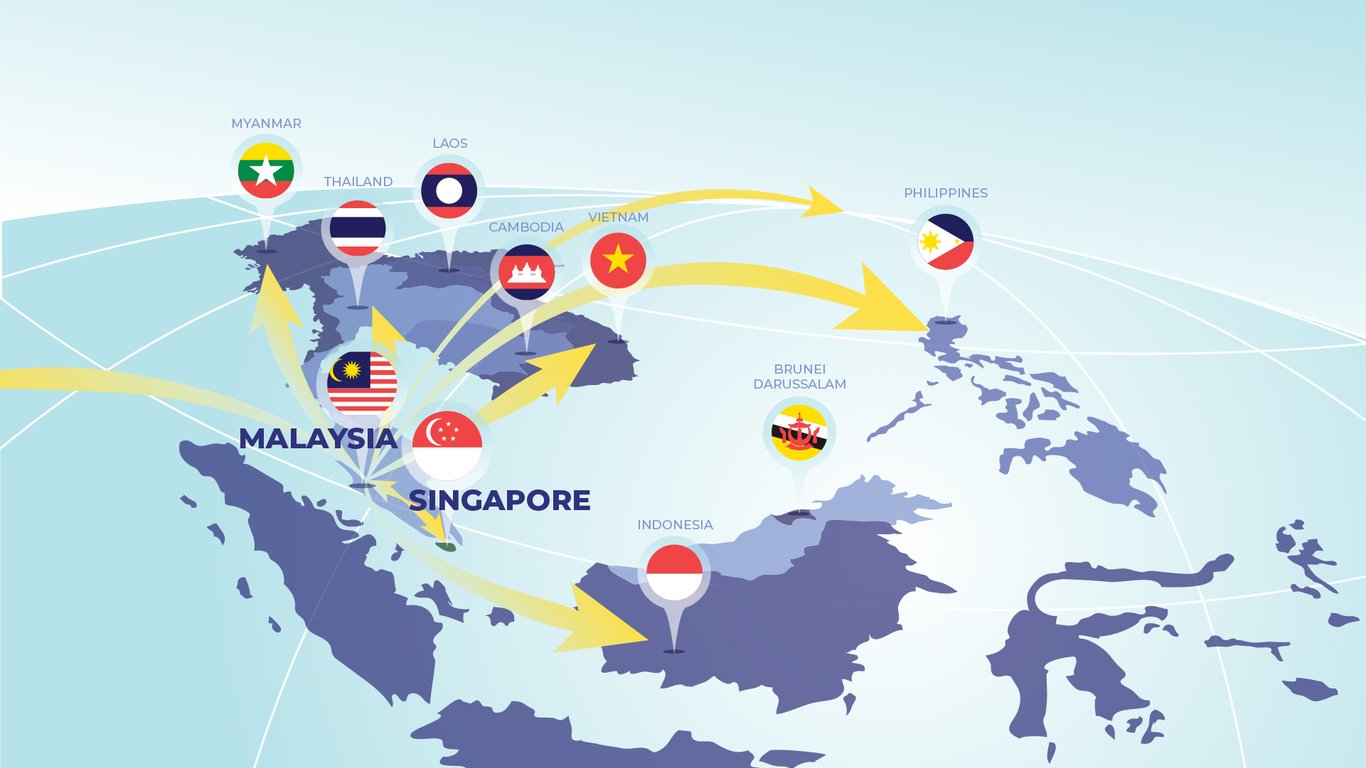
Why ASEAN expansion is no longer about market access. It’s about market distinction
ASEAN is more connected than ever. But for many Malaysian businesses, the real challenge is no longer entering new markets. It is standing out in them.
For decades, Malaysian businesses have built a reputation for manufacturing excellence, entrepreneurial resilience, and operational competitiveness.
Today, many are looking beyond domestic growth and exploring opportunities across Singapore and the wider ASEAN region. Improved connectivity, digital commerce, regional trade agreements, and growing consumer demand have made cross-border expansion more accessible than ever.
Yet despite these favourable conditions, many businesses still struggle to scale successfully beyond their home market.
The common assumption is that expansion challenges stem from logistics, regulations, market entry costs, or local partnerships.
While these factors matter, they are rarely the primary obstacle.
The more fundamental challenge is often strategic differentiation.
Across sectors such as food manufacturing, retail, engineering, education, and consumer products, many businesses enter new markets with strong products and proven operational capabilities. However, they frequently encounter a difficult reality: customers in new markets see little distinction between them and existing competitors.
As a result, businesses that once enjoyed strong positions domestically find themselves competing on price, promotions, and short-term incentives.
Expansion becomes a race for visibility instead of a strategy for value creation.
This is the emerging differentiation crisis facing many growth-oriented businesses across Southeast Asia.
The challenge is particularly visible when companies move from Malaysia into more competitive regional markets such as Singapore, where customers are often presented with more choices and increasingly sophisticated brand experiences.
The same challenge affects Singapore businesses entering Malaysia and other ASEAN markets.
Businesses may be operationally ready for expansion but strategically unprepared for differentiation.
In many cases, they export products.
What they fail to export is a compelling reason for customers to choose them.
This distinction becomes increasingly important as ASEAN evolves into one of the world’s most dynamic economic regions.
Market access is becoming easier.
Market distinction is becoming harder.
The companies that succeed regionally are rarely those with the biggest advertising budgets or the most aggressive pricing strategies.
They are the businesses that establish a clear category position and communicate value in a way that resonates across different cultures, markets, and customer segments.
This is why strategic branding should no longer be viewed as a marketing function.
It is a business growth function.
At Phoenix Design, this perspective forms the foundation of the Category Hack Blueprint™.
Rather than asking businesses how to compete more effectively within existing categories, the framework challenges organisations to identify opportunities to define new categories, uncover unmet customer needs, and establish positions that competitors cannot easily replicate.
Equally important is understanding how those positions translate across different markets.
What resonates with a customer in Kuala Lumpur may not resonate with a customer in Singapore, Jakarta, Bangkok, or Ho Chi Minh City.
This is where the Cultural Compass™ framework becomes critical.
By helping businesses understand the cultural drivers that influence trust, purchasing behaviour, and brand perception, organisations can adapt their positioning without losing the essence of what makes them unique.
Together, these frameworks address a challenge that many businesses mistakenly treat as a sales problem.
In reality, it is often a positioning problem.
During our initial months establishing Phoenix Design’s presence in Kuala Lumpur and engaging with business leaders across the Klang Valley, one observation stood out.
Malaysia has no shortage of companies capable of competing regionally.
What is often missing is a strategy that transforms capability into category leadership.
“One of the most encouraging things we’ve observed since entering Kuala Lumpur is the depth of entrepreneurial talent and industrial expertise that already exists within Malaysia,” said Herry Ho, Founder and Managing Director of Phoenix Design.
“Many businesses already possess the products, capabilities, and ambition needed to compete across ASEAN. What often limits growth is not operational readiness but strategic clarity. When companies define a category they can own instead of competing within categories defined by others, they unlock entirely different growth opportunities. The potential for Malaysian brands to scale regionally is enormous if they can articulate why they matter in a way that customers immediately understand.”
The future of ASEAN growth will not belong solely to businesses that expand geographically.
It will belong to businesses that expand strategically.
The Singapore–Malaysia growth corridor represents more than trade and investment.
It represents an opportunity for businesses on both sides of the border to create stronger brands, define new market categories, and build meaningful competitive advantages that travel across markets.
The next generation of regional leaders will not simply enter new markets.
They will shape them.