
JAKARTA, Indonesia, Sept. 2, 2026 /PRNewswire/ — As Indonesia commemorates its 81st anniversary of its independence, PT Sarana Multi Infrastruktur (Persero) (“PT SMI”), the country’s state-owned Development Finance Institution (DFI), reaffirms its role as a catalyst for equitable national development. Since inception, PT SMI has recorded cumulative financing commitments of Rp294.5 trillion (approximately US$16.55 billion), reaching 31 provinces and 158 regencies and cities across the archipelago, a footprint that spans from the nation’s most established economic corridors to its most remote frontiers. It is a scale of reach matched by few financing institutions in Indonesia, public or private, and one that reflects a deliberate strategy: development that does not stop at the edge of Java but follows the contours of the entire nation.
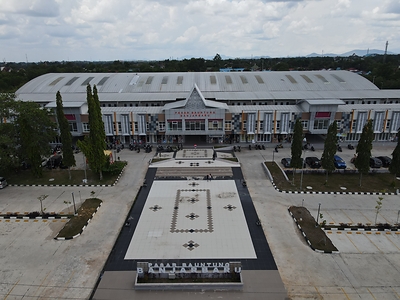
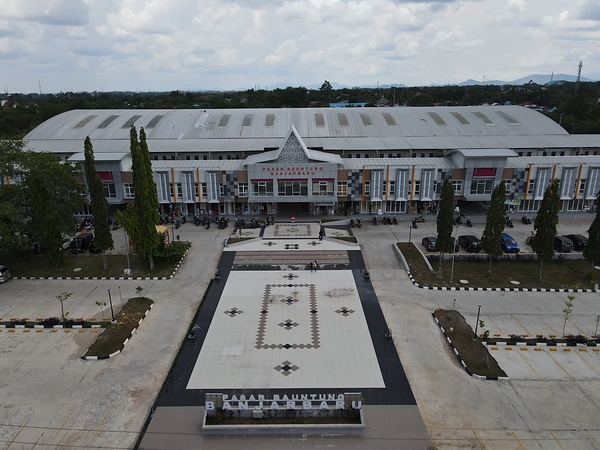
Pasar Bauntung in Banjarbaru, South Kalimantan, is one of the regional infrastructure projects financed by PT Sarana Multi Infrastruktur (Persero) (PT SMI), highlighting its role in expanding access to infrastructure and supporting more equitable development across Indonesia.
“Independence was never just a date on the calendar, it is an ongoing obligation to make sure every region, not only the ones already well connected, has the infrastructure to grow,” said Reynaldi Hermansjah, President Director of PT SMI. “When we finance a toll road in Sumatra, a water system in eastern Indonesia, or a fiber network in a district that many companies might consider too remote to serve, we are helping fulfil a commitment that has been at the heart of Indonesia’s independence since 1945, ensuring that every region has the opportunity to grow. That is what regional financing means to us. It is not simply a segment of our portfolio, it is the reason we are here.”
This regional orientation is visible across PT SMI’s sectoral allocation. Transportation and connectivity remain the institution’s largest commitment, at Rp145.4 trillion (US$8.17 billion) across 160 projects, forming the backbone of Indonesia’s logistics and economic mobility. Telecommunications infrastructure follows with Rp19.2 trillion (US$1.08 billion) across 28 projects, narrowing the digital divide between urban centres and communities that have historically sat outside the reach of commercial telecom investment. Beyond connectivity, PT SMI has steadily deepened its mandate into human development and public welfare, committing Rp4.9 trillion (US$275.41 million) to 29 health and education infrastructure projects and Rp4.2 trillion (US$236.07 million) to 15 clean water, sanitation, and waste management initiatives, projects whose impact is measured not only in financial terms, but also in the daily lives of the communities they serve.
Running alongside this regional expansion is a second, equally deliberate trajectory: the acceleration of PT SMI’s renewable energy portfolio, which reached Rp38.3 trillion (approximately USD 2.15 billion) across 91 projects in H1 2026, more than doubling from Rp18.4 trillion in 2023. The pace of that growth, sustained even as the institution maintains its commitments across transportation, telecommunications, health, education, water, and sanitation, signals that sustainability at PT SMI is not a parallel initiative competing for capital, but an integrated part of how the institution finances sustainable development.
“Sustainability used to be treated as a separate box to check alongside a financing decision. We’ve moved past that,” said Reynaldi. “Every infrastructure project we finance today is evaluated not only on its economic return, but on its environmental footprint and its resilience for the next generation. More than doubling our renewable energy book since 2023, while still scaling our core sectors, proves that the energy transition and national development are not competing priorities. Done right, they are the same mandate.”
Beyond the balance sheet, PT SMI frames its role through the multiplier effect its financing generates across the wider economy. Every Rp1 of PT SMI financing is estimated to generate twice that value in broader economic output, representing a 2x multiplier effect, while the institution’s financing and construction activities are estimated to support approximately 160,000 jobs each year across the economy. In the energy sector alone, PT SMI-backed projects have enabled 5,283 MW of renewable energy capacity nationwide, underscoring PT SMI’s role in supporting Indonesia’s clean energy transition.
Taken together, the numbers tell a story that PT SMI is careful to frame as unfinished. Thirty-one provinces and 158 regencies and cities represent extensive reach, but not yet complete coverage; 91 renewable energy projects represent strong momentum, but not yet a finished transition. As Indonesia turns 81, PT SMI’s leadership is positioning the institution’s anniversary reflection not as a victory lap, but as a checkpoint, a moment to measure distance travelled against the distance still ahead, in every province, in every sector, and across the energy transition still unfolding.
About PT Sarana Multi Infrastruktur (Persero)
PT Sarana Multi Infrastruktur (Persero), established on February 26, 2009, is a State-Owned Enterprise under the coordination of the Ministry of Finance, operating as a Non-Bank Financial Institution with a mandate to serve as an agent of sustainable development. PT SMI’s business is built on three pillars: Commercial Financing, Public Financing, and Advisory and Project Development Services.
Beyond its core role as an infrastructure financier, PT SMI functions as a development enabler, offering a range of distinctive products and services that support the acceleration of infrastructure development — including the implementation of Public-Private Partnership (PPP) schemes that bring together private and multilateral financial institutions. PT SMI actively supports the execution of PPP projects and drives infrastructure development at the regional level through its regional lending products.