
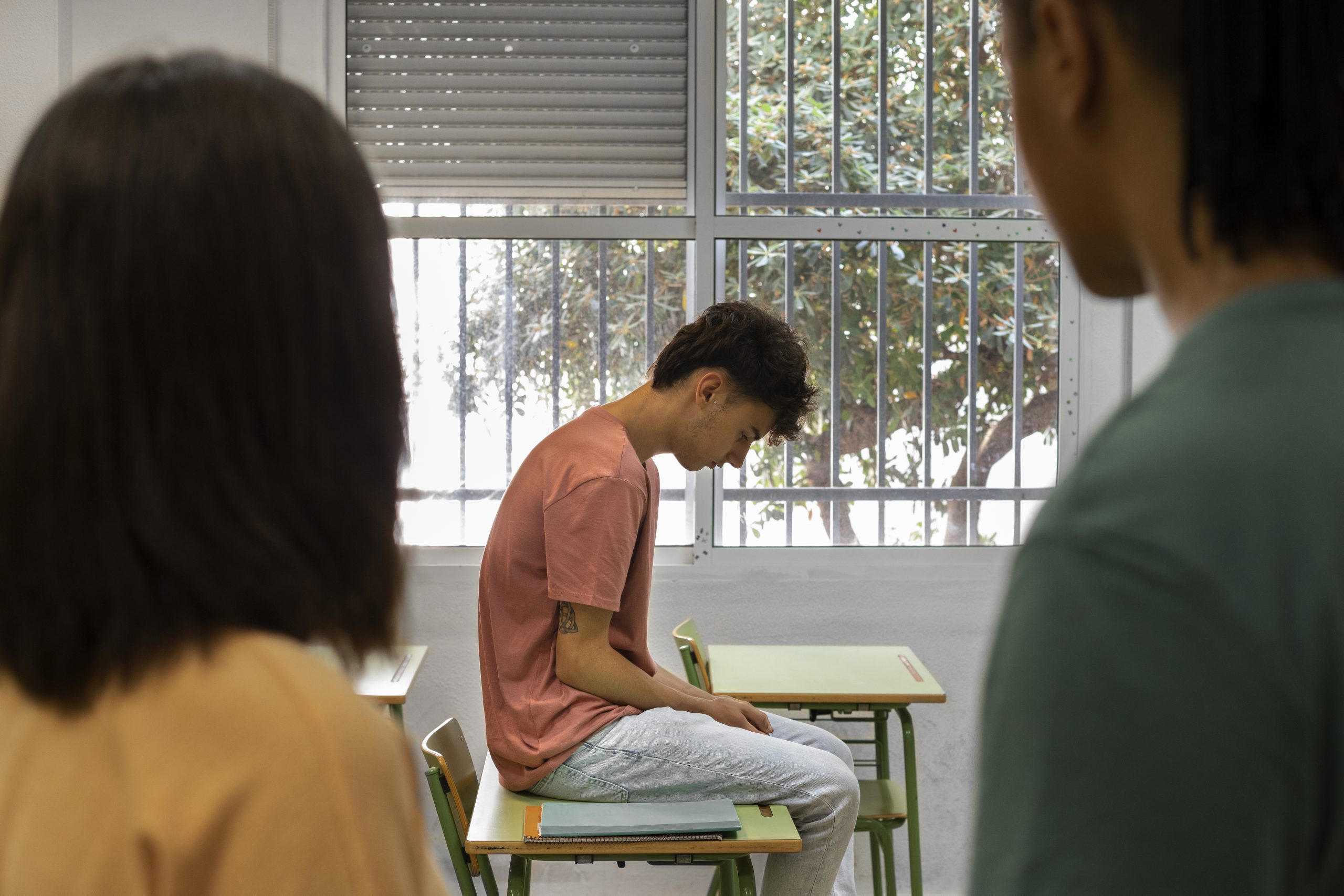
Malaysia’s adolescent mental health concerns extend beyond the number of young people experiencing emotional difficulties. The bigger question is whether they can access the support they need when those difficulties arise.
According to Malaysia’s National Health and Morbidity Survey (NHMS) 2022, approximately 26.9% of adolescents aged 13 to 17 experienced depression. To put this figure into perspective, this would be equivalent to roughly 11 out of every 40 teenagers. Although the figure does not represent every classroom, it shows how widespread the issue can be among young people.
However, recognising the importance of mental health does not necessarily mean knowing how or where to seek help. For some teenagers, the first challenge is getting others to recognise that their struggles are more than temporary mood changes. Even when they recognise that something is wrong, finding the right support can be another obstacle.
When Distress Is Mistaken for Bad Behaviour
A 2025 report by Malaysia’s Institute for Health Behavioural Research, involving 6,735 secondary school students aged 13 to 19, found that 71.2% had excellent mental health knowledge scores. However, this did not necessarily translate into seeking help. Across all respondents, only 21.1% had sought professional support, while 25.6% had taken no action when facing emotional distress. The findings highlight a gap between knowing about mental health and knowing when or where to seek help.
That gap can begin within the family. A teenager experiencing persistent sadness, exhaustion or anxiety may be told to stop overthinking, study harder or become more disciplined. For some families, visiting a psychiatrist also carries social stigma. Parents may fear their child being labelled as mentally ill, while others dismiss emotional distress as a normal part of growing up. These reactions can make teenagers question whether their feelings are serious enough to deserve attention.
Access to Professional Help Remains a Challenge
Even when teenagers are willing to seek help, professional support is not always easy to access. Malaysia’s adolescent mental health services face challenges involving the availability and distribution of qualified professionals.
As of April 2026, Malaysia’s Ministry of Health had 445 psychiatrists in its services, equivalent to one for every 69,860 people. This falls below the ministry’s target of one psychiatrist for every 40,000 people.
For adolescents living outside major urban areas, limited access to specialists can mean longer waiting times, additional travel and difficulties attending regular appointments. Financial circumstances may also affect whether families can afford private treatment or travel to healthcare facilities.
Getting an appointment is only the first step. Adolescents also need professionals who understand the emotional and developmental needs of young people. Without appropriate assessment and follow-up care, some mental health conditions may go unrecognised or receive delayed attention.
Help Must Not End at the First Appointment
Teenagers often turn to people they trust, including family members, friends and teachers, when dealing with emotional difficulties. However, not everyone knows how to respond. Dismissing their feelings or treating distress as ordinary teenage behaviour may discourage them from seeking further help.
Schools can help identify warning signs, but mental healthcare should not fall on counsellors alone. Families need better mental health awareness, while healthcare providers must work with schools and communities to ensure young people can access professional support when needed. Affordable services, clearer referral pathways and reliable digital support can make seeking help easier. Improving adolescent mental health in Malaysia is not just about raising awareness. It is about making sure teenagers are heard, taken seriously and able to receive appropriate care before their difficulties become harder to manage.