As Darul Ehsan Berselawat moves beyond its traditional home in Shah Alam, Selangor is turning a large religious gathering into something closer to the communities it hopes to reach.
For many, selawat may be a simple act of remembrance. But when thousands of people gather under the same roof, reciting together, it becomes something larger. A shared experience that connects faith, family and community.
The expansion of Darul Ehsan Berselawat across Selangor raises a bigger question: can a state-led religious programme become more than an annual gathering and create stronger connections between the people it brings together?
From Shah Alam to the Districts
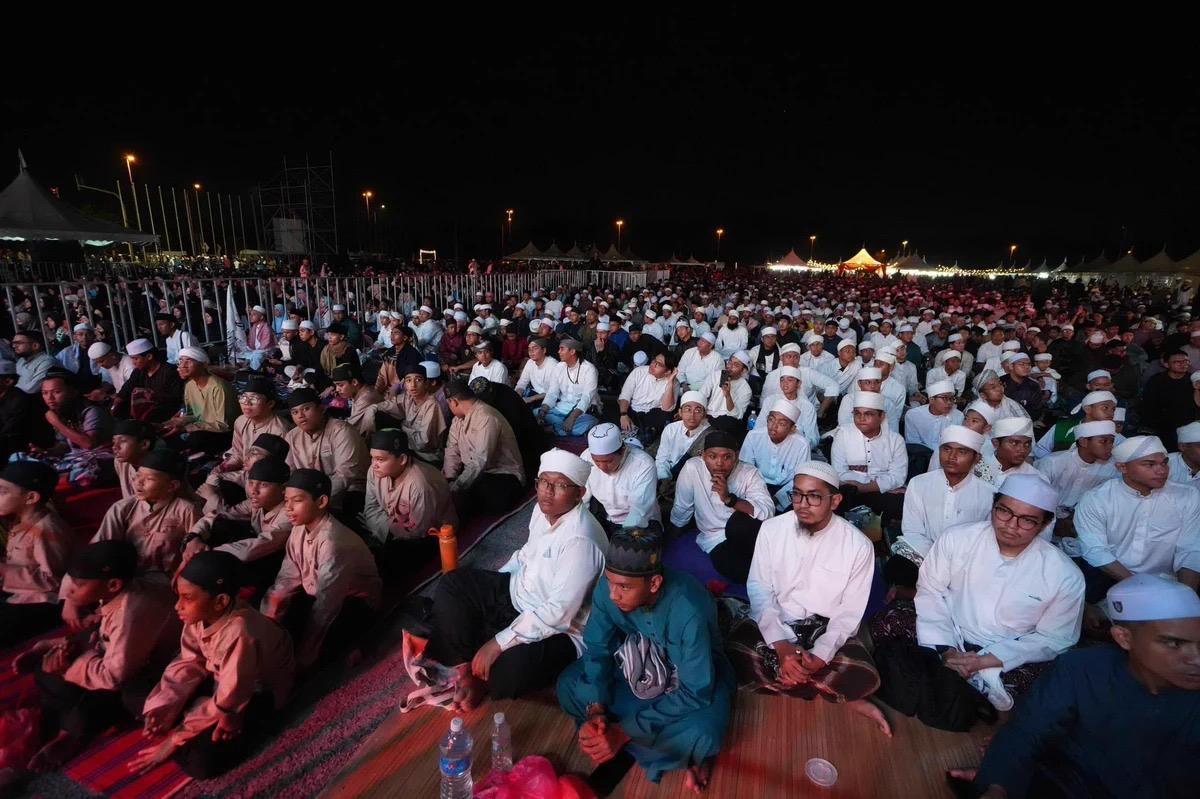
Darul Ehsan Berselawat first gained prominence through large-scale gatherings in Shah Alam. During its 3.0 edition in conjunction with the 2024 New Year celebrations, more than 10,000 Muslims gathered at Dataran Karnival, Stadium Shah Alam, for an evening of qasidah and selawat.
However, the programme was not intended to remain centred in one location.
In January 2024, Selangor Menteri Besar Datuk Seri Amirudin Shari announced plans to expand Darul Ehsan Berselawat to districts across the state. The programme would feature activities including zikir, selawat and the study of traditional Islamic texts, bringing its religious and educational elements closer to communities throughout Selangor.
The expansion reflects a broader effort to make the programme more accessible to communities beyond Shah Alam.
While a large gathering can unite thousands of people in one place, bringing this initiative to different districts creates an opportunity for communities to experience the programme within their own surroundings.
When Faith Becomes a Community Experience
The significance of this programme may not only lie in the number of people who attend.
It can also be found in the smaller moments.
A family arriving together. An elderly person sitting beside a younger generation. Friends gathering after work. Neighbours meeting outside their usual routines.
These moments may appear ordinary, but they are where a large programme can take on a more personal meaning.
Religious gatherings have long been spaces where people do more than practise faith. They can also create opportunities for people to meet, share experiences and strengthen relationships within their communities.
This becomes particularly relevant as Selangor continues to grow and its communities become increasingly diverse in age, background and lifestyle.
The challenge is therefore not simply bringing more people to an event.
It is whether the event can give people a reason to return to their communities with a stronger sense of connection.
Where Religion Meets State Initiatives
There is also another layer to the programme.
This initiative is not simply a community-organised gathering. Its expansion has been publicly supported by the Selangor state government, making it part of a wider approach to religious and cultural programming in the state.
In 2024, more than 50,000 people attended the Maulid Akbar Darul Ehsan Berselawat, held as part of the Festival Turath Islami Selangor.
The event was attended by Prime Minister Datuk Seri Anwar Ibrahim and Selangor Menteri Besar Datuk Seri Amirudin Shari.
The scale of participation shows that programmes centred on Islamic knowledge, selawat and culture can attract a substantial public audience.
But state involvement also makes the programme worth examining beyond attendance figures.
When governments support religious and cultural initiatives, they are also participating in how communities understand identity, tradition and belonging.
That does not necessarily make the meaning of the programme political for every person who attends.
For some, it may simply be a night of selawat.
For others, it may be a space to reconnect with a religious tradition that feels increasingly distant from everyday life.
More Than a Programme
The real test of taking this programme statewide may therefore be what remains after the crowd goes home.
A successful programme is easy to measure in numbers, attendance, locations and frequency.
Community connection is harder to measure.
It can be found in whether young people feel comfortable participating alongside older generations. Whether neighbours begin talking to one another. Whether religious knowledge becomes something shared rather than simply presented from a stage.
And perhaps most importantly, whether people feel that the programme belongs to them.
As that sound travels beyond Shah Alam and into Selangor’s districts, its journey is no longer only about expanding an event.
It is about bringing something familiar closer to home.
Because sometimes, the meaning of a gathering is not found in how large the crowd becomes, but in how connected people feel when they finally return home.