In collaboration with High Life: Living the Good Life, VOICE OF ASIA is proud to present timeless articles from the archives, reproduced digitally for your reading pleasure. Originally published in High Life Volume 2 in 2016, we step into some of the most iconic fictional settings we’ve immersed ourselves in for the past decades, which you can visit yourself!
Every movie buff will attest to sometimes deviating from the rich characters on-screen to be captivated by the beauty of the background setting, marvelling at the crystal azure of the Mediterranean ocean and the lush meadows at the base of the Swiss Alps. The exquisiteness of nature in movies make us think this kind of beauty can only be achieved with green screens and building beautiful sets, because nothing that breathtaking could ever be within our reach. It is therefore a pleasant surprise to many moviegoers that studios go on location to shoot many of their most famous films, and any of these gorgeous settings could be your next getaway from the hustle and bustle of the big city. Let HIGH Life immerse you in some of the most spectacularly exciting locations in the world, the very substance of that which we call “Hollywood magic.”
American Museum of Natural History, New York
Night at the Museum
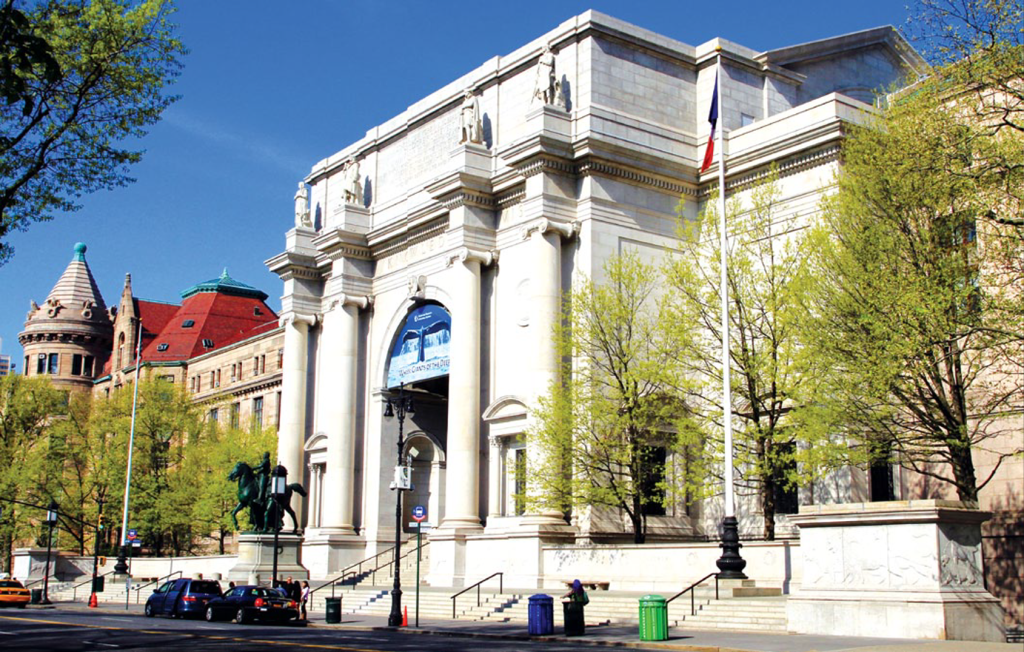
For avid history fans or simply anyone interested in learning more about our little planet, the American Museum of Natural History situated in Central Park, New York may just be the pinnacle of museum education and entertainment. The location was the inspiration and the site of hit movie Night at the Museum, that was premised around the exhibits coming alive at night against the backdrop of the extensive collection of historical artefacts around the museum, piquing the viewers’ amusement as millennia-old antiques exchanged witty one-liners with the main character.
In actual truth, the movie depicted only a small fraction of the reallife exhibits that can be found on-site; the American Museum of Natural History is the largest natural history museum in the world, spanning four city blocks and consisting of 25 interconnected buildings. The museum was founded in 1869, housing discoveries by Charles Darwin and other renowned Victorian scientists at the time, limited to artefacts that were found in the study of all natural objects, animals, vegetables and minerals. However, when the museum was dangerously close to shutting down in1878 because it was considered “boring,” the curators launched into a golden age of exploration and for the next 50 years, the museum was involved in several expeditions around the world that led to the discovery of the North Pole, dinosaur fossils in Asia and many more scientific breakthroughs that allowed the museum to stay open, and which can all be found within their corridors to this day. The institution contains more than 40 exhibition halls, displaying a portion of the institution’s 32 million specimens, in life-like dioramas that showcase the dedication the museum staff put into every single detail of their exhibits.
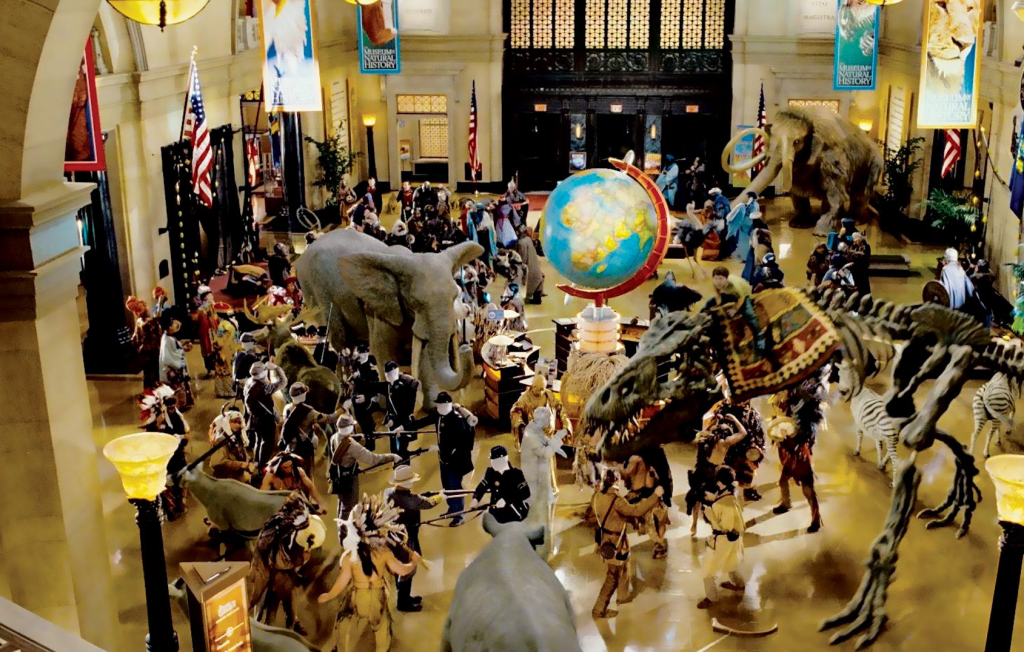
Walking through the halls of the museum itself is more than just a way to move from point A to point B, it is an adventure of finding new and exciting discoveries. The gallery provides interactive applications like Explorer as well as 360 other devices that can be borrowed on a visit to navigate through the seemingly endless corridors, and provide in-depth tours of some of the museum’s most famous exhibits. These include the six halls of the museum dedicated entirely to telling the story of the vertebrate evolution, possessing the most scientifically important collection of dinosaurs and fossil vertebrates in the world, as well as the stunning Rose Centre for Earth and Space, a US$200-million glass box that features the Heilbrunn Cosmic Pathway where each step a visitor takes equals about 75 million years of cosmic evolution, illustrating the vast range in sizes of our universe. There is also the Cullman Hall of the Universe, which focuses on each new discovery in modern astrophysics, and the Hayden Planetarium that offers a three-dimensional tour around the universe with a multi-sensory recreation of the Big Bang.
Salzburg, Austria
The Sound of Music
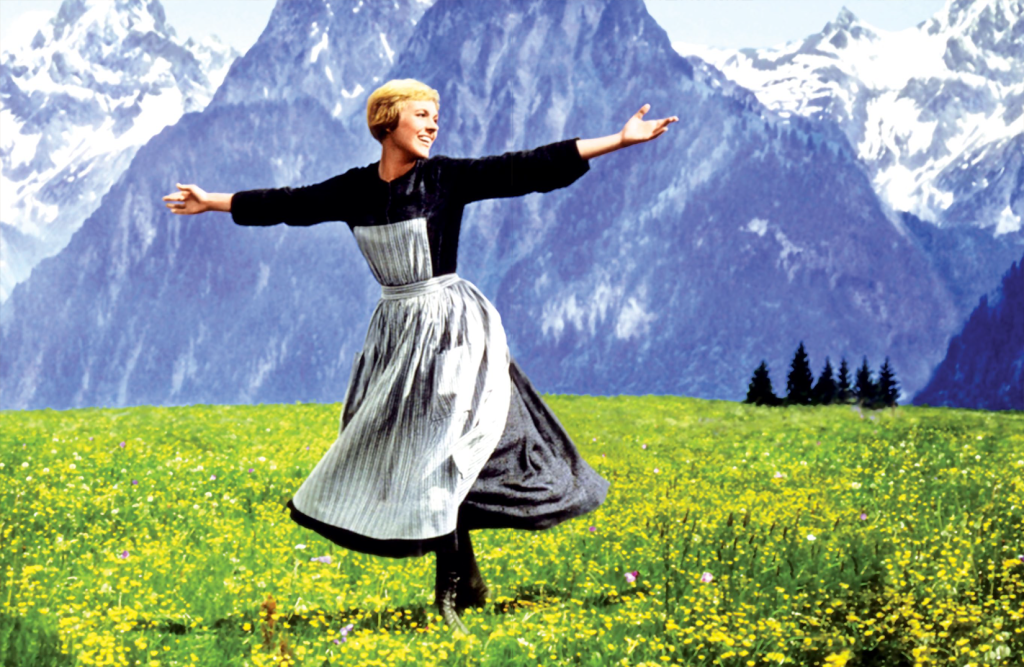
Salzburg, Austria is a land straight out of your favourite childhood storybook. The location’s biggest claim to fame was being the backdrop for the global hit The Sound of Music, with each musical number shot in stunning locations all over Salzburg. The iconic image of Julie Andrews with her arms wide open, singing The Hills Are Alive, pictures the formidable clifftop fortress and the majesty of the mountains beyond. It is a view that generations of cinema-goers have come to recognise, one that boasts of being home to lordly prince-archbishops and Salzburg superstar Amadeus Mozart himself. Salzburg City itself, referred to as the Altstadt, German for ‘old city,’ has earned the title of being a UNESCO World Heritage Centre by preserving a rich urban fabric in their cityscape which was developed over the period from the Middle Ages to the 19th century. The distinctly Gothic structures of the city attracted many artists, even before Italian architects Vincenzo Scamozzi and Santina Solari crafted the Baroque appearance it has now become famous for.
Salzburg is also renowned for its incredible architecture with its skyline set against a backdrop of mountains, characterised by an abundance of spires and domes, dominated by the Hohensalzburg Castle, one of the largest medieval castles in Europe, as well as the Baroque-styled churches and monuments of the city. Many of these monuments, like the Cathedral, the Residence, the Franciscan Abbey and the Abbey of St Peter, are rich in history and beauty as they belonged to former Prince-Archbishops. Some of these historic locations may also seem familiar to fans of The Sound of Music, as the dramatic flight scenes of the von Trapp family were shot on the stairs of the cemetery of the Abbey of St Peter. Many of the shots from the film were based in a few of the most scenic locations of Salzburg, beginning with the Benedictine Convent in Nonnberg where the nuns sing Maria, as the well as the Mirabell Gardens and Mirabell Palace, the site where Maria and the children sing everyone’s beloved Do-Re-Mi. One of the most romantic scenes in musicals, the song and dance number I Am 16 Going On 17 was shot at the Hellbrunn Palace, a favourite for many visiting couples who wish to recreate the scene with their loved ones.
Zhangjiajie National Forest Park, South-Central China
Avatar
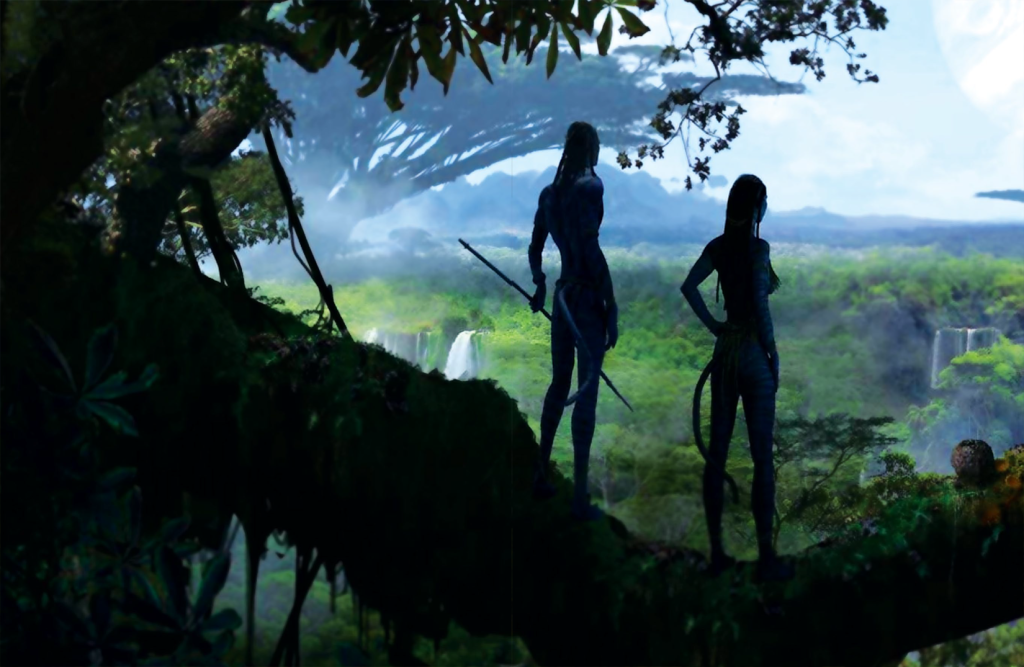
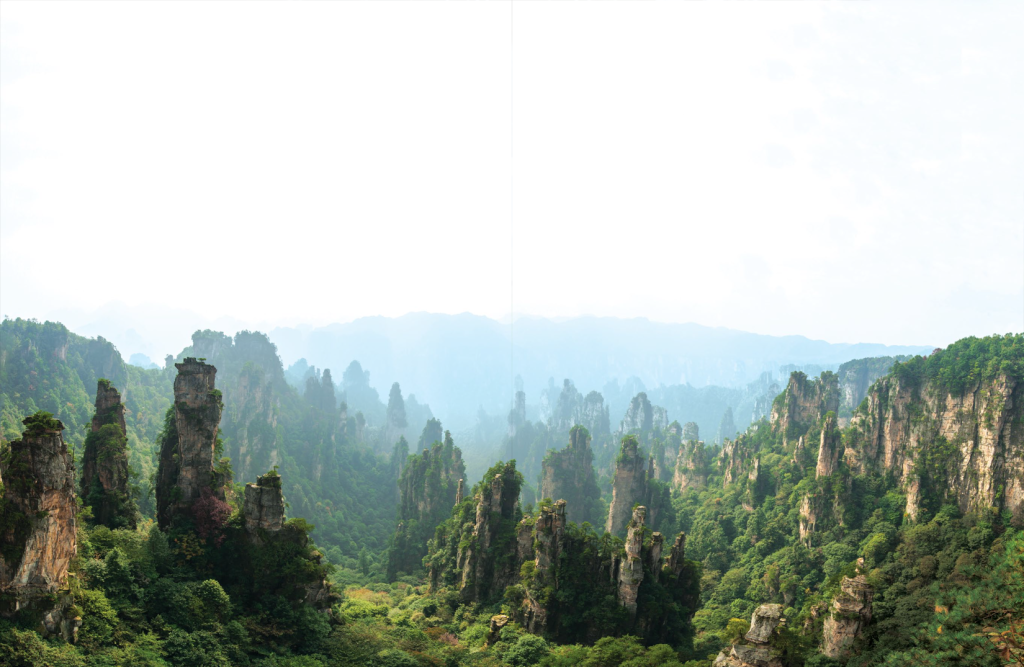
While viewers were enthralled by the storyline and talented CGI effects that went into creating the creatures and beasts of Pandora in the blockbuster hit Avatar, it was the backdrop and natural setting of the movie that left us in our seats agape with wonder. Rock formations that peaked incredible heights, lush greenery as far as the eye could see, surrounding crystal clear rivers that ran from mountain ranges hidden in view by the ethereal mist that covered the land – these natural wonders looked untouched by man’s hand and were so beautiful they simply had to come from another planet. But these mystical forests do belong to our planet and they’re all concentrated in the Zhangjiajie National Forest Park, located in the Hunan province of South-Central China.
The park served as an inspiration for the visual setting of the world of Pandora after the film’s director James Cameron heard of the ‘South Pillar of the Heaven ,’ a mountain that stands at a height of 3,500 feet above sea level which has become a nationally renowned scenic attraction. After it was renamed ‘Hallelujah Mountain,’ a move that the director of the management committee called “sending a message that Zhangjiajie belongs to the world and is now known to global tourists,” tourists and adventure junkies from all over the world have attempted to climb this tremendous peak, referred to as ‘Avatar Mountain.’ For travellers that love a place of mystery and mysticism, a surreal alternative to the usual vacation spots, Zhangjiajie has its fair share of legends and adventure. It is said that Zhang Liang, a famed strategist of the Western Han Dynasty, escaped to the mountain range after leaving the imperial court. Zhang found Zhangjiajie Mountain an ideal refuge because of the haunting beauty and tranquil atmosphere that blanketed the area. He became a hermit and planted several ginkgo trees that spurred the birth of the forests that now populate the region.
The national park is also home to one of the rarest precious stones in the world, the Chrysanthemum stone, nicknamed ‘the Stone of Wealth and Honour,’ found in the rocks at the bottom of the Daxi River. The gem contains patterns exactly like chrysanthemums, the official symbol of the Imperial Family of China, and these designs make it unparalleled to any other stone in the world. The Qing Dynasty excavated and carved these stones to build dams, later making these carvings tributes to the king due to their unique shape and appearance. The flowers are embedded in dark gray limestone with celestite and calcite, and the stones themselves contain more than 10 kinds of trace elements such as gold, silver, bismuth and selenium. This results in the stones being valued very highly, perfect for travellers that pride themselves on witnessing strange and unique things around the world.
Monuriki, Fiji
Cast Away

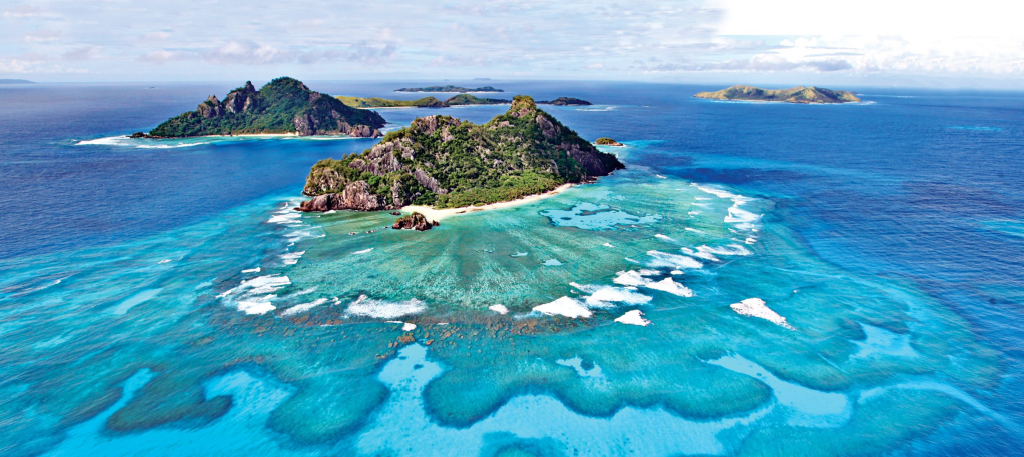
Situated in the Mamanuca islands and considered the most beautiful islands in the Fijian archipelago, Monuriki has long been considered the crowning jewel of the region. The island’s beauty, with jagged volcanic peaks that plunge into the ocean and azure blue seas, has captured the hearts of many, inspiring film director Robert Zemeckis to shoot Cast Away on its shores. Now referred to as ‘Cast Away Island,’ and to many excited tourists as ‘Tom Hanks Island,’ it is an uninhabited paradise and completely isolated from forms of life save the small animals that scuttle around the island, and of course the other islets that surround the beach. Visitors will be exhilarated by nature’s beauty in its purest form, untouched by man and far, far away from thoughts of city life. The island is tiny, stretching 600 metres wide and one kilometre long, and is surrounded on all sides by coral reef, making it a perfect site for snorkelling and exploring the marine life in the reefs. For animal lovers, the island is also home to the endangered Fiji Crested Iguana that keeps the rat and pest population low, and it is also a delight to watch myriads of sea turtles trek from the sea to the shore to lay their eggs in the soft white sand.