
In collaboration with High Life: Living the Good Life, VOICE OF ASIA is proud to present timeless articles from the archives, reproduced digitally for your reading pleasure. Originally published in High Life Volume 2 in 2017, we take a look at some cultural creation myths humanity told to explain how the world worked.
In the beginning, God created the heavens and Earth.” But God did not merely pull the universe from a vast nothingness. Sometimes, He spat out the air and vomited out water. In others, He- She impregnated themselves and birthed cosmic light that would in turn become the women and men of Earth. Human beings have always been seeking out their place in the universe and how they had come to exist. Before the advent of modern science and the school of rational thought, they tried to answer these questions by watching the world and weaving imagination into the mix. The stories they told their children and their children’s children were no longer fanciful stories but profound truths about the nature of human beings, the changing of the seasons and how the world first burst forth into existence. HIGH Life delves into creation myths from all over the world, filling its readers with a sense that something unbelievable will happen and that once upon a time, eons ago, it did. And it has birthed the world today as we know it.
Egyptians
How the World Came to Be
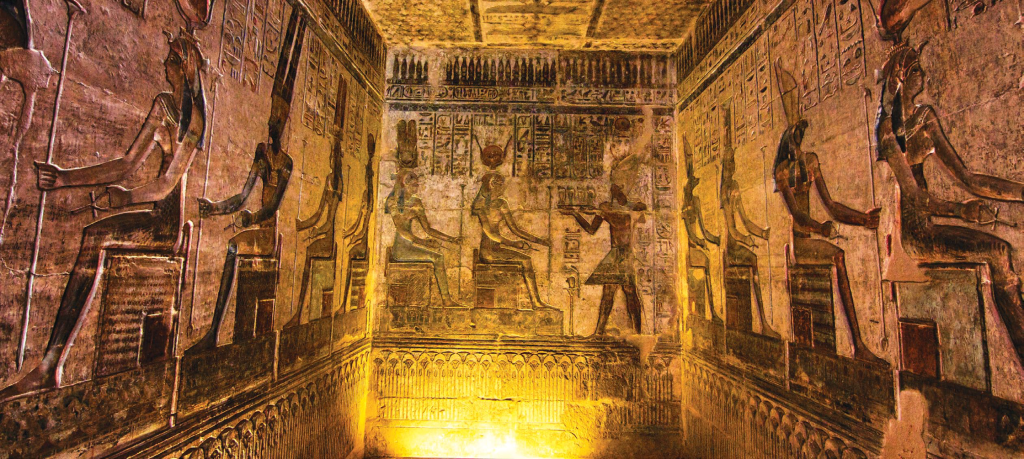
The ancient Egyptians have always been a people of science and order, beginning with their firm grasp of physics and astronomy that enable them to create monuments like the pyramids and intricate tombs for their pharaohs as well as creating a calendar to track the moon and stars that would detail what time of the year the Nile River would flood. However, this strongly held belief in maintaining structure and form is not merely a way of life, but a decree passed down from the gods themselves that began with the creation of the Earth.
Before the dawn of time, there existed only a dark and watery chaos called Nu. One being rose from the waters, commanded only by the sheer force of its thought and will. This was Atum or Ra, the god of the sun and the most powerful being in the realm of Egyptian mythology. With no place to stand from the chaos from which he was born, Ra created the hill Ben-Ben, the origin of the Temple of Heliopolis, one of the oldest cities of Egypt and the world. The creation of the hill represented the coming of light into the darkness of Nu. Yet Ra was alone in the universe, a solitary supreme deity of light. He mated with his shadow to spit out Shu, god of the air, and vomited out Tefnut, goddess of moisture, to whom he passed the task of destroying chaos and replacing it with structure in the universe. Shu and Tefnut separated the chaos into principles of order, law and stability which the ancient Egyptians upheld throughout their civilization – in their architecture, social hierarchy, laws and sciences. This order was called Ma’at which formed the principles of life for all time. Ma’at was a feather which was light and pure, a constant reminder to the people of ancient Egypt that order was fragile and easily broken, and that if these principles were not constantly followed, the chaos of Nu was sure to consume civilisation and plunge the world in darkness once more.
The early days of destroying Nu was perilous; both Shu and Tefnut were consumed by it and vanished into the darkness. Ra grew frantic because his children were gone for so long and removed his eye that could roam the entire universe to send it on a search. When Shu and Tefnut returned with the Eye of Ra, their father was so grateful for their safe return that he shed tears of joy. These tears dropped into the dark and fertile earth of Ben-Ben and thus, women and men were born. To make a safe place for these creatures to live, Shu and Tefnut mated and gave birth to Geb, god of the earth, and Nut, goddess of the sky. They fell deeply in love and were inseparable, in each other’s embrace for generations. Their behaviour threatened to disturb the natural order of the Earth and thus, Ra pushed Nut far away from Geb, high up into the heavens where the two lovers could stretch as far as they could but were unable to touch. Already pregnant by Geb, the sky shook and a tremendous ripping sound could be heard and thus, Nut gave birth to Isis, Set, Nephthys, Horus and Osiris, the wisest, who was given rule over the world and its inhabitants.
Ancient Greeks
The Changing of the Seasons
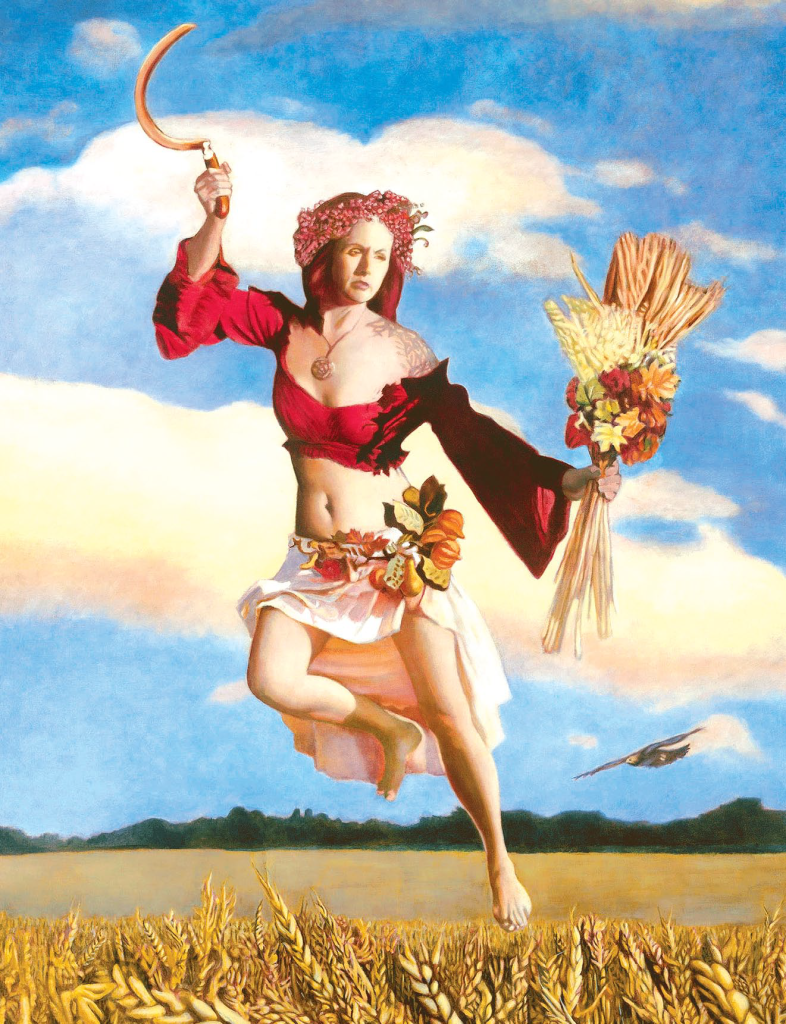
The changing of Earth’s seasons is such an incredible and momentous phenomenon to the mortal world, affecting everything from the harvest to travel, that the ancient Greeks believe only immortal deities can be responsible for such an event. Before the dawn of meteorology, they relied on pure observation and spellbinding tales of how a frightful abduction and a mother’s anguish created harsh blizzards from a once-gentle and carefree weather.
Demeter was the all-powerful goddess of fertility and fruitfulness of the Earth, and her presence among mortals guaranteed a flourishing of the harvest that the populace depended on her for. As the divine incarnation of Mother Earth, she was an immensely powerful and important goddess. The root of her name, ‘meter,’ is the Greek word for mother and she was a mother to all of humanity, gifting them with soil and gentle, mild weather that provided peace and plentiful crops. But there was none she loved more than Persephone, her daughter born from her love affair with Zeus, the king of gods. Persephone was kind and caring like her mother, and one of the most beautiful beings in the galaxy. Her beauty and grace did not go unnoticed by her uncle Hades, the god of the underworld, who desired her as his bride. He approached Zeus to ask for her hand in marriage and Zeus gave his permission without a care for what Demeter thought. One spring day when Persephone was playing on a grassy meadow, a wide gaping chasm in the ground opened up and Hades rushed towards her on his chariot of the dead. Upon seizing her, he dove back into the earth and the ground closed up again, muffling Persephone’s desperate cries for help to her father Zeus.
Demeter was so overcome by grief at the loss of her daughter, and fury at Zeus for conspiring with Hades behind her back, that she shunned the company of the gods and changed her form to enter the world of the mortals. As she brooded for a year in grief and rage for her stolen daughter, none of the seeds sown in the fields would germinate, and any crops that managed to grow would die almost immediately. Humankind was in danger of starvation, yet the selfish gods of Olympus were concerned only with losing the worship and offerings provided by the mortals. Finally, Zeus was spurred to act and sent down messengers to tell Demeter to come to Olympus and stop withdrawing from the world, but Demeter was obstinate and swore she would not return to Olympus or her duties to the harvest until she was with her daughter once more. Demeter’s dedication and stubbornness finally wore Zeus down, and he ordered Hades to release his daughter. Hades appeared to be accepting of Zeus’ command and warmly told Persephone she could go home to her mother, but under the surface, the god of the dead was scheming. Hades tricked her into swallowing a few pomegranate seeds, the only food she had taken in the underworld. When Persephone returned to the surface, there was a joyous reunion between her and Demeter, yet her mother could sense there was something wrong. Persephone confessed that she had been forced to swallow some pomegranate seeds and regretfully, Demeter told her that it meant Hades still had some claim over her. Thus, split between her mother and her husband, Persephone was forced to spend six months of the year in the underworld and the remaining six months of the year with her mother. During this period, Demeter is overjoyed and every spring, she makes sure the flowers blossom on the meadows and the mountains bloom to welcome home her daughter. Every autumn the leaves fall while the harvest comes abruptly to an end as Demeter cries when Persephone leaves willingly to become the Queen of the Underworld once more.
Hinduism
The Protector and The Creator
Biology tells us that our existence comes about from the first trilobite on Earth that advanced into aquatic animals, which became land mammals that progressed into primates and finally, evolved into the first human beings. However, according to Hindu creationism, all species on earth, especially humans, have devolved from a much higher state of pure consciousness. Hindu mythology believes that all species of plants and animals now are material forms adopted by pure consciousness which will live an endless cycle of births and rebirths because consciousness never dies. This consciousness is older than gods, older than the universe itself which, according to the Veda, the oldest collection of religious texts from the ancient Sanskrit civilisation, may be more than billions of years old.
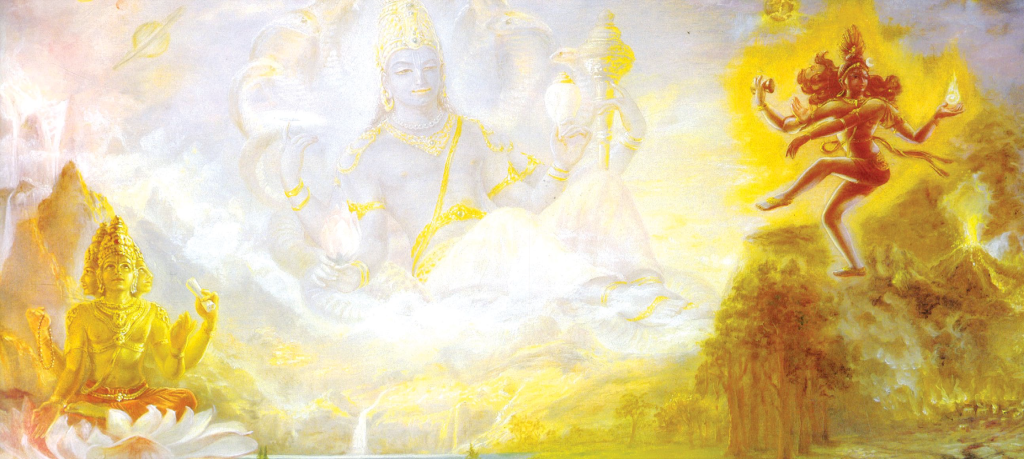
Thus, the Hindu creation myth begins, before the beginning of time when there was no heaven, earth or space in between. All that pulsed in the land was a vast and dark ocean that washed upon nothingness and licked the empty space above. The only living thing that existed was a giant, multi-headed cobra known as Shesha, floating on the ocean. It is said that when the creature uncoils, time moves forward and creation takes place, and when it coils back, the universe ceases to exist. Laying asleep within its endless coils, frozen in time, was Lord Vishnu the Protector. He was watched over by the mighty serpent and lay peacefully asleep while from the depths, a humming ‘ohm’ sound began to boom across all universes, which symbolised the “essence of breath, life, everything that exists” and “the infinite language, the infinite knowledge.”
When the night had ended and dawn broke, Vishnu’s navel grew a magnificent flower. In the middle of the blossom sat Vishnu’s servant, Brahma the Creator, who awaited the Lord’s command. Vishnu commanded, “It’s time to begin. Create the world.” A wind swept over the water and Vishnu and the serpent vanished. Brahma remained floating on the lotus flower and lifted his arms to calm the wind and the ocean. He split the lotus flower into three and stretched one part into the heavens while another was turned into the earth, and what remained of the lotus flower was transformed into the skies. Yet the earth was bare. Brahma created various different types of grass, flowers, trees and plants to which he gave feelings, creating the oldest known belief system in the world – animism – that describes how every living and non-living thing on earth has a soul. He created animals and insects to live in the land, to which he gave the ability to touch, smell, see, hear and move. The world was abuzz with life and the air filled with the sweet sounds of Brahma’s creations.
Chinese
Pangu Destroys Chaos and Chaos Creates the World
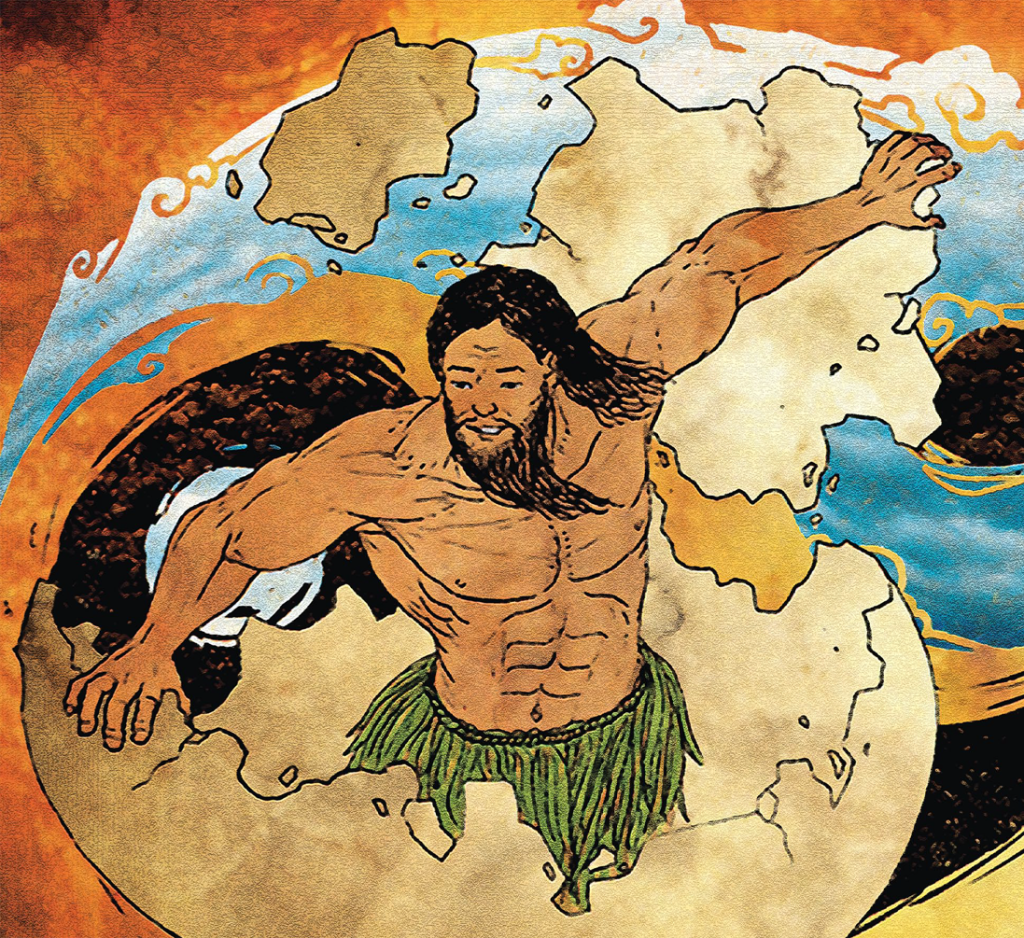
Before there was time, before there was anything, there was nothing. And before there was nothing, there was chaos. The heavens and earth were intermingled and one lone, large, black egg remained in the middle. The first living being in the universe, Pangu, was born inside this egg and lay asleep for 18,000 years. Pangu was a great and primitive hairy giant with horns on his head and clad in furs.
With him were the perfectly opposed principles of Yin and Yang that became balanced. When he awoke, he cracked the egg and began to push it apart, and cleaved the balance of Yin and Yang with a swing of his great axe. The upper half of the shell became the sky above him and was joined by the clear Yang while the lower half became the earth, mixed together with murky Yin. The longer he held them apart, the thicker these pieces of shell grew and the taller he became. As Pangu grew, he kept pushing the eggshells further apart by precisely 10 feet per day. To keep them permanently separated, Pangu stood between them and pushed up the sky, taking 18,000 years to do so. With each day, the sky grew ten feet higher and the Earth grew ten feet wider. But Pangu was not alone in his task. He was aided by four mythical beasts: the Turtle, the Qilin (a chimera that is native to China and East Asian myths), the Phoenix and the Dragon.
After 18,000 years, Pangu collapsed from exhaustion and was laid to rest. His breath became the wind and his voice turned into thunder. The sun was formed from his left eye and his right eye was thrown into the sky to be converted into the moon. Pangu’s body became the mountains and poles of the world, while his blood formed rivers, his muscles the fertile lands and his facial hair the stars and the galaxy. Bushes and forests were transmuted from his fur while valuable minerals and diamonds were all born from Pangu’s bones. His sweat became rain on earth and the fleas on his fur were carried by ferocious winds to become the fish and animals throughout the planet. The goddess Nüwa used the mud of the waterbeds to form the shape of humans, and because they were individually crafted, were extremely intelligent. These first humans created inventions like fire and the wheel, but Nüwa grew bored of making each human individually, so she put a rope in the water bed and let the drops of mud that fell from it become new humans. These small drops were deformed drops of human beings and were not as intelligent as the originals. Thus, the world was built on the sacrifice of a god and is still commemorated to this day by descendants of the Zhou dynasty.
Polynesian Myths
A Love That Hurts
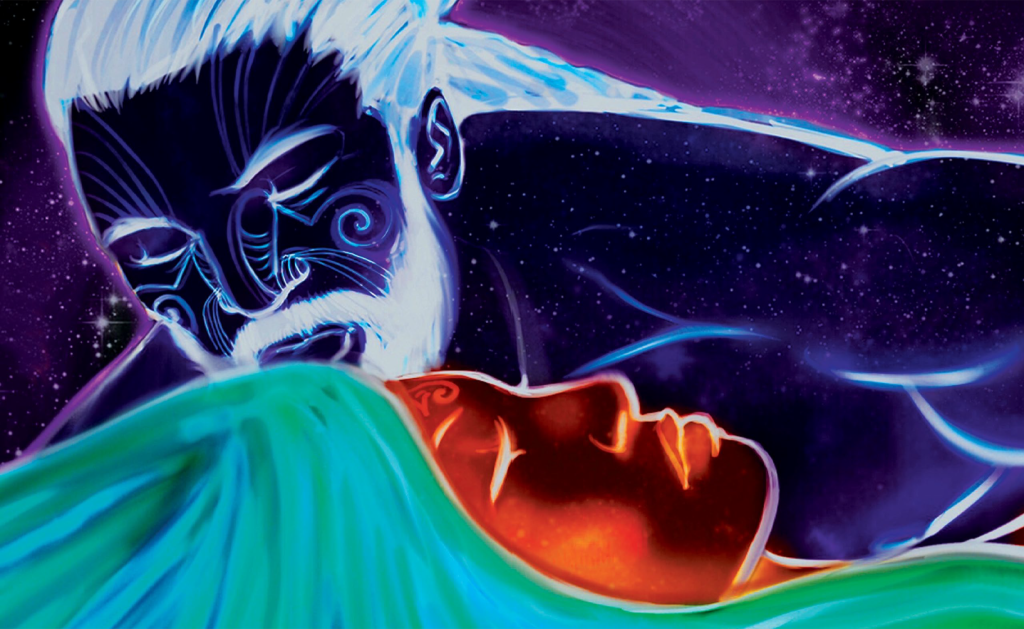
The people of Polynesia, descendants of the ancient Maori tribes, have always identified themselves closely with nature. Even before the act of felling a tree, an act that will kill a child of the god of the forest, they will conduct rituals to placate the great forest spirits. In the act of hunting for food, they would not dare speak of their purpose for fear that the prey might hear and anger the deities of the land. This dates back to Polynesian mythology where every aspect of nature is descended from one primal pair, the Sky Father and the Earth Mother. Their myth about the creation of the Earth is different from many other cultures. The world was not born out of chaos or angry gods but instead, describes how the loving embrace between the sky and the earth nearly kept the universe in darkness forever.
In the beginning, all that existed was Te Ponui, the Great Night. The night lived only in a giant shell and slowly, it began to open, letting a sliver of light inside so the world within could emerge. The top of the shell became Rangi, the Sky Father and the bottom was Papa, the Earth Mother, and the two loved each other deeper than any beings in the world had ever loved each other. The two held each other tightly and never let go and, in time, bore 70 godsons, each one strong and powerful, eager to aid the new creation. Tane, god of the forests, planted trees and bushes, shrubs and flowers. Stiff fern fronts, bushy green leaves and bright red flowers burst from the trees all over Papa’s body. Haumia created wild foods, while Tangaroa was the god of the rolling sea and let the cool waters grow Tane’s creations. Tawhiri was ruler over the storms and winds and Tumatauenga vowed to fiercely protect everything as the god of war. The world continued to grow with the forests, seas and animals. Yet as Rangi and Papa stayed in their embrace, the sky lay upon the earth and their children had no space and lived in darkness because no light could enter. They begged their mother to let go of Rangi in order for the world to grow. “I love Rangi. I will not let go. Do not ask such a thing of your mother,” said Papa and Rangi agreed with her. Tumatauenga frightened the others by urging them to kill their parents but Tane calmly counselled that they should instead try to push them apart. Tane won out in the end and was responsible for prising his mother away from his father. He placed his shoulders against his mother’s belly and with his feed pressed against Rangi, he pushed with all his might until slowly their grips on each other began to loosen.
Light and air began to fill the world and after a while, the space between Papa and Rangi grew wide enough so the earth and sky were no longer one. The brothers decided that in this new land of light, they needed to create the human element and set about creating the first woman. They traveled to the island of Kurawaka where the older brothers found red clay to shape the body of the woman, and the young ones added flesh, muscles and blood. When they had finished, Tane took the figure in his arms, pressed his nose to hers and breathed the living spirit into her nostrils that she would use to birth new life. When the gods had offered her all their gifts, the woman’s eyes opened and Hine-ahu-one, the first woman, was born and thus, signaled the beginning of the creation of humankind. Though they were proud of their sons, the lovers were heartbroken. Rangi shed vast quantities of tears, covering the earth in oceans of his sadness. Every night Rangi cries and in the morning, the world becomes damp with the dew of his tears. Papa’s sighs of sadness form the morning mists whenever she sees her beloved Rangi crying while missing his embrace.