
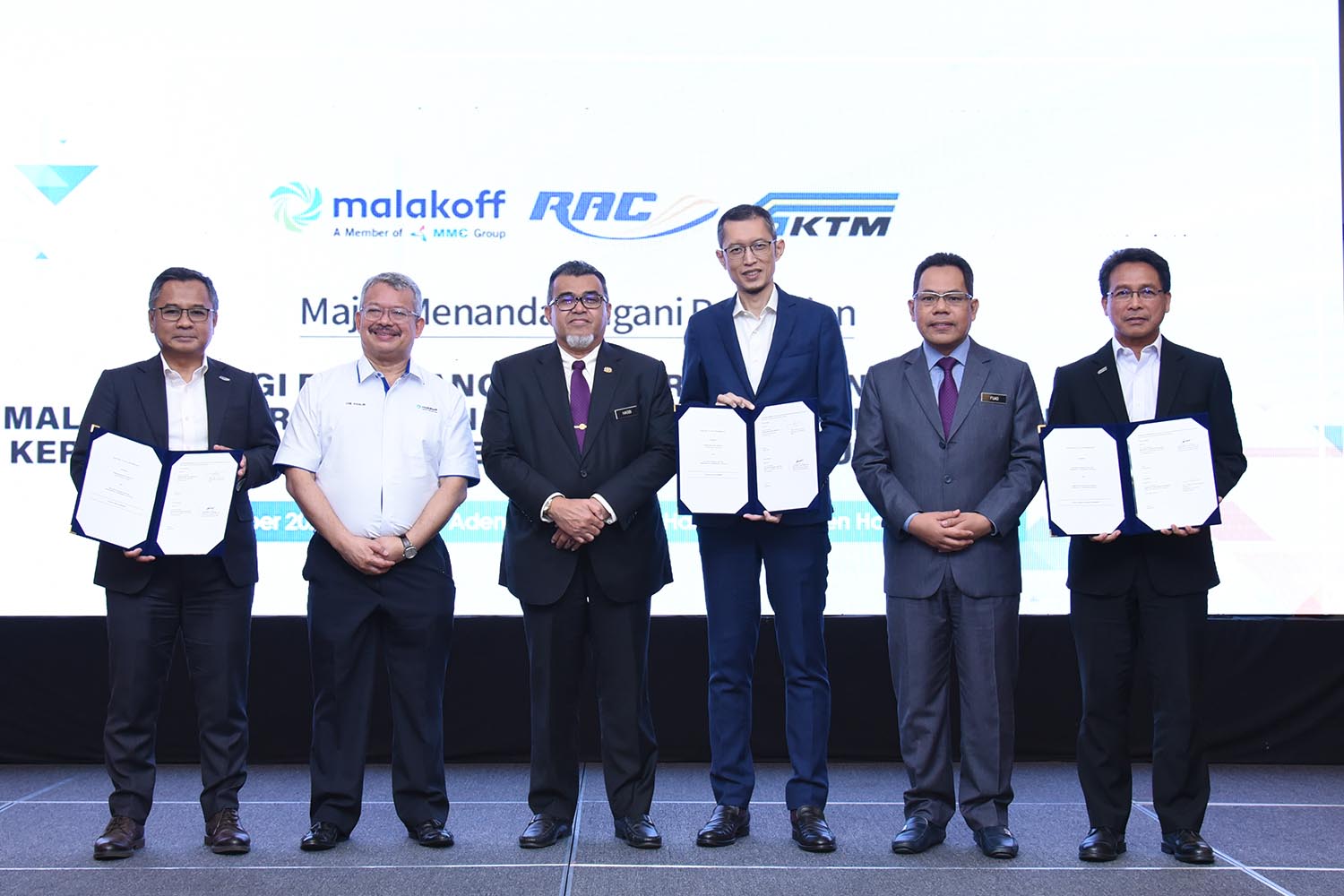
Railway Assets Corporation (RAC) has been shortlisted as a finalist for Sustainable Transport Initiative of the Year at the Transport Expo Asia (TXA) Awards 2026, recognising its plans to turn underused railway land and station rooftops into sources of renewable energy. The initiative explores how existing transport assets can support Malaysia’s energy transition while creating long-term value without requiring RAC to fund the solar installations upfront.
Turning Railway Space into Clean Energy
RAC manages 30,755 acres of railway land and 125 stations across Peninsular Malaysia. Its proposed solar programme focuses on two opportunities: developing a large-scale solar plant in Perak and installing rooftop solar systems at 11 railway stations in Johor.
The Perak project would combine ground-mounted and floating solar panels, with a proposed capacity of 67.97 megawatts. It is expected to generate between 50,000 and 65,000 megawatt hours of renewable electricity annually, subject to project development and approvals.
In Johor, the proposed rooftop installations would cover 11 stations, including Segamat, Kluang and Kempas Baru. These are examples of the locations identified for the programme. The programme is projected to reduce annual carbon dioxide emissions by 607 to 1,019 tonnes and save between RM138,000 and RM359,000 in electricity costs during its first year.
These figures remain estimates, with actual outcomes dependent on final system capacity, site conditions and contractual arrangements.
Green Investment Without Upfront Capital Costs
What distinguishes RAC’s solar energy initiative is its financing structure. Private partners would design, finance, build, operate and maintain the installations, while RAC provides access to its land or rooftops.
The proposed Perak project is expected to attract RM108.52 million in private investment. Under a 21-year lease, RAC would receive an annual access fee of RM609,000. For the 11 Johor stations, a 20-year solar power purchase agreement would allow RAC to purchase electricity at an agreed rate below the reference electricity tariff.
This arrangement allows RAC to explore renewable energy generation without committing its own capital to the installations. It also creates potential recurring income from railway property, showing how RAC’s solar energy plans can serve both environmental and financial objectives.
A Model with Potential Beyond Two Projects
The initiative could have implications for RAC’s wider portfolio. With 125 stations under its management, the Johor programme offers a basis for assessing whether similar arrangements could be introduced elsewhere. Each site would still need to pass checks covering roof structure, shading, electricity consumption, safety and grid requirements.
The Perak solar plant and the proposed rooftop installations at 11 Johor stations remain at the development stage. The Perak plant requires further agreements and approval of a renewable energy quota from the Sustainable Energy Development Authority (SEDA), while the station installations depend on site assessments and investment approval. The programme aligns with Malaysia’s National Energy Transition Roadmap and the 13th Malaysia Plan, which support renewable energy development, greener infrastructure and private-sector investment.
RAC’s selection as a finalist for Sustainable Transport Initiative of the Year at the TXA Awards 2026 highlights an approach to sustainability that extends beyond trains and tracks. By putting existing railway land and buildings to work as potential sources of clean electricity, RAC’s solar energy demonstrates how transport infrastructure can contribute to the energy transition while generating lasting value for Malaysia.