
In collaboration with I&P Living, VOICE OF ASIA is proud to present timeless articles from the archives, reproduced digitally for your reading pleasure. Originally published in I&P Living Volume 1 in 2015, we take a peek into the history of kite-flying.
Kite-flying has a very long history and, despite the new entertainment options and games available to us in this day and age, continues to be a favourite pastime for children and adults alike. The hobby is particularly prominent in Asia, and Malaysia has been known to produce some of the most beautiful traditional kite designs in the world. I&P Living takes a look at the past of kite-flying and its recent developments, also offering some basic knowledge to help start you off in the enjoyment of this family activity.
Olden Time Pastime
Kites originated in China in the remote past, most likely before 1000 B.C., and have been widely flown in the East since that time, although both Indonesia and Polynesia have also been credited as inventors. Originally made from silk materials for the sail, high-strength fine silk for the flying line and flexible bamboo for the lightweight framework, ancient Chinese kites were usually rectangular and flat.
Europeans were made aware of kites by way of Marco Polo in the 13th century, although the practice of kite-flying only became popular in the West around the 16th and 17th centuries, as sailors brought back kites from China, Japan and the Malay archipelago. By the 18th and 19th centuries, kites were being used for an array of purposes. Famously utilised by Benjamin Franklin in an experiment that proved lightning contained electricity, kites have also been used to measure atmospheric conditions for weather forecasts, to shoot aerial photography, to carry antennas for communication and signalling during war, as well as a series of other functions. Furthermore, kites are regarded as ancestors of the modern aircraft.
A Modern Twist
Today, kite-flying is mostly a recreational activity and a popular form of art that has been incorporated into traditional festivals and other events throughout the globe. Modern kites are usually made of bamboo and paper, and come in an ample variety of shapes and sizes.
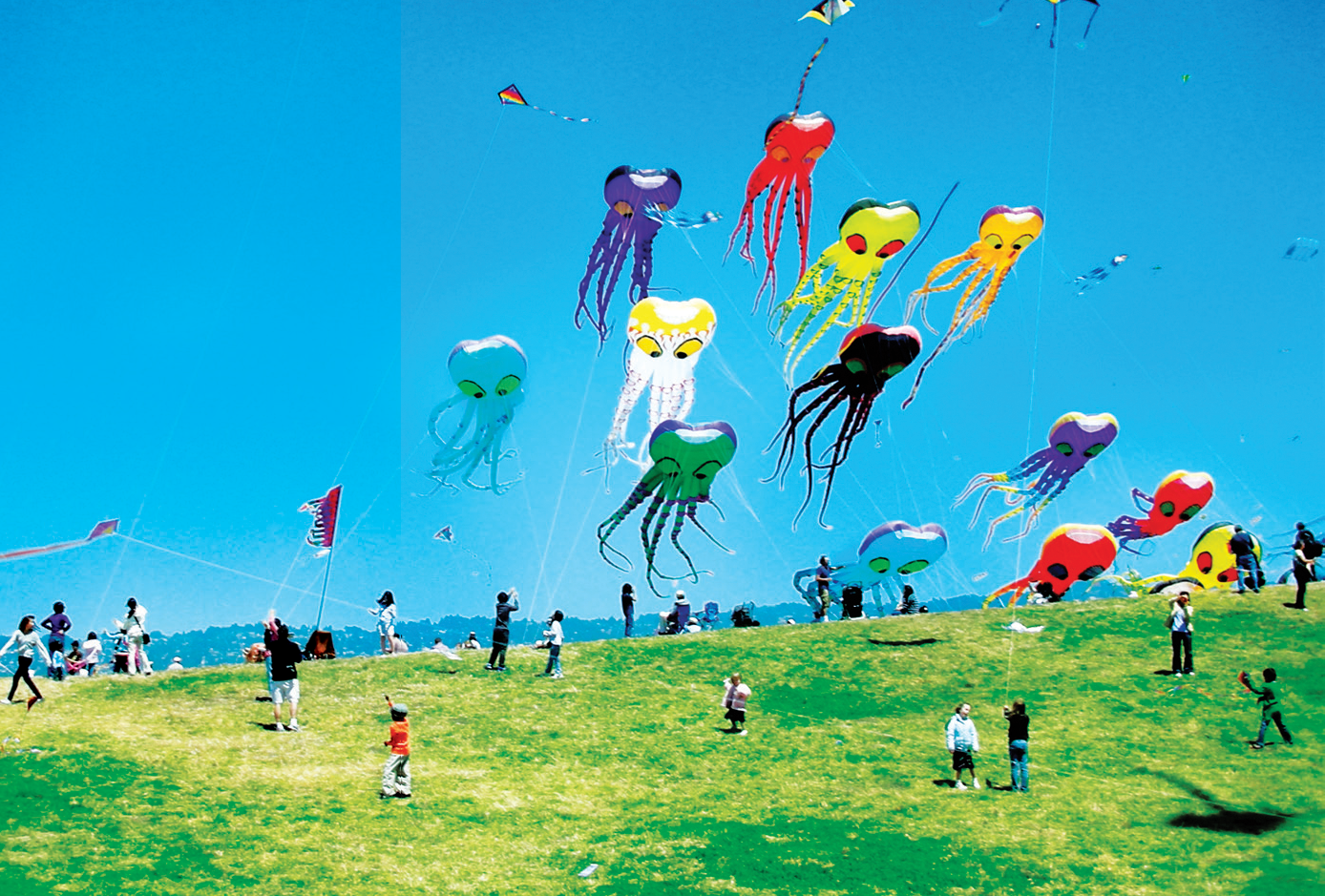
If you are entering a competition where the beauty and movement of the kite is the judging criteria you should opt for more elaborate designs. These can be shaped like animals or other unique shapes, preferably be in bright colours and sport a long and flowing tail so they can be seen from a distance. For kite-fighting, where participants try to snag each other’s kites and cut them down using a mixture of ground glass powder and glue, the kite should be of simple design, flat and small, with a diamond-like shape and no tail. This ensures agility and facilitates manoeuvring, while insuring against a sizeable loss in case your kite gets cut down.
Ready to Fly
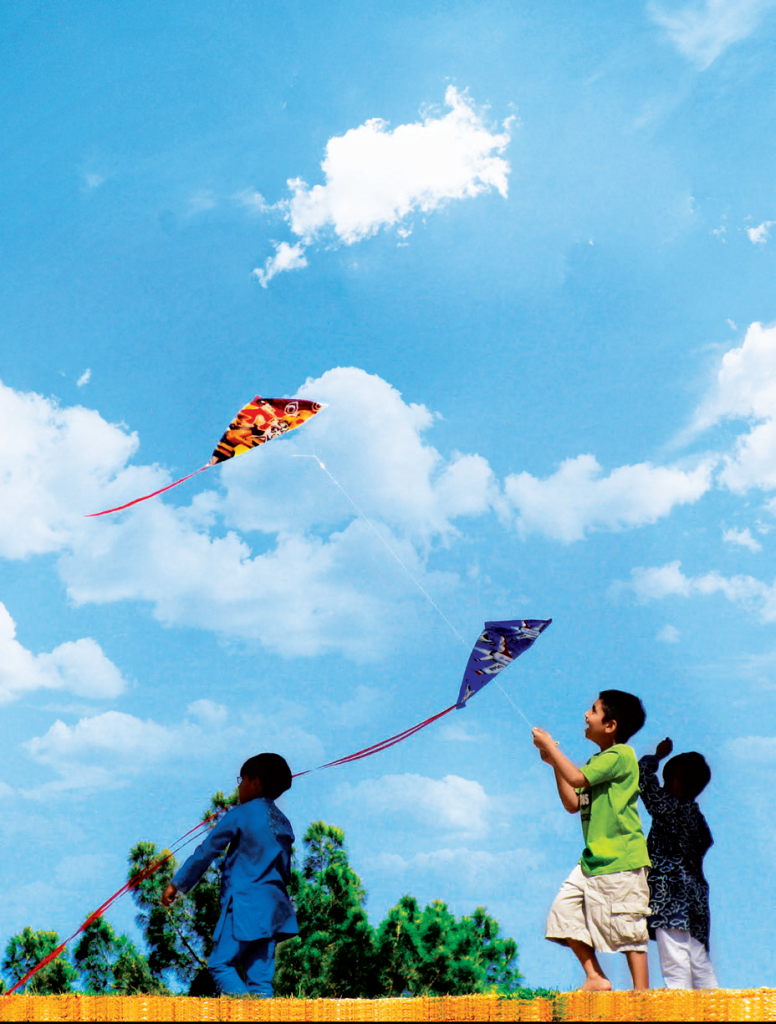
Kite-flying is one of the easiest hobbies to learn: all you need is a bit of wind and practice to launch your kite into the sky. For beginners, single line kites are the optimal choice to begin with, and you should practise in a clear and open area, away from power lines, roads and airports. As it is difficult to fly a kite when the wind is too strong or too light, ideal wind conditions are those between 8-40 km per hour. Kite-flying during rain and lightning storms is not recommended, as the electricity in clouds is attracted by damp kite lines.
Once the ideal conditions are met, you are ready to launch your kite. Stand with your back to the wind, hold the kite up by the bridal point – where the line is attached to the kite – and let the line out. It is useful to have a helper to hold your kite when you first start flying, but this is not compulsory. If there is enough wind, your kite should fly right up. Allow it to float away a short distance, and then pull the line as the kite points upwards, so it will climb even further. Repeat these steps until your kite gains sufficient altitude.
To make your kite more stable for stronger winds, add a tail. And be sure to watch out for a couple of mishaps you may encounter. If the kite begins to sink tail first, it is a sign that there is not enough wind; if it spins or comes down head first, there is probably too much wind. Provided you follow these steps closely, your kite should soon be soaring into the heavens.
An ancient hobby and art form, kite-flying has been extremely useful for scientific, military and technological purposes in the past, not to mention its importance as a pleasurable and relaxing activity for many generations. I&P offers, in each of its townships, vast green areas and parks ideal for this practice, providing a space for families to entertain themselves as well as promoting a pastime that has strong significance in Malaysian culture. Take advantage of our tips and get a charge out of a day spent outdoors in the company of your children while you watch your kite fly up, up and away.