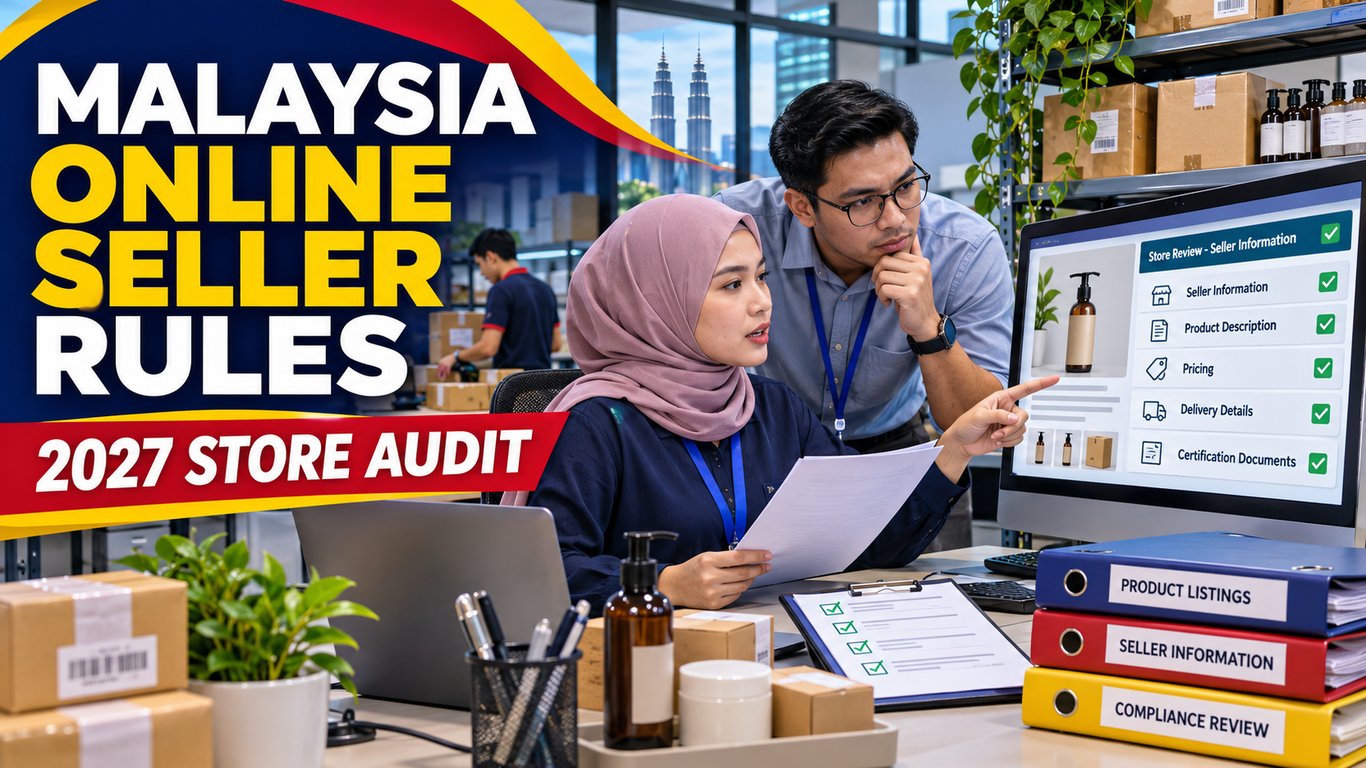
Malaysia's current electronic trade regulations require online marketplace sellers to provide clear business, product, pricing, payment and delivery information, with disclosures made in Bahasa Melayu and other languages permitted alongside it. Before 2027, multistore teams should review whether the information shown across their marketplace listings remains complete, accurate and consistent.
Malaysian marketplace sellers preparing for 2027 should review more than campaigns and inventory. Business details, product descriptions, prices, delivery estimates and applicable certifications must remain consistent across active stores.
The Consumer Protection (Electronic Trade Transaction) Regulations 2024 took effect on 25 December 2024 and replaced the 2012 rules. The year-end question is whether disclosures remain accurate as products, prices and operations change.
What the Current Regulations Require Sellers to Disclose
The official Schedule identifies ten disclosure categories, including the seller or company name, the marketplace website where applicable, email, telephone number and operating address.
Transaction information must describe the main characteristics of the goods or services, the full price including transportation, taxes and other costs, payment methods, sales terms and estimated delivery time. Applicable safety or health certification also forms part of the framework.
The information must not be false or misleading, so product details and commercial terms require ongoing review.
Bahasa Melayu Is Part of the Disclosure Framework
Disclosed information must be in the national language. English, Chinese or other languages may be added alongside Bahasa Melayu.
Current TikTok Shop Malaysia seller guidance, updated in October 2026, instructs sellers to provide product titles and descriptions in Bahasa Melayu and to add other translations when needed. It also reminds sellers in relevant categories to provide valid product certification information.
Translation should not be treated as a purely cosmetic task. Product specifications, safety information, usage conditions and certification references need to preserve the same meaning in every language version.
Public Disclosures and Platform Verification Are Not Identical
The ten Schedule items describe information disclosed through the online marketplace. Marketplace operators also have separate duties to verify seller compliance before permitting transactions, provide a complaint channel and maintain specified seller and transaction records for three years.
As a result, a platform may request identity documents, business registration details or category-specific certificates through Seller Center even when those fields are not displayed to buyers in the same format. Teams should distinguish information that must appear publicly from documents submitted for platform verification, while following the current instructions of each marketplace.
What Multistore Teams Should Audit Before 2027
Company names, operating addresses, email addresses and telephone numbers should not conflict across stores managed by the same entity. Outdated details create customer-service problems and disclosure gaps.
Product teams should review titles, descriptions, prices, payment information, delivery estimates and sales terms. Copied listings may retain an outdated delivery promise, omit part of the full cost or carry an incomplete translation. Regulated products require a separate certification check.
New stores and copied listings still need to be checked against the target platform’s required fields, language presentation and category rules.
How BigSeller Supports Product Information Reviews
BigSeller allows sellers to manage and bulk-edit supported product information for Shopee, Lazada and TikTok Shop from a centralized product workflow. This can help multistore teams locate active listings and update titles, descriptions and other supported fields without reviewing every store separately.
Its product translation tools support Malay translations for product titles, descriptions, variation options and image text in supported single-edit and bulk-edit workflows. Translated content can then be reviewed and adjusted before it is applied.
These tools support the operational review but do not determine legal compliance. Sellers remain responsible for checking business details, full prices, delivery terms, certifications and the accuracy of every language version against the applicable regulation and marketplace requirements.
Treat Disclosure as Ongoing Store Data Governance
Online seller disclosure is not a one-time registration exercise. Business details change, prices are revised, delivery commitments move and certifications expire. Assigning ownership for regular listing reviews can help prevent different stores from presenting conflicting versions of the same information.
Before 2027, Malaysian marketplace teams can use the current regulations as a practical audit framework: confirm who is selling, what the buyer is purchasing, what the complete transaction costs, when delivery is expected and which supporting certification applies. Clear and consistent information is both a regulatory responsibility and a foundation for buyer confidence.