
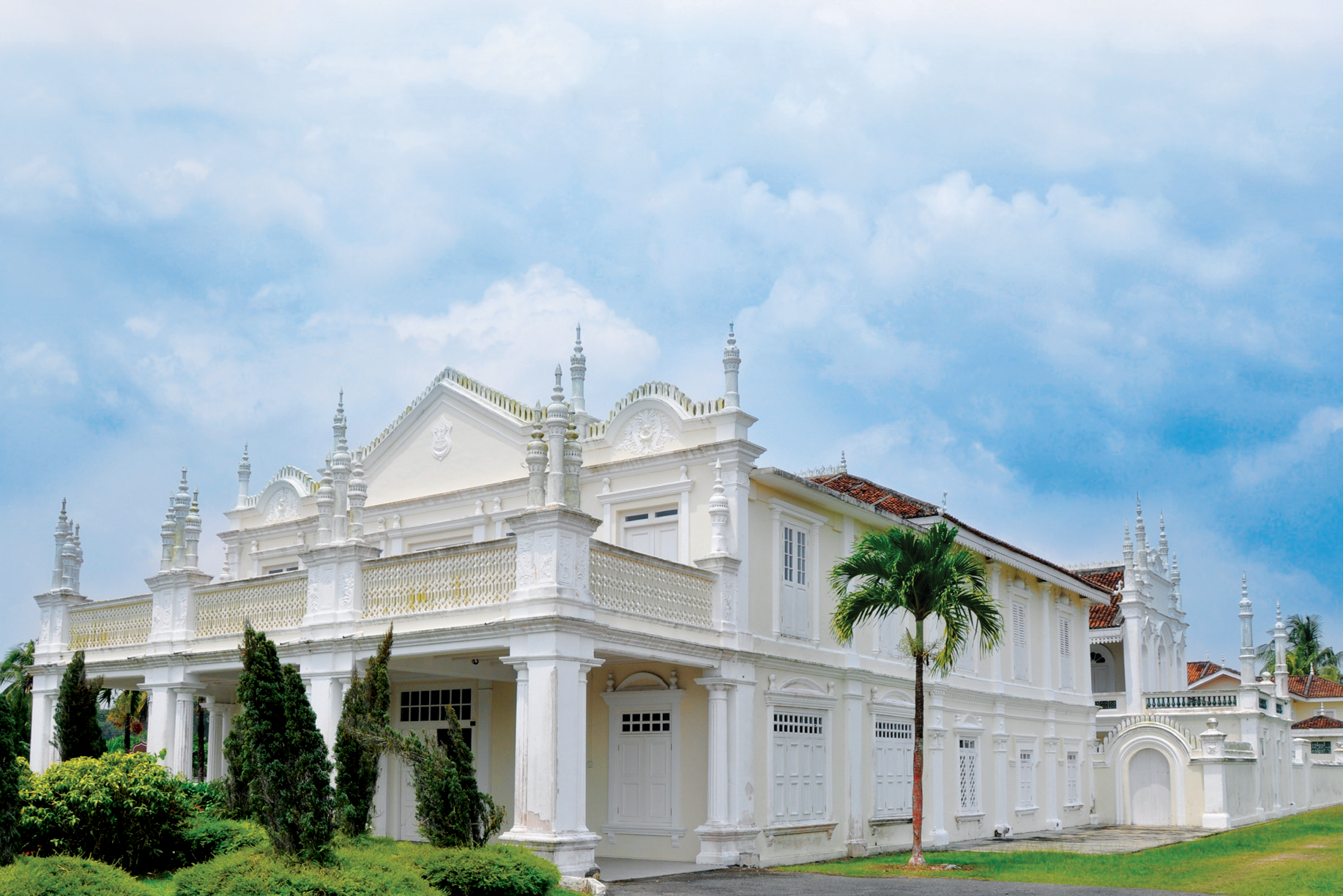
In collaboration with I&P Living, VOICE OF ASIA is proud to present timeless articles from the archives, reproduced digitally for your reading pleasure. Originally published in I&P Living Volume 2 in 2015, we explore the history behind Istana Bandar, Tasik Temasha, in Kuala Lumpur.
Malaysia’s rich history has seen different cultures leave their marks on these shores – the Javanese, the Indians, the Arabs, the Chinese, the British, the Portuguese, and the Dutch – to name but a few. Quite often, these influences are reflected in the architectural styles which are reflected in some of the most charming buildings in the country. I&P Living takes you to view the heritage behind these structures.
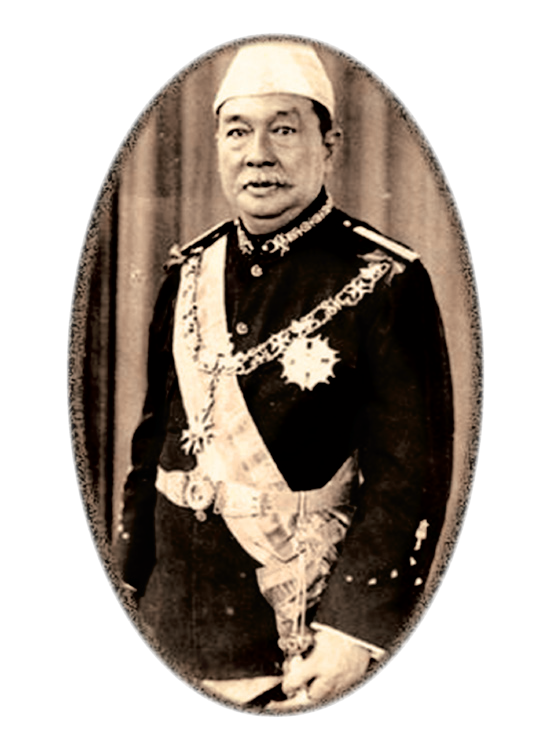
The long history of the Sultanate of Selangor can be traced to as early as 1766 when it was established by the first Sultan, Raja Lumu (1766 – 1782). A Bugis chief from the islands of Sulawesi, he made Kuala Selangor – which was already a Bugis settlement – the site of his fort – Kota Malawati – and declared it the royal capital.
It remained so until the year 1857, when the fourth Sultan, Sultan Abdul Samad (1857 – 1898) relocated the royal capital to his ancestral land in Langat. Later in the mid 1870s, he moved the capital to what was subsequently known as Bandar Temasha, near the coast of Jugra. It was there that he built a new Palace which was two-storeys high and made of concrete.
After visiting the Istana Deli in Medan, Sumatra, the next Sultan – Sultan Ala’eddin Suleiman Shah (1898 – 1938) – was inspired to build a new Palace, which he did in 1898. Named Istana Bandar, it was erected on 12.96 acres of land and located approximately 20 kilometres from Banting town and around 70 kilometres from Kuala Lumpur. Istana Bandar was also known as the Palace with 40 Rooms, as that was the number of rooms – including 15 bedrooms – this vast structure had.
An Extraordinary Man
The Palace was as extraordinary as the man who commissioned it. Born in Kuala Selangor in 1865, Sultan Suleiman was well educated for his time, and by the age of 11 could read and write Malay fluently. Also at the age of 23, he applied to the British Resident for an English tutor.
A firm believer in education, Sultan Suleiman championed the cause of formal education and established Sekolah Raja or Royal School for the children of Selangor chiefs and royalty, as well as schools for Malay girls. Furthermore, as a devout Muslim, he wrote and published religious books for use in school and proposed the codification of Islamic Law on matrimonial subjects.
Incidentally, Sultan Suleiman also had a large family, comprising 44 children, and this played a part in his conceptualisation of the Istana Bandar as he envisaged a large Palace with many rooms to accommodate his many children and where he could perform royal duties such as meeting with state officials.
Sultan Ala’eddin Suleiman Shah was also an avid carpenter, a skill he inherited from his late father Raja Muda Musa, and some of his woodwork can still be seen at Istana Bandar. The idea and designs for the 2-storey Palace came from the Sultan himself and aside from Malay motifs, the designs were influenced by European, Islamic (Middle-Eastern), Indian and Chinese art and architecture.
Stunningly Beautiful
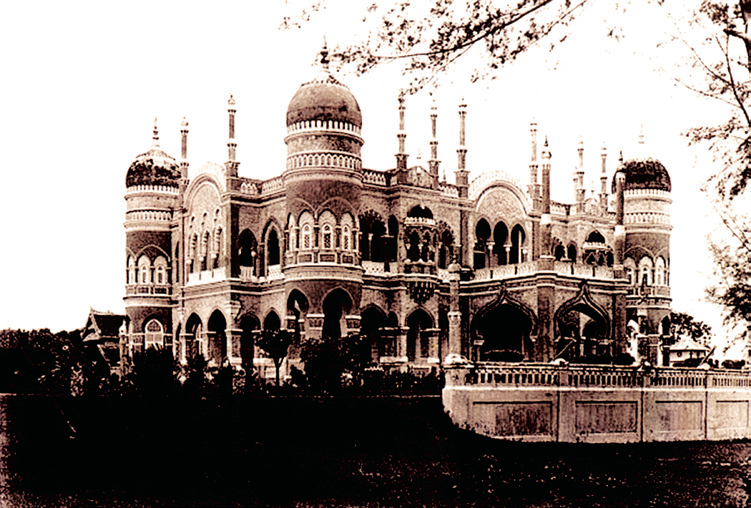
The design of the Palace was based on Malay Acheh art with sharp roof lines (bumbung limas), curved windows and ornately decorated stone staircases while the exterior facades were symmetrically colonial. The pillars were modelled after Rome and Gothic architecture as well as the walls, which were built with thick bricks.
While the sculpture and carving on the windows and doors have an unmistakable Middle Eastern influence, there are also obvious Chinese and Indian stylings in the wall decorations. High-quality marble tiles were used for the flooring on the ground floor while ‘cengal’ wood was used for the entire first floor.
The whole Palace was covered by bumbung limas of varying height, which signified different levels of hierarchy. Tiered roofs were used for the main royal area and kitchen, while flat roofs were actually added afterwards in the early 1900s, when the Palace underwent renovation.
Unique Features
A unique feature of the Palace is that it had a bathing pool in an enclosed area for female royals, which was only accessible by a path known as Laluan Kecelaan. Similar to the English concept of a Secret Garden, men were forbidden from entering this area and any transgressor would have been severely punished.
Secret gathering spots aside, the Palace was divided into three areas. The common area was the designated place for the Sultan to meet people, while the semi-common area could only be accessed by members of the royal family and Palace workers. Then there was the private area which was for the sole use of the royal family.
Sultan Suleiman was very much involved in the decoration of the Palace, giving it his personal touches. Family portraits adorned the walls, tracing the lineage of the royal family. He even sculptured some decorations on the walls, however these deteriorated over time. Interestingly, he bore all the construction cost personally and lived there for 35 years until his death in 1938.
The Centre of Life
Istana Bandar bore witness to many important occasions. It was here that Sultan Suleiman governed and presided over important official and religious ceremonies, and received numerous British and foreign dignitaries. It was also during Sultan Suleiman’s reign that the states of Selangor, Perak, Negeri Sembilan and Pahang came together to form the Federated Malay States.
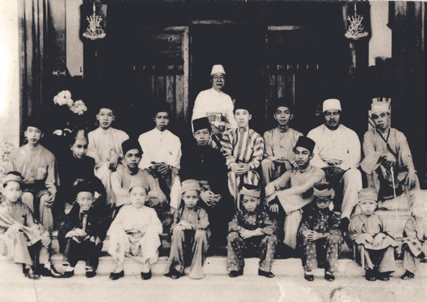
Aside from governing Selangor, Sultan Suleiman also found time to teach the art and practice of being a good ruler to his descendants, one of whom, his grandson, would later become Sultan Salahuddin Abdul Aziz Shah – the eighth Sultan of Selangor and 11th Seri Paduka Baginda Yang di-Pertuan Agong of Malaysia. Sultan Salahuddin, incidentally, was born in Istana Bandar.
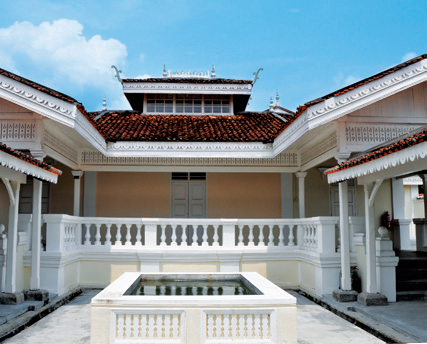
After Merdeka in 1957, the administration of Selangor moved to Kuala Lumpur and the Palace was vacated. Since then it has had several different uses including being a craft centre and a centre for Quranic studies. It has since been left unoccupied, and it is currently undergoing minor renovations including some repair work and repainting.