
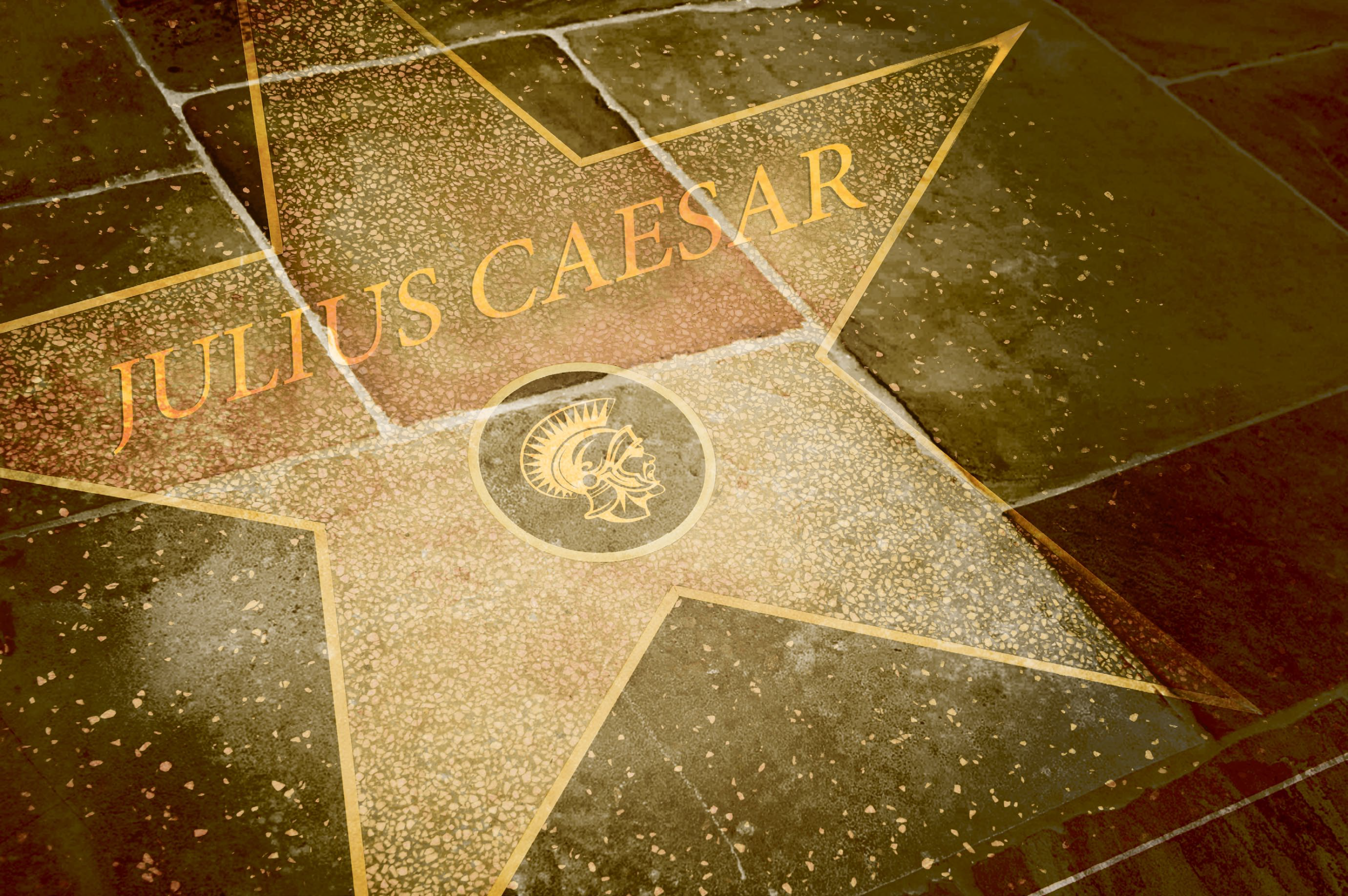
In collaboration with High Life: Living the Good Life, VOICE OF ASIA is proud to present timeless articles from the archives, reproduced digitally for your reading pleasure. Originally published in High Life Volume 2 in 2016, we take a look at the concept of ‘celebrities’, and how people have followed and adored those we see as exceptional.
From notorious poet Lord Byron to silent screen stars Sarah Bernhardt and Clara Bow, to the golden age of cinema led by the enigmatic and elegant Grace Kelly, and the rebel-rousing clan known as the Rat Pack, celebrities have long been a constant element in the public sphere, leaving audiences transfixed and starry-eyed. HIGH Life traverses through the decades to uncover how this unique concept of celebrity came into being.
Fame, notoriety, popularity, admiration, adulation, adoration – the list goes on. The culture of celebrity manifests itself in many ways, and in this age of instant gratification, social media and reality TV, celebrities are born every minute and in every trade imaginable.
Today, being a celebrity is not limited to the realm of the superstar; the celebrity net is cast wider, and in that respect, the lure of the celebrity has diminished somewhat. Images, news, tweets, Instagram photos and the like assail us from every angle, every single day, every hour, every minute. With smart devices in the grip of everyman, these icons are closer than ever.
But way before the advent of technology, centuries ago, Greek athletes in the ancient Olympic Games were celebrated and adored, a version of today’s modern-day Michael Jordan and Stephen Curry, minus the million-dollar endorsements, of course. So were gladiators during the Roman Empire. Despite being outlaws, these exceptionally well-built fighting machines were adored (and desired) by the general populace, aristocrats and high-society ladies.
However it wasn’t just the athletes who demanded fame. Roman emperor Julius Caesar was the very first Roman to appear on a coin in his own lifetime, besides claiming he descended from Venus, that is. These figures were also immortalised as sculptures or artworks. Perhaps the lure of fame is just too strong for a human being.
The individuals in the following pages have each made an indelible mark in the halls of history and – just as Genting fashioned an illustrious heritage of entertainment – created a legacy of stardom that has set the bar high for their present day equivalents.
LORD BYRON (1788-1824)
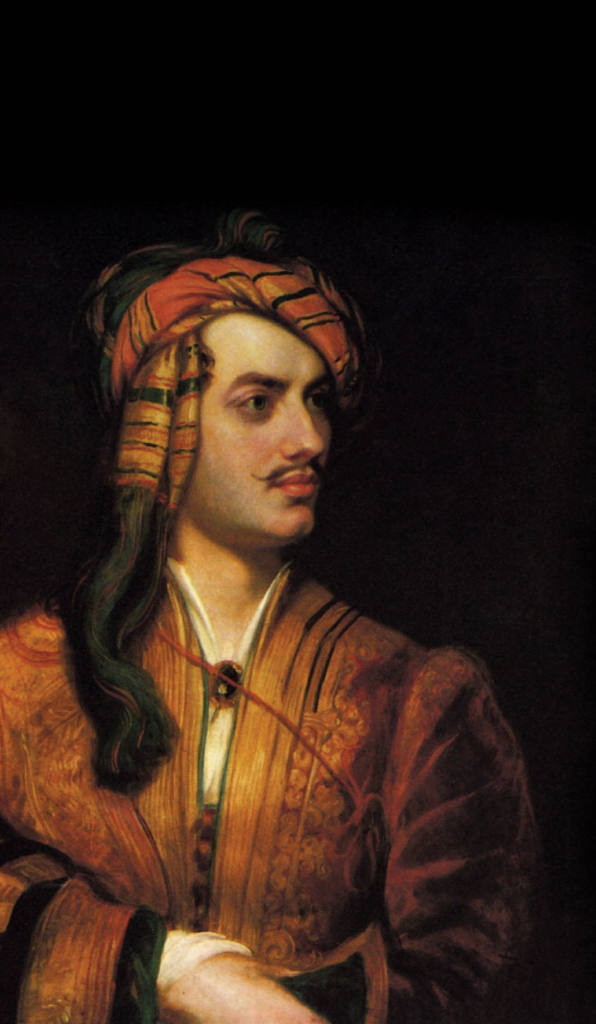
Take for instance “Byromania,” a term coined by Annabella, wife of Britain’s most notorious poet Lord Byron, and used to describe the fanfare surrounding her husband. Born in 1788, Byron was a leading figure of England’s Romantic Movement in the early 19th century. A life of debauchery and liaisons with society’s leading ladies further cemented the poet’s reputation as a playboy. The publication of the first two cantos of Childe Harold (a poem of a young man’s reflections on travel in foreign lands) in 1812 made him an overnight sensation. Thus began the very public life of this leading icon of the Byronic hero, best described as melancholic, beautiful and self-indulgent.
In 1813, Byron allegedly had an illicit (and incestuous) relationship with his half-sister Augusta. The guilt from that relationship led him to produce the darkly toned The Giaour, The Bride of Abydos and The Corsair. To escape his rather “complicated” relationship, Byron took a bride, Anne Isabella Milbanke. The union produced a daughter but did not last long due to Byron’s drinking and rumours of indiscretion. Following the breakdown of his marriage, Byron left England in 1816 and never returned. He travelled to Switzerland where he wrote the third canto to Childe Harold. It was here, too, that his second daughter Allegra was born, a result of his affair with Claire Clairmont. In October of the same year, he sailed for Italy, leaving a trail of women in his wake, which later became material for his greatest work, Don Juan. Byron died at age 36 in Greece where he was supporting the Greek war for independence from Turkey.
Personal upheavals aside, Byron had a knack for self-promotion, manipulating his own image for the benefit of the public. He was conscious of his weight, and had a long-standing battle with it, taking laxatives to keep his weight in check. Born with a club foot, Byron was acutely aware of his deformity, and painstakingly went to great lengths to conceal it. He would keep a tight control over the visuals of his image, instructing his nose to be repainted for instance, and would pose in colourful costumes for portraits.
SARAH BERNHARDT (1844-1923)
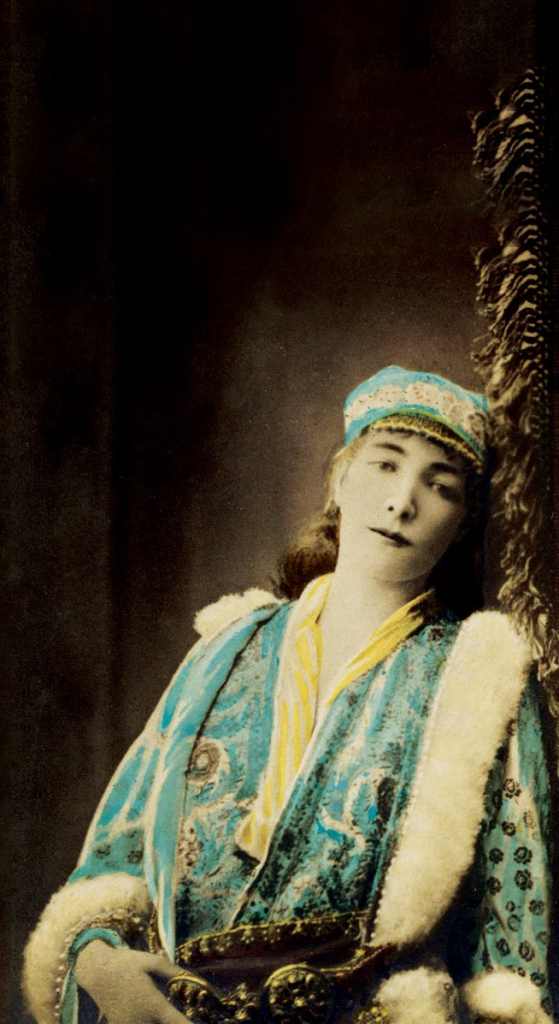
Regarded as one of the finest actors of the 19th century in the Western world, Sarah Bernhardt was one of the first actors to appear in motion pictures when the new medium of film took hold. Bernhardt touched almost all aspects of cultural life in the 19th and early 20th centuries. Her fame extended well beyond Paris, where the actress, who was also a sculptor, writer, artist and subject of paintings and photographs, truly embodied the term “celebrity.” Bernhardt’s professional career spanned over half a century and encompassed stage and screen, including product endorsements such as soap and bicycles.
Raised in a convent, Bernhardt was the illegitimate daughter of a Dutch courtesan. Harbouring hopes of becoming a nun, the young Bernhardt however was enrolled into the Paris Conservatoire at 16. Her early years in the performing arts went largely unnoticed (she did stints in the Comédie- Française, France’s national theatre company, and Théâtre du Gymnase- Dramatique). It wasn’t until 1866 and the next six years that followed (she signed a contract with the Odéon Theatre), where her reputation soon began to grow, largely due to her role in Francois Coppee’s one-act play Le Passant, where she played Zanetto, a role that she reprised when performing in front of Napoleon III.
Bernhardt’s career stalled during the Franco-German War, but by the late 1870s when the war was over, she resumed her acting career, which by this time had reached its pinnacle, partly contributed by her eccentricities (Bernhardt was known to have slept in a coffin lined with letters from her lovers!). She enthralled audiences with her “golden voice” and realistic, emotional acting, performing with such intensity that she would often faint at the end of her performance.
A savvy businesswoman, Bernhardt ran her own theatre company and went on a worldwide tour to Europe, Australia, Canada and the United States, becoming an international star along the way. She began her career in cinema at the turn of the century, appearing in Hamlet (1900) and La Tosca (1908). In 1905, Bernhardt injured her right knee during a performance in South America. Her leg never healed properly and a decade later gangrene had set in and her leg had to be amputated. Despite her disability, Bernhardt resumed touring and playing roles. She also visited soldiers at the frontline during World War 1. Bernhardt died in 1923 while La Voyante was being filmed in her Paris home.
CLARA BOW (1905-1965)

Baby-faced, big-eyed, carefree, selfassured, independent and energetic – a true embodiment of the flapper girl, Clara Bow was an icon of the 1920s woman. With an onscreen persona that was just as beguiling, the silent-era actress was Hollywood’s original “It” girl; Bow played the lead role in It in 1927 – a role that later defined her career.
A product of the Brooklyn tenements, Bow was born and raised in extreme poverty to a mentally unstable mother and abusive father, and found her way out when she won a magazine contest that gave her passage to Hollywood. She signed with independent movie producer B.P Schulberg and appeared in Black Oxen and Wine in 1923 and 1924 respectively, movies that established her as Hollywood’s true flapper queen. Roles in The Plastic Age, Mantrap, Wings and It solidified her position as a screen legend in Hollywood. Off-screen, Bow’s personal life became tabloid fodder due to her romantic liaisons with Hollywood’s leading men (John Wayne and Bela Lugosi counted among them) as well as top industry players.
Bow made the successful transition from silent movies to talkies, taking roles in The Wild Party and True to the Navy, leading cinemagoers to throng theatres. Sadly, a grueling work schedule, a personal life that came under public scrutiny and the traumas of childhood had taken its toll and in 1931, Bow suffered a mental breakdown and entered a sanitarium. In 1933, Bow left the silver screen and retired to Nevada with her husband Rex Bell. She continued her battle with psychiatric illness until her death at age 60.
GRACE KELLY (1929-1982)
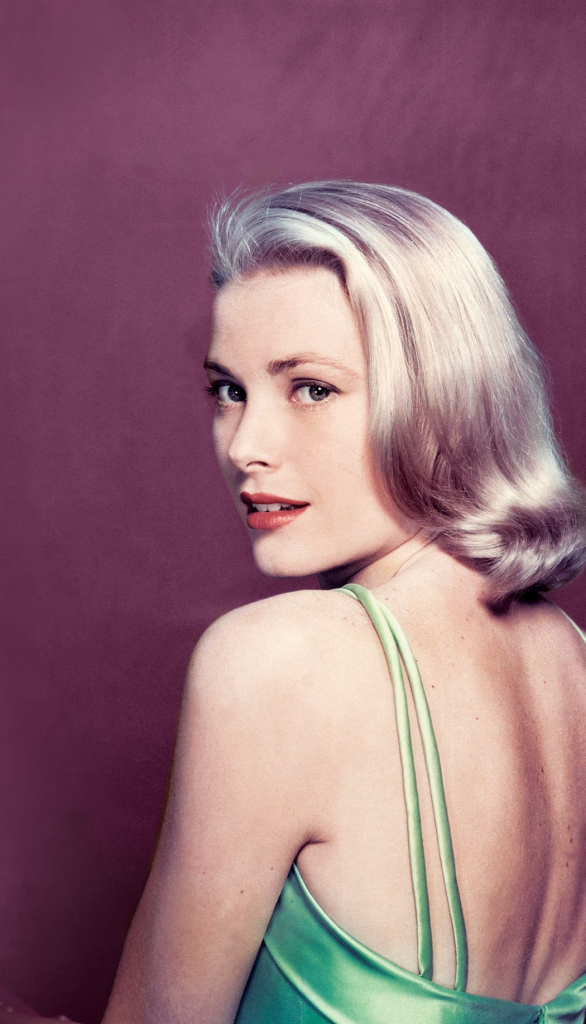
A Hollywood screen royalty who later became a reallife princess, Grace Kelly was born of Irish-German parentage in Philadelphia. Harbouring hopes of acting, Kelly enrolled at the prestigious American Academy of Dramatic Art to study the craft.
Discovered by Gary Cooper at age 22 on the set of her very first film Fourteen Hours (1951), Cooper arranged for Kelly to play his young wife in High Noon (1952) thus launching her career in Hollywood. Kelly was soon offered a role in Mogambo (1953), a film set in Kenya, where she starred alongside Clark Gable and Ava Gardner. The movie marked a major milestone in her career – she was nominated for her first Academy Award and won a Golden Globe for Best Supporting Actress. Her position as a Hollywood heavyweight was further entrenched when she partnered with her mentor and (later friend) Alfred Hitchcock to star in three of his films: Rear Window (1954), Dial M for Murder (1954) and To Catch a Thief (1955.) Kelly went on to win the best actress gong for her role as Georgie Elgin in The Country Girl opposite Bing Crosby and William Holden.
In 1955, her fate would soon change. At the Cannes Film Festival in France, Kelly met Prince Rainier III of Monaco. A fairytale courtship ensued and a year later, the screen princess married her real-life Prince Charming. Kelly gave up her acting career to take on a royal role in the Grimaldi household, becoming Princess Consort of Monaco. She also gave up her American citizenship. Princess Kelly plunged herself into regal life, had three children and became involved in many cultural and charitable organisations.
THE RAT PACK 1955
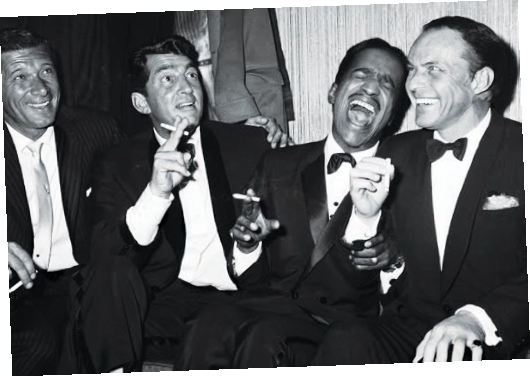
Personifying the very essence of cool, Frank Sinatra, Dean Martin, Sammy Davis Jr, Joey Bishop and Peter Lawford were “the clan” or “the Summit” as favoured by Sinatra – high-rolling revellers always on the lookout for a good time in the swinging 60s. Think martinis, cigars, afternoon cocktails, fun and frolic.
While the Rat Pack held court, other stars and personalities orbited around them, namely Shirley MacLaine (who became honorary mascot and Girl Friday), Jackie Gleason and Bing Crosby.
This informal entourage of actors, comedians and singers made their home on the Las Vegas Strip, specifically at the Copa Room at the Sands Hotel and Casino. In their element, the fast-talking crew told jokes, did impressions and sang, becoming the ultimate night club act ever assembled. They also appeared together in films such as Ocean’s 11 and Robin and the 7 Hoods.
The pack gained national prominence while campaigning for John F. Kennedy’s presidential bid, taking part in publicity campaigns and photo ops for Kennedy and the Democratic Party. There was even a recording by Sinatra of High Hopes, which later became Kennedy’s campaign song. Their friendship extended to the Strip, where Kennedy could sometimes be spotted, enjoying the antics of his celebrity friends.
After a few brief years together, the Rat Pack soon disbanded. Frank, Dean and Sammy attempted to revive the group in the 1980s but it just wasn’t the same as the good ol’ days. Sammy died in 1990, and Dean and Frank in 1995.
Regardless of decade or time, the stars that glittered through the ages all possessed qualities that set them leagues apart from lesser-known mortals, leaving us in constant amazement and wonderment. Truly, the cosmos have a special place for these stellar performers, their celebrity guiding those that come after them.