
ANSA Digital Sdn. Bhd. has been named a finalist in the Transport Innovator of the Year category at the Transport Expo Asia (TXA) Awards 2026, recognised for applying digital technology to vehicle insurance services and commercial driver safety. Its approach combines an operating digital platform supporting Cermat MADANI with a telematics system designed to help bus and lorry operators identify potential driver safety risks.
Connecting Digital Insurance with Safer Driving
ANSA Digital was incorporated in 2021 as a Kuala Lumpur-based systems integrator and technology company. Its work spans digital platforms, insurance technology, fire safety technology and telematics, with solutions developed for government agencies and businesses.
One of its transport-related initiatives is the digital platform supporting Cermat MADANI, a Ministry of Transport programme launched on 9 June 2026. The programme offers drivers an additional rebate of up to 10% on their vehicle insurance premiums when renewing through the Road Transport Department’s MyJPJ application.
Through participating insurance providers, ANSA Digital supports registration, insurance-related transactions and payments within the renewal process. From June to September 2026, the platform recorded 42,213 insurance-related transactions.
The figures indicate early operational activity for the digital service. By bringing several steps of the renewal process into one digital journey, the platform offers vehicle owners an alternative to coordinating separately with insurers, agents and service counters.
Moving Driver Safety Monitoring Earlier
ANSA Digital also focuses on telematics technology for commercial vehicles. Rather than depending primarily on manual supervision, roadside checks or investigations after an accident, the system is designed to identify potential risks before and during a journey.
The system combines three technologies. An alcohol detection device uses a fuel-cell sensor to test a driver’s breath before departure. When connected to the vehicle’s controls, it can prevent the engine from starting if the reading exceeds a set limit, with test results transmitted to a monitoring platform through 4G.
A contactless monitoring component uses 60 GHz radar to detect the driver’s presence and track heart rate and respiration. These readings are transmitted to the vehicle’s recorder or GPS tracker, providing additional information for safety monitoring.
The third component is an artificial intelligence-powered driver monitoring camera. It detects behaviours including drowsiness, yawning, mobile phone use, smoking, distraction and failure to wear a seat belt. It also recognises the driver’s face to confirm identity, issues in-cabin alerts and sends recorded events with video to the operator’s monitoring platform.
Together, these functions are designed to help fleet operators identify potential safety concerns earlier and intervene where necessary.
Testing the Technology in Real Operations
ANSA Digital has installed its telematics system on its first 20 vehicles for testing. The current phase assesses data transmission, alert reliability, installation and system stability during daily operations.
These evaluations are important before wider deployment, as the value of driver monitoring technology depends not only on detecting potential risks but also on delivering reliable alerts that operators can act upon.
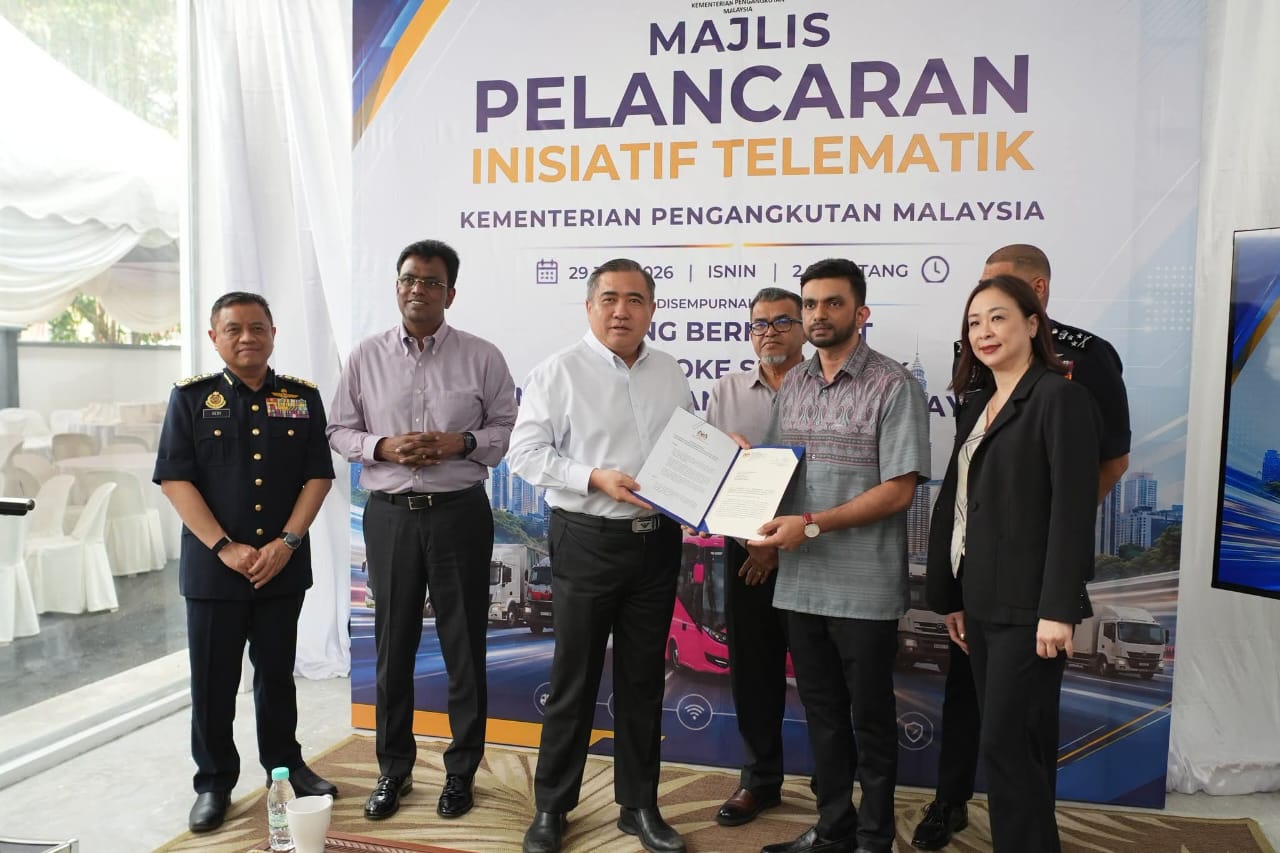
The company’s participation in the Ministry of Transport’s commercial vehicle telematics initiative provides a pathway for further adoption. In June 2026, ANSA Digital was recognised by Transport Minister Loke Siew Fook as one of five pioneer telematics providers at the launch of the Ministry of Transport’s initiative, alongside BSmart System Solution, Navipulse, MyLorry Technology Solution and Theta Edge.
Preparing for Wider Commercial Vehicle Adoption
The Ministry’s initiative outlines a phased approach to telematics adoption. Participation is voluntary in 2026 and 2027, with subscription costs expected to range from approximately RM60 to RM300 per month, depending on the features selected.
From 2027, the Ministry plans to develop a Commercial Vehicle Driver Database and integrate telematics data centrally. It will also consider making telematics a licensing condition for commercial vehicles in 2028.
ANSA Digital’s system is designed for buses and lorries already in service, allowing operators to adopt the technology without replacing their existing fleets. This compatibility makes implementation more accessible to operators seeking to introduce additional driver safety monitoring.
Nevertheless, broader adoption will depend on operational performance, subscription costs and the practical requirements of fleet operators. The ongoing testing phase will therefore be important in establishing the system’s readiness for wider use.
Towards a More Connected Transport System
ANSA Digital’s two initiatives point towards a road transport environment in which digital insurance services, driving records and driver safety monitoring may become more closely connected.
Cermat MADANI already uses driving records to support incentives for safer drivers, while the telematics system is designed to generate real-time information on driver alertness, sobriety and behaviour. Any future integration between the initiatives will depend on technical feasibility, data governance and operator needs.
As a finalist for Transport Innovator of the Year at the TXA Awards 2026, ANSA Digital stands out for its work across digital insurance administration and emerging commercial vehicle safety technology. Its operating platform has recorded measurable transaction activity, while its telematics system remains under evaluation.
The combination demonstrates how digital innovation can address different aspects of road transport operations, while highlighting the importance of validating technology performance before wider implementation.